Story sequencing Extra Challenge Worksheets for Ages 4-9
5 filtered results
-
From - To
Unlock your child's creativity with our "Story Sequencing Extra Challenge Worksheets for Ages 4-9!" These engaging resources are designed to enhance storytelling skills while promoting critical thinking. With a variety of scenarios, children weave narratives by arranging events in logical order, fostering comprehension and narrative skills. Ideal for young learners, the worksheets combine fun illustrations, relatable themes, and age-appropriate language to captivate their interest. Perfect for homeschooling or classroom activities, these worksheets empower children to produce their stories and explore their imagination. Encourage your child's love for reading and storytelling today with our carefully crafted sequencing challenges!
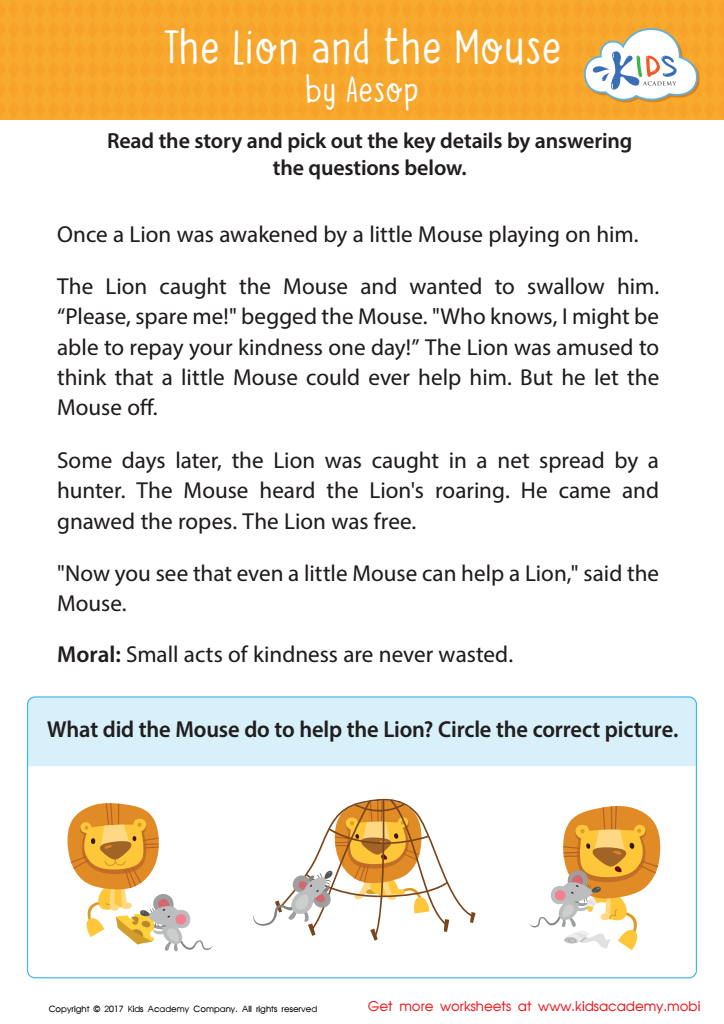
The Lion and The Mouse Sequencing Worksheet
 Assign to My Students
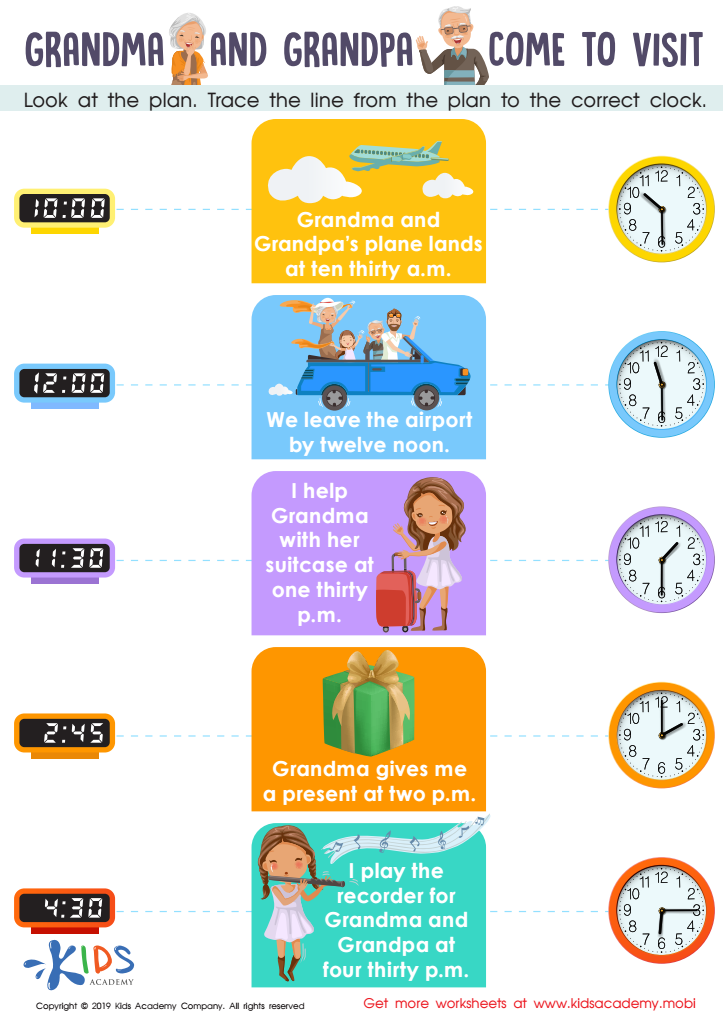
Grandpa and Grandma Come to Visit Worksheet
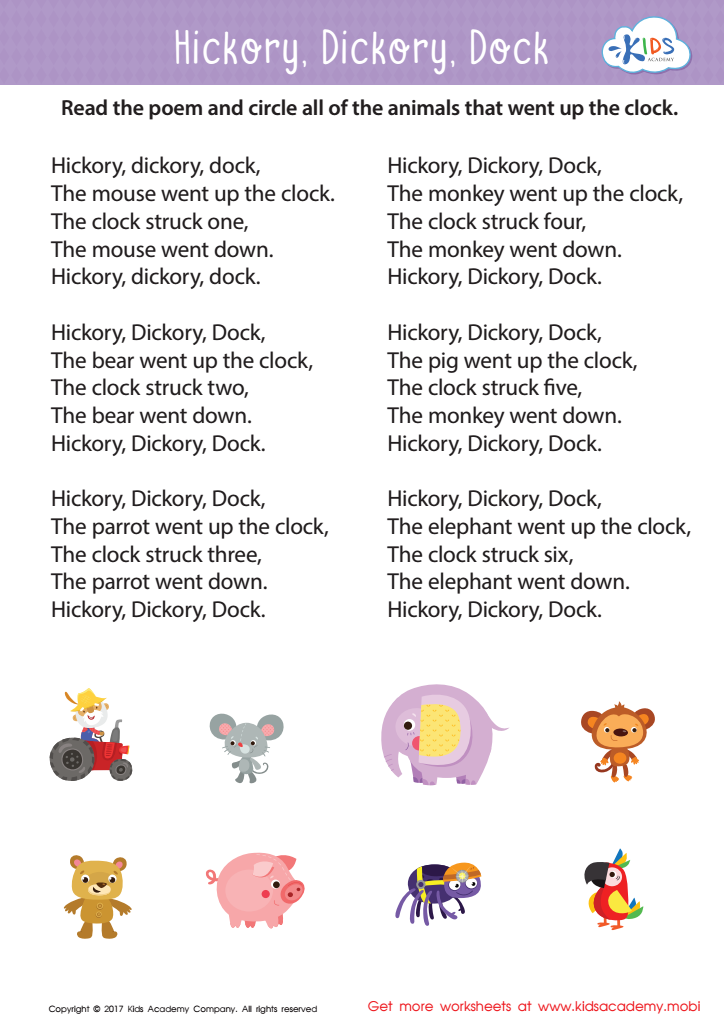
Hickory Dickory Dock Sequencing Worksheet
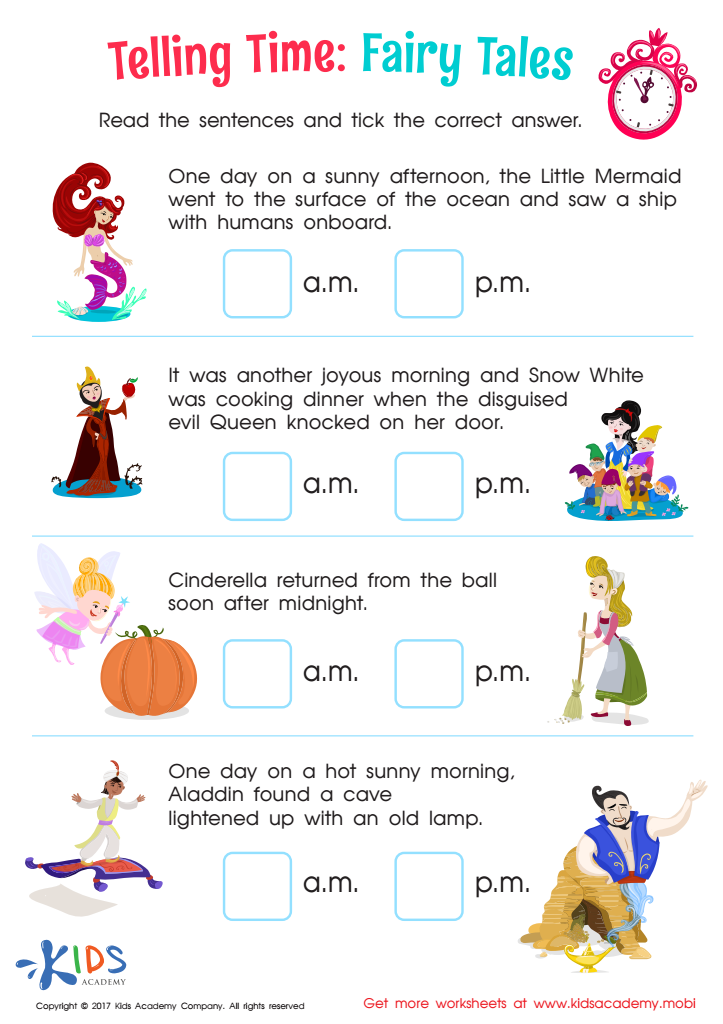
Telling Time: Fairy Tales Worksheet
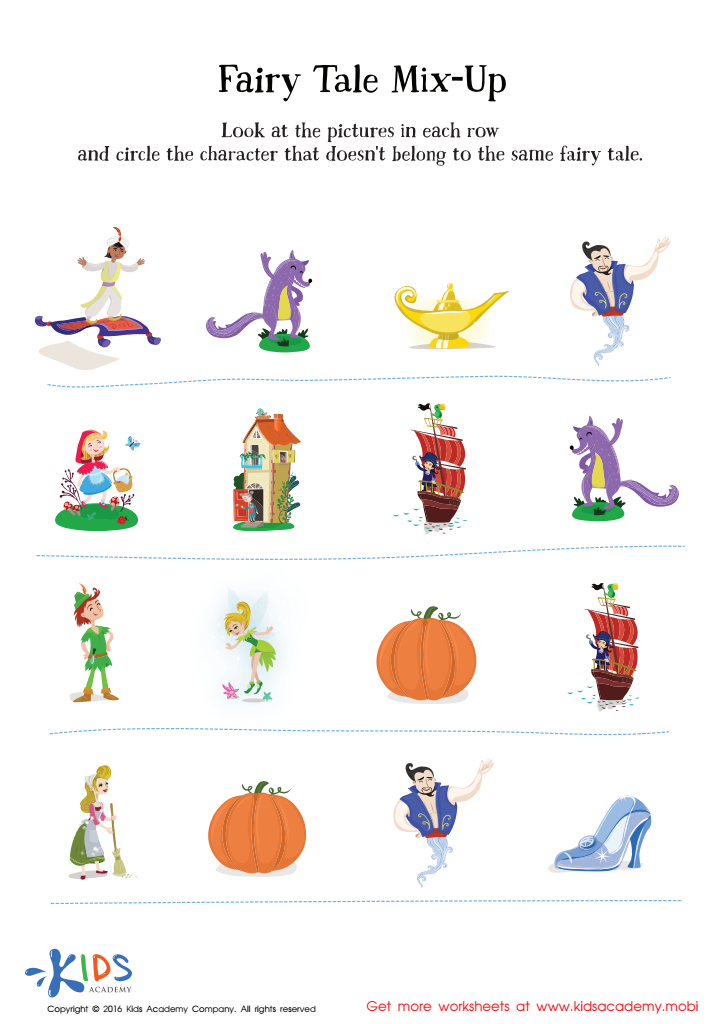
Fairy Tale Worksheet: Story Mix Up







Story sequencing is an essential skill for children aged 4-9 as it significantly contributes to their cognitive and language development. For parents and teachers, fostering this skill enhances comprehension and communication abilities, which are crucial for academic success. By understanding the order of events in a story, children learn to identify cause-and-effect relationships, recognize main ideas, and make predictions about outcomes.
Engaging with story sequencing also promotes critical thinking and problem-solving skills. As children arrange story events, they exercise their ability to analyze and interpret information, laying the groundwork for more complex reasoning abilities in later grades. This activity can be both educational and enjoyable, encouraging a love for reading.
Furthermore, story sequencing practices foster creativity and imaginative play, enabling children to relate stories to their own experiences. This connection deepens their understanding of narrative structure, character development, and themes, which enhances their overall literacy.
Involving parents and teachers in story sequencing activities solidifies a cooperative learning environment, reinforcing lessons in and out of the classroom. Ultimately, supporting story sequencing helps children become confident readers and storytellers, equipping them with vital skills for lifelong learning.








