Fine motor skills (drawing) Extra Challenge Math Worksheets for Ages 4-9
3 filtered results
-
From - To
Enhance your child's fine motor skills while engaging them in fun and educational extra challenge math worksheets designed for ages 4-9. Our activity-rich resources incorporate drawing exercises that promote hand-eye coordination and dexterity, vital for early learning. Each worksheet cleverly blends math concepts with creative tasks, allowing children to practice counting, pattern recognition, and problem-solving while honing their drawing abilities. As they color, trace, and sketch, young learners will experience a captivating way to reinforce their math skills. Perfect for classrooms or at-home learning, these worksheets make mastering fine motor skills both enjoyable and beneficial! Dive into our exciting collection today!
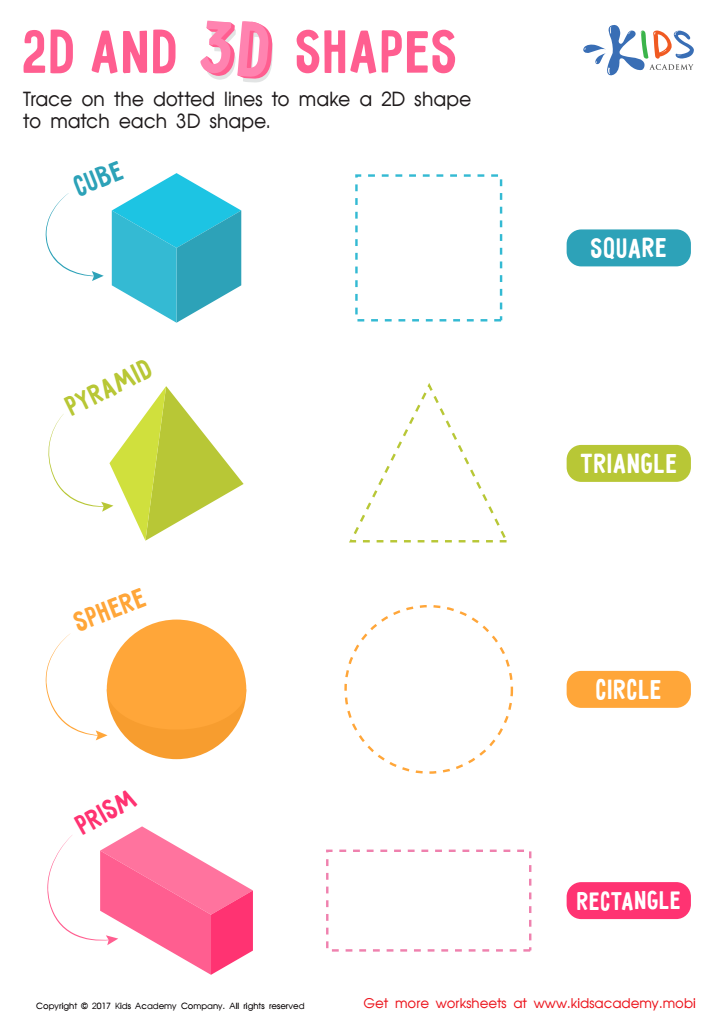
2D and 3D Shapes Worksheet
 Assign to My Students
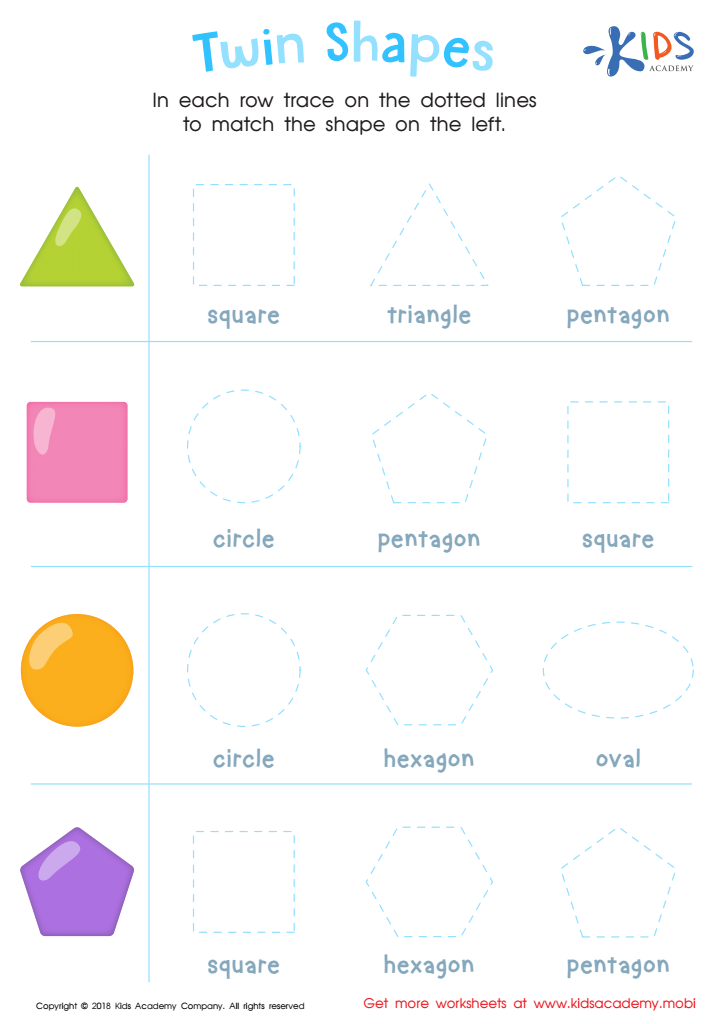
Twin Shapes Dot-to-Dot Worksheet
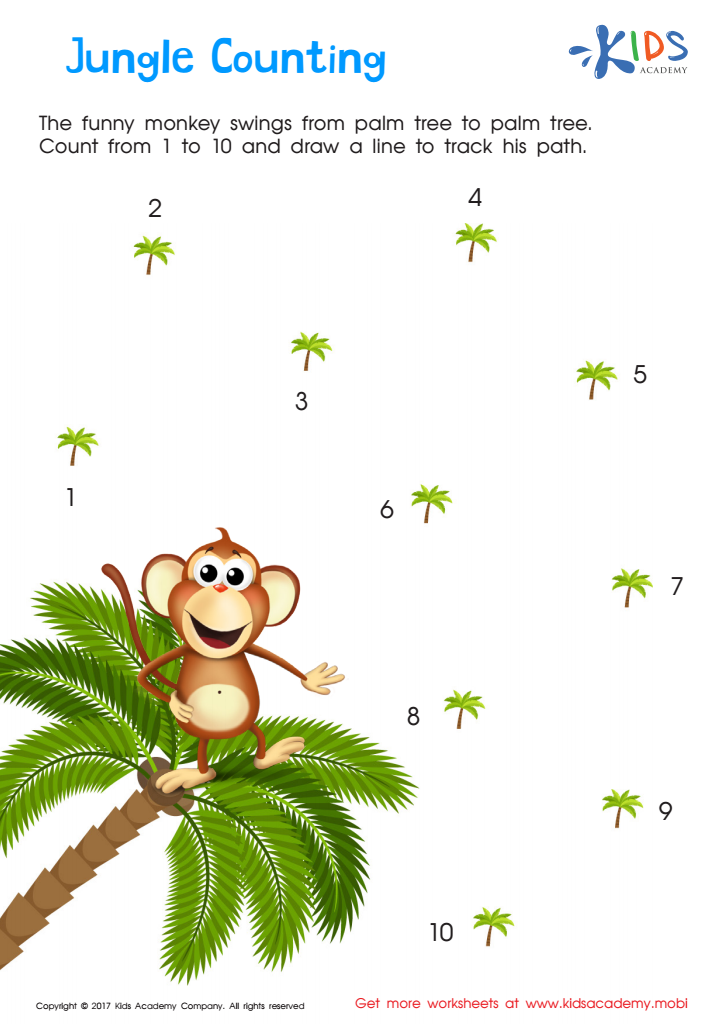
Jungle Counting Connect Dots Worksheet







Fine motor skills, particularly those developed through activities like drawing, play a vital role in a child's overall development. For children aged 4-9, fine motor skills involve the coordination of small muscles in their hands and fingers, which are essential for everyday tasks and academic performance. When children engage in drawing, they improve their grip, control, and precision—all crucial for writing, cutting, and various hands-on activities.
Parents and teachers should pay special attention to these skills because they are closely linked to cognitive development and learning readiness. Drawing encourages creativity and self-expression, allowing children to communicate their thoughts and feelings visually. Additionally, it fosters problem-solving and critical thinking as they decide on shapes, colors, and perspectives.
Moreover, integrating extra challenge math activities into drawing can deepen engagement. By creating mathematical dilemmas related to their drawings—like counting elements, creating patterns, or exploring symmetry—children will enhance their understanding of mathematical concepts in a fun, interactive manner.
By prioritizing fine motor skills and integrating challenges within drawing activities, parents and educators can cultivate a generation of confident learners capable of tackling both artistic and academic pursuits effectively. This holistic approach lays the foundation for lifelong learning and skill development.








