Matching skills Extra Challenge Math Worksheets for Ages 4-9
4 filtered results
-
From - To
Enhance your child's learning experience with our "Matching Skills Extra Challenge Math Worksheets" designed for ages 4-9. These engaging worksheets focus on developing critical matching skills essential for early math success. By recognizing patterns, identifying relationships, and connecting numbers with visuals, children will build their confidence and proficiency in math. Our carefully crafted activities challenge young learners while making learning fun and interactive. Perfect for both classroom and home setting, these worksheets cater to different learning styles and paces. Boost your child's understanding of math concepts while fostering a love for learning. Explore our collection today to support your child's developmental journey!
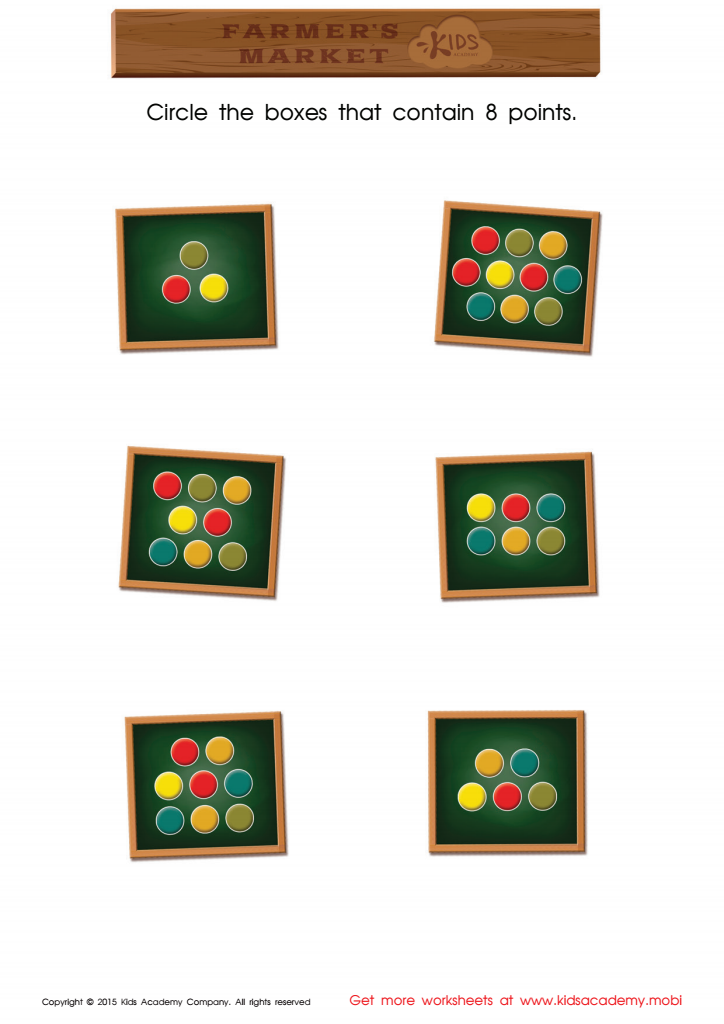
Count and Match Points 8 Math Worksheet
 Assign to My Students
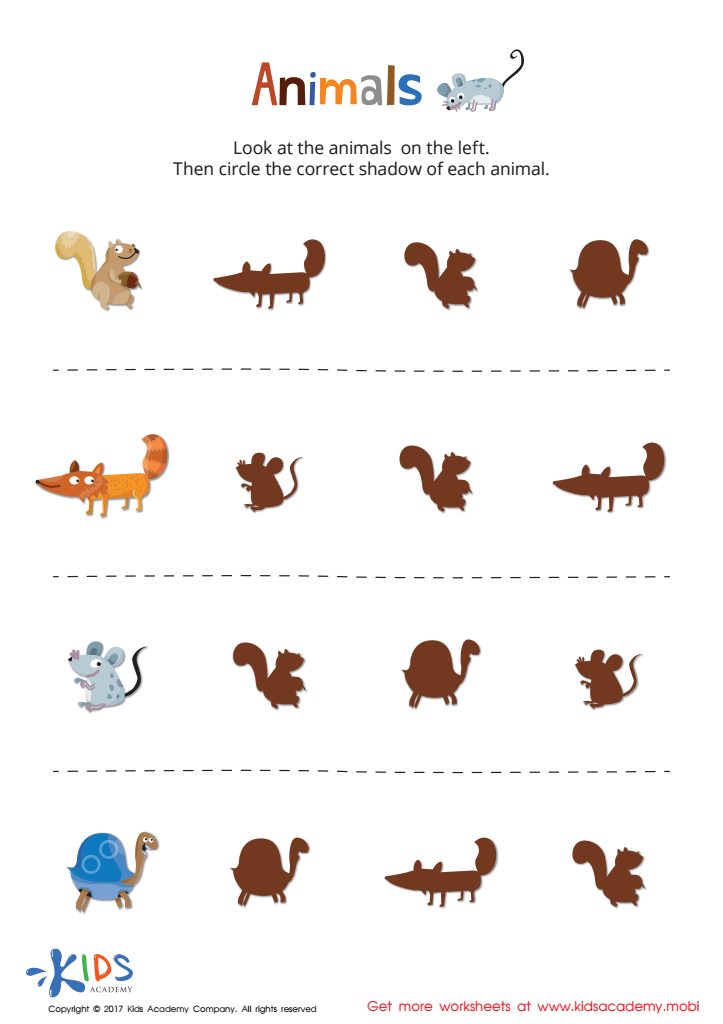
Animal Shadows Sorting Worksheet
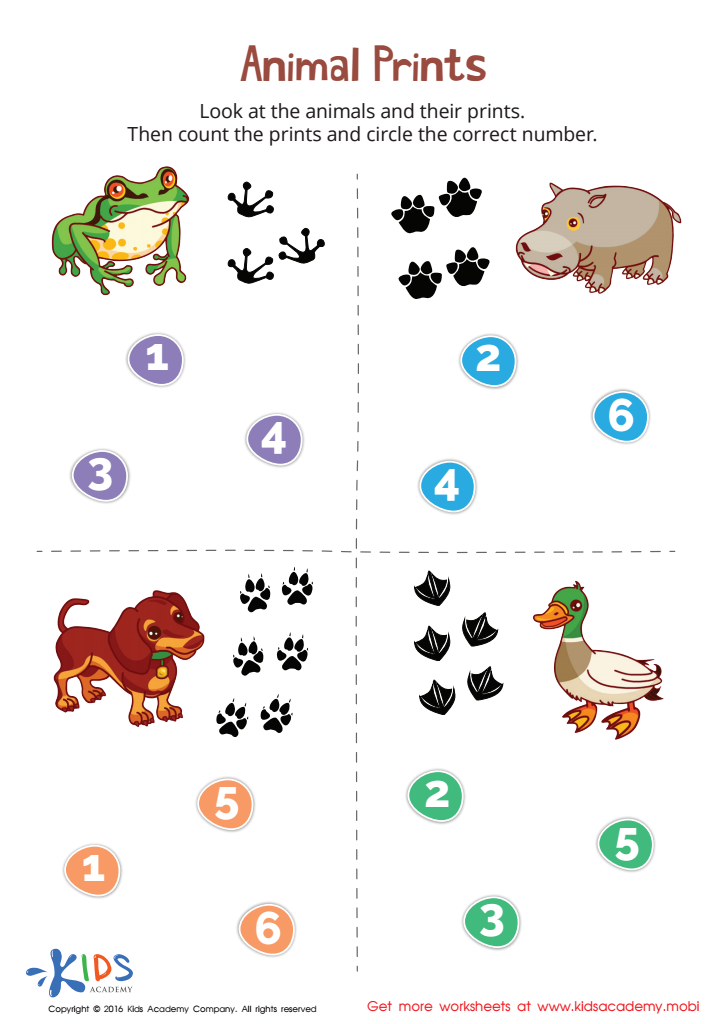
Animal Prints Match-Up Worksheet
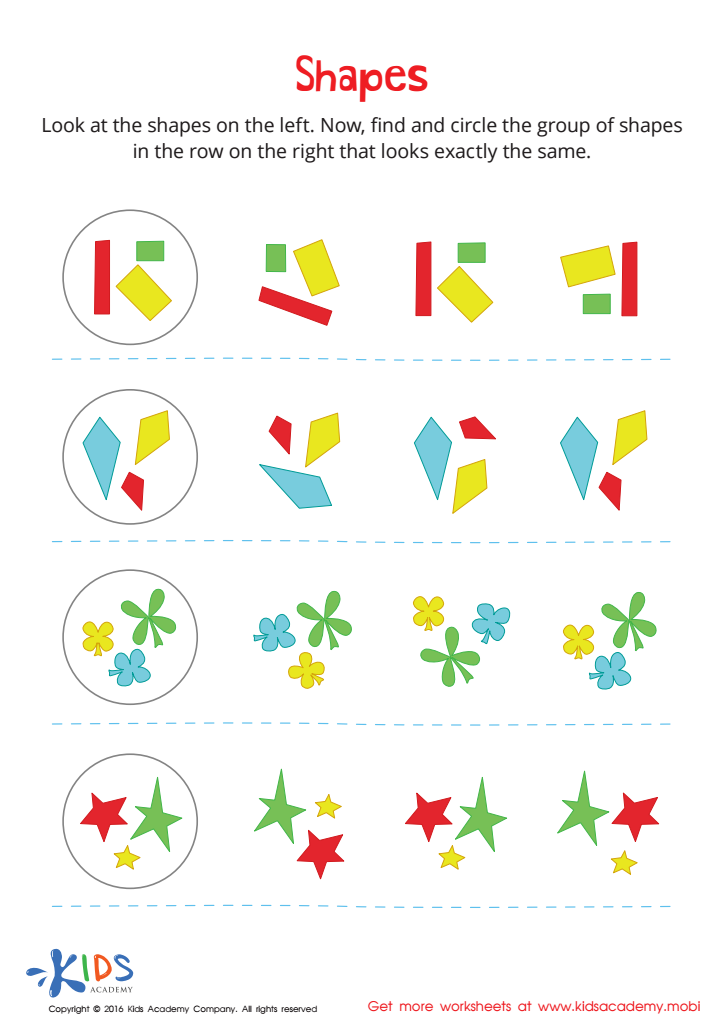
Shapes Worksheet








Parents and teachers play a crucial role in a child's early mathematical development, and engaging with the Matching Skills Extra Challenge Math program for ages 4-9 holds significant benefits. This program aims to enhance foundational math skills through engaging, hands-on activities that encourage children to make connections between numbers and concepts.
Firstly, early exposure to math challenges promotes critical thinking. These activities not only educate but also empower children to solve problems creatively, a skill that is vital in everyday life. Furthermore, enhancing matching skills is pivotal as it lays the groundwork for later mathematical concepts such as addition, subtraction, and patterns.
Additionally, the program fosters collaboration and communication. When parents or teachers participate in these activities alongside children, it enhances the learning experience, building confidence while providing positive reinforcement. This collaboration strengthens the child’s understanding and enthusiasm for math.
Ultimately, the Matching Skills Extra Challenge Math program supports cognitive development, laying a solid foundation for future academic success. By investing in such skills, parents and teachers can ignite a lifelong appreciation for mathematics, resulting in a generation more comfortable and proficient in numeric reasoning and problem-solving. This all-around developmental approach ensures that children are not only prepared but excited about learning math.








