
Subtraction practice Extra Challenge Word Problems Worksheets for Ages 4-9
4 filtered results
Difficulty Level
Grade
Age
-
From - To
Subject
Activity
Standards
Enhance your child's math skills with our engaging Subtraction Practice Extra Challenge Word Problems Worksheets, designed for ages 4-9. These worksheets offer a fun way to develop critical thinking and problem-solving abilities through real-life scenarios. Each word problem encourages children to apply subtraction concepts creatively while boosting their confidence in mathematics. Perfect for both in-class use and at-home practice, these worksheets cater to various skill levels, making learning enjoyable and effective. Whether your child is just beginning to learn subtraction or needing that extra challenge, our thoughtfully crafted problems will keep them motivated and eager to excel!
Favorites
With answer key
Interactive
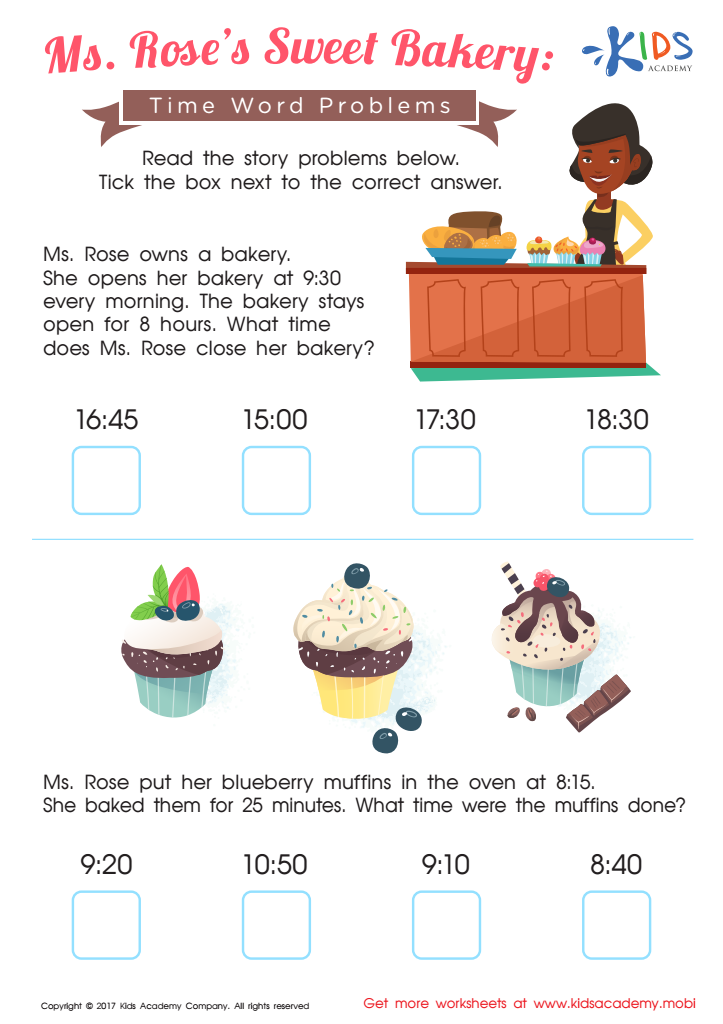
Ms. Roseв's Sweet Bakery Time Worksheet
Help your child understand the 24-hour clock using this fascinating telling time word problems worksheet: Sweet Bakery! Widely known as "military time", this skill isn't taught in school but is important for your kid to master.
 Assign to My Students
Ms. Roseв's Sweet Bakery Time Worksheet
Worksheet
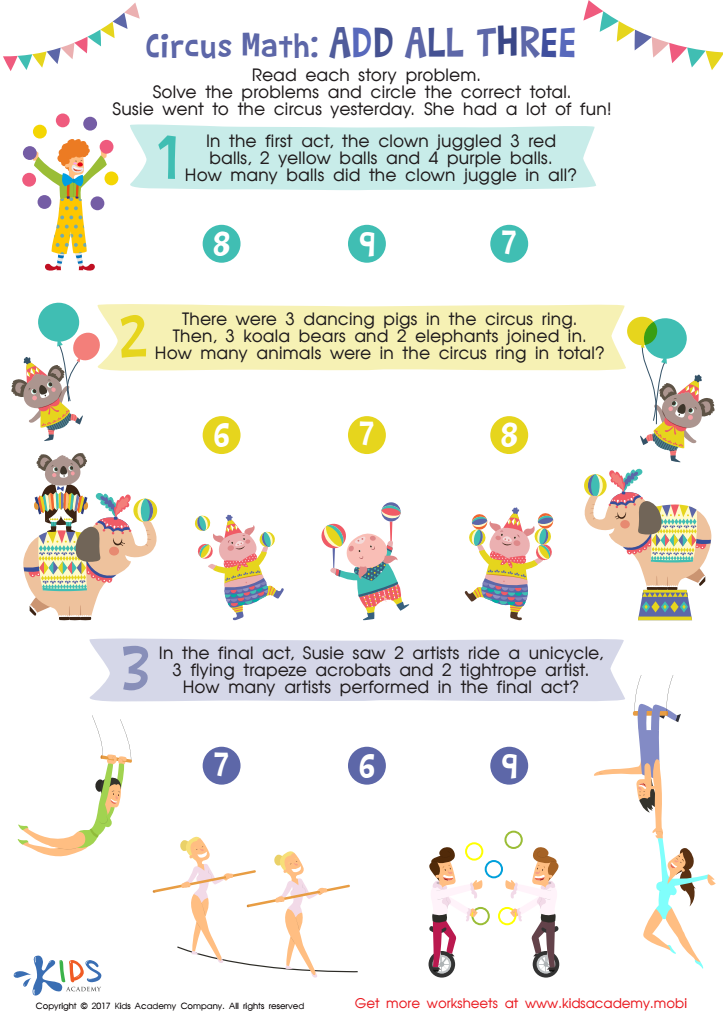
Circus Math Printable
Let's take the kids to the circus and combine literacy and numeracy skills! Our circus math printable worksheet will encourage creativity and higher-order thinking by connecting addition to real-life examples. Kids will learn to love math while they explore the fun, real-life applications of math. Ignite their passion today!
Circus Math Printable
Worksheet
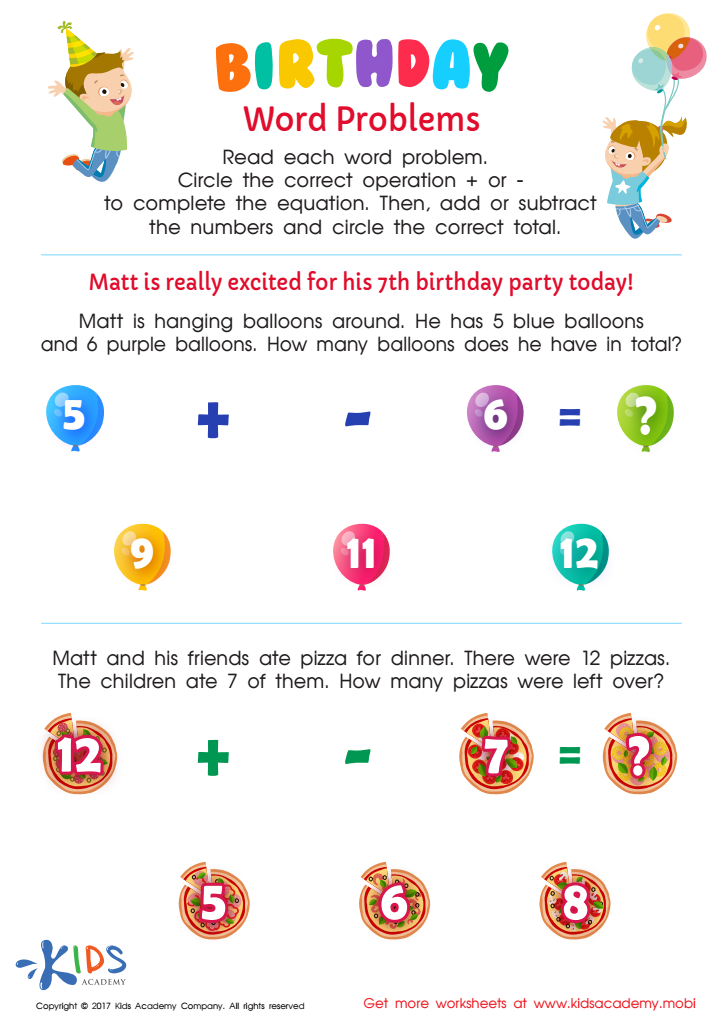
Birthday Word Problems Substraction Worksheet
This worksheet, Birthday Word Problems, is a great way to improve your child's math and literacy skills. It features tricky subtraction equations based on a birthday celebration - perfect for kids who love birthdays!
Birthday Word Problems Substraction Worksheet
Worksheet
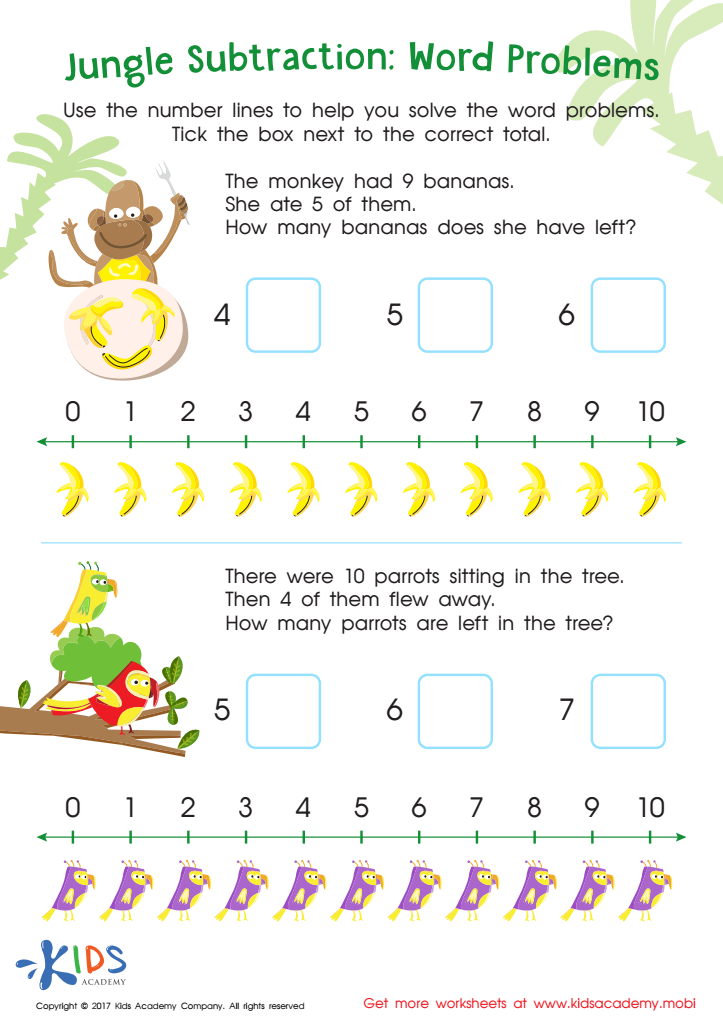
Jungle Subtraction Word Problems Substraction Worksheet
Kids will love this jungle-themed worksheet: subtraction word problems! Help the monkey work out how many bananas he has, using the number line. Encourage your child to use colorful parrots to subtract with ease and make calculations fun!
Jungle Subtraction Word Problems Substraction Worksheet
Worksheet
Join Kids Academy for Free
Who is primarily going to use this learning content?








Subtraction practice Extra Challenge Word Problems for ages 4-9 are essential for several reasons. First and foremost, these problems encourage critical thinking and problem-solving skills. When children engage with word problems, they must interpret the situation, identify the relevant numbers, and apply subtraction appropriately. This process enhances their reasoning abilities, which are crucial for future academic success.
Moreover, these word problems provide a context for learning that makes mathematics more relatable and engaging. When students see real-life applications of subtraction, such as sharing or comparing quantities, they understand the importance of math in daily activities. This relevance fosters a positive attitude towards math, reducing anxiety and building confidence.
Additionally, structured practice helps solidify subtraction skills, allowing students to transition smoothly from concrete to abstract thinking. As they advance, strong foundational skills will empower them to tackle more complex mathematical concepts with ease.
For parents and teachers, promoting consistent practice through Extra Challenge Word Problems not only aids in academic development but also strengthens the parent-child or teacher-student relationship through collaborative learning. Ultimately, prioritizing subtraction practice at this age enhances both cognitive and social-emotional growth, setting the stage for lifelong learning.








