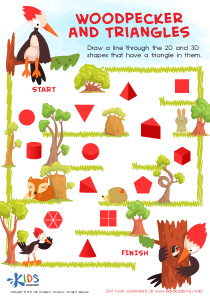
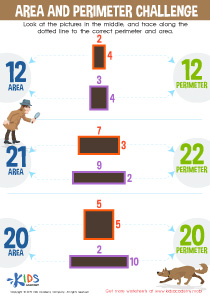
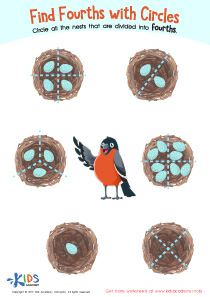
Shape Recognition Extra Challenge Tracing Shapes Worksheets for Ages 5-6
4 filtered results
-
From - To
Elevate your child's shape recognition skills with our Shape Recognition Extra Challenge Tracing Shapes Worksheets for ages 5-6. These specially designed worksheets go beyond basic tracing, providing your young learner with engaging and advanced challenges to identify, trace, and understand a variety of shapes. Tailored to enhance fine motor skills and cognitive development, each activity fosters both fun and learning. Perfect for young minds, these worksheets offer an excellent combination of education and entertainment, ensuring your child stays ahead in early math and geometry concepts. Download now to give your little one the extra edge in shape learning!
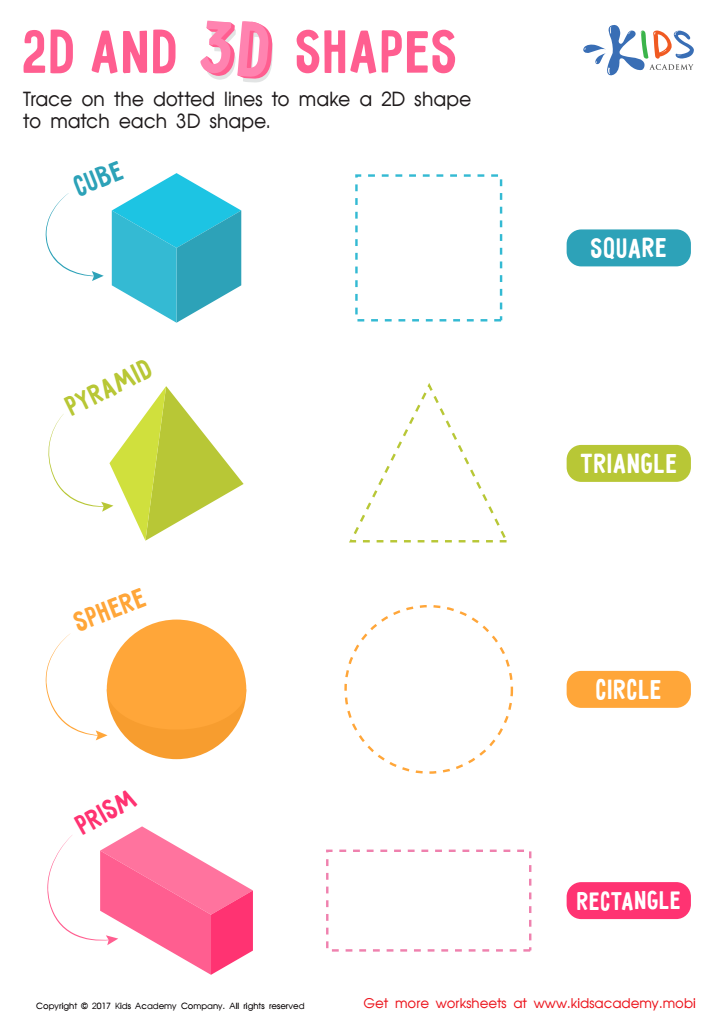
2D and 3D Shapes Worksheet
 Assign to My Students
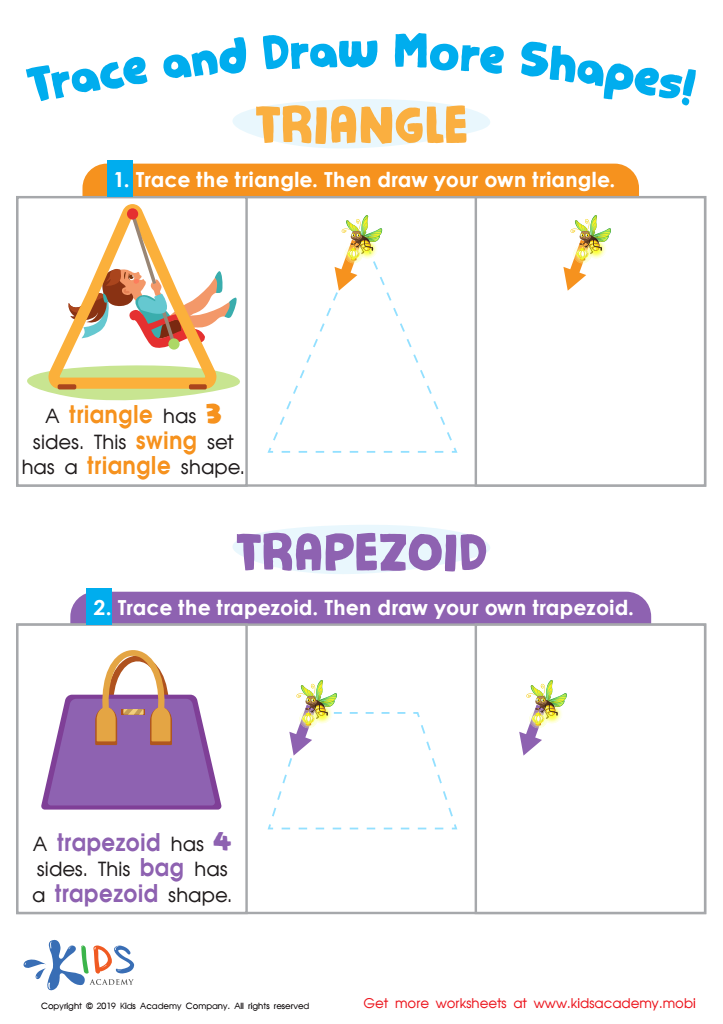
Trace and Draw More Shapes Worksheet
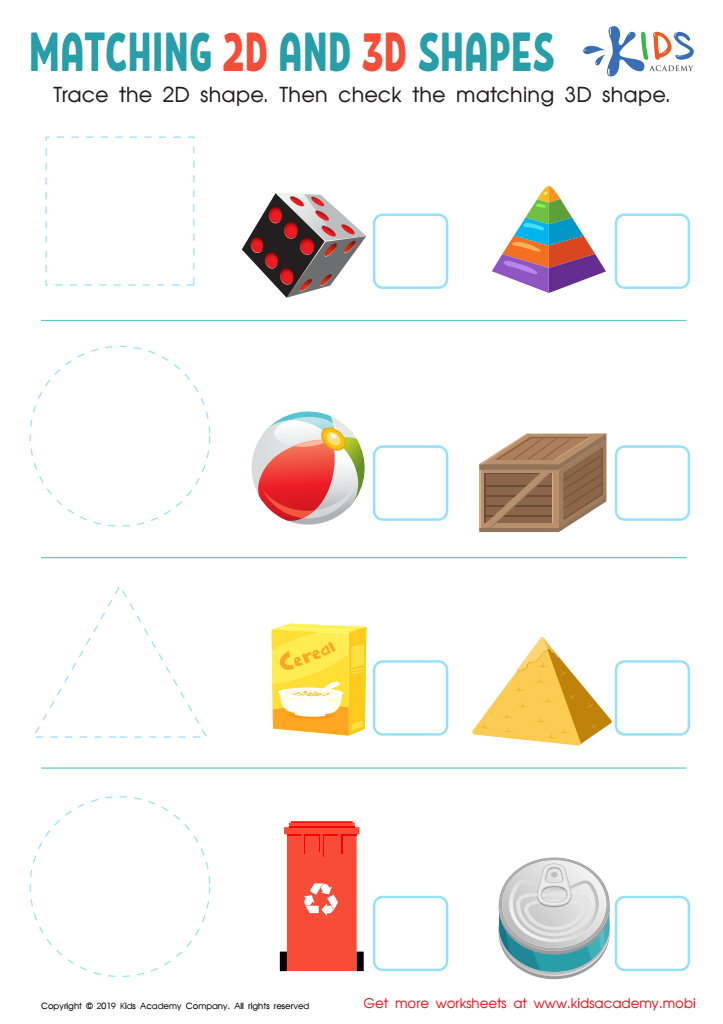
Matching 2D and 3D Shapes Worksheet
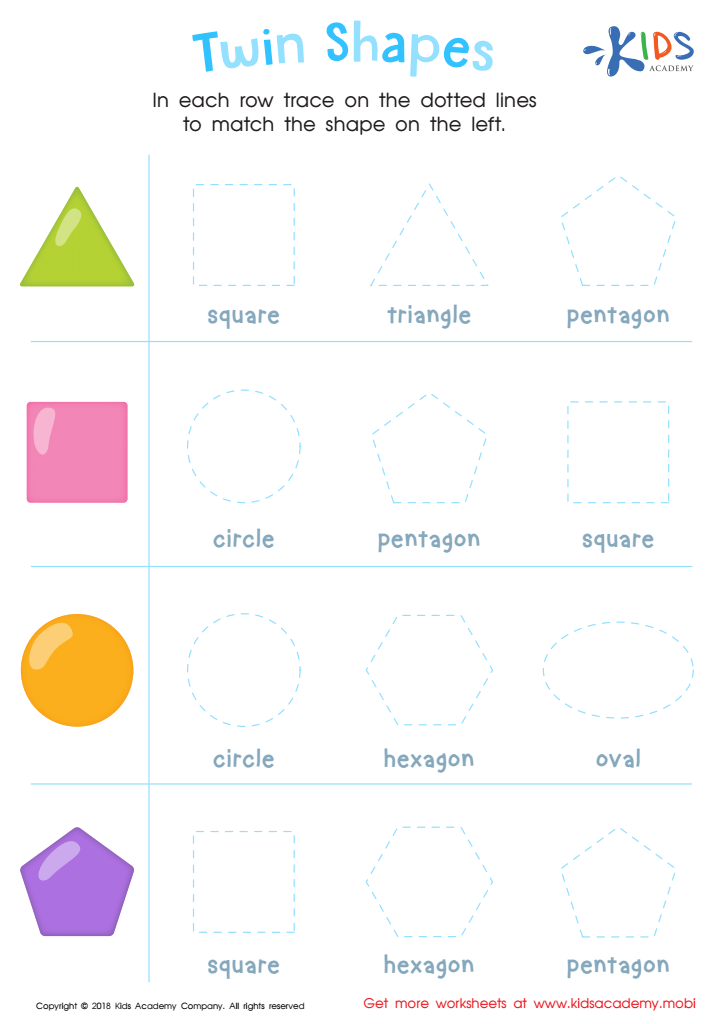
Twin Shapes Dot-to-Dot Worksheet








Parents and teachers should prioritize Shape Recognition Extra Challenge Tracing Shapes for children aged 5-6 because it is pivotal for enhancing early cognitive development and fine motor skills. At this age, children are at a crucial stage of visual and spatial awareness development. Recognizing and tracing shapes aids in understanding geometry, and it lays the foundation for later math skills, including problem-solving and critical reasoning.
This activity not only bolsters fine motor skills through the physical act of tracing but also improves hand-eye coordination, necessary for more advanced tasks like writing and drawing. Tracing shapes requires focus and attention to detail, fostering both patience and concentration in young learners.
Additionally, Shape Recognition Extra Challenge exercises can be transformative for children's confidence in their abilities. Mastering these tasks offers tangible accomplishments, promoting a positive attitude toward learning and a sense of personal achievement.
By engaging in these activities, children are enveloped in an exploratory and playful learning environment. They encounter opportunities to differentiate shapes, recognize patterns, and develop spatial awareness. Consequently, these early educational experiences equip children with the foundational skills needed for academia and everyday tasks, ensuring a well-rounded developmental pathway. Encouraging such skills demonstrates a forward-thinking approach to a child's holistic growth.