
Comparing Fractions Extra Challenge Worksheets for Ages 5-7
5 filtered results
Difficulty Level
Grade
Age
-
From - To
Subject
Activity
Standards
Unlock your child's potential with our "Comparing Fractions Extra Challenge Worksheets" designed for ages 5-7! These engaging worksheets make learning fractions fun while helping kids build essential math skills. Carefully crafted to encourage critical thinking, they include a variety of exercises that challenge young learners to compare fractions using visuals and hands-on activities. As children explore different ways to understand size relationships, they'll improve their problem-solving abilities and enhance their confidence in math. Perfect for extra practice or enrichment, these worksheets are a valuable resource for parents and educators looking to foster a love for learning in early learners. Get started today!
Favorites
With answer key
Interactive
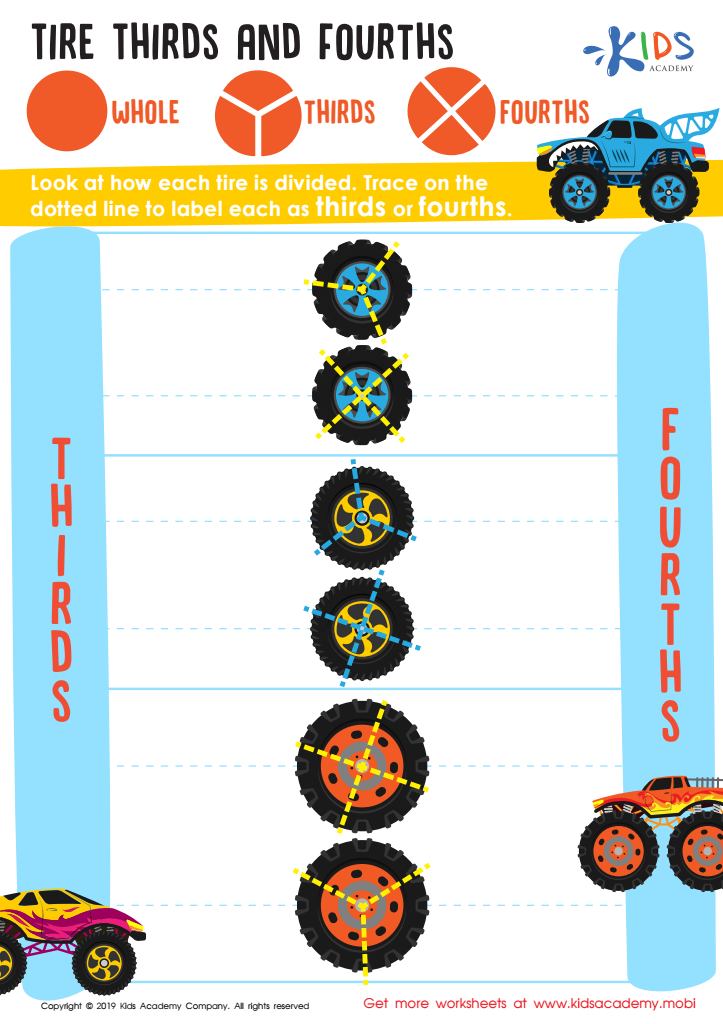
Tire Thirds and Fourths Worksheet
Learning geometry is key in your child's education. Have them identify and name shapes cut into 2, 3 and 4 parts. Test their knowledge with this worksheet - trace the dotted line to label each as third or fourth. Encourage them to keep learning!
 Assign to My Students
Tire Thirds and Fourths Worksheet
Worksheet
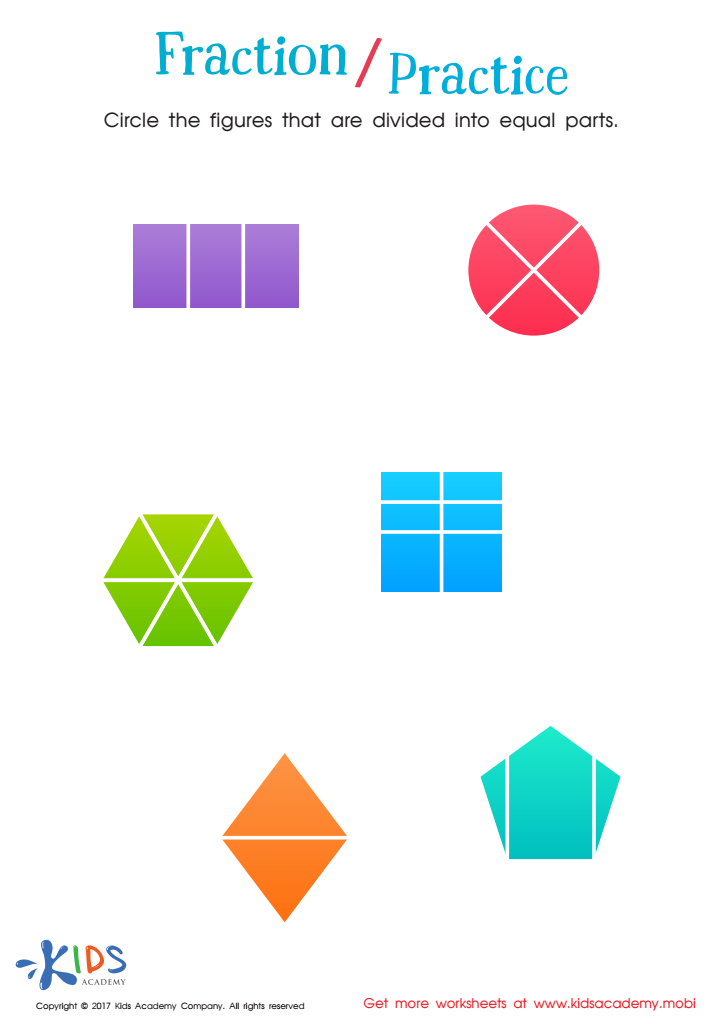
Fractions: Shapes Worksheet
Get your printable now.
Kids learn math differently today than you did in school; understanding concepts rather than memorizing facts. Help your child understand fractions with this printable worksheet. It'll help your child recognize parts of a whole, identify equal parts and build a foundation for numeracy. A better understanding sets kids up for math success! Get your printable now.
Fractions: Shapes Worksheet
Worksheet
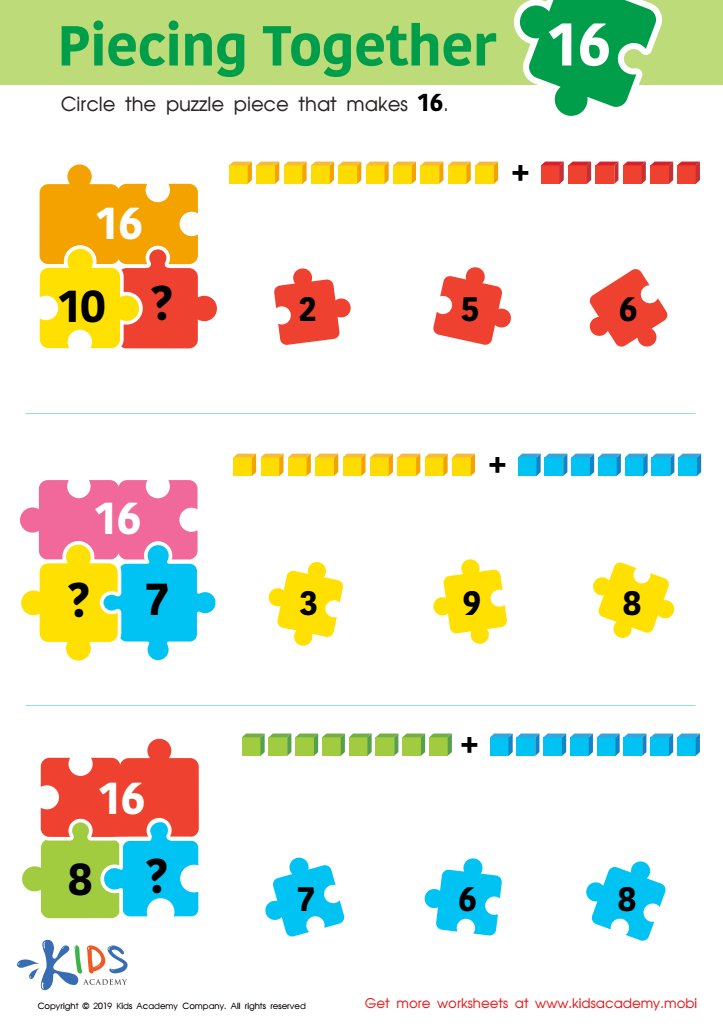
Piecing Together 16 Worksheet
Combine learning with fun using this colorful worksheet! Ask your preschoolers what they see in the picture, then help them solve the mathematical equations on the puzzle pieces. One equation is missing on each; have them circle the piece that will make the bottom puzzle piece numbers equal 16. Use puzzles and bright colors to teach - it's one of the best ways your kids can learn!
Piecing Together 16 Worksheet
Worksheet
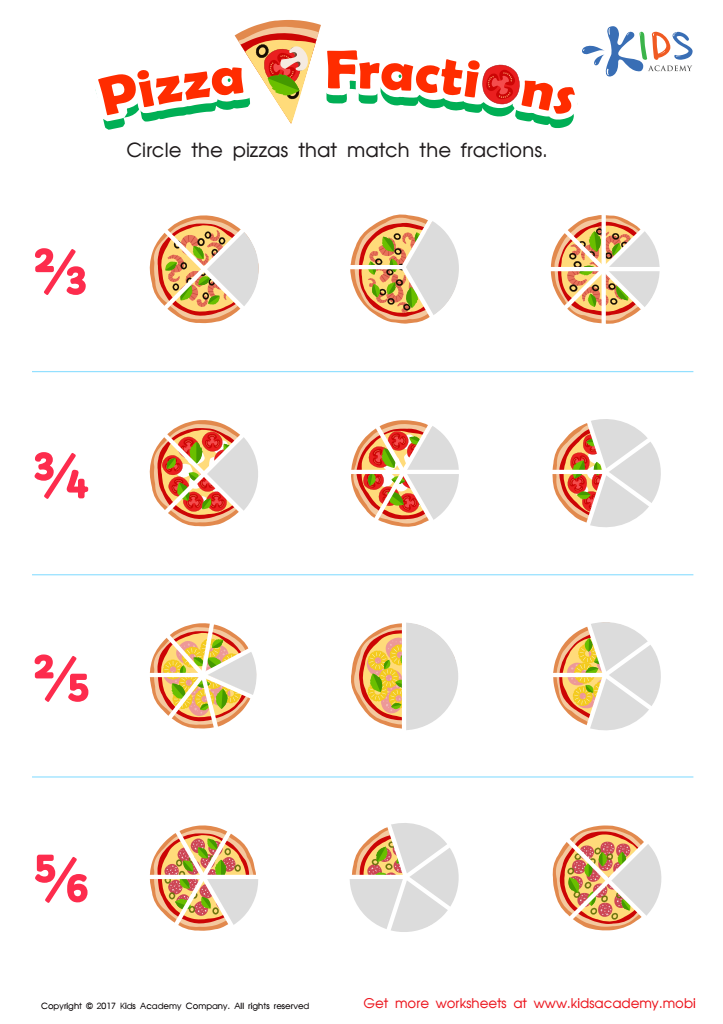
Fractions: Pizza Printable
Fractions can be tricky for kids, but this pizza fractions printable can help! Kids can understand fractions by seeing them, as they use one of their favorite foods. It helps them grasp the concept and gain a deeper understanding of what fractions represent. Extend their learning by quizzing them when you order pizza next time.
Fractions: Pizza Printable
Worksheet
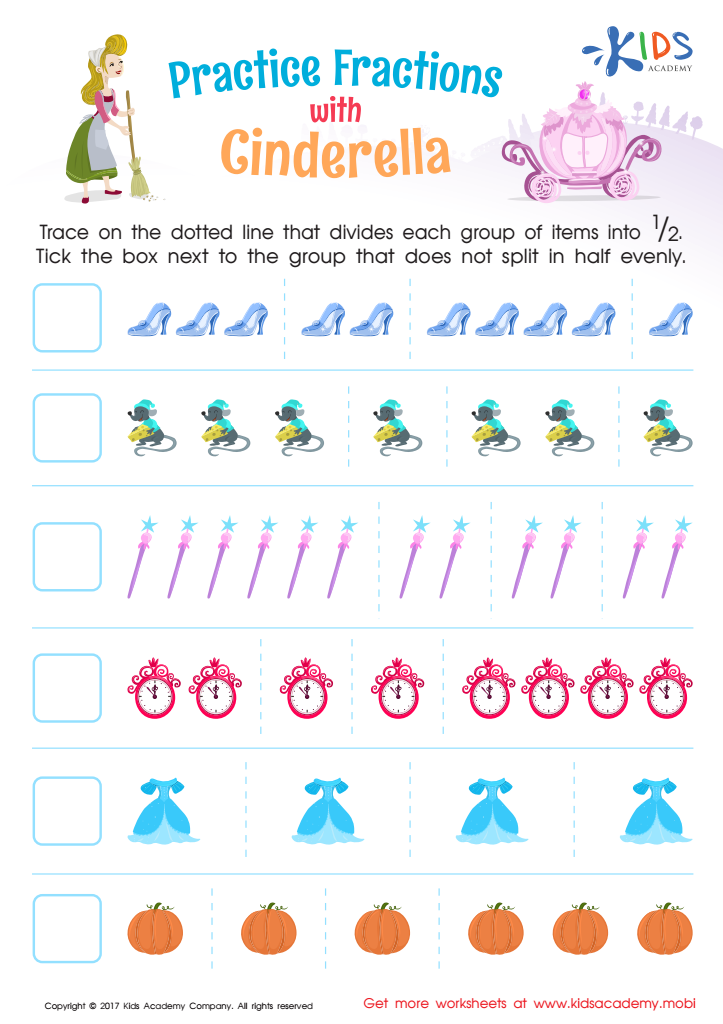
Fractions: Cinderella Printable
Cinderella and ½ are the perfect pair to excite your child about learning fractions.
Fractions: Cinderella Printable
Worksheet
Join Kids Academy for Free
Who is primarily going to use this learning content?






Understanding fractions is a foundational math skill that begins in early childhood, and engaging young learners in activities like Comparing Fractions Extra Challenge for Ages 5-7 can have significant long-term benefits. First, this foundational skill supports critical thinking and problem-solving abilities. When children are exposed to comparing fractions, they enhance their ability to make decisions based on logical reasoning, fostering important cognitive skills.
Moreover, mastering fractions at a young age prepares students for more complex math concepts in later grades, reducing anxiety and improving overall math performance. It also lays the groundwork for real-world applications, such as cooking, crafting, and budgeting, enhancing their ability to relate math to everyday life.
Involving parents and teachers in the process distinguishes the learning experience, creating a supportive environment that encourages curiosity and exploration. Collaborative activities foster positive attitudes towards math, ensuring children see it not only as a subject confined to the classroom but as an integral part of their lives.
Finally, Introducing challenges tailored to this age group shows children that learning can be engaging and fun. By caring about and supporting their engagement in such activities, adults can cultivate a rich educational experience that promotes a lifelong love for learning and mathematics.








