Shape identification Extra Challenge Geometry Worksheets for Ages 5-7
5 filtered results
-
From - To
Discover our "Shape Identification Extra Challenge Geometry Worksheets" designed specifically for children aged 5-7! These engaging worksheets provide an exciting way for young learners to enhance their geometry skills. Each activity encourages students to identify, compare, and classify a variety of shapes through fun and challenging tasks. With colorful visuals and age-appropriate difficulties, these worksheets not only foster shape recognition but also promote critical thinking and problem-solving abilities. Perfect for teachers and parents alike, our worksheets offer an effective supplement to classroom learning or as enjoyable home practice. Give your child a head start in geometry with our fun and educational resources!
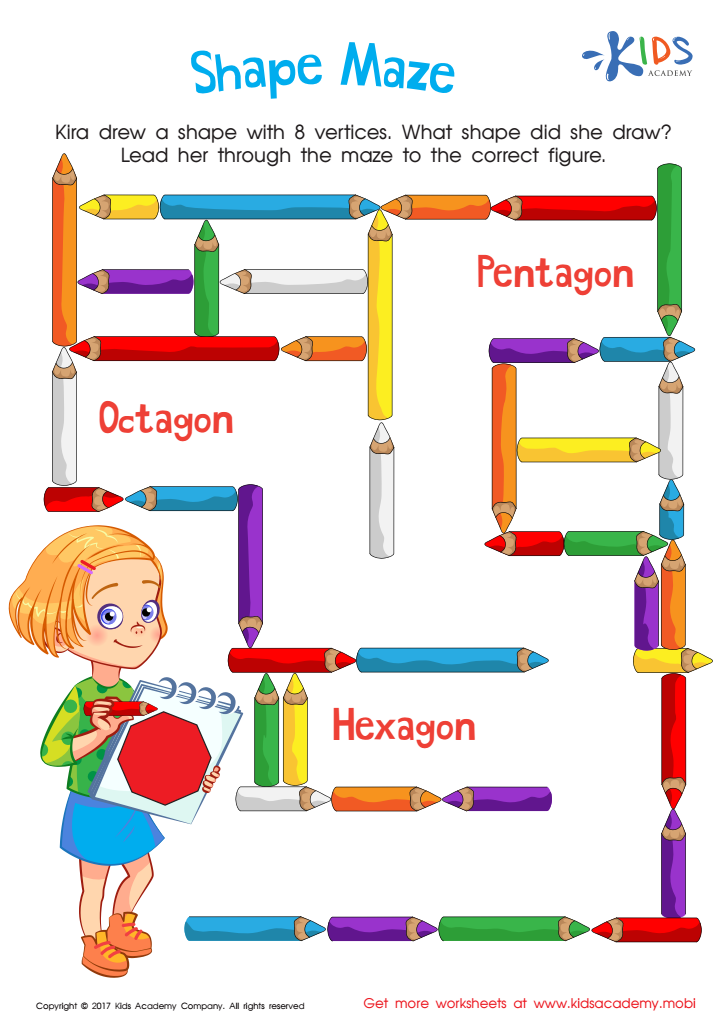
Shape Maze Worksheet
 Assign to My Students











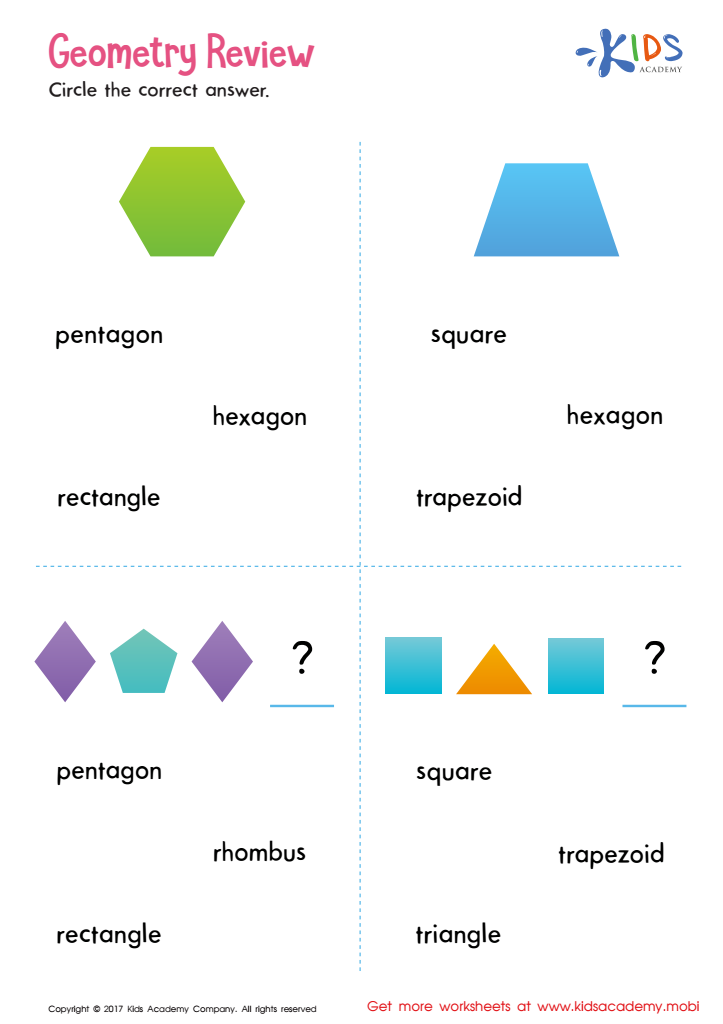
Geometry Review Printable
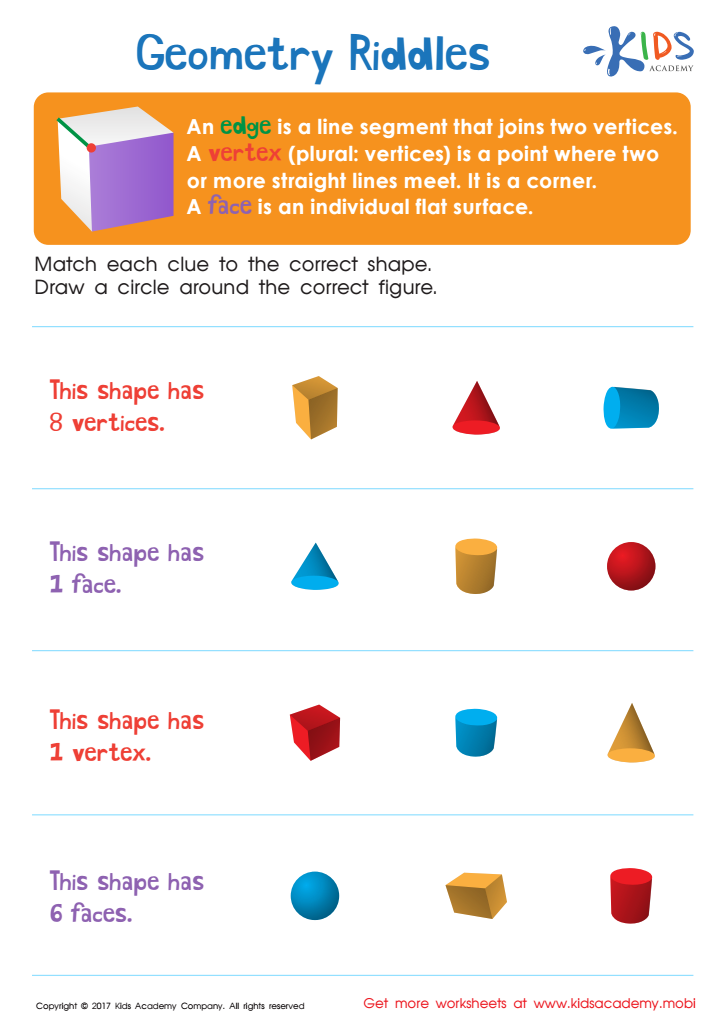
Geometry Riddles Printable
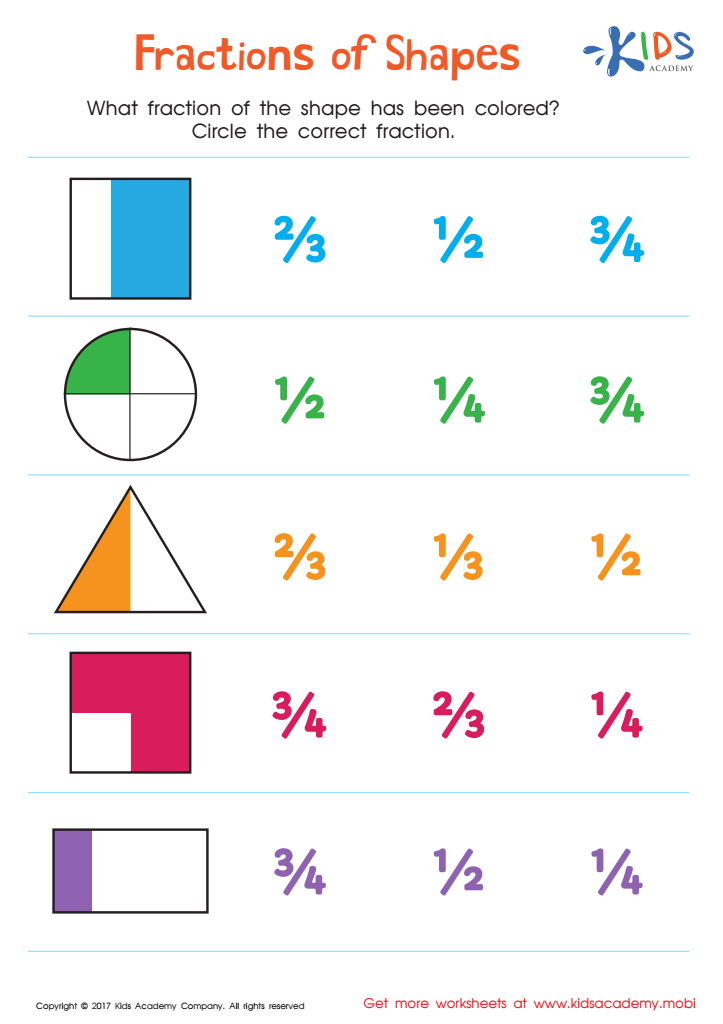
Fractions of Shapes: Math Concept Worksheet
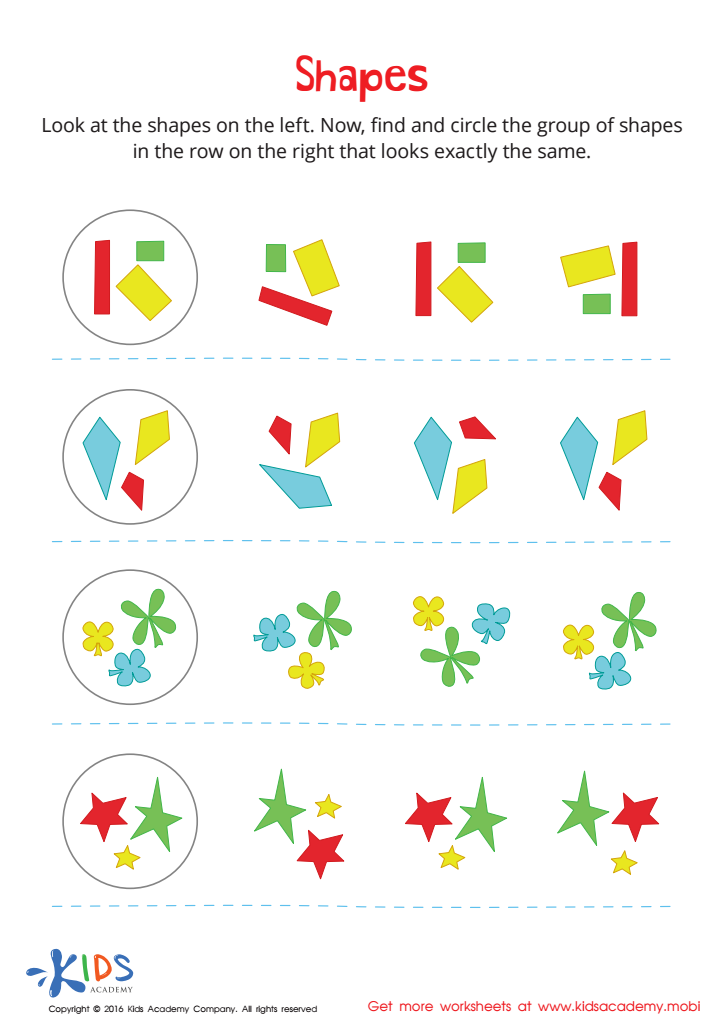
Shapes Worksheet








Shape identification is a fundamental skill in early childhood education, particularly for children aged 5-7. Understanding shapes not only enhances a child's mathematical foundation but also supports cognitive development and spatial awareness. When parents or teachers engage students in the Shape Identification Extra Challenge, they enable children to recognize and categorize geometric figures, fostering critical thinking and problem-solving skills.
Shapes are everywhere in our environment, from architecture to nature. By learning to identify and differentiate shapes, children gain observational skills that are important for everyday life. Moreover, shape recognition is linked to more complex mathematical concepts, such as symmetry, angles, and area, which they will encounter later in their education.
The challenge aspect adds a layer of motivation and excitement, encouraging children to explore, experiment, and take intellectual risks. This can build their confidence and instill a lifelong love for learning. Parents and teachers play a crucial role in guiding children through collaborative activities that promote engagement. Witnessing children grasp these essential skills paves the way for academic success and develops a curiosity about the world around them. Thus, incorporating these activities into learning routines is vital for fostering rich educational experiences in early development.








