
Comparing Fractions Extra Challenge Math Worksheets for Ages 5-7
5 filtered results
Difficulty Level
Grade
Age
-
From - To
Subject
Activity
Standards
Dive into a world of math with our "Comparing Fractions Extra Challenge Math Worksheets" designed for children aged 5-7! These engaging worksheets will help young learners enhance their understanding of fractions through fun and interactive challenges. Tailored to stimulate critical thinking, kids will practice comparing fractions with different denominators and numerators, making abstract concepts more concrete. Our activities encourage problem-solving skills while capturing kids' imaginations, ensuring they have a blast learning! Perfect for classroom or home use, these worksheets are not just educational; they’re an exciting adventure in math! Explore and empower your young mathematicians today!
Favorites
With answer key
Interactive
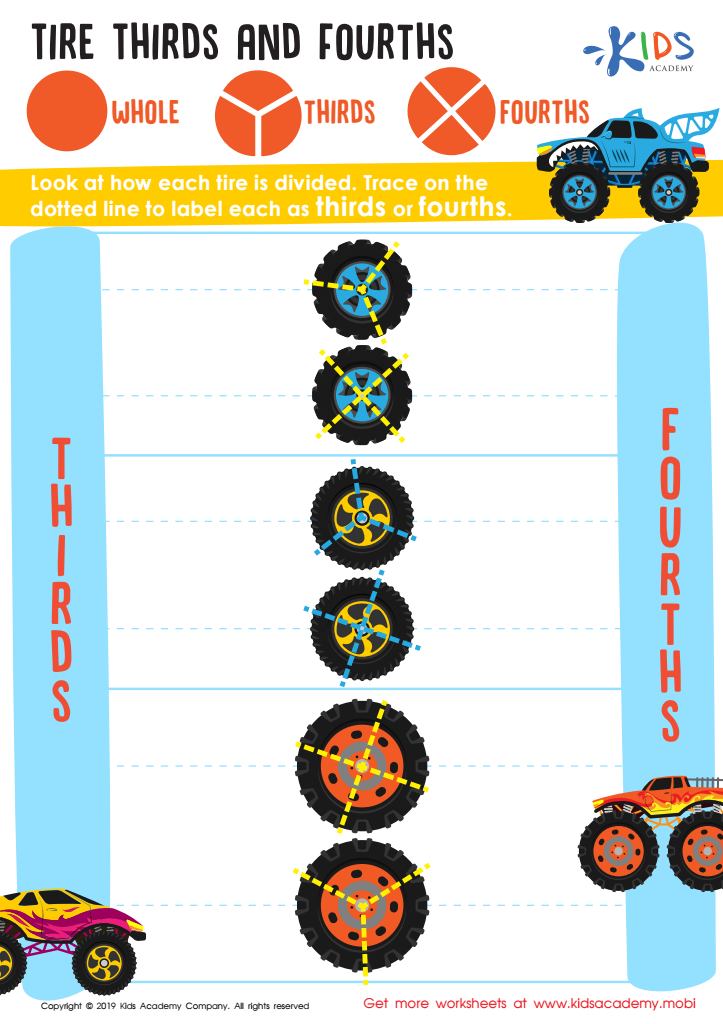
Tire Thirds and Fourths Worksheet
Learning geometry is key in your child's education. Have them identify and name shapes cut into 2, 3 and 4 parts. Test their knowledge with this worksheet - trace the dotted line to label each as third or fourth. Encourage them to keep learning!
 Assign to My Students
Tire Thirds and Fourths Worksheet
Worksheet
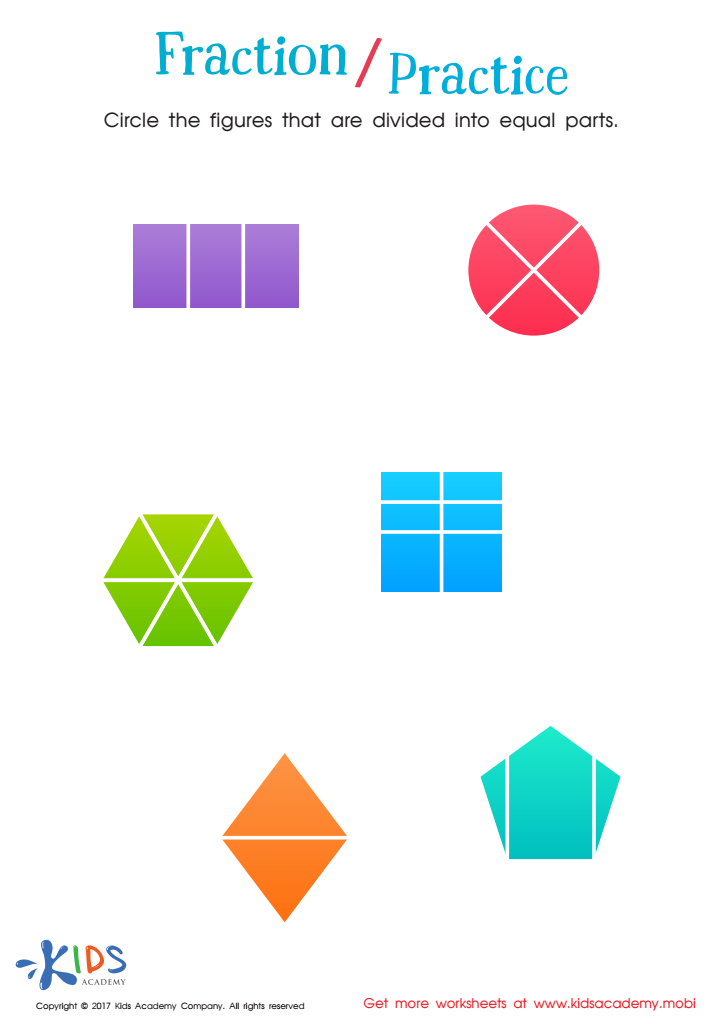
Fractions: Shapes Worksheet
Get your printable now.
Kids learn math differently today than you did in school; understanding concepts rather than memorizing facts. Help your child understand fractions with this printable worksheet. It'll help your child recognize parts of a whole, identify equal parts and build a foundation for numeracy. A better understanding sets kids up for math success! Get your printable now.
Fractions: Shapes Worksheet
Worksheet
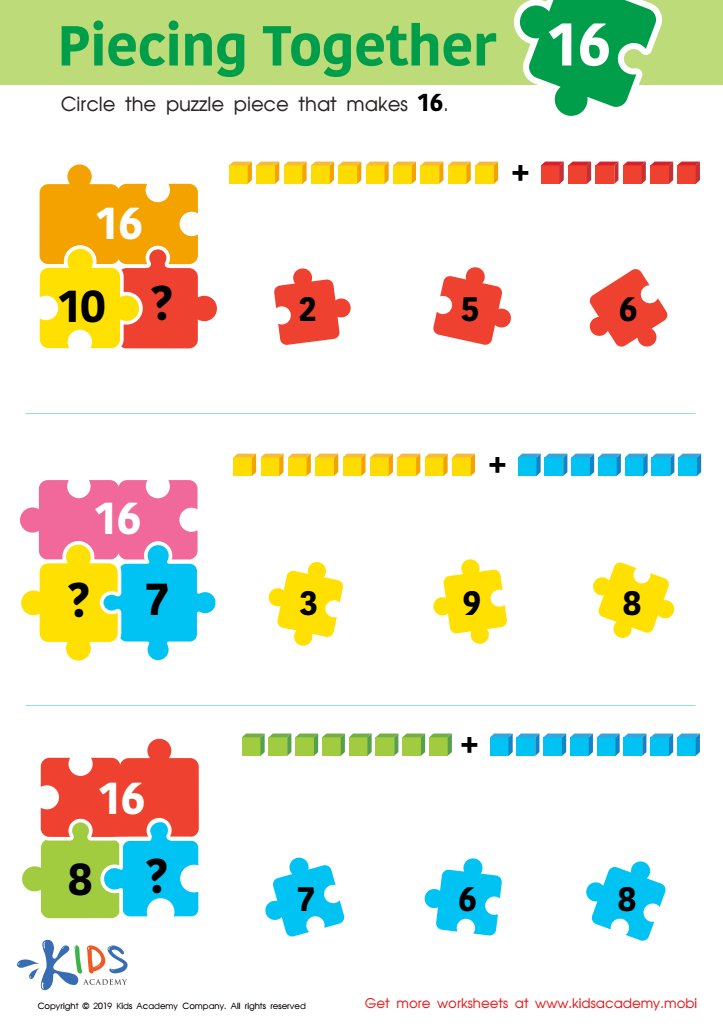
Piecing Together 16 Worksheet
Combine learning with fun using this colorful worksheet! Ask your preschoolers what they see in the picture, then help them solve the mathematical equations on the puzzle pieces. One equation is missing on each; have them circle the piece that will make the bottom puzzle piece numbers equal 16. Use puzzles and bright colors to teach - it's one of the best ways your kids can learn!
Piecing Together 16 Worksheet
Worksheet
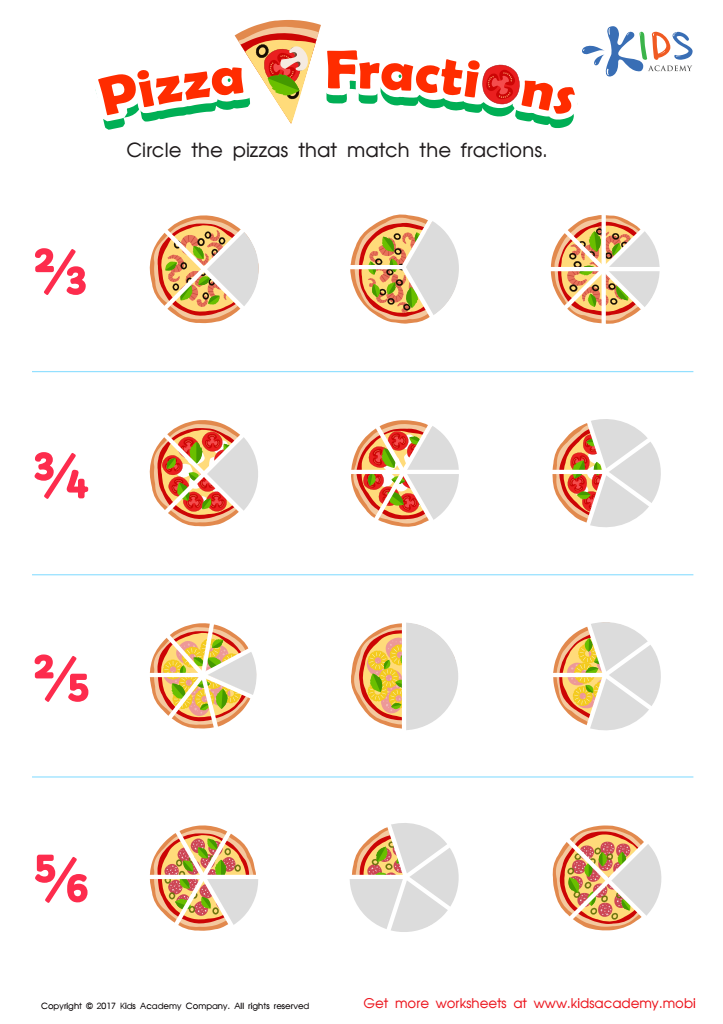
Fractions: Pizza Printable
Fractions can be tricky for kids, but this pizza fractions printable can help! Kids can understand fractions by seeing them, as they use one of their favorite foods. It helps them grasp the concept and gain a deeper understanding of what fractions represent. Extend their learning by quizzing them when you order pizza next time.
Fractions: Pizza Printable
Worksheet
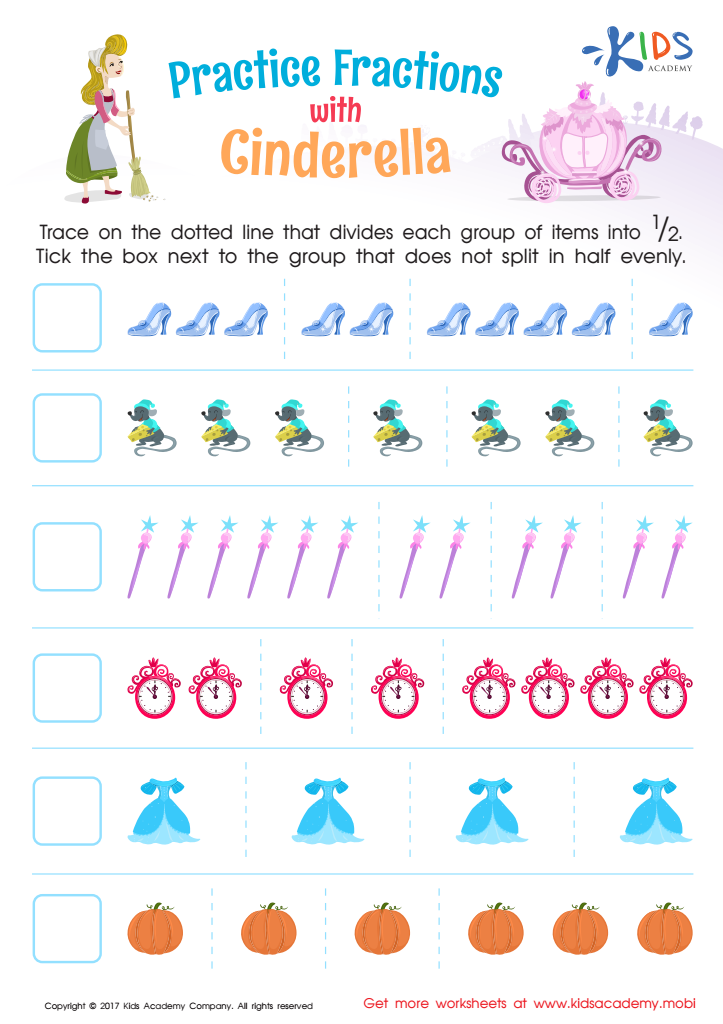
Fractions: Cinderella Printable
Cinderella and ½ are the perfect pair to excite your child about learning fractions.
Fractions: Cinderella Printable
Worksheet
Join Kids Academy for Free
Who is primarily going to use this learning content?







Parents and teachers should care about comparing fractions for children ages 5-7 because it lays a foundational understanding of numerical relationships essential for future mathematical learning. At this age, children develop critical thinking and problem-solving skills, and introducing them to comparing fractions helps boost these abilities.
Understanding fractions encourages children to visualize and grasp the concept of parts of a whole, which enhances their comprehension of division and ratios later on. Additionally, comparing fractions sharpens their ability to interpret and analyze information, skills that are vital for academic success across various subjects.
Engaging with comparing fractions fosters confidence and enjoyment in math at an early age, setting a positive tone for their entire educational journey. Activities surrounding this topic can be both fun and interactive, making learning appealing and effective.
Furthermore, as children work through challenges with fraction comparisons, they learn perseverance and resilience—important traits that can be applied in all areas of life. Overall, prioritizing this learning ensures children have the tools needed for a deeper understanding of math concepts as they advance in their education.








