Spatial awareness Extra Challenge Math Worksheets for Ages 5-7
9 filtered results
-
From - To
Introducing our Spatial Awareness Extra Challenge Math Worksheets for Ages 5-7, designed to ignite curiosity and enhance spatial reasoning skills in young learners. These engaging resources blend fun and learning, helping kids master spatial concepts through puzzles, patterns, and problem-solving activities. Tailored for children aged 5-7, these worksheets offer an exciting way to challenge math abilities and foster critical thinking. Perfect for use at home or in the classroom, our vibrant, age-appropriate worksheets make learning spatial awareness an adventure. Boost your child's confidence and prepare them for more advanced math concepts with our expert-designed collection.
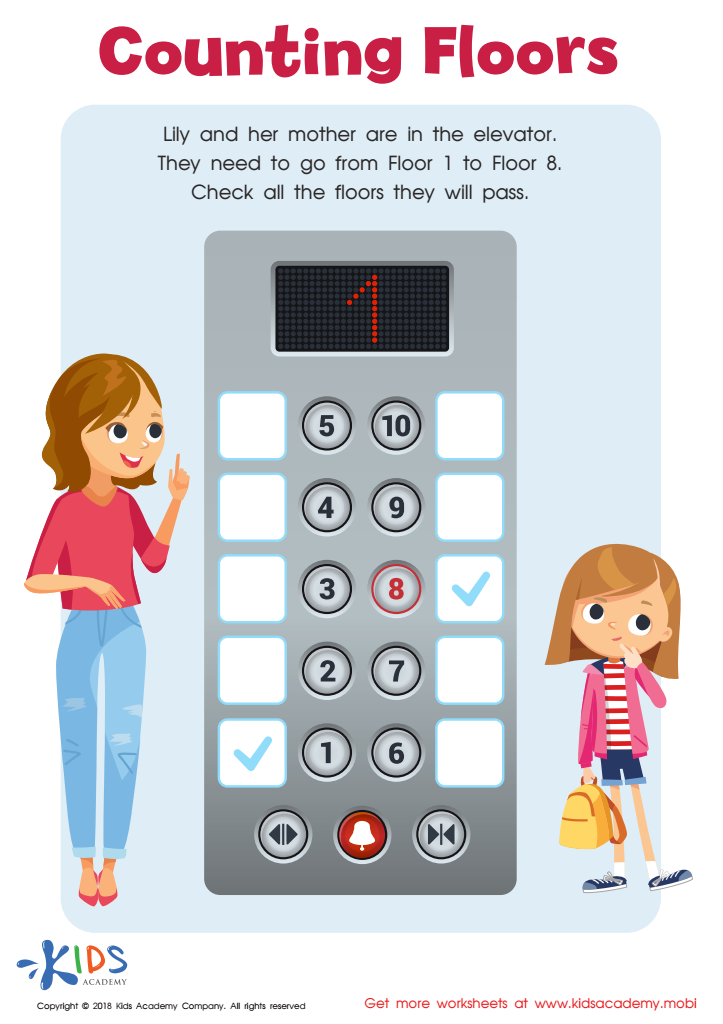
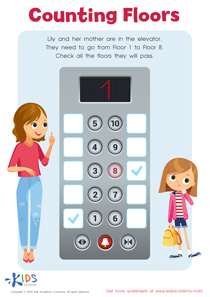
Counting Floors Worksheet
 Assign to My Students
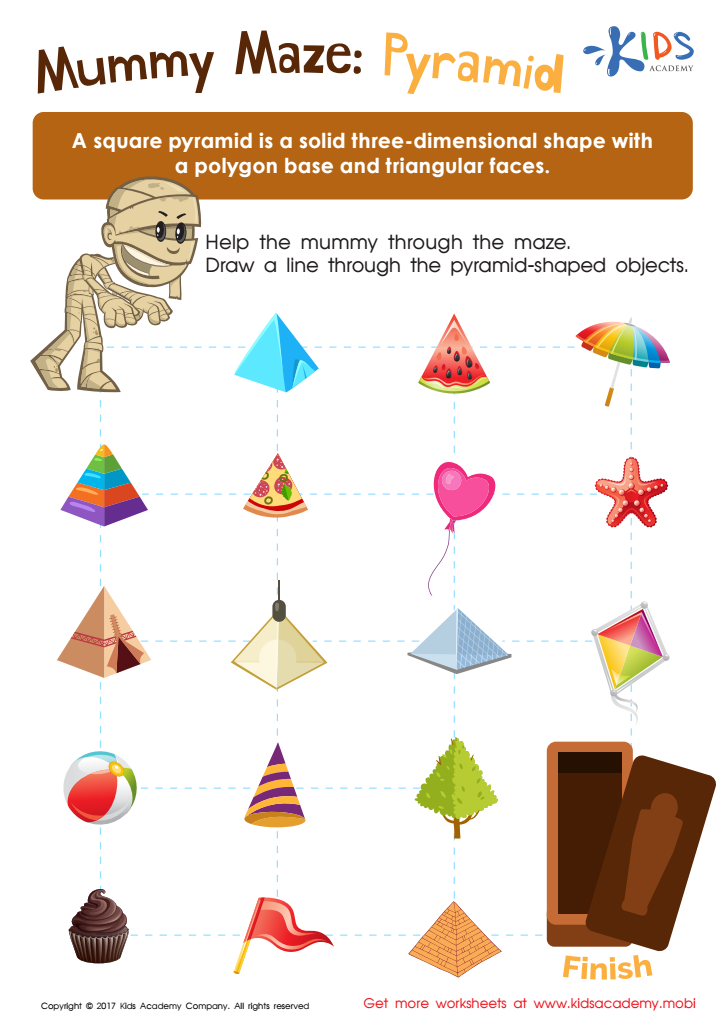
Mummy Maze: Pyramid Printable
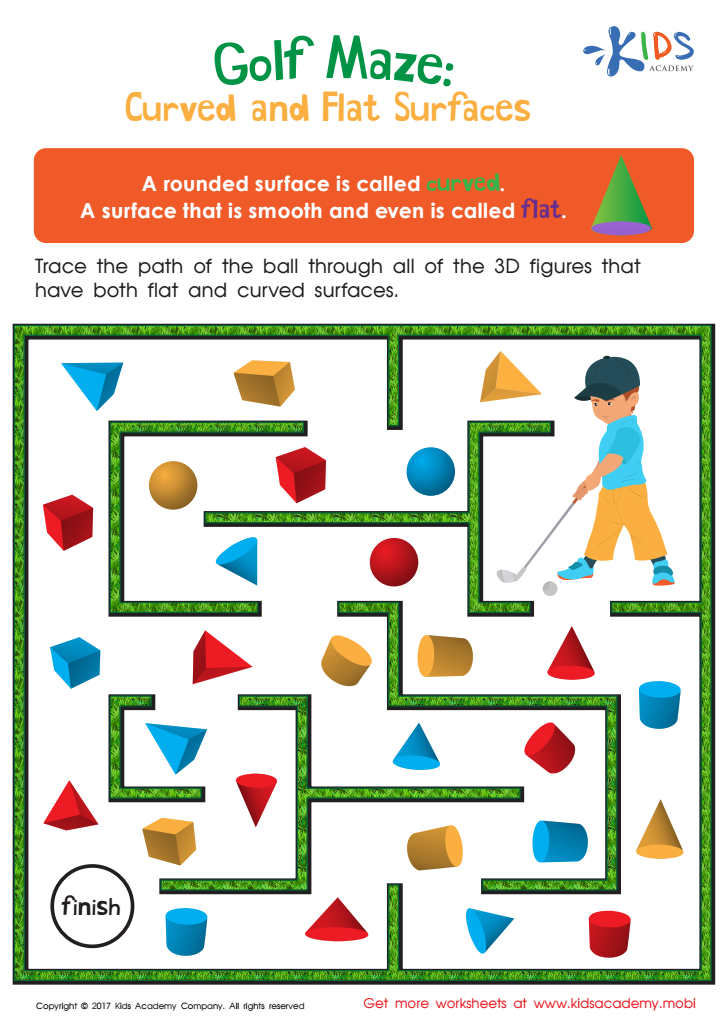
Golf Maze: Curved and Flat Surfaces Worksheet
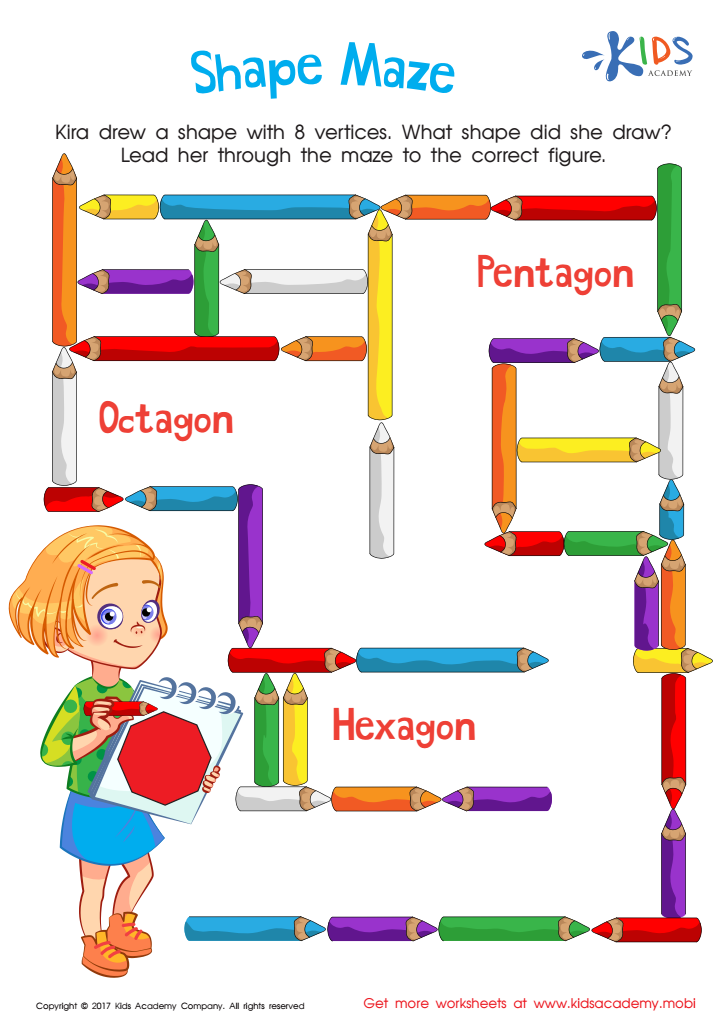
Shape Maze Worksheet
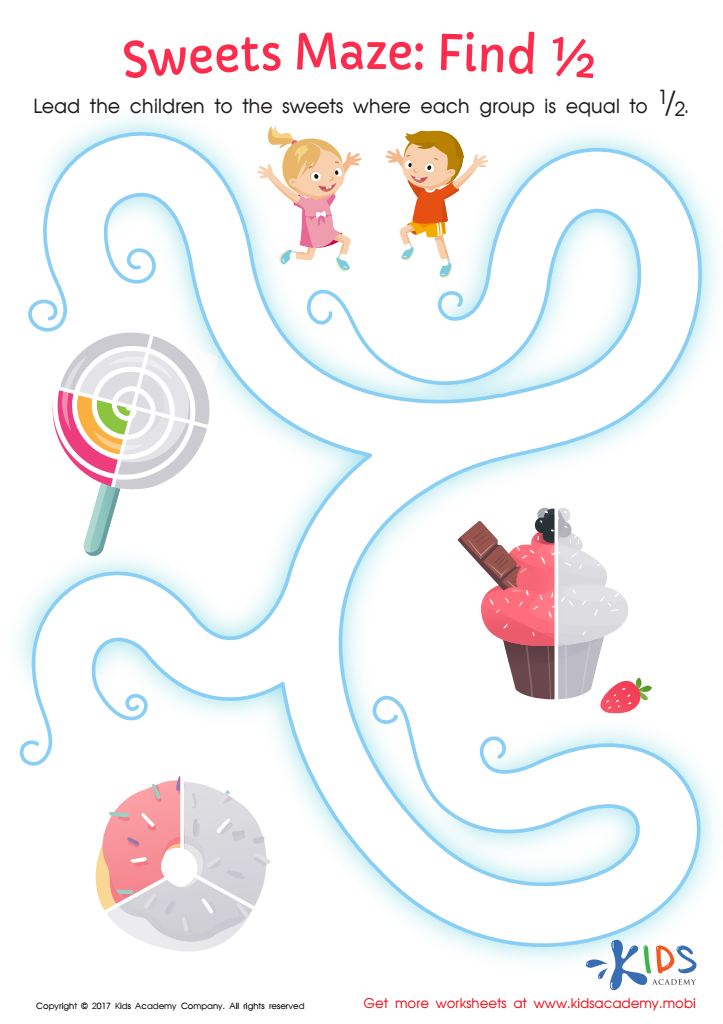
Fractions: Sweets Maze Worksheet
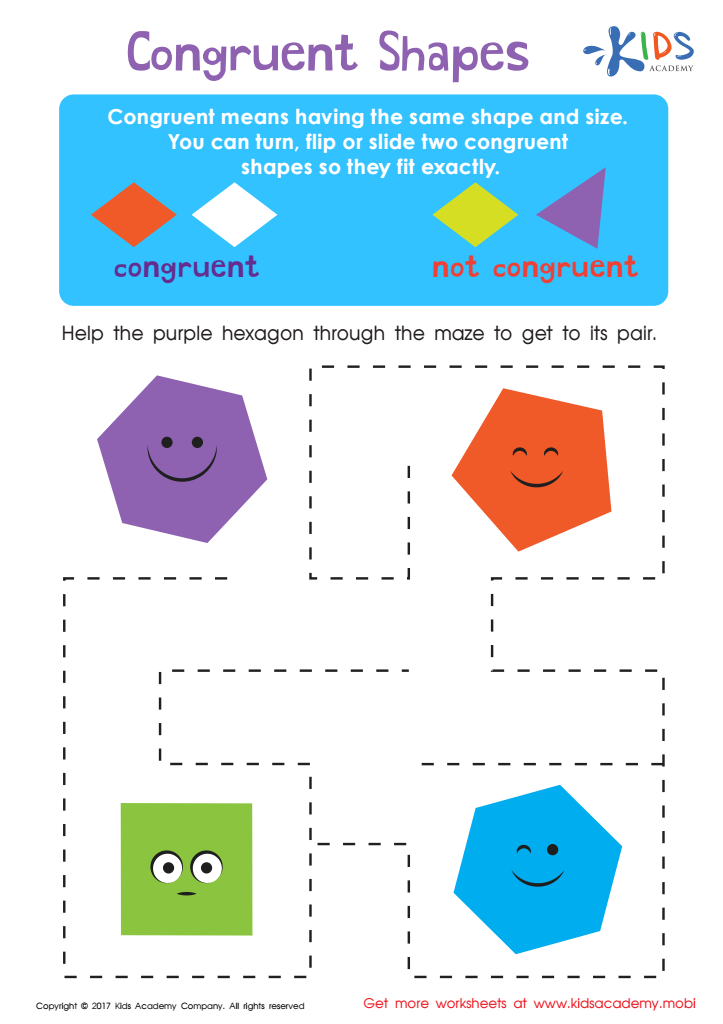
Congruent Shapes Worksheet
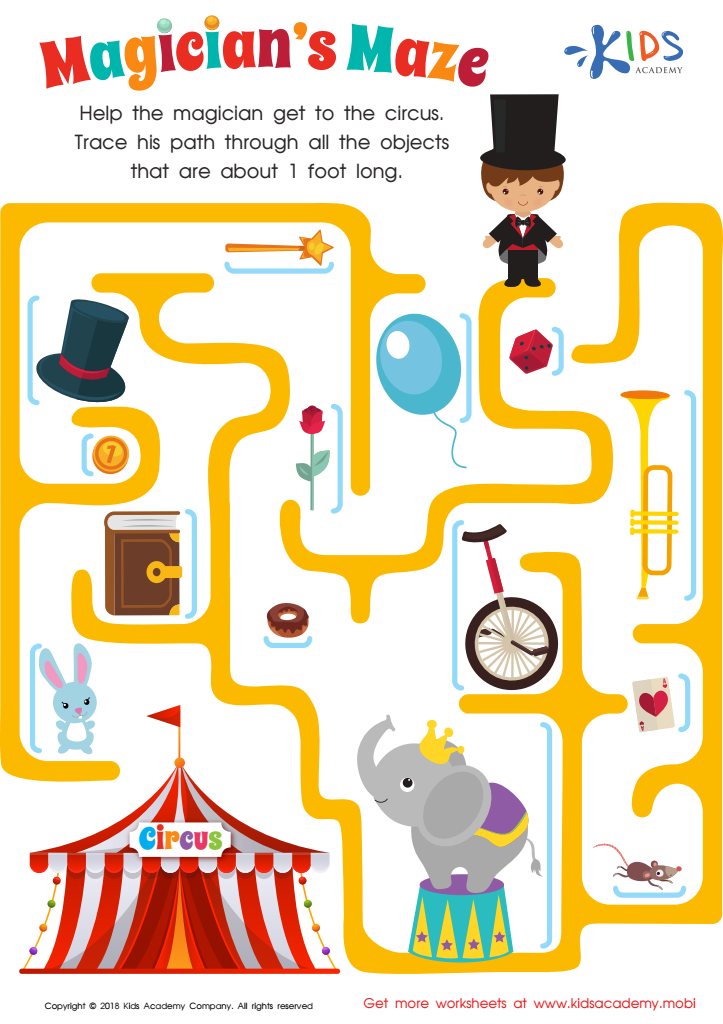
Estimating Length: Magician's Maze Worksheet
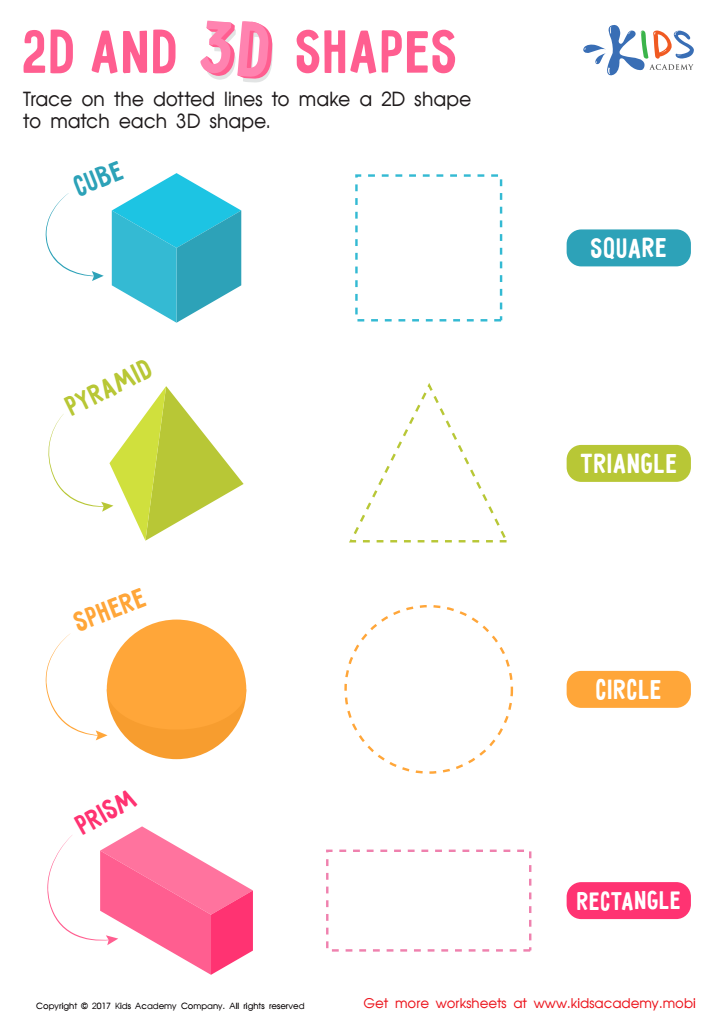
2D and 3D Shapes Worksheet
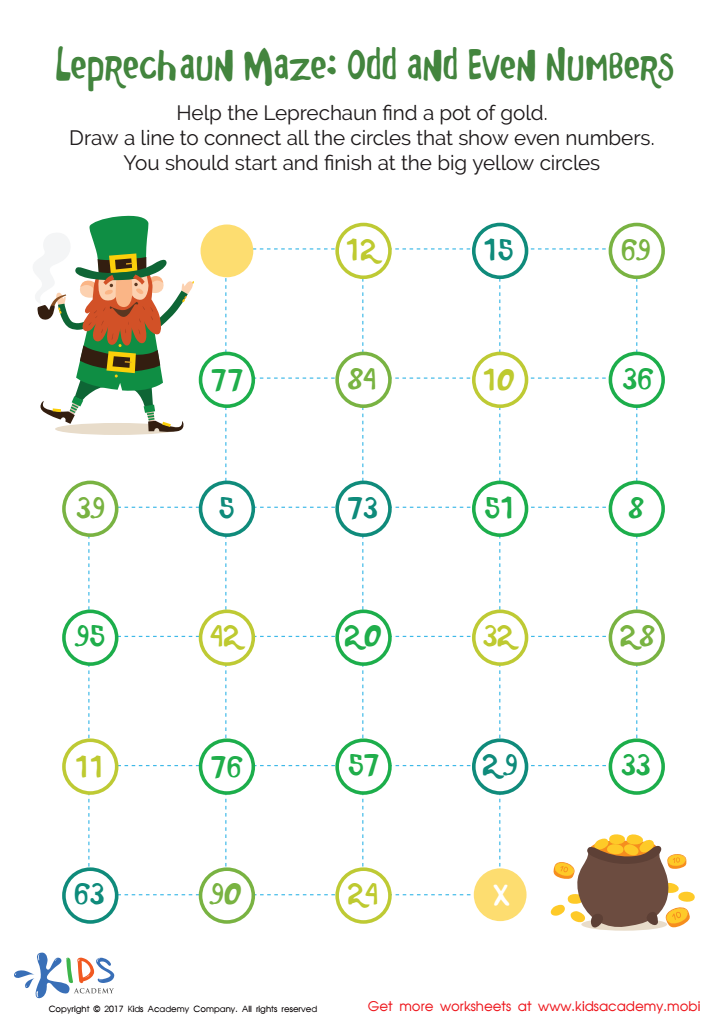
Leprechaun Maze Printable







Spatial awareness is a vital skill for young children, underpinning many areas of learning and daily life. Introducing an extra challenge in math focused on spatial awareness for ages 5-7 can offer substantial benefits. Parents and teachers should care about this aspect for several key reasons.
Firstly, spatial awareness activities help children understand and navigate the world around them, promoting their ability to think critically and solve problems. Tasks like identifying shapes, understanding their properties, and visualizing movements or transformations directly enhance their mathematical understanding, which is foundational for more complex geometry and algebra concepts learned in later years.
Secondly, developing strong spatial skills is linked to improved performance in STEM (Science, Technology, Engineering, and Mathematics) fields. Early exposure to spatial challenges can foster an interest and build confidence in these areas, potentially guiding future educational and career choices.
Moreover, spatial awareness contributes to everyday tasks and personal safety, from reading maps to understanding positions and directions, which are crucial for independence. By embedding these skills in fun, engaging formats through games or puzzles, children are more likely to develop a positive attitude toward learning.
Therefore, by prioritizing spatial awareness in early math instruction, parents and teachers equip children with essential cognitive tools that support their mathematical journey and broader life skills, laying a strong foundation for their future development.