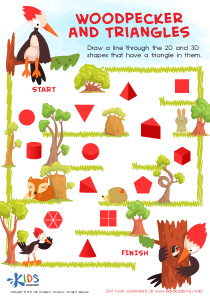
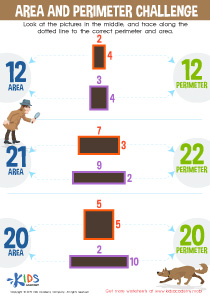
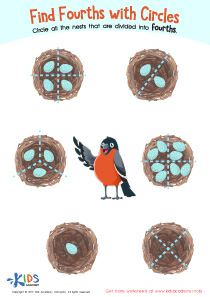
Extra Challenge Tracing Shapes Worksheets for Ages 5-9
4 filtered results
-
From - To
Boost your child's geometry skills with our Extra Challenge Tracing Shapes Worksheets, designed for ages 5-9! These engaging printables are perfect for young learners ready to advance from simple shapes to more complex patterns. Children will improve their hand-eye coordination, fine motor skills, and shape recognition while having fun. Our worksheets feature various challenges, from tracing intricate shapes to recognizing advanced geometrics. Perfect for classroom activities or at-home practice, these resources provide an exciting way to prepare children for higher-level math concepts. Discover endless learning fun today with these exceptional tracing worksheets!
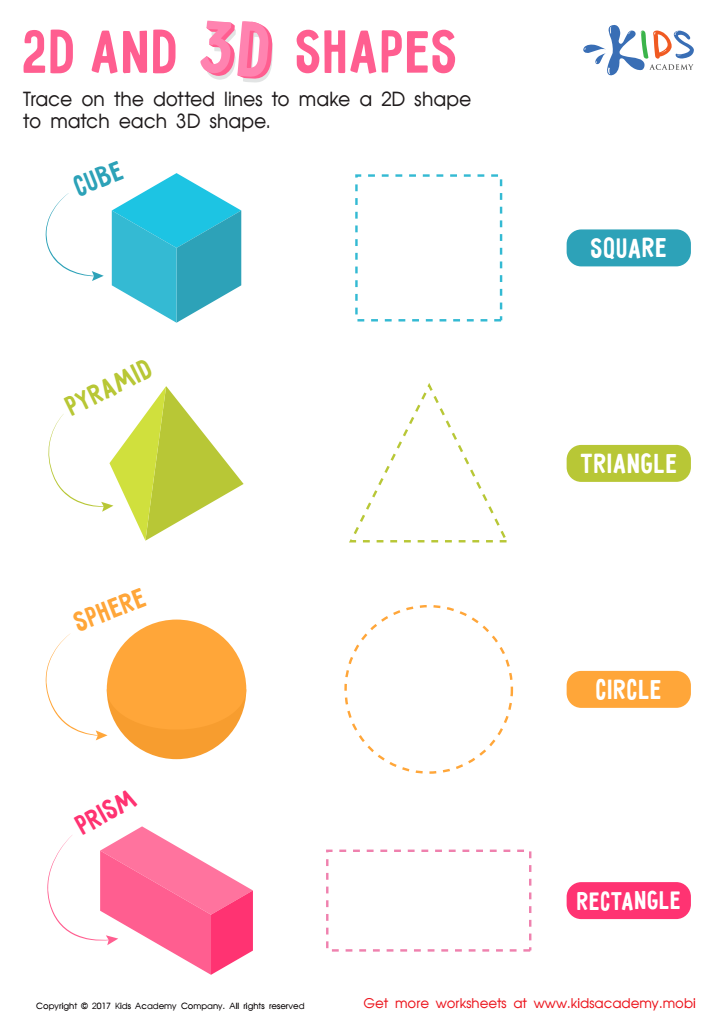
2D and 3D Shapes Worksheet
 Assign to My Students
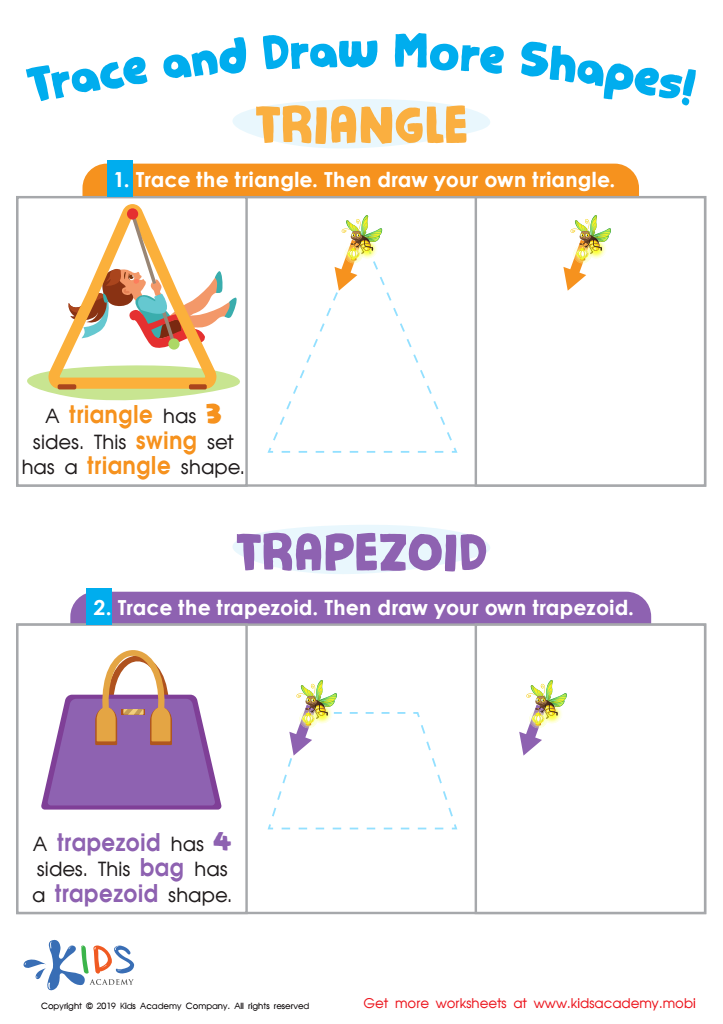
Trace and Draw More Shapes Worksheet
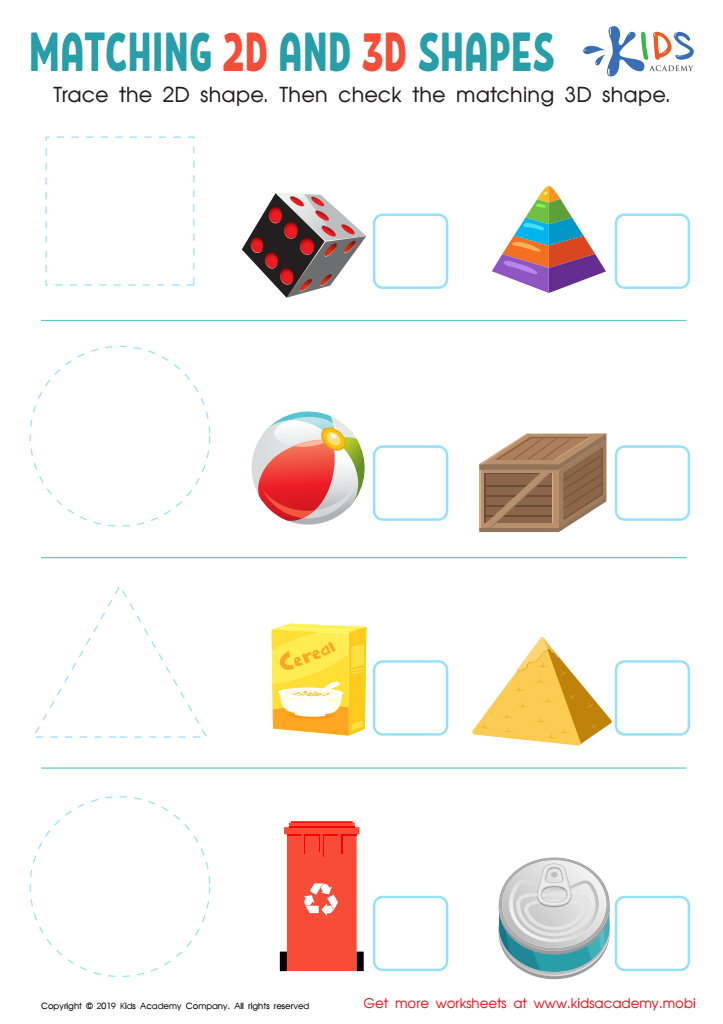
Matching 2D and 3D Shapes Worksheet
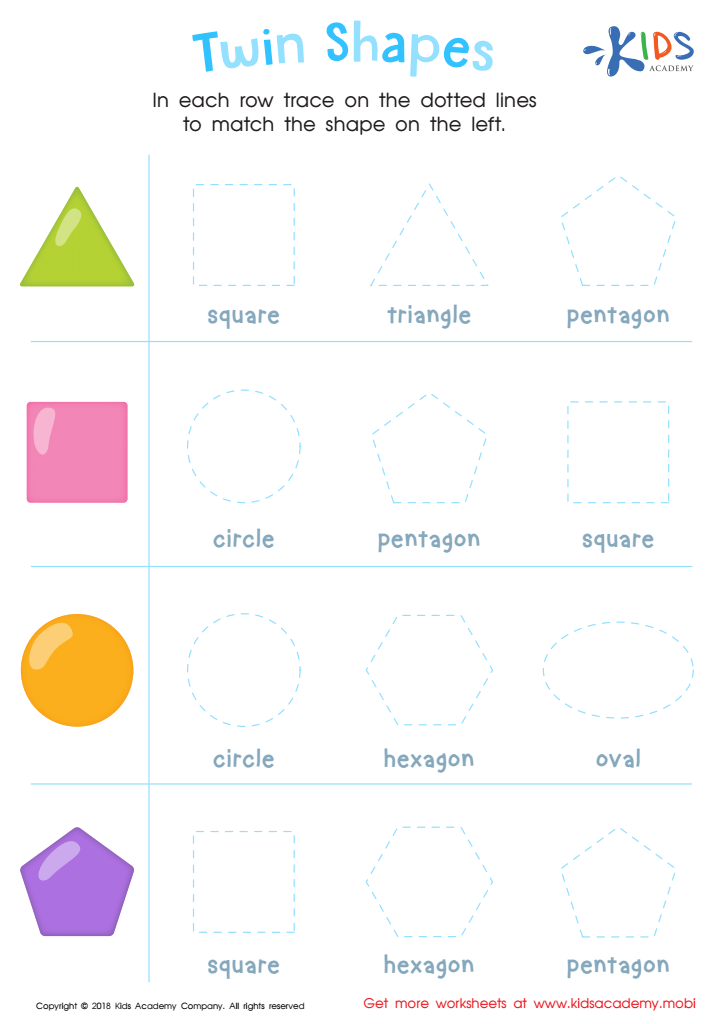
Twin Shapes Dot-to-Dot Worksheet








Extra Challenge Tracing Shapes for Ages 5-9 is an invaluable tool for young learners, and both parents and teachers should appreciate its benefits. At this critical developmental stage, children's fine motor skills and hand-eye coordination are rapidly evolving. Engaging in shape-tracing activities aids in refining these skills, which are essential for writing fluency and accuracy in the future. By meticulously tracing different shapes, kids enhance muscle memory and adapt their grip, setting a foundation for effective penmanship.
Moreover, tracing shapes boosts cognitive skills by teaching children to recognize and differentiate various geometric patterns. This activity nurtures an understanding of spatial relationships and promotes early mathematical concept comprehension. When children trace shapes, they are exposed to problem-solving scenarios, validating the concept's significance beyond artistic endeavors.
For parents and teachers, these exercises offer a structured yet enjoyable approach to learning that keeps children engaged and motivated. They provide immediate, tangible progress for kids, building confidence and a positive outlook towards learning new skills. Additionally, the repetitive nature of tracing helps instill discipline, patience, and precision, shaping their overall academic demeanor.
In sum, incorporating Extra Challenge Tracing Shapes complements a holistic educational strategy, set on fortifying foundational literacy and numeracy skills crucial for lifelong learning.