Comparing objects Extra Challenge Worksheets for Ages 6-7
3 filtered results
-
From - To
Enhance your child’s learning experience with our "Comparing Objects Extra Challenge Worksheets" designed for ages 6-7. These engaging worksheets provide a thrilling way for young learners to build their critical thinking skills by comparing sizes, weights, and quantities. Featuring a variety of interactive activities, children can identify similarities and differences through fun and colorful illustrations. Ideal for classroom use or at-home practice, these worksheets not only support standards-based learning but also encourage kids to express their observations creatively. Perfect for early grade teachers and parents seeking to foster a love of learning in their children. Download now and watch them excel!
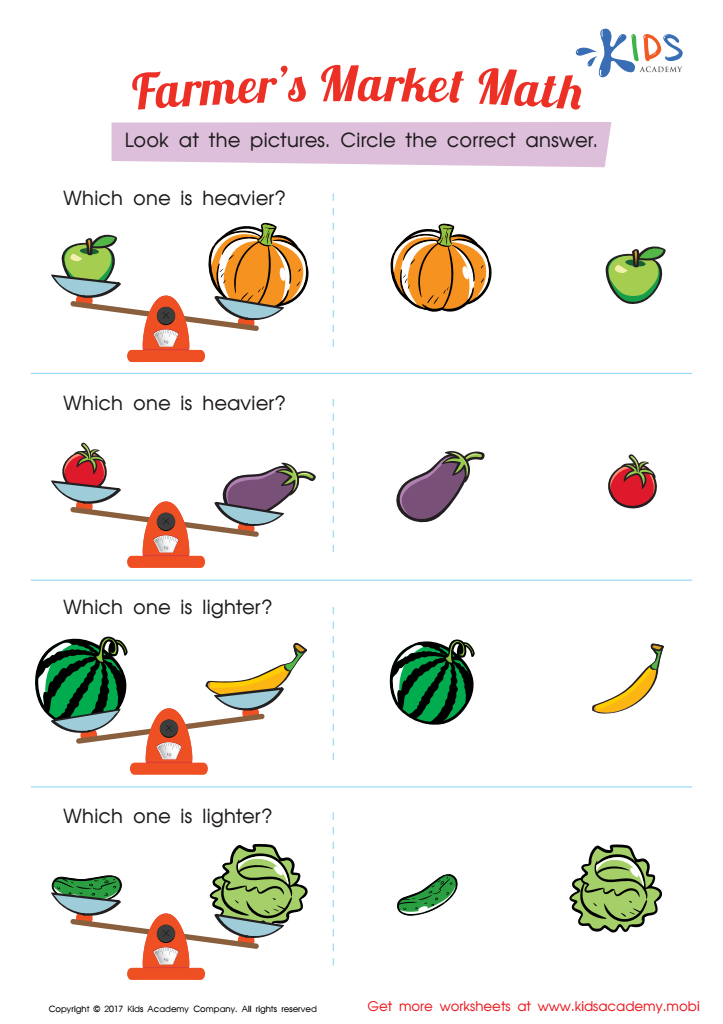
Which One Is Heavier Worksheet
 Assign to My Students
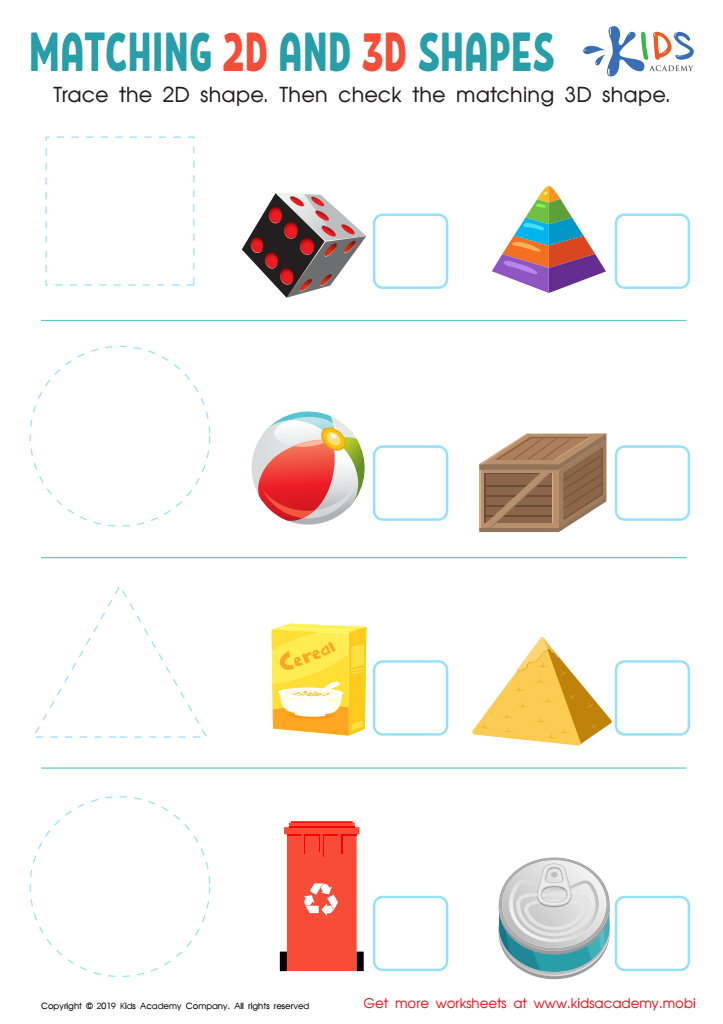
Matching 2D and 3D Shapes Worksheet
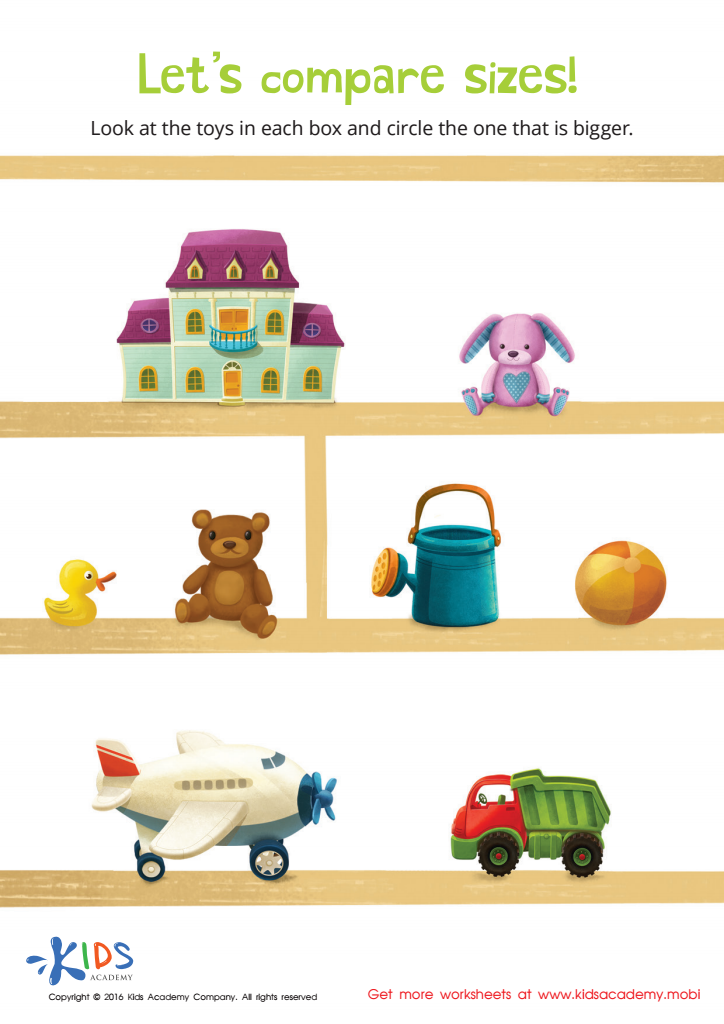
Classifying by Size Sorting Worksheet




Comparing objects is a fundamental skill that plays a crucial role in early childhood development, especially for children aged 6-7. Parents and teachers should care about this concept because it fosters critical thinking and analytical abilities. When children learn to compare objects, they enhance their observational skills, leading them to notice differences in size, shape, weight, and color. This practice not only builds a strong foundation in mathematical concepts, such as measurement and geometry, but also promotes logical reasoning.
Moreover, engaging in comparisons encourages language development. As children articulate their observations, they expand their vocabulary and improve their communication skills. This is essential for both academic success and everyday interactions.
Furthermore, through activities involving comparisons, children develop social and emotional skills. They learn to express preferences and make choices, which helps in cultivating decision-making abilities. As they collaborate with peers or family members, they also foster teamwork and negotiation skills.
Overall, embracing the concept of comparing objects provides a rich, multi-faceted learning experience. It is vital for empowering children with the skills they need for lifelong learning and problem-solving, making it an important focus for both parents and educators.








