Shape Recognition Extra Challenge Geometry Worksheets for Ages 6-9
13 filtered results
-
From - To
Boost your child's shape recognition skills with our Shape Recognition Extra Challenge Geometry Worksheets for Ages 6-9! Designed for young learners, these engaging activities help children identify and differentiate between various geometric shapes through fun and interactive tasks. Perfect for both classroom and home use, our worksheets combine challenging exercises with colorful graphics to keep kids interested while developing critical thinking and spatial awareness. By enhancing their knowledge of shapes, these worksheets prepare students for more complex geometry concepts and foster a love for mathematics. Make learning an adventure with our expertly designed geometry worksheets tailored to curious minds aged 6-9!
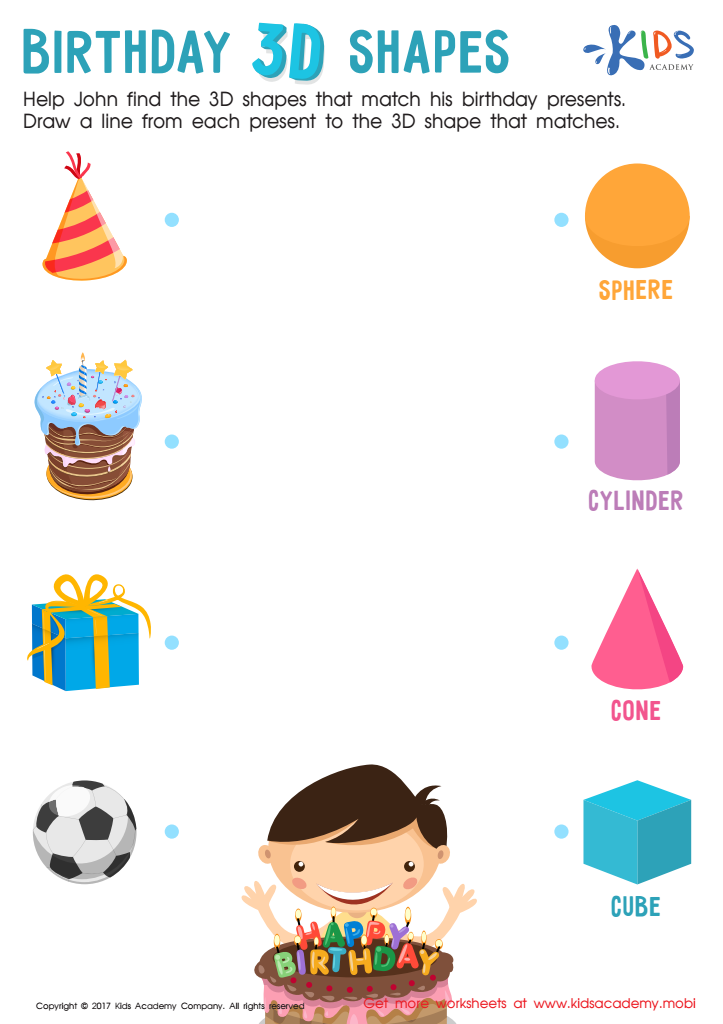
Birthday 3D Shapes Worksheet
 Assign to My Students











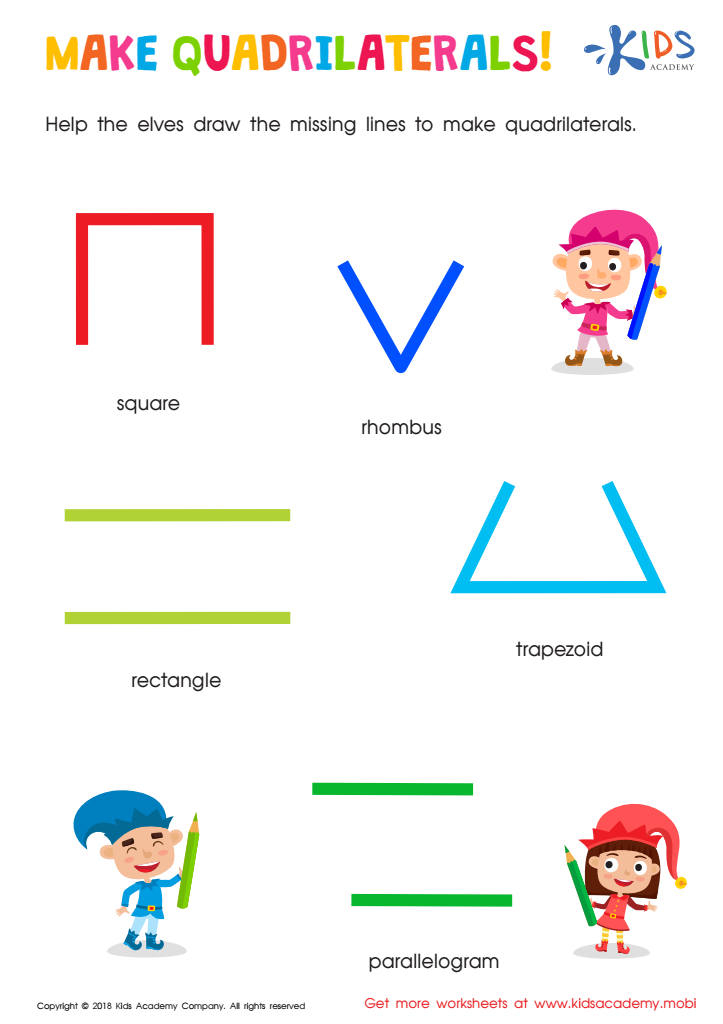
Make Quadrilaterals Worksheet
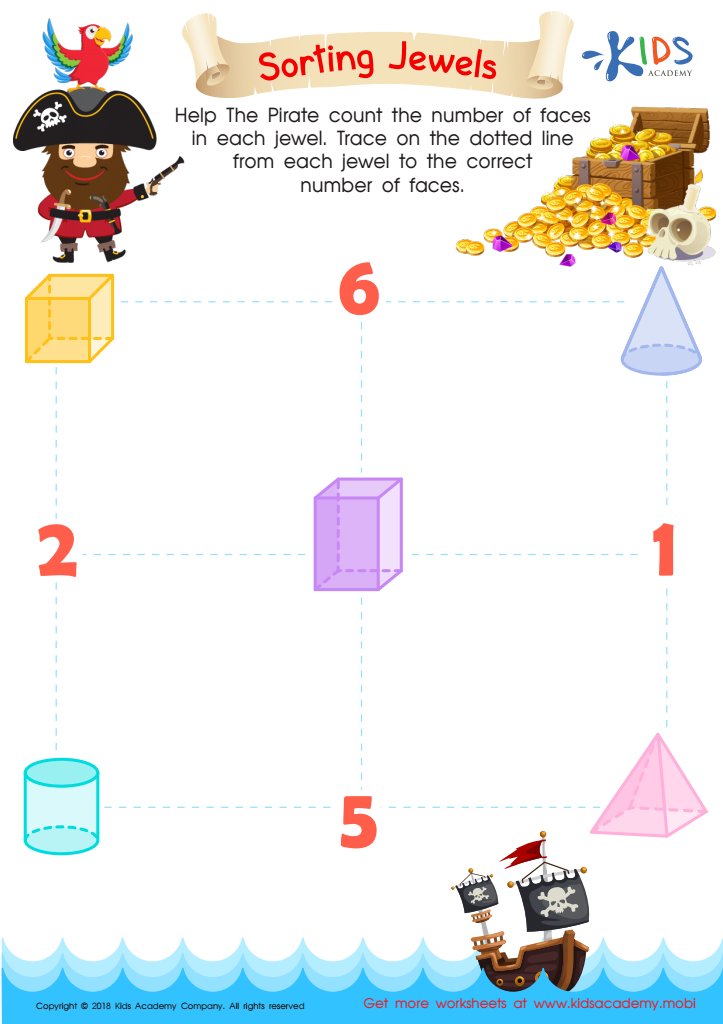
Sorting Jewels Worksheet
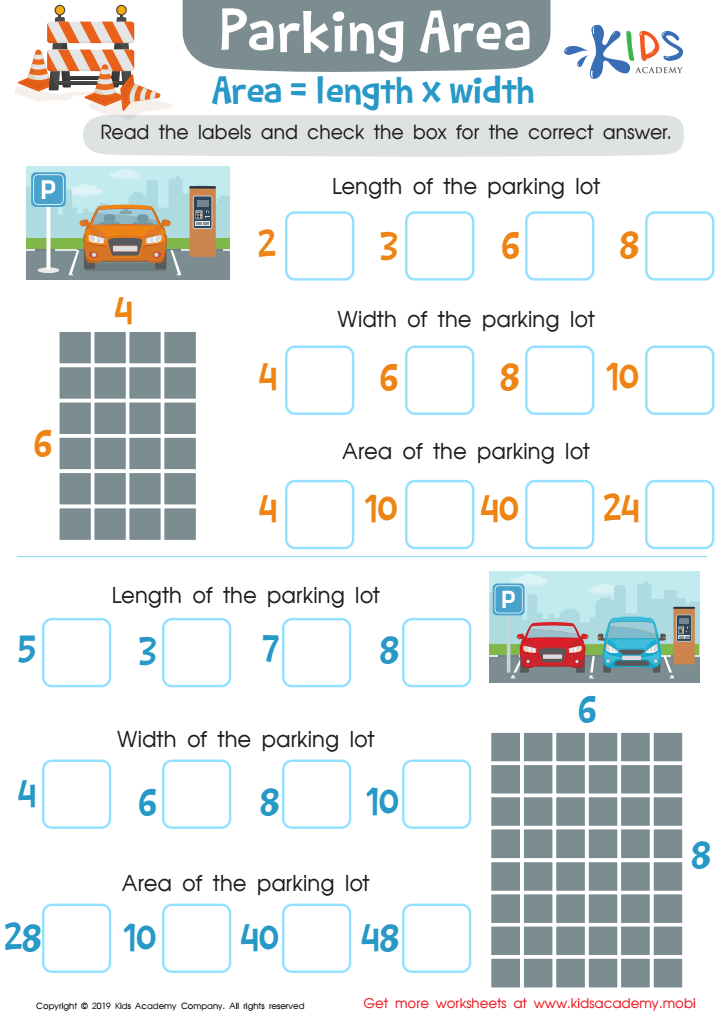
Parking Area Worksheet
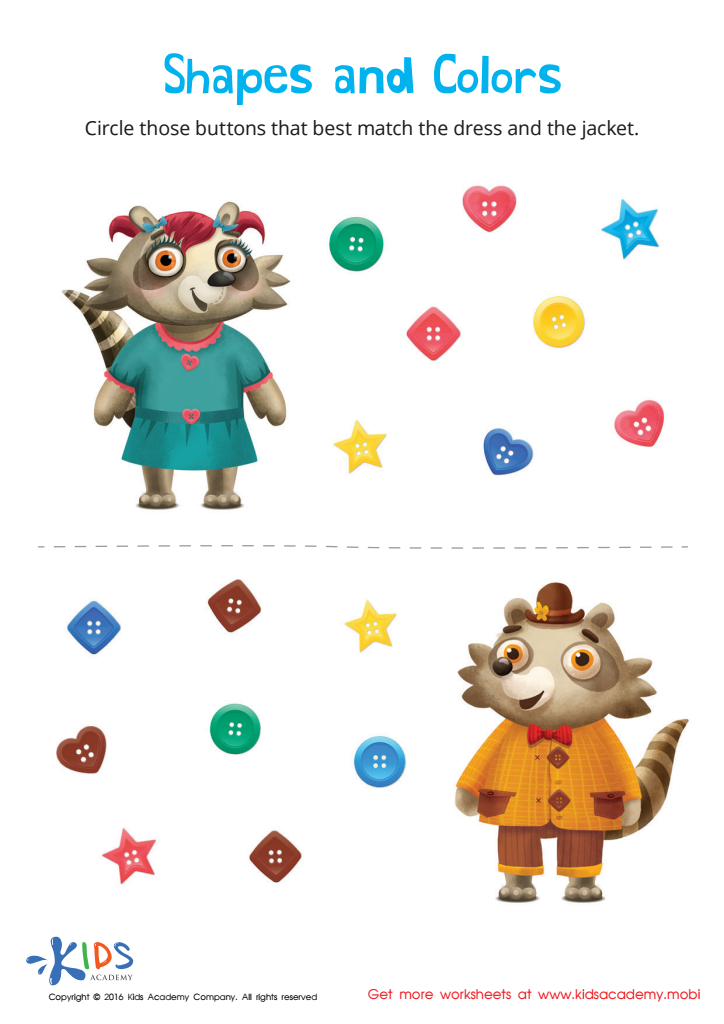
Matching: Shapes and Colors Worksheet
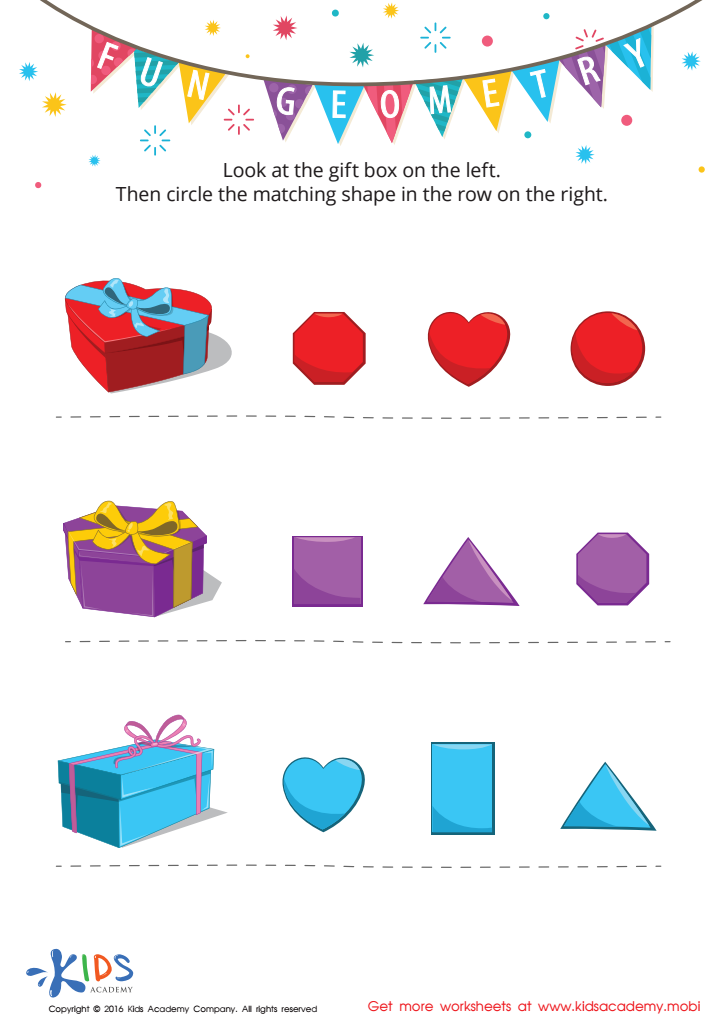
Fun Geometry Worksheet
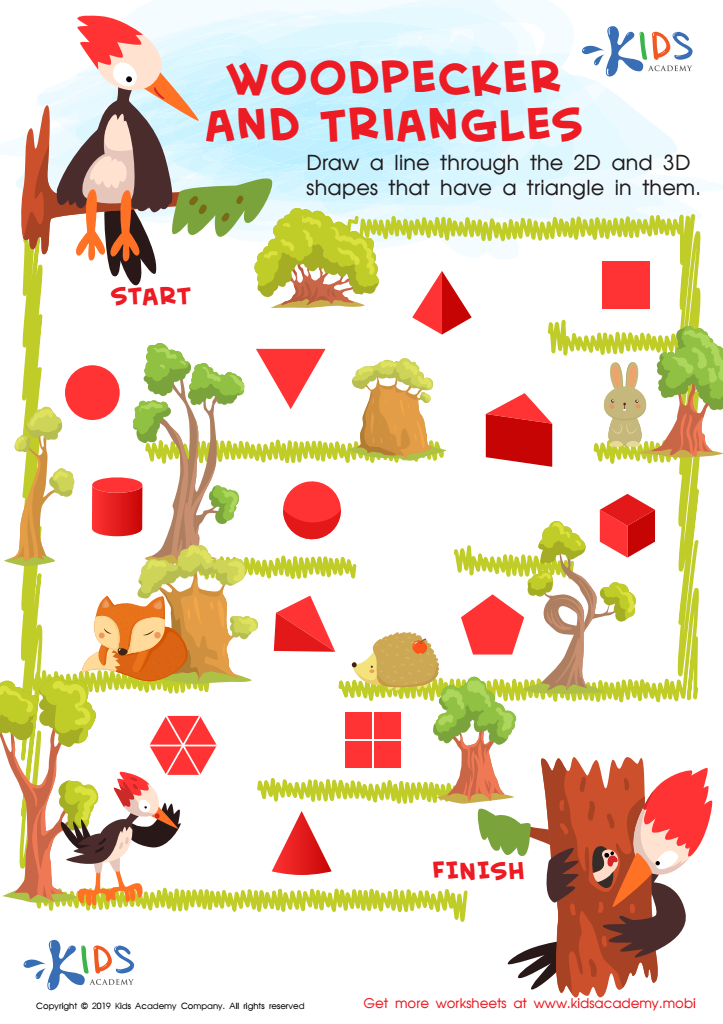
Woodpecker and Triangles Worksheet
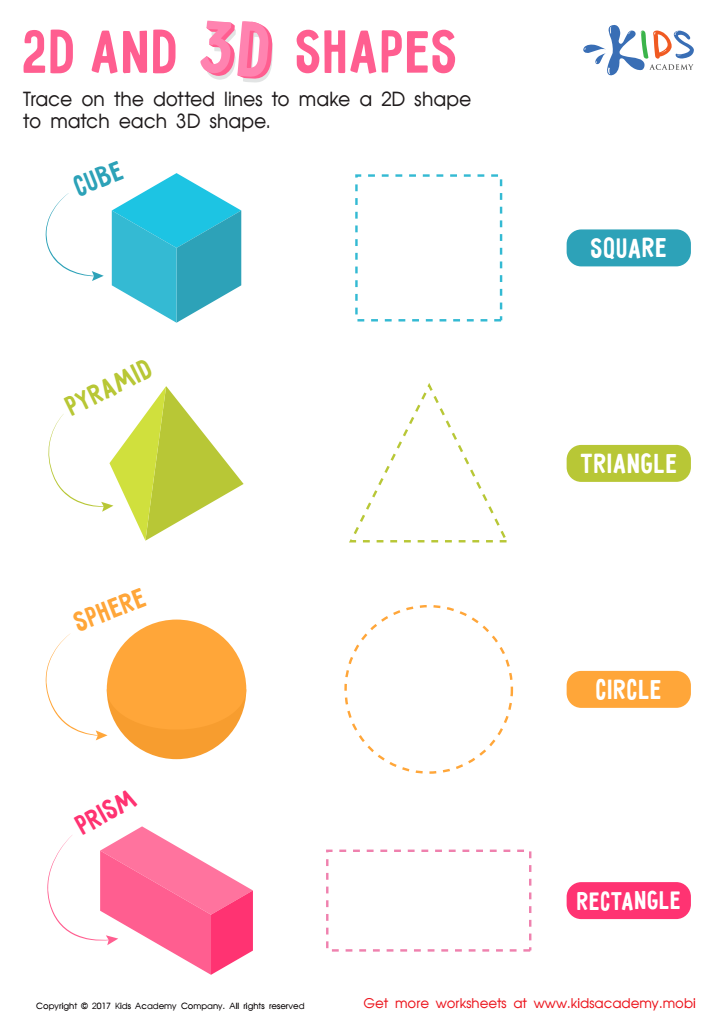
2D and 3D Shapes Worksheet
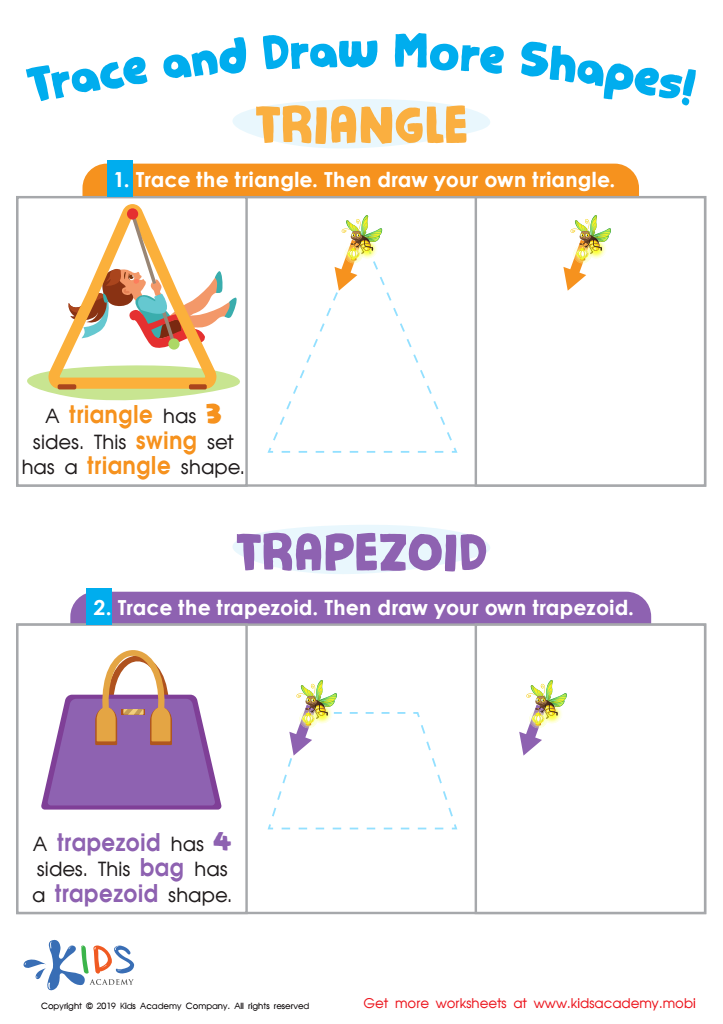
Trace and Draw More Shapes Worksheet
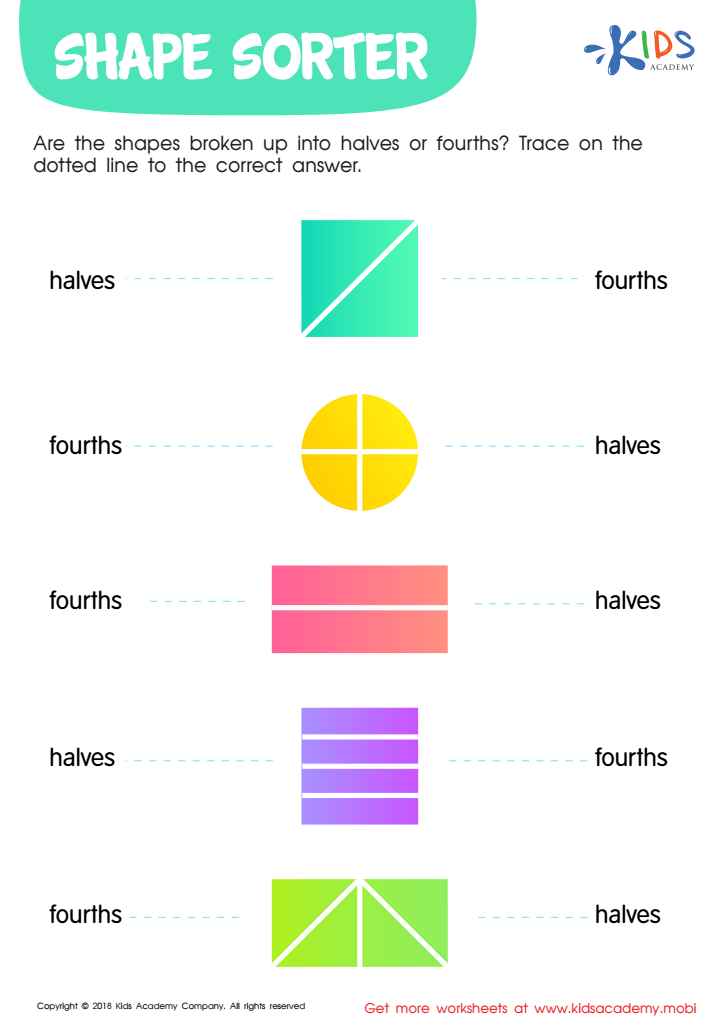
Shape Sorter Worksheet
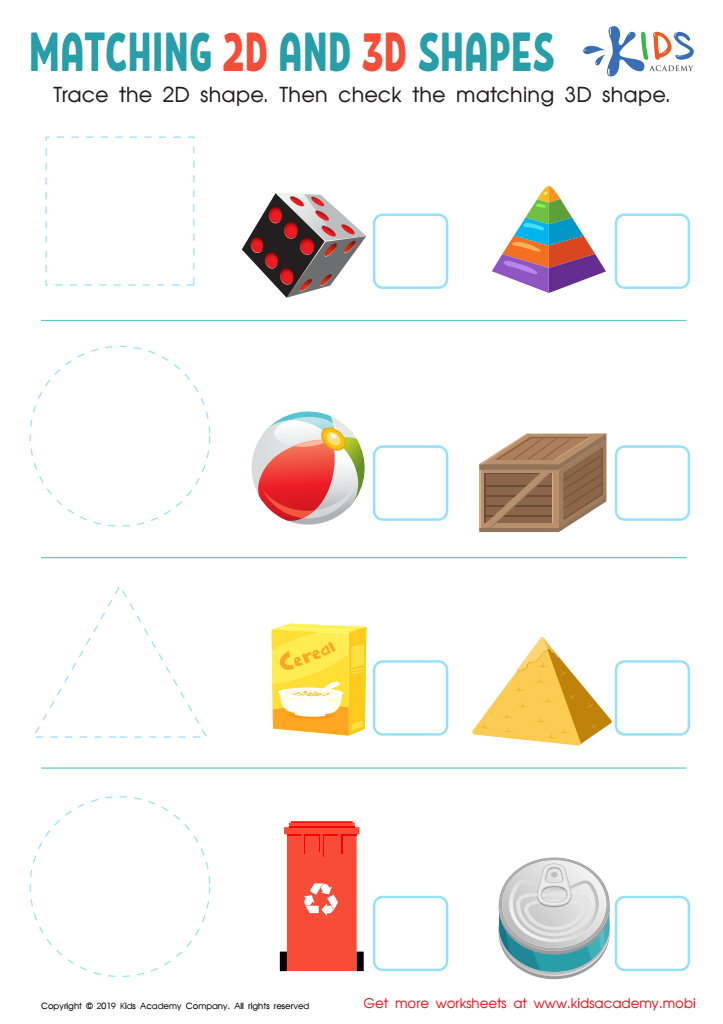
Matching 2D and 3D Shapes Worksheet
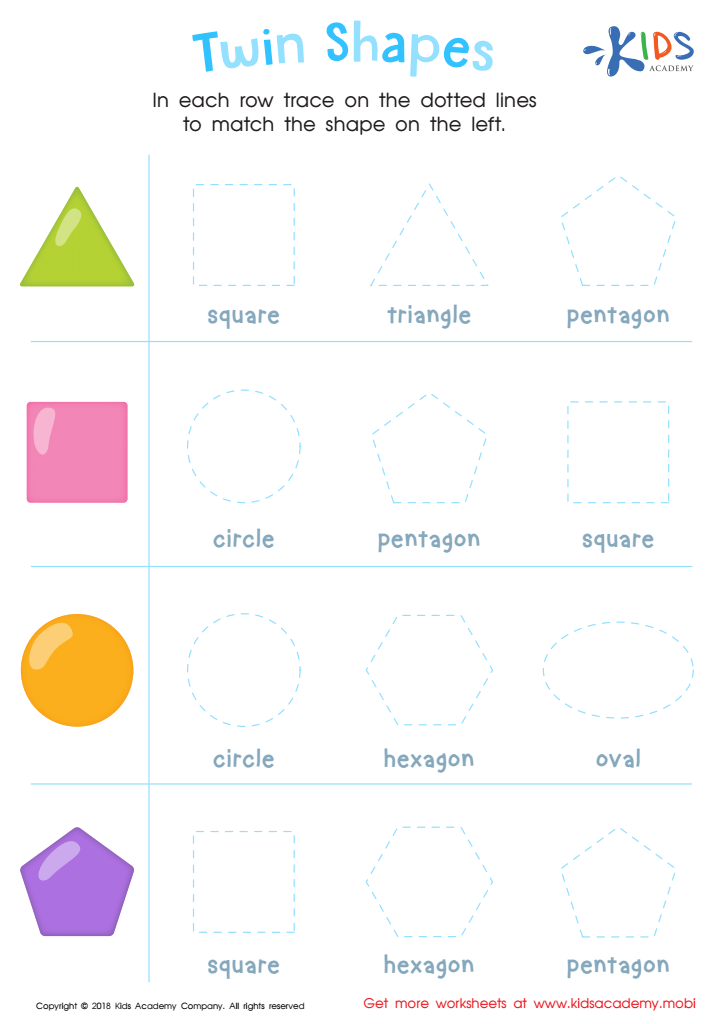
Twin Shapes Dot-to-Dot Worksheet
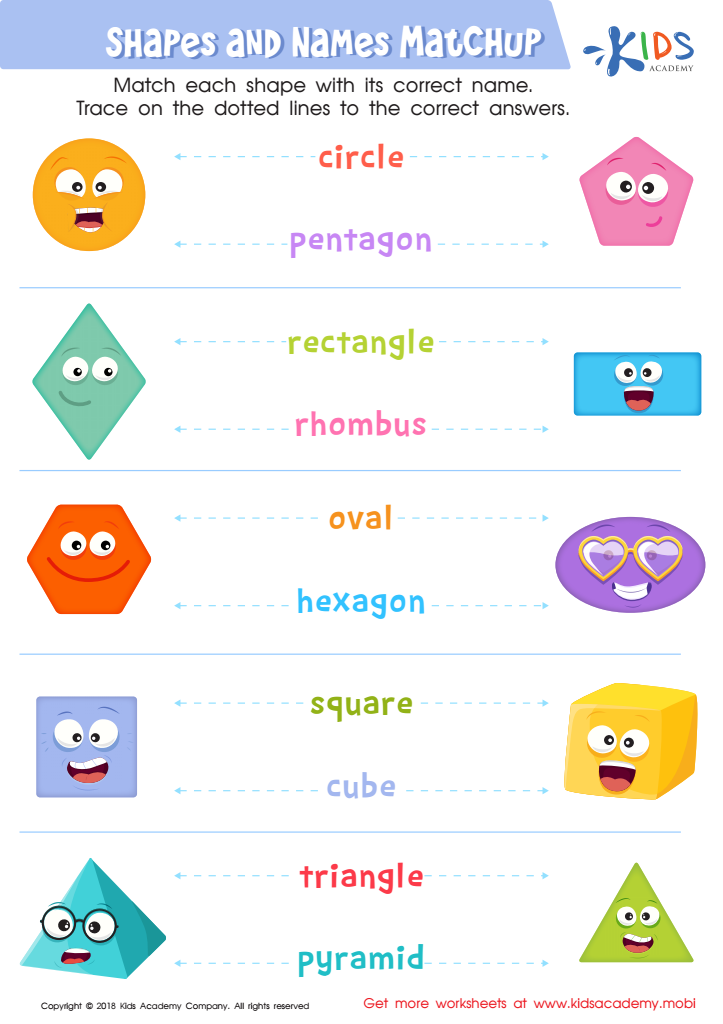
Shapes and Names Matchup Worksheet








Shape recognition is fundamental for young learners and the Extra Challenge Geometry activities specifically target essential developmental skills for children ages 6-9. Firstly, these activities sharpen cognitive abilities by encouraging children to distinguish, classify, and manipulate different shapes. This enhances their understanding of spatial relationships and geometry, foundational competencies for higher-level math.
Incorporating extra challenges fosters critical thinking and problem-solving skills. It pushes children to go beyond basic recognition and apply their knowledge in unfamiliar contexts, thereby deepening their conceptual understanding. Moreover, these tasks promote fine motor skills as children often draw, cut, and interact with physical shape models.
From a broader perspective, shape recognition lays the groundwork for other academic disciplines. For instance, reading involves identifying shapes of letters, and science frequently requires understanding geometric patterns. These activities also instill a sense of achievement and boost confidence as children overcome progressively tougher challenges.
Ensuring that young learners engage in such geometrical challenges not only aligns with educational standards but also nurtures a well-rounded cognitive development. Overall, parents and teachers play a crucial role in guiding children through these enriched learning experiences, making foundational geometry both fun and intellectually rewarding.








