Shape identification Extra Challenge Geometry Worksheets for Ages 7-8
4 filtered results
-
From - To
Unlock advanced geometry skills with our "Shape Identification Extra Challenge Geometry Worksheets" tailored for ages 7-8. Perfect for young learners looking to tackle more complex shape recognition tasks, these worksheets provide engaging activities to enhance spatial awareness and analytical thinking. Each sheet is designed to challenge students with identifying, comparing, and contrasting a variety of geometric shapes. Boost your child's confidence and proficiency in math with these meticulously crafted exercises. Dive into an exciting world of geometry and discover how fun learning can be! Printable and easy-to-use, these worksheets are the ultimate resource for young math enthusiasts.
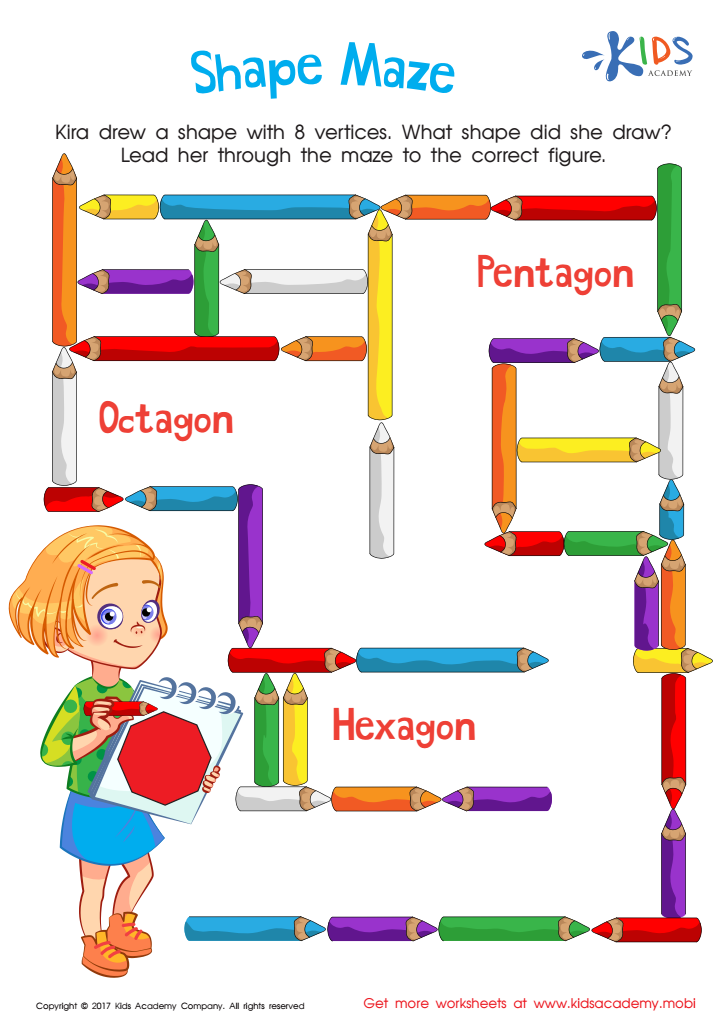
Shape Maze Worksheet
 Assign to My Students











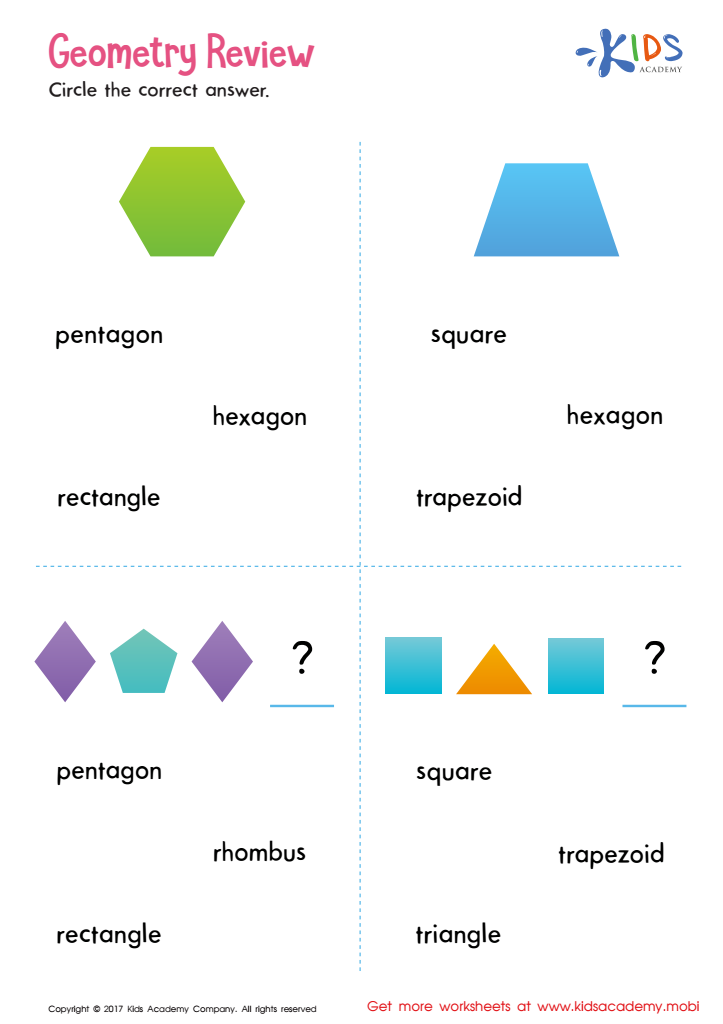
Geometry Review Printable
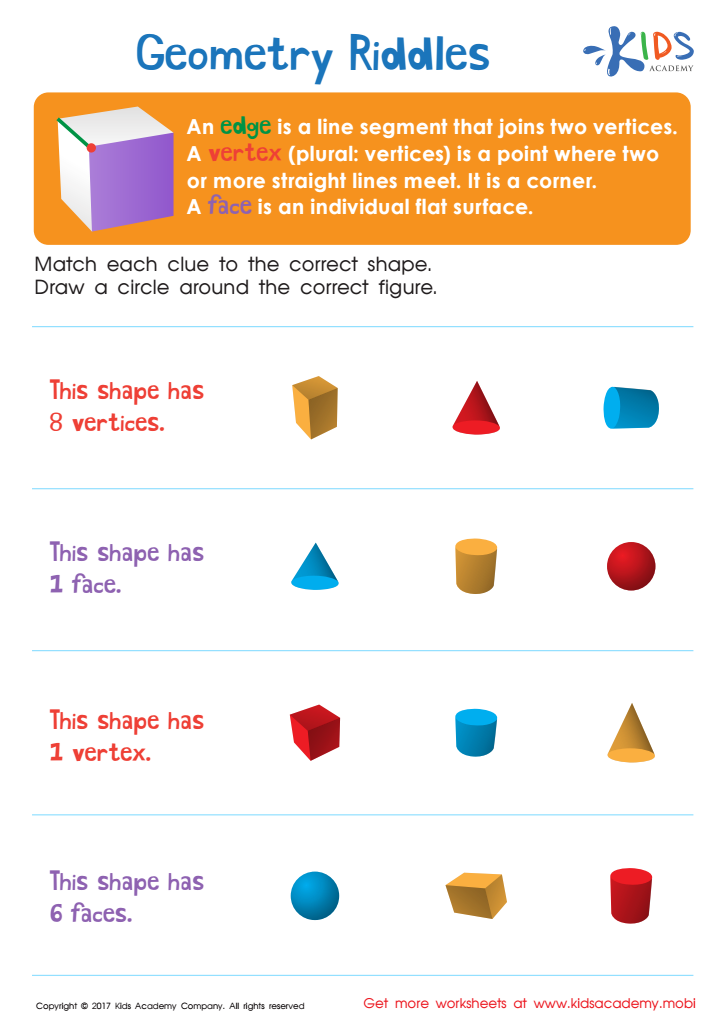
Geometry Riddles Printable
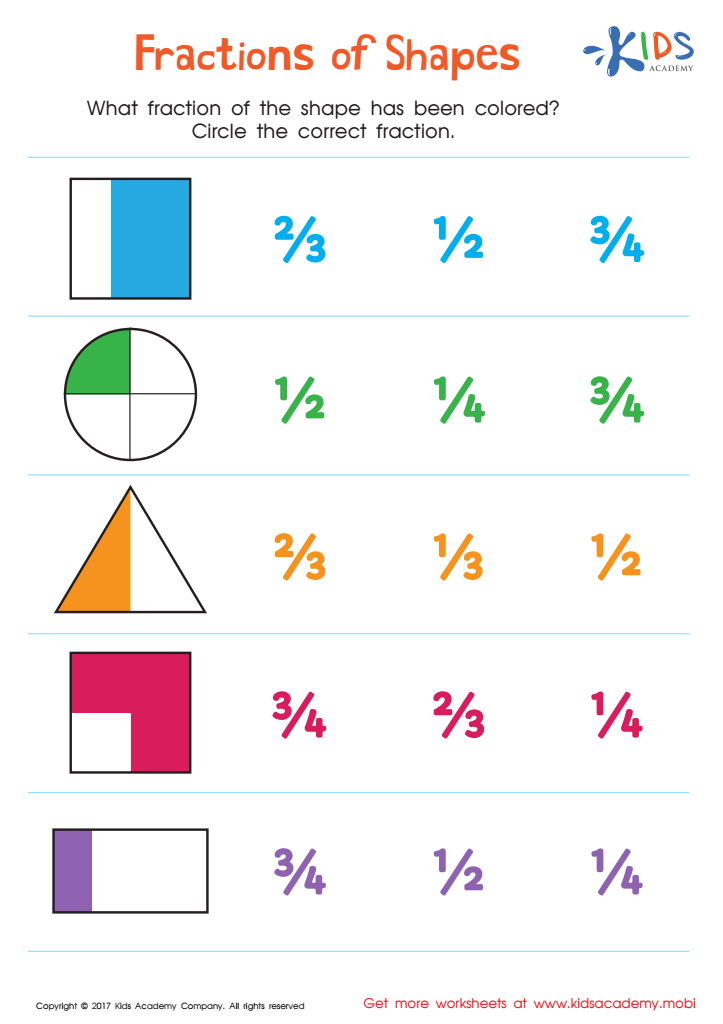
Fractions of Shapes: Math Concept Worksheet








Introducing shape identification and extra geometry challenges to children aged 7-8 is crucial for their overall cognitive development and academic growth. At this age, children's brains are highly receptive to learning new concepts, and geometry serves as a foundation for numerous other areas of learning.
First, understanding shapes enhances spatial awareness, which is critical for everyday activities, from navigating spaces to understanding maps. It also helps with problem-solving skills and critical thinking, as children learn to recognize patterns, make predictions, and develop an understanding of symmetry and balance.
Moreover, early exposure to geometry can pave the way for success in more advanced math subjects. By solidifying their understanding of basic shapes, children build the skills necessary for later topics, such as fractions, algebra, and even calculus. Geometry also improves their comprehension skills in non-math subjects, like art and science, where recognizing patterns and organizing visual information play major roles.
Finally, engaging in geometry activities builds a child's confidence and perseverance. When children tackle shape identification tasks, they practice patience and learn the value of trial and error. This helps develop a growth mindset, which will benefit them throughout their educational journey.
In summary, shape identification and geometry challenges are essential for young learners, promoting critical thinking, spatial awareness, mathematical skills, and a confident approach to tackling complex problems.