Strategic thinking development Extra Challenge Worksheets for Ages 7-9
3 filtered results
-
From - To
Unlock your child's potential with our "Strategic Thinking Development Extra Challenge Worksheets" designed for ages 7-9! These engaging worksheets foster critical thinking, problem-solving, and planning skills, encouraging young learners to think outside the box. Each activity presents thought-provoking scenarios and challenges that promote strategic reasoning in a fun and interactive way. Perfect for enhancing cognitive abilities at home or in the classroom, these extra challenges are ideal for children ready to stretch their minds beyond the basics. Empower your child’s growth and boost their confidence in tackling complex tasks with these essential learning tools! Explore today and enhance their strategic thinking skills!
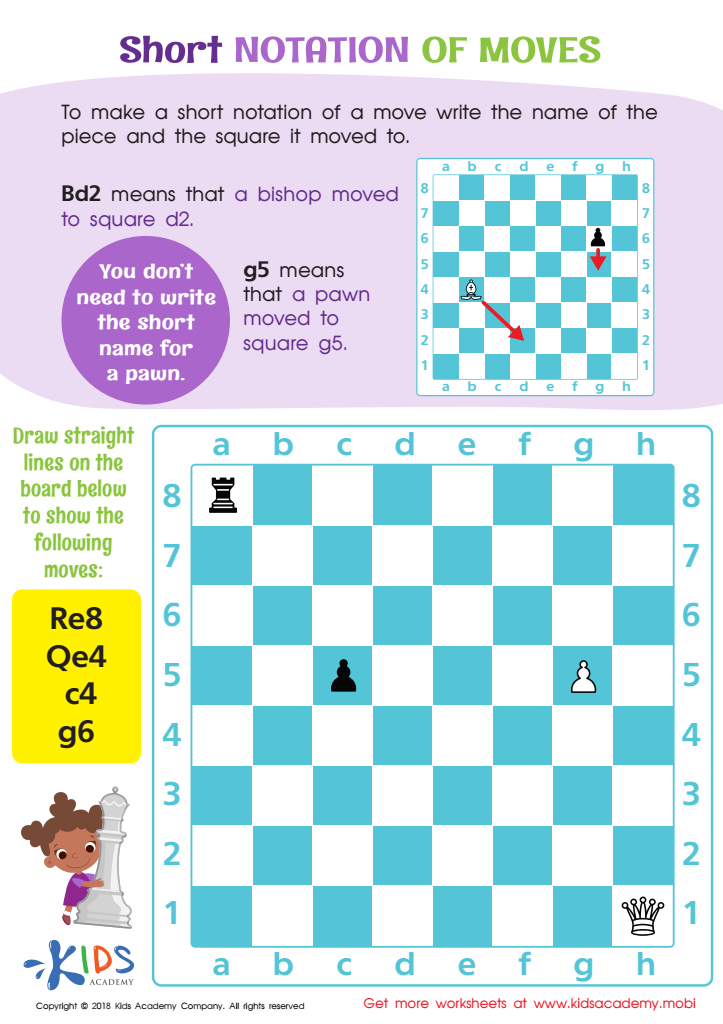
Short Notation of Moves Worksheet
 Assign to My Students
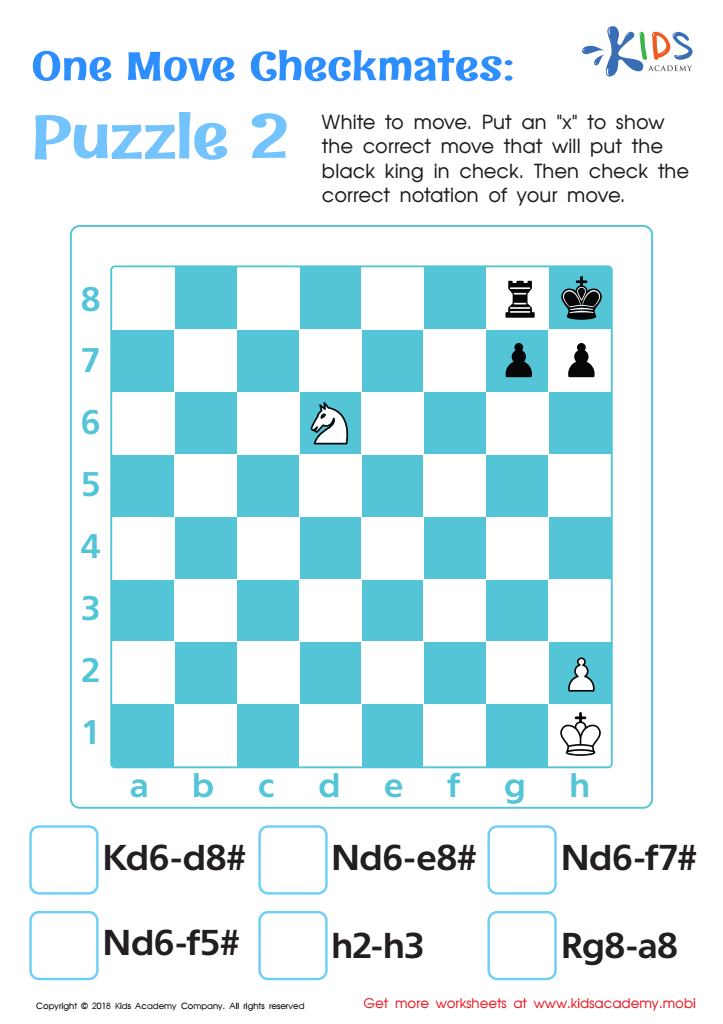
One Move Checkmates: Puzzle 2 Worksheet
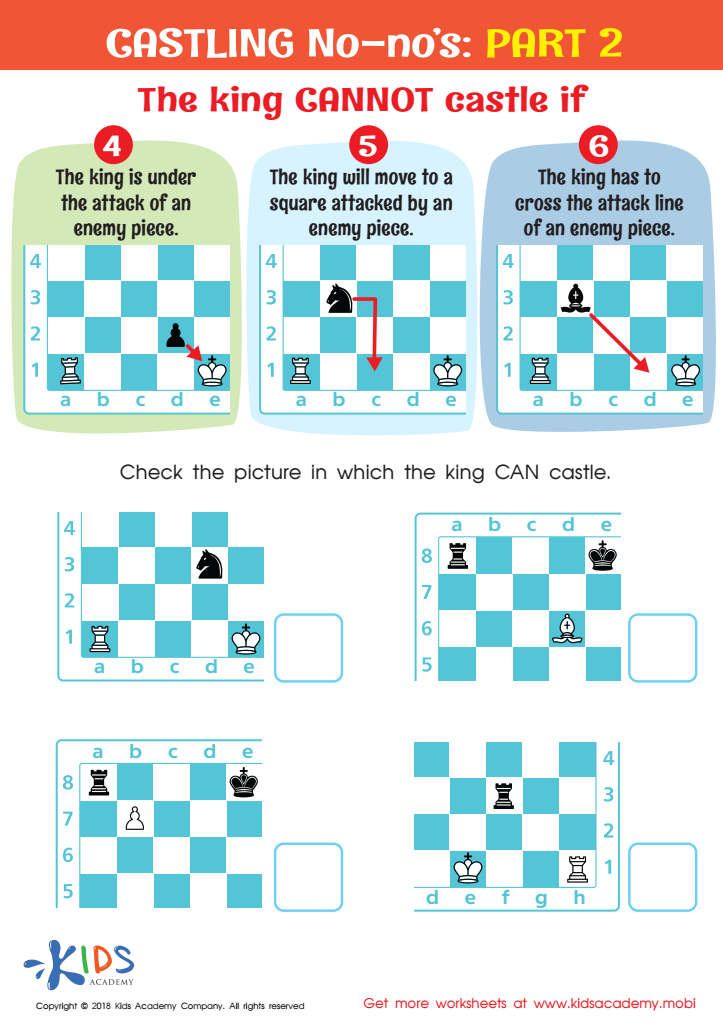
Castling No - no's: Part 2 Worksheet


.jpg)



Strategic thinking development is crucial for children aged 7-9, as it equips them with essential skills for academic and life success. At this stage, children begin to engage in more complex problem-solving tasks and can benefit greatly from learning how to think ahead and make informed decisions. Developing strategic thinking allows them to anticipate outcomes, consider multiple perspectives, and create effective plans to achieve their goals.
For parents and teachers, fostering this skill means encouraging children to not only solve problems but also understand the processes behind those solutions. Engaging in activities that promote strategic thinking—such as puzzles, games, or group projects—can enhance critical thinking and creativity. Furthermore, these skills lay a foundation for future learning and personal development, helping children to navigate challenges in school and beyond.
By caring about and actively fostering strategic thinking, parents and teachers can help instill a growth mindset in their children, promoting resilience and adaptability. In a rapidly changing world, these competencies will not only support academic success but prepare children for real-life scenarios, where making strategic decisions becomes increasingly important. Ultimately, strategic thinking is not just about solving today’s problems; it’s about preparing for tomorrow's challenges and opportunities.








