Shape identification Extra Challenge Geometry Worksheets for Ages 8-9
4 filtered results
-
From - To
Enhance your child's geometry skills with our Shape Identification Extra Challenge Worksheets for ages 8-9! Designed to engage young learners, these worksheets provide a fun and interactive way for kids to master shape recognition and vocabulary. With a variety of challenging activities, children will identify, classify, and analyze different shapes, helping to strengthen their understanding of geometry concepts. Each worksheet is designed to cater to various learning styles, encouraging critical thinking and problem-solving skills. Perfect for homework, tutoring sessions, or reinforcing classroom learning, our worksheets create a solid foundation for your child's future in mathematics. Get started on geometric adventures today!
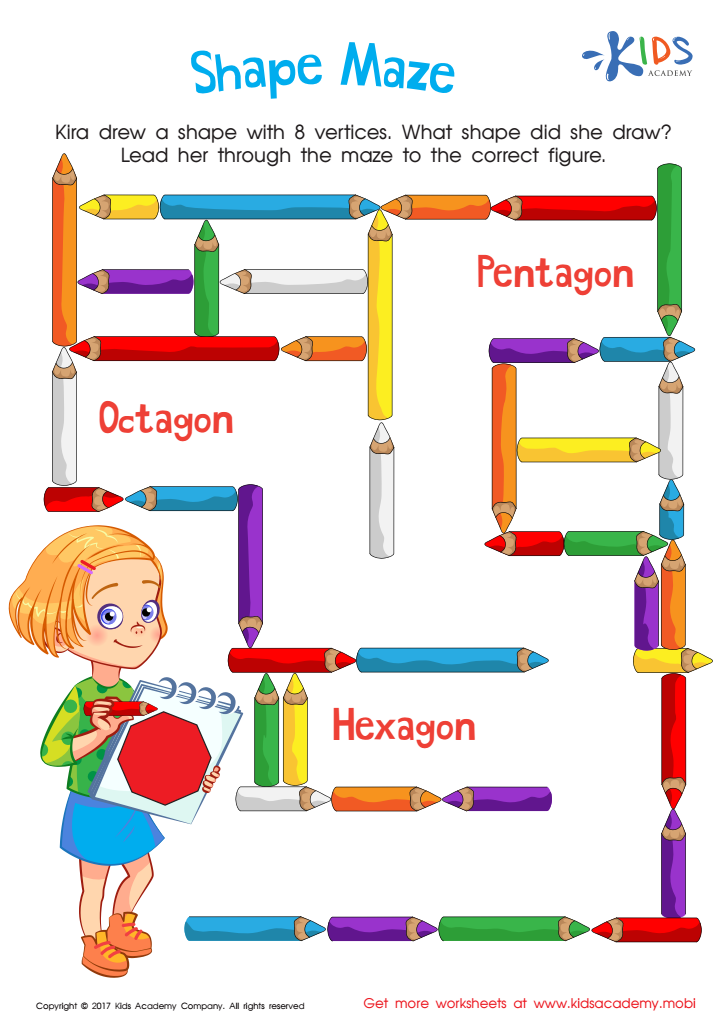
Shape Maze Worksheet
 Assign to My Students











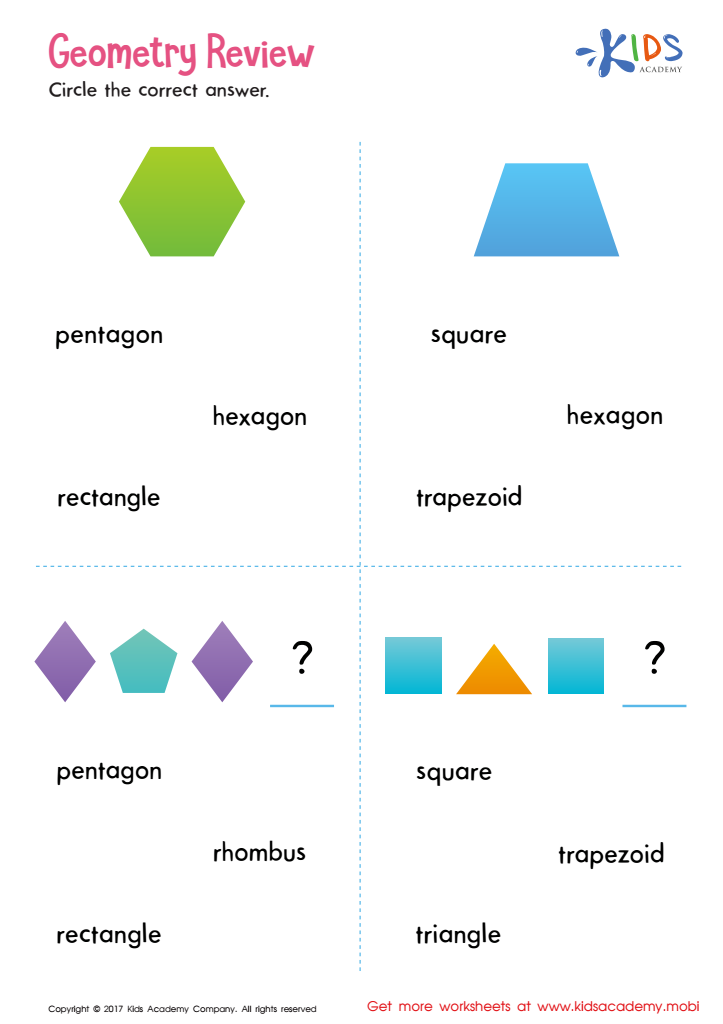
Geometry Review Printable
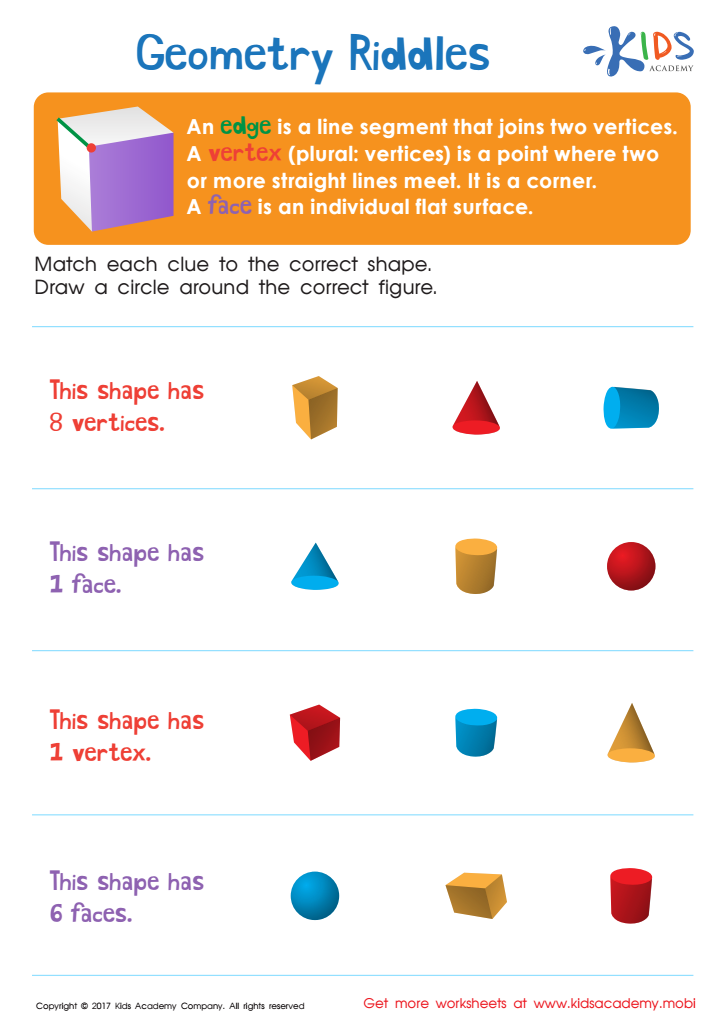
Geometry Riddles Printable
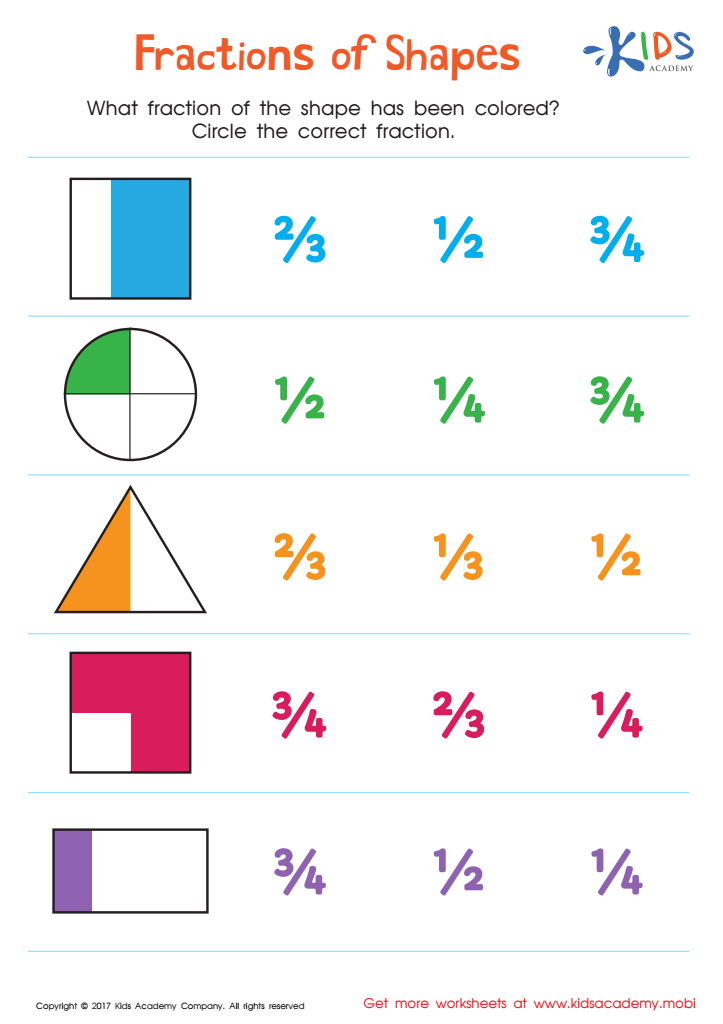
Fractions of Shapes: Math Concept Worksheet








Shape identification Extra Challenge Geometry for Ages 8-9 is crucial for parents and teachers as it plays a key role in a child's cognitive and spatial development. At this age, children are beginning to understand more complex shapes and their properties, which lays the groundwork for future mathematical concepts, including geometry, measurement, and even algebra.
Engaging students in identifying and differentiating shapes encourages critical thinking and problem-solving skills. This extra challenge not only makes learning interactive and fun but also fosters a deeper understanding of various shapes and their real-world applications. By emphasizing hands-on activities and exploration, children can build a strong foundation in geometry that will benefit them as they progress in school.
Parents and teachers should care about this program because it promotes higher-order thinking skills, encourages discussions about characteristics and similarities of shapes, and develops visual-spatial awareness. Additionally, strong geometry skills are essential in daily life, influencing areas such as art, engineering, and science. Investing time in shape identification challenges nurtures a love for learning and helps children become confident, engaged learners, setting them up for success in future mathematical endeavors. Ultimately, early mastery of these concepts significantly boosts children’s overall educational development.