
Animal recognition Extra Challenge Worksheets for 8-Year-Olds
3 filtered results
Difficulty Level
Grade
Age
-
From - To
Subject
Activity
Standards
Our Animal Recognition Extra Challenge Worksheets for 8-Year-Olds offer an engaging way to enhance your child's learning experience! These worksheets are designed to deepen understanding of various animals through fun-filled activities that promote critical thinking and observation skills. Each worksheet features exciting visual challenges and questions that encourage children to identify, classify, and learn interesting facts about animals from different habitats. Ideal for both classroom and home use, these extra challenges provide an opportunity for young learners to expand their knowledge while staying entertained. Download and watch your child's curiosity about the animal kingdom grow through these stimulating educational resources!
Favorites
With answer key
Interactive
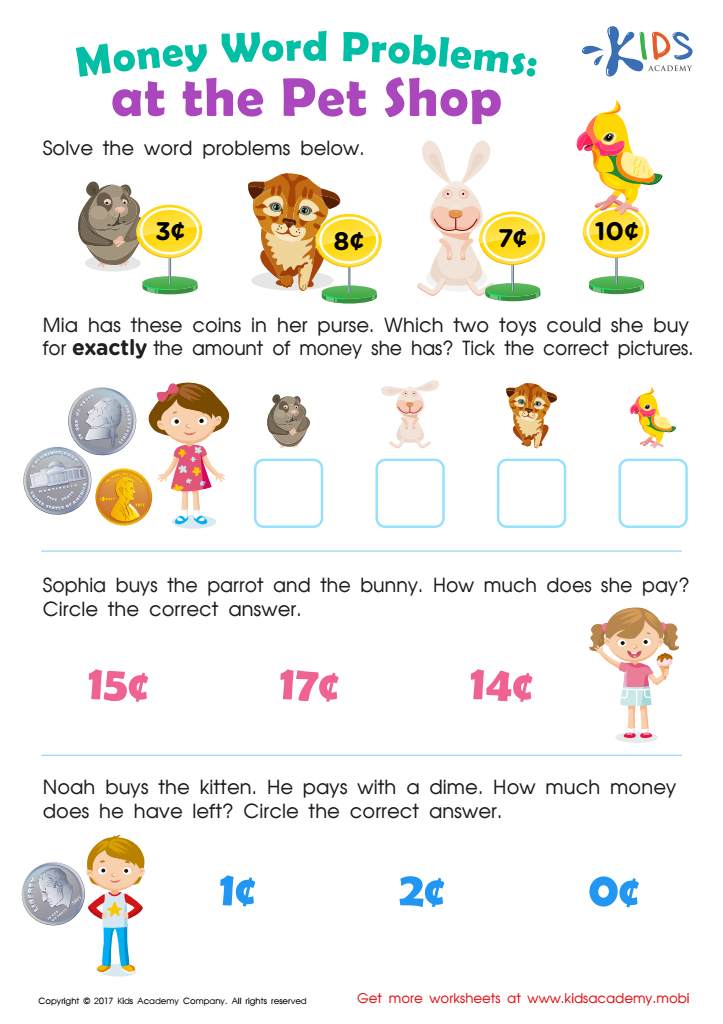
Pet Shop Worksheet
Teach your child a key life skill: counting and managing money. With this worksheet, they'll learn to count coins and calculate purchases at the pet shop. Give them colorful, fun math practice!
 Assign to My Students
Pet Shop Worksheet
Worksheet
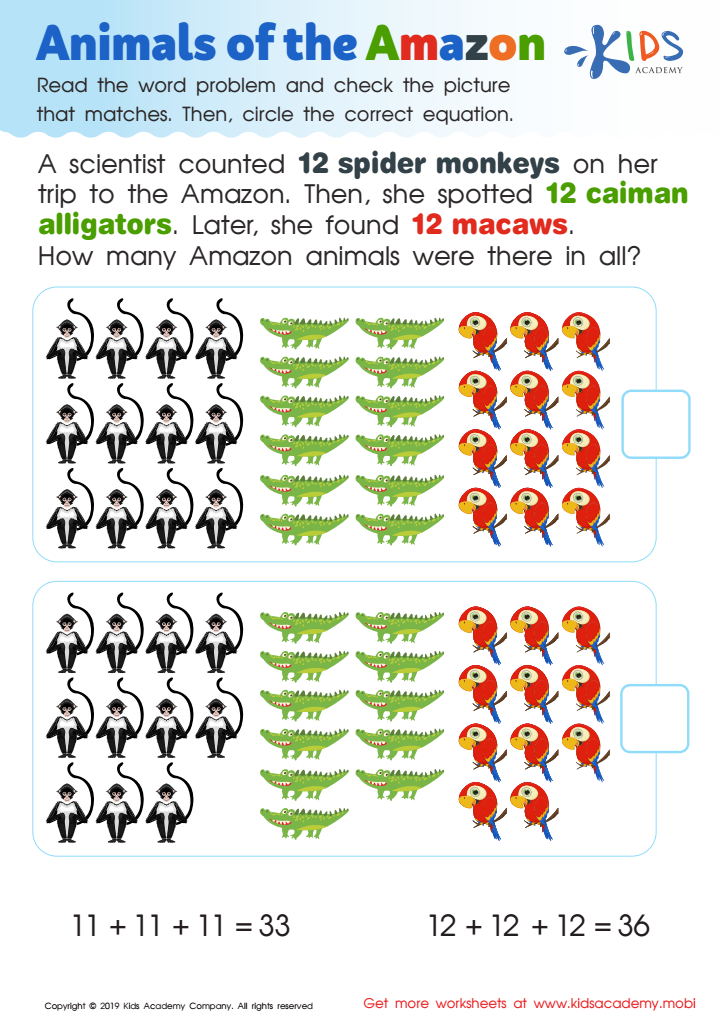
Animals of Amazon Worksheet
Kids will love exploring the Amazon while solving addition problems on this colorful PDF worksheet. They need to pay attention to the bolded info in each word problem to figure out the equation picture that matches. It's an exciting way to learn about the Amazon and practice adding multiple numbers!
Animals of Amazon Worksheet
Worksheet
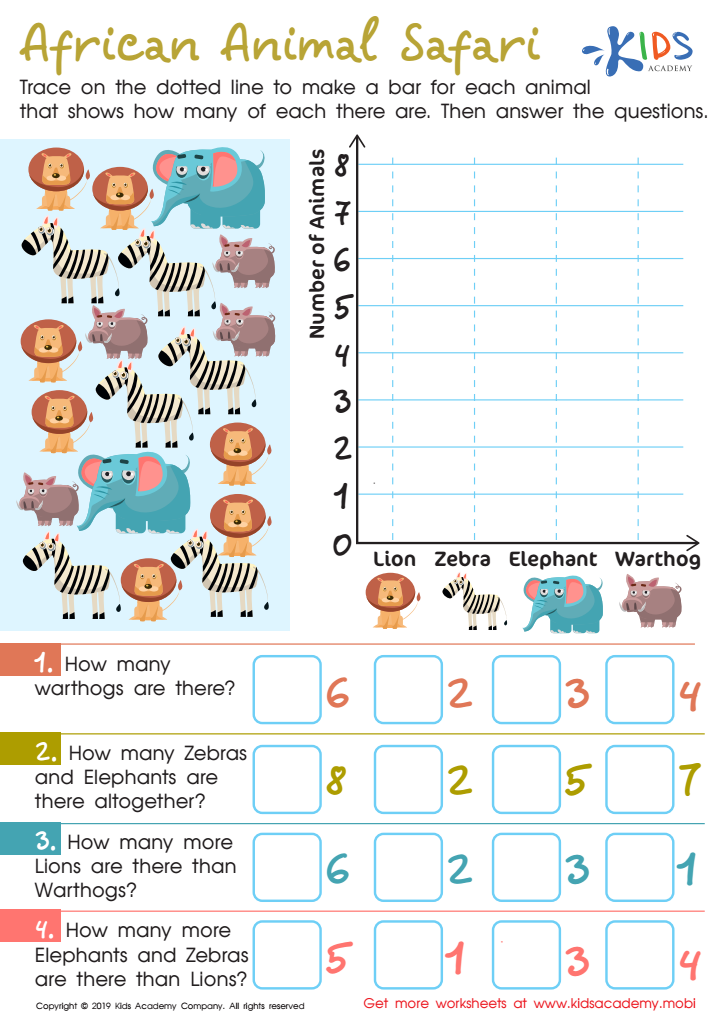
African Animal Safari Worksheet
Help students learn geography and math, with this worksheet. Examine the graph and ask your students questions. Have them answer using the graph and addition/subtraction exercises. This can help them name continents, countries, and animals unique to each.
African Animal Safari Worksheet
Worksheet
Join Kids Academy for Free
Who is primarily going to use this learning content?








Animal recognition activities are essential for 8-year-olds as they significantly enhance their cognitive and emotional development. When parents and teachers engage children in recognizing different animals, they cultivate observation skills, critical thinking, and knowledge of biodiversity. This process not only enriches their understanding of the natural world but also fosters a sense of responsibility and respect for living beings.
Furthermore, learning about animals can spark curiosity and inspire a love for nature, promoting outdoor exploration and environmental awareness. It encourages children to ask questions, seek answers, and think about ecosystems and their interconnectedness. These activities can also boost vocabulary and language skills, as children learn to identify, categorize, and describe various species.
Socially, group activities such as animal recognition can enhance teamwork and communication skills, as children discuss and share their findings with peers. The fun and interactive nature of these challenges makes learning enjoyable, aiding in retention and application of knowledge.
By prioritizing animal recognition challenges, parents and teachers help children develop important life skills while also nurturing empathy and ethical perspectives towards animals and the environment. This foundational knowledge sets the stage for responsible citizenship and a lifelong appreciation of the natural world.








