Shape identification Extra Challenge Worksheets for 8-Year-Olds
4 filtered results
-
From - To
Discover our "Shape Identification Extra Challenge Worksheets for 8-Year-Olds," designed to enhance and test your child’s understanding of geometry. Our engaging worksheets go beyond basic shapes, introducing more complex figures and combinations to keep curious minds stimulated. Perfect for young learners who need an additional challenge, these printable resources assist in building spatial awareness, critical thinking, and cognitive skills necessary for mastering shape identification. Created by experienced educators, every sheet is both fun and educational, ensuring your child stays motivated and confident. Ideal for home practice or classroom enrichment. Encourage your child’s geometric curiosity today!
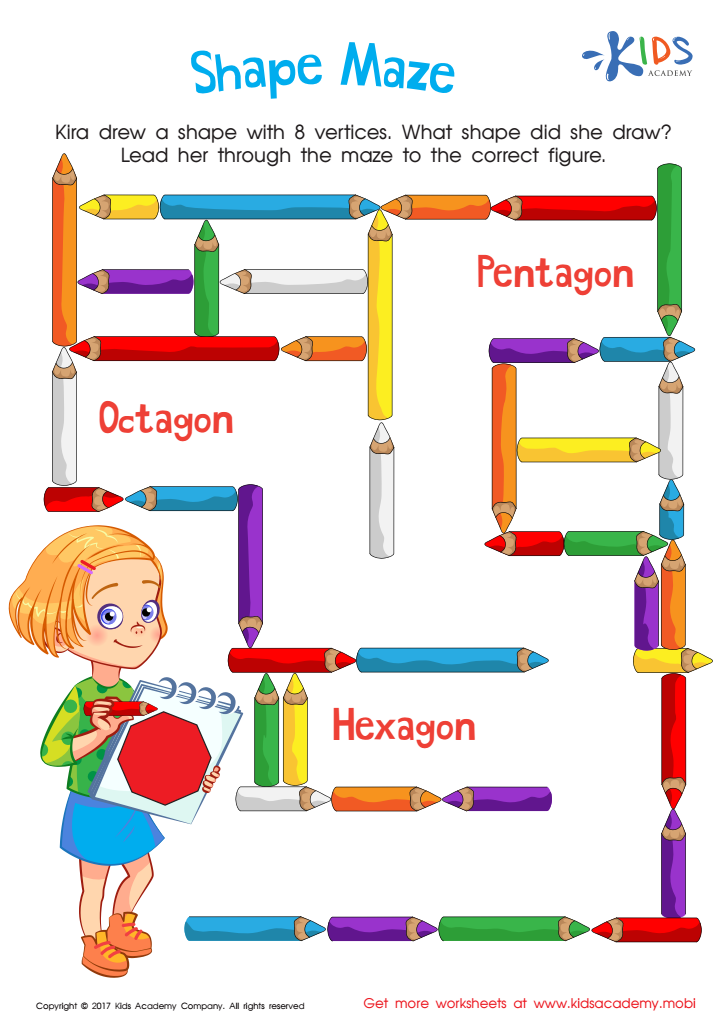
Shape Maze Worksheet
 Assign to My Students
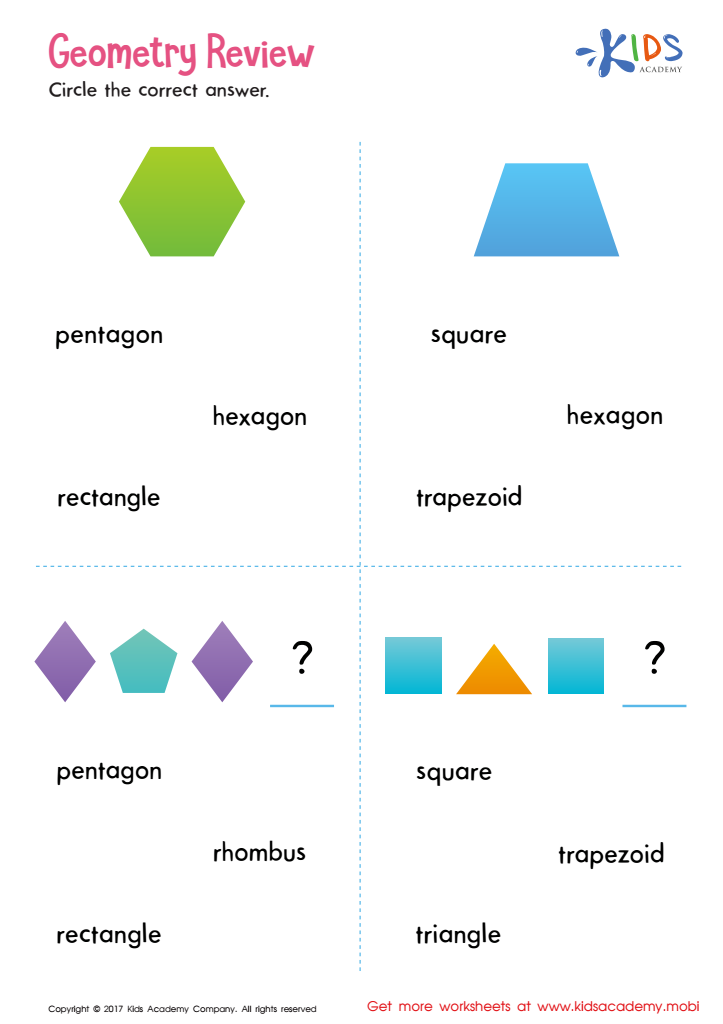
Geometry Review Printable
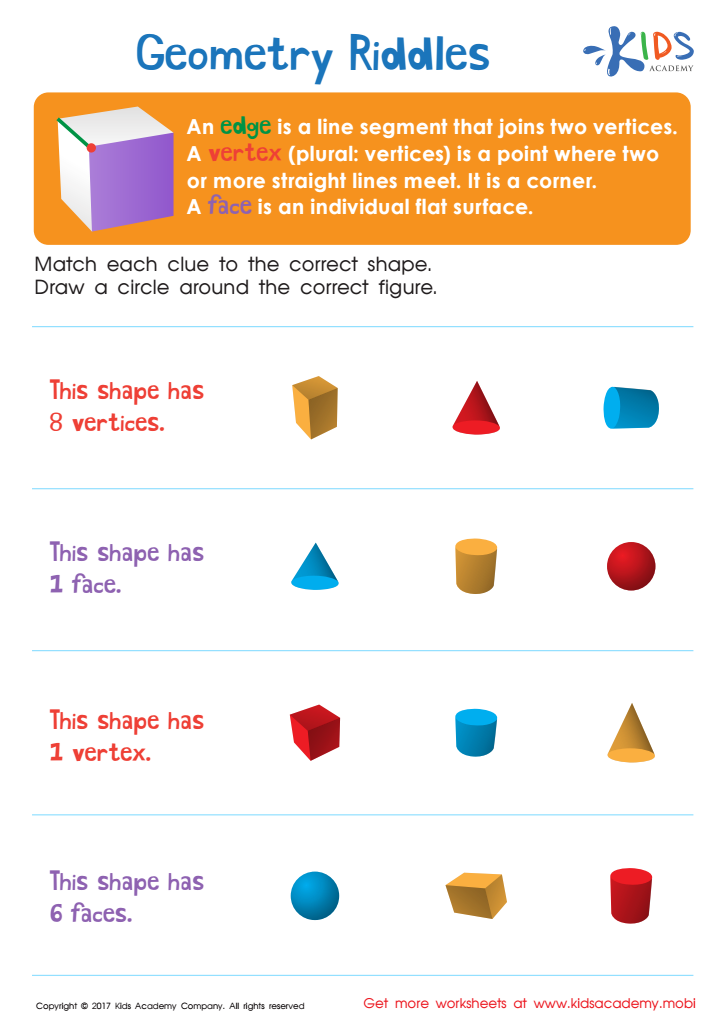
Geometry Riddles Printable
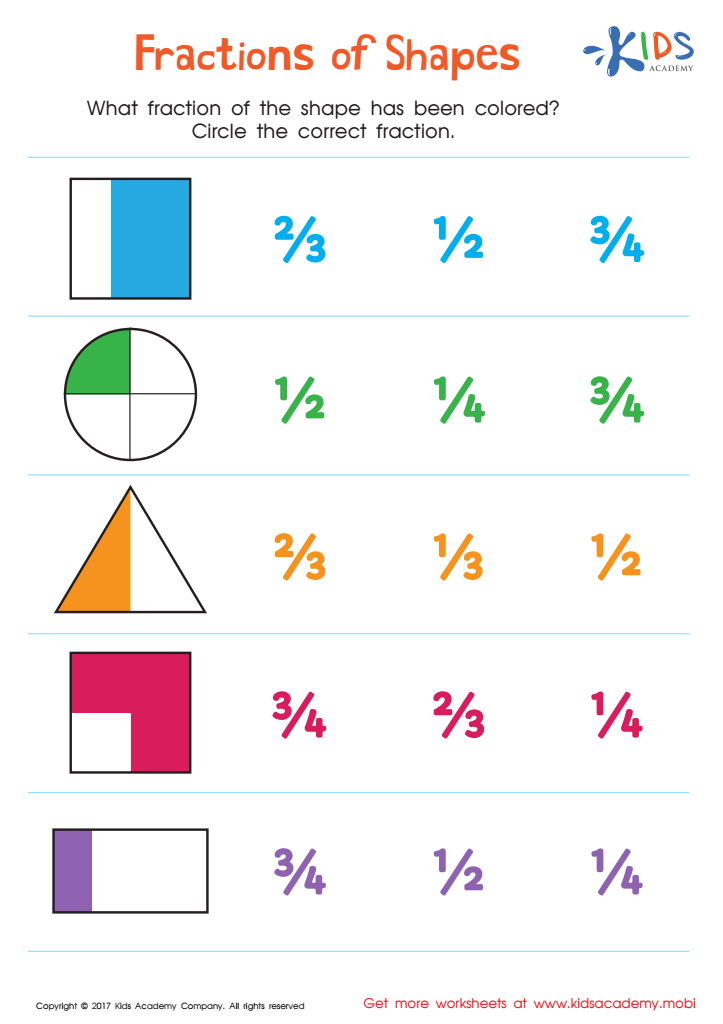
Fractions of Shapes: Math Concept Worksheet








Parents and teachers should care about Shape Identification Extra Challenges for 8-year-olds because these activities play a significant role in a child's cognitive and academic development. At this age, children are at a critical stage where foundational skills are being solidified, and understanding geometric shapes is an essential component of that foundation.
Engaging in shape identification challenges helps children develop their spatial awareness, which is the ability to understand and remember the spatial relations among objects. Enhanced spatial awareness improves their ability to navigate the physical world, crucial for activities ranging from sports to everyday tasks. These skills are also foundational for later learning in science, technology, engineering, and mathematics (STEM) subjects.
Furthermore, such exercises foster critical thinking and problem-solving abilities. Children learn to observe, compare, and contrast different shapes, which enhances their analytical skills. These challenges also improve attention to detail and concentration, as children must focus on specific attributes of each shape to identify them accurately.
Additionally, shape identification challenges can be enjoyable and can boost confidence. When children successfully complete these challenges, they experience a sense of achievement that encourages a positive attitude towards learning.
Ultimately, incorporating shape identification challenges prepares children for future academic success while making learning fun and engaging for them, promoting a lifelong love for discovery and education.








