Shape Recognition Extra Challenge Grade 1 Worksheets
8 filtered results
-
From - To
Enhance your first grader's learning experience with our Shape Recognition Extra Challenge Grade 1 Worksheets! These engaging printable activities are designed to foster critical thinking and reinforce shape identification skills in a fun and interactive manner. Children will explore a variety of shapes through exciting exercises, puzzles, and creative activities that challenge their cognitive abilities. Our worksheets support early math learning while promoting spatial awareness and problem-solving skills. Perfect for both in-class and at-home learning, these shape recognition challenges will captivate young minds and encourage a love for geometry. Start your child’s shape discovery adventure today!
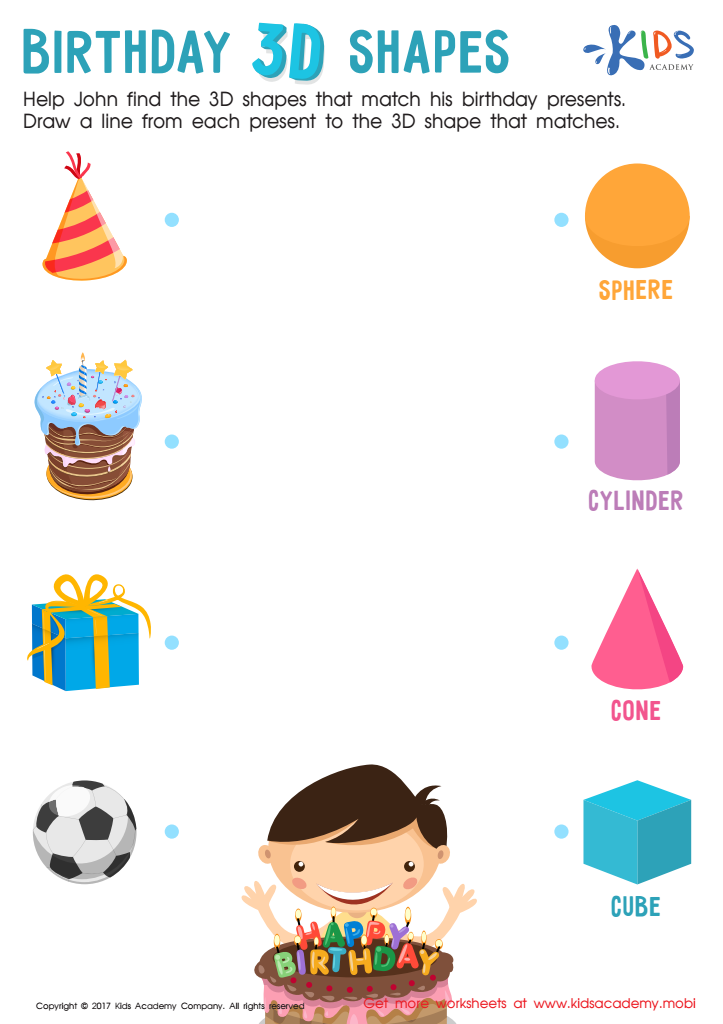
Birthday 3D Shapes Worksheet
 Assign to My Students
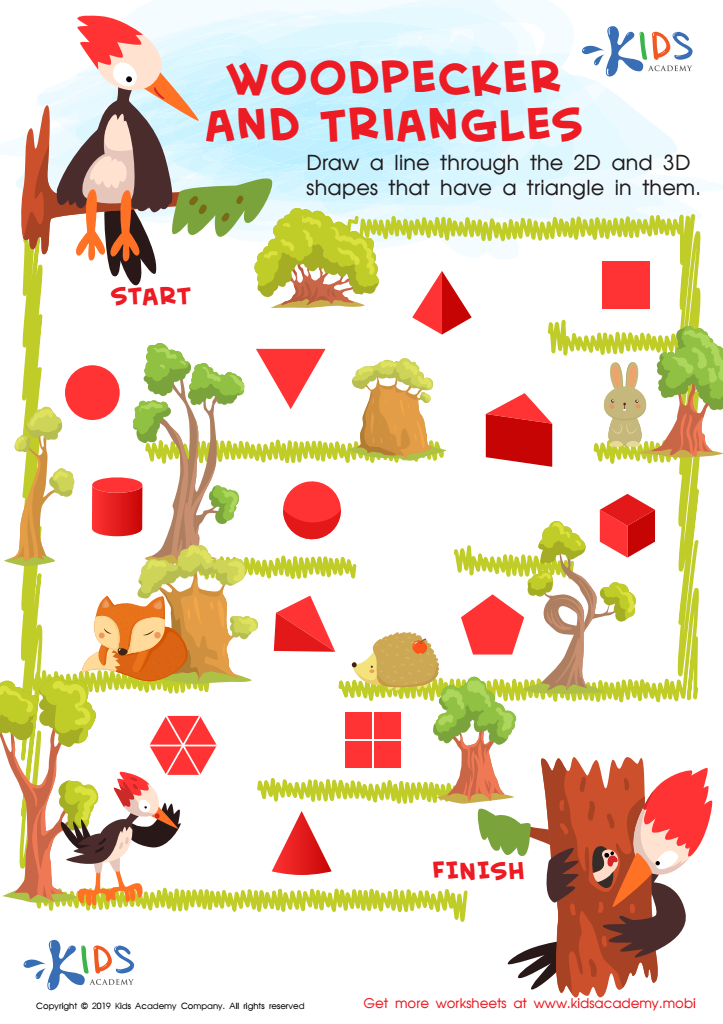
Woodpecker and Triangles Worksheet
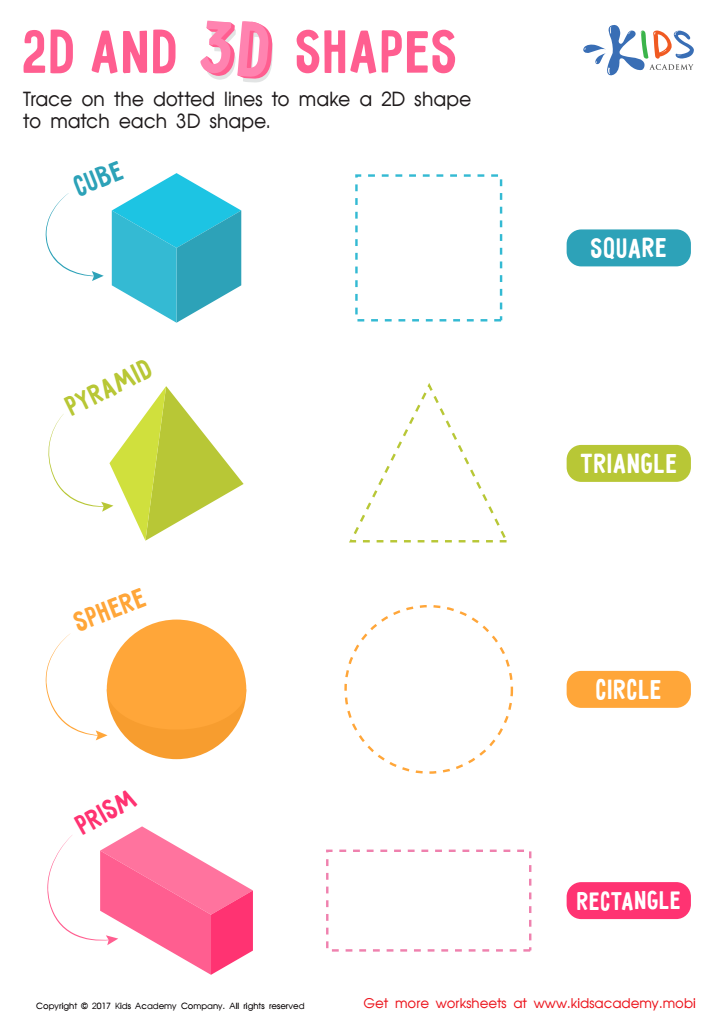
2D and 3D Shapes Worksheet
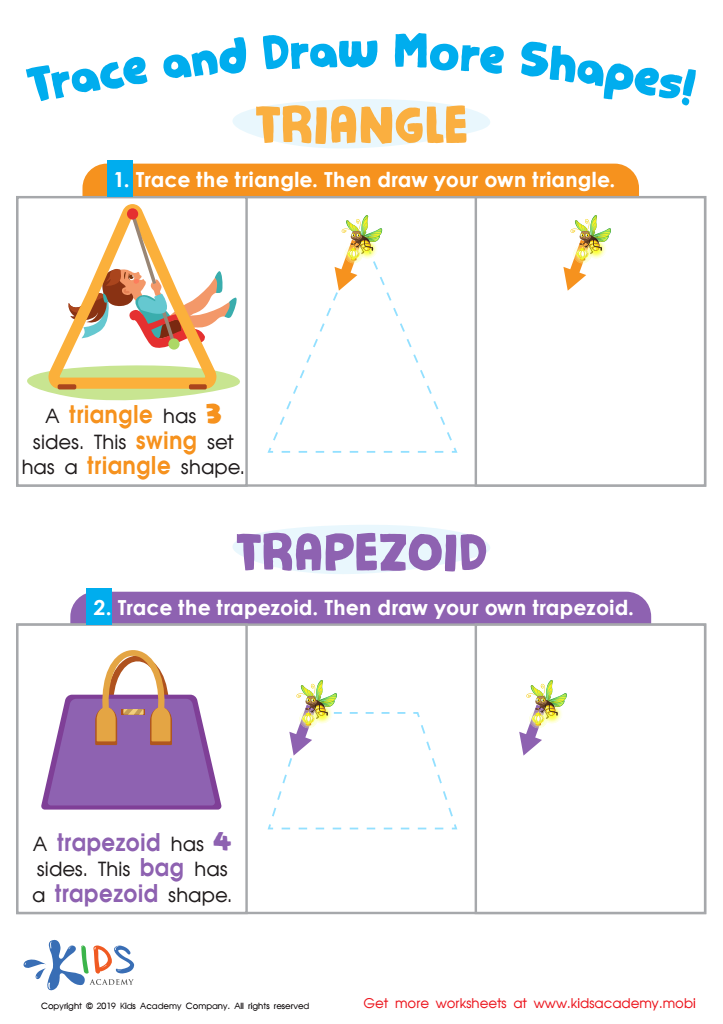
Trace and Draw More Shapes Worksheet
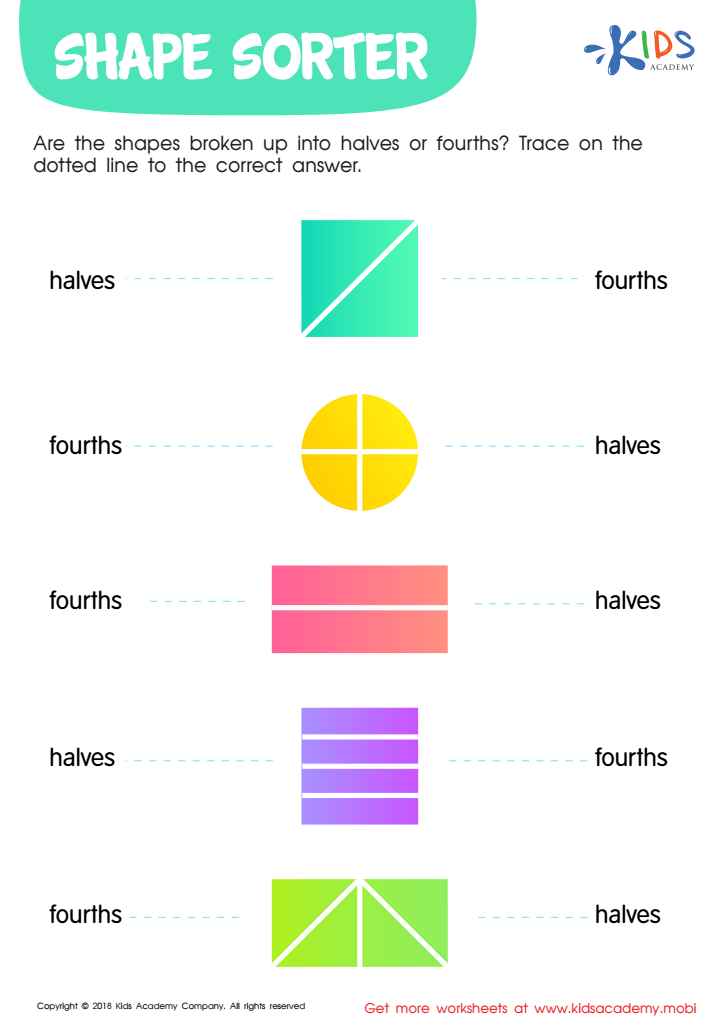
Shape Sorter Worksheet
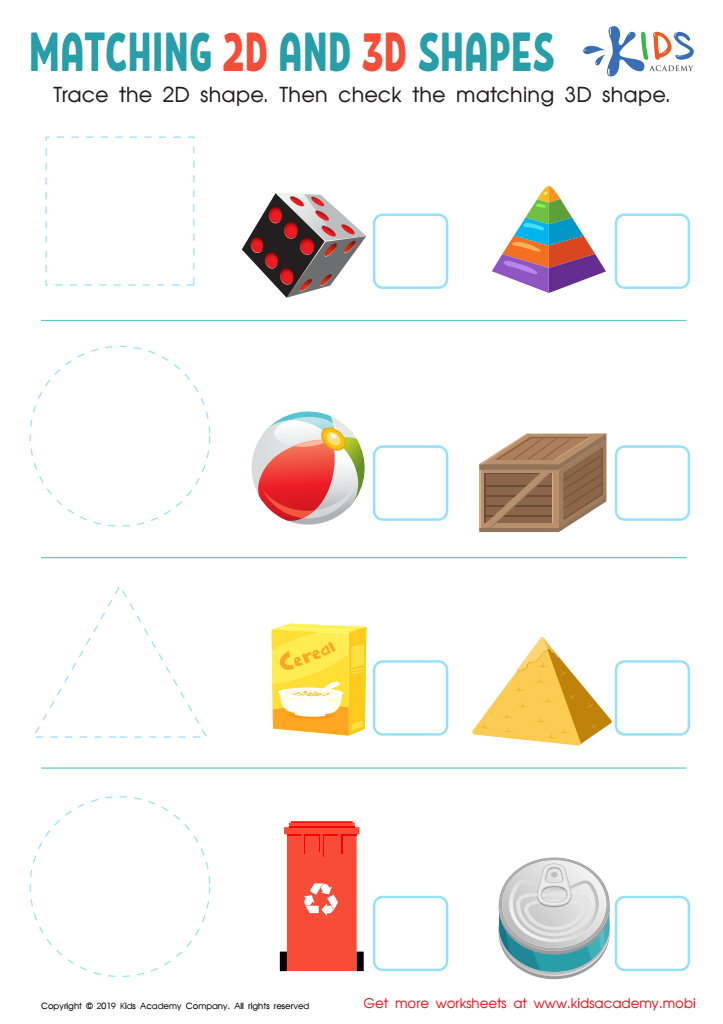
Matching 2D and 3D Shapes Worksheet
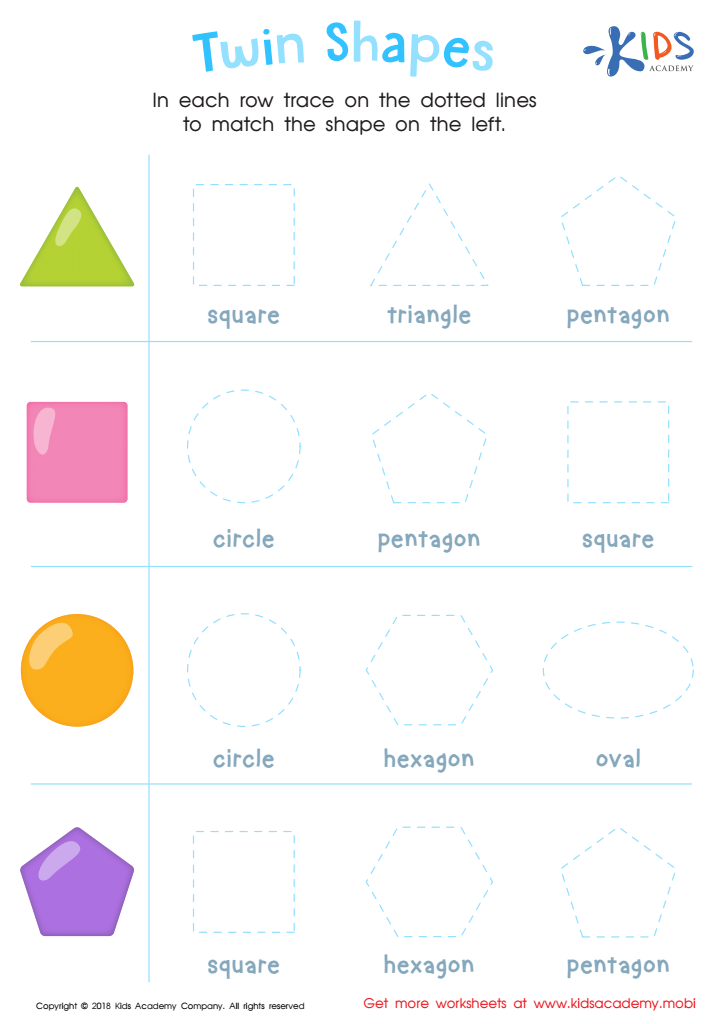
Twin Shapes Dot-to-Dot Worksheet
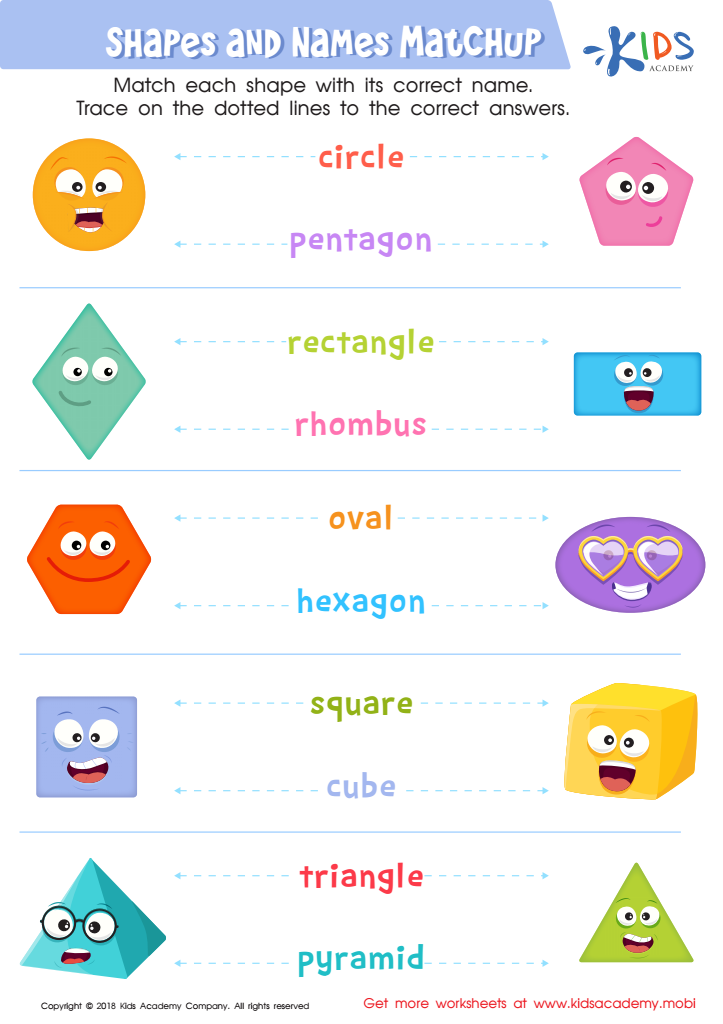
Shapes and Names Matchup Worksheet


.jpg)





Shape recognition is a fundamental skill that lays the groundwork for various aspects of early learning in grade 1. Parents and teachers should prioritize shape recognition because it not only helps children identify and categorize shapes in their environment but also enhances critical thinking and problem-solving abilities. Recognizing shapes is integral for developing spatial awareness, a skill essential for future mathematical concepts such as geometry and measurement.
Moreover, engaging in shape recognition challenges encourages cognitive development through exploration and manipulation. As children identify and describe different shapes, they improve their language skills and expand their vocabulary, learning terms like "triangle," "rectangle," and "hexagon." This practice fosters creativity as they begin to see how shapes can combine to form new structures, an important aspect of both art and science.
Furthermore, incorporating extra challenges related to shape recognition can motivate students, making learning both fun and engaging. Parents and teachers can collaborate to create interactive activities, reinforcing these important skills beyond the classroom. Ultimately, fostering strong shape recognition abilities in grade 1 not only enriches a child's learning experience but also supports their overall academic growth. Recognizing the value of this skill early on sets a strong foundation for future learning challenges.