Visual perception Extra Challenge Grade 1 Worksheets
3 filtered results
Difficulty Level
Grade
Age
-
From - To
Subject
Activity
Standards
Explore our "Visual Perception Extra Challenge Grade 1 Worksheets" designed to enhance students' cognitive skills while making learning fun! These printable worksheets offer an array of engaging activities that promote visual discrimination, spatial awareness, and pattern recognition. Perfect for first graders, each worksheet is thoughtfully crafted to challenge young minds, helping them develop essential foundational skills in a captivating way. Spice up your lesson plans with these creative exercises that support classroom and home learning. Whether you're a teacher or a parent, our worksheets are an excellent resource for fostering visual perception skills in children. Get started today and watch them thrive!
Favorites
With answer key
Interactive
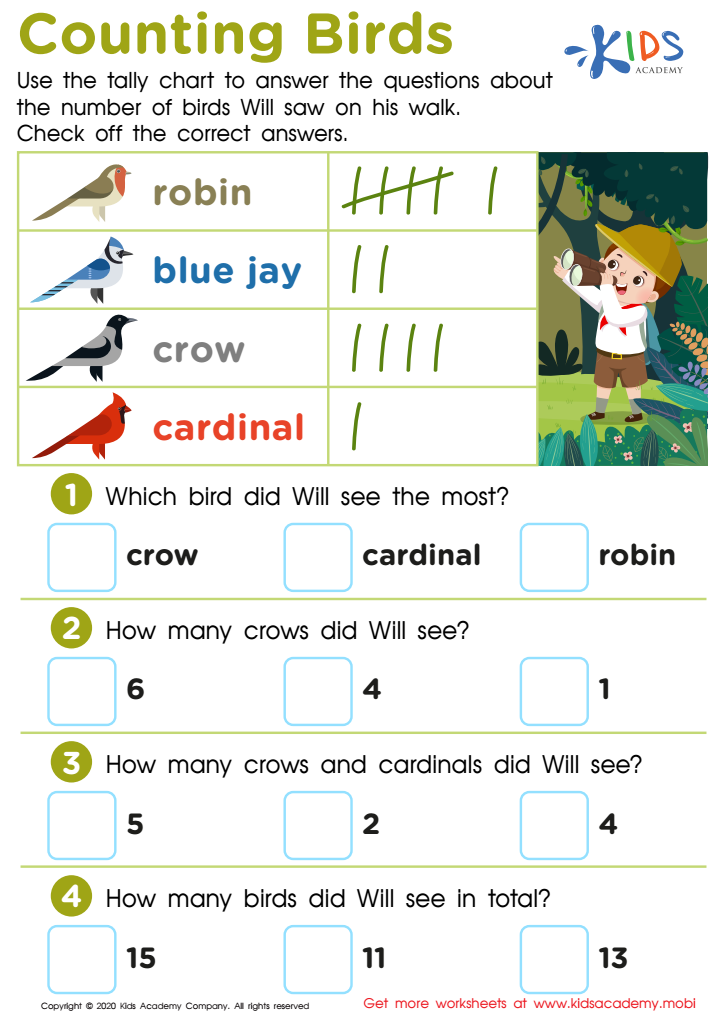
Counting Birds Worksheet
Introduce your child to the exciting activity of bird watching! This PDF worksheet features a tally chart of the different types of birds Will saw on his walk. Have your kid use the tally chart to organize information and use it to answer the questions that follow, thus boosting early science and math skills.
 Assign to My Students
Counting Birds Worksheet
Worksheet
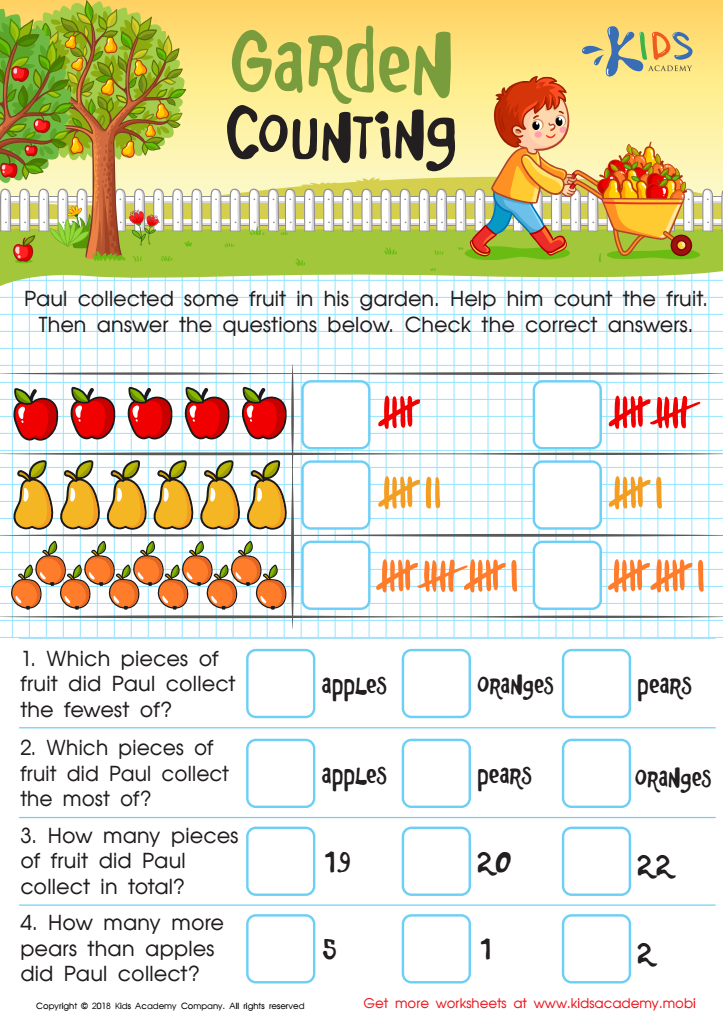
Garden Counting Worksheet
Help Paul count his fruit! Look at each type and count the total; check the box with the right number. Answer the questions below to report your findings and the types of fruit. Let's help Paul count his delicious harvest!
Garden Counting Worksheet
Worksheet
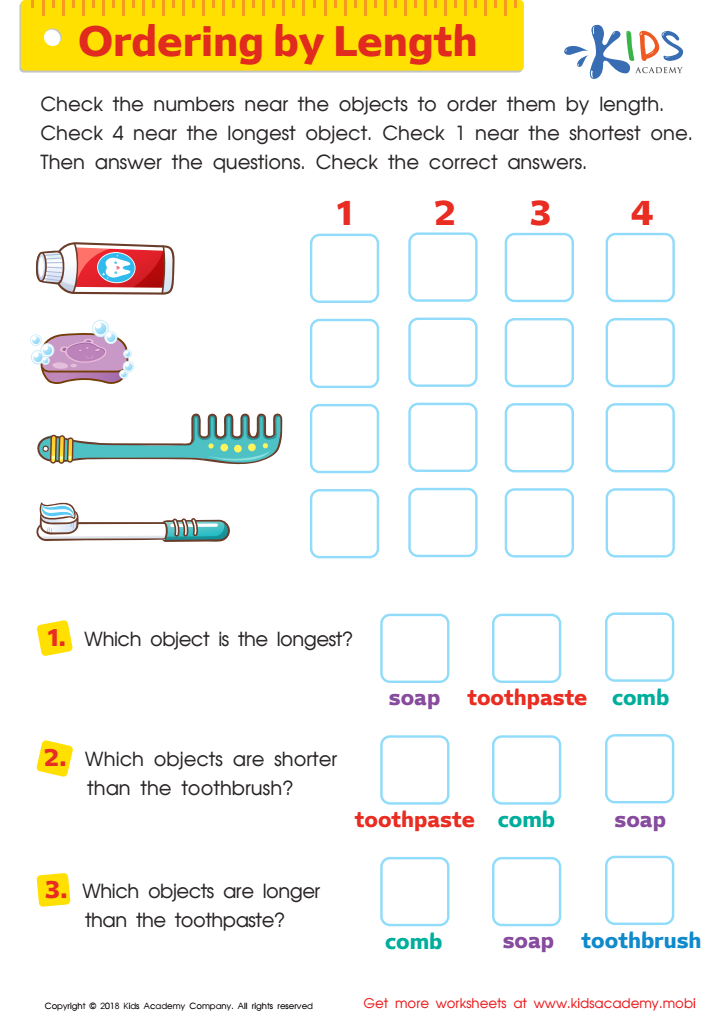
Ordering by Length Worksheet
Compare objects to learn about measurement! Before purchasing a ruler, get kids to understand length by comparing objects and labeling them as longer or shorter than others. Use this printable math worksheet to help children think about measurement. It will show pictures of objects and ask children to categorize them by length.
Ordering by Length Worksheet
Worksheet
Join Kids Academy for Free
Who is primarily going to use this learning content?






Visual perception is a crucial skill for Grade 1 students, as it forms the foundation for many cognitive and learning processes. Parents and teachers should care about this skill because it impacts a child's ability to understand and interact with their environment. Strong visual perception supports the development of literacy, numeracy, and fine motor skills. For example, recognizing shapes, patterns, and letters enhances reading and math abilities.
Children with well-developed visual perception can efficiently process visual information, making it easier to follow instructions, complete assignments, and engage in activities like drawing or writing. Conversely, difficulties in visual perception can lead to challenges in academics and everyday tasks, resulting in frustration or decreased confidence.
Additionally, fostering visual perception can improve a child's observational skills, attention to detail, and ability to make connections between visual and conceptual information. Supporting this area of development through playful activities, games, and targeted exercises prepares students not just for the immediate curriculum but for lifelong learning.
In summary, prioritizing visual perception in Grade 1 equips children with essential tools for success in school and in their everyday lives, making it a key focus for both parents and educators.