Comparing Fractions Extra Challenge Addition & Subtraction Worksheets
4 filtered results
-
From - To
Enhance your students' mathematical skills with our "Comparing Fractions Extra Challenge Addition & Subtraction Worksheets" designed for advanced learners. These worksheets provide rigorous exercises in comparing fractions through intricate addition and subtraction problems. Ideal for deepening understanding, the worksheets help students master both conceptual and practical aspects of fraction operations. Engaging and thought-provoking, they're perfect for supplementing classroom lessons or homework. Tailored for early grades, they promote critical thinking and numerical proficiency. Equip your students with the tools to excel in math through challenging yet achievable tasks that foster growth and confidence in their abilities.
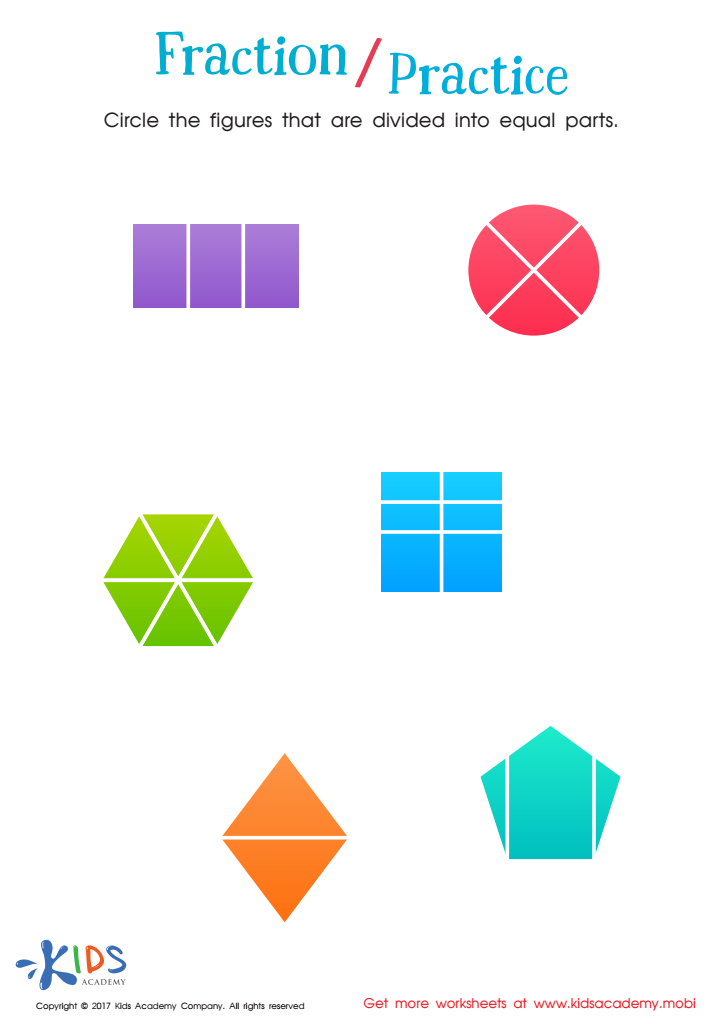
Fractions: Shapes Worksheet
 Assign to My Students
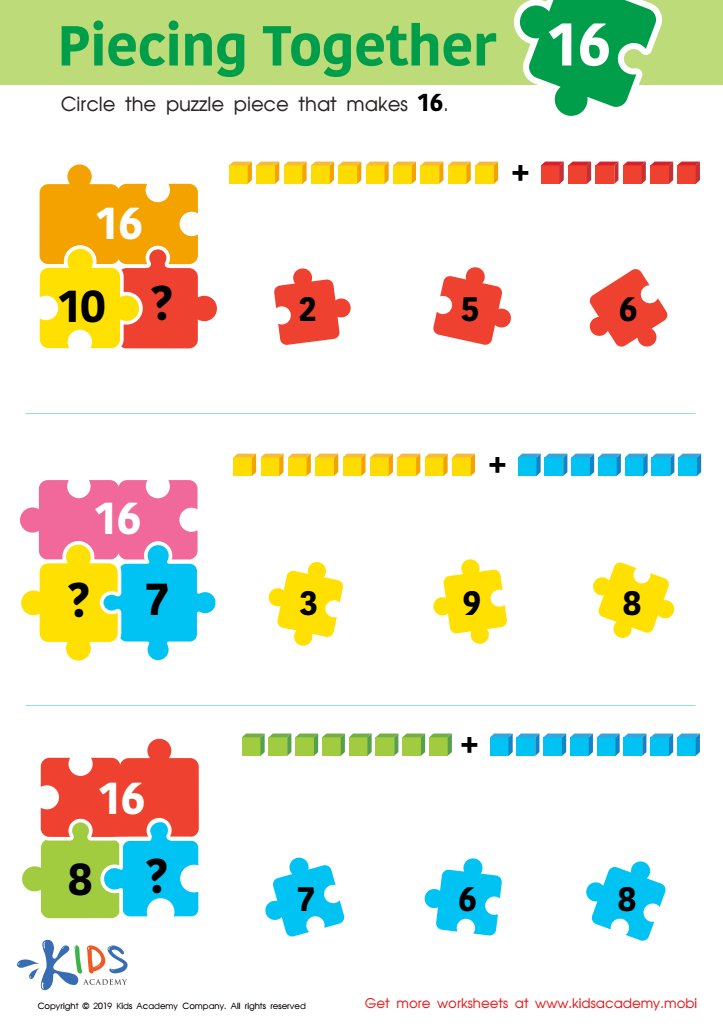
Piecing Together 16 Worksheet
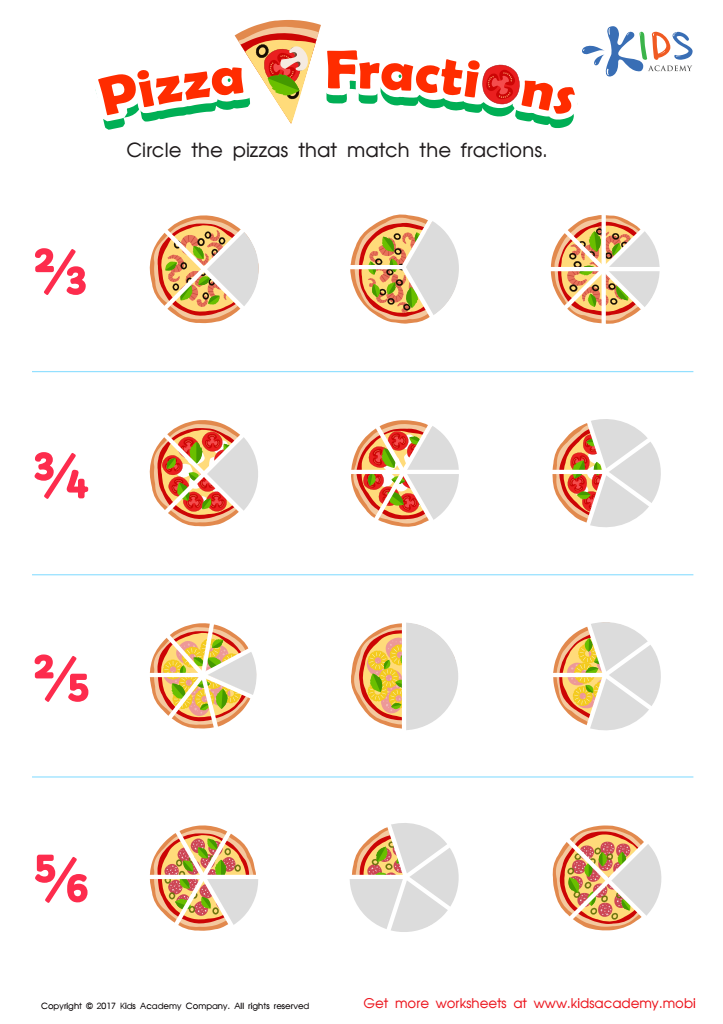
Fractions: Pizza Printable
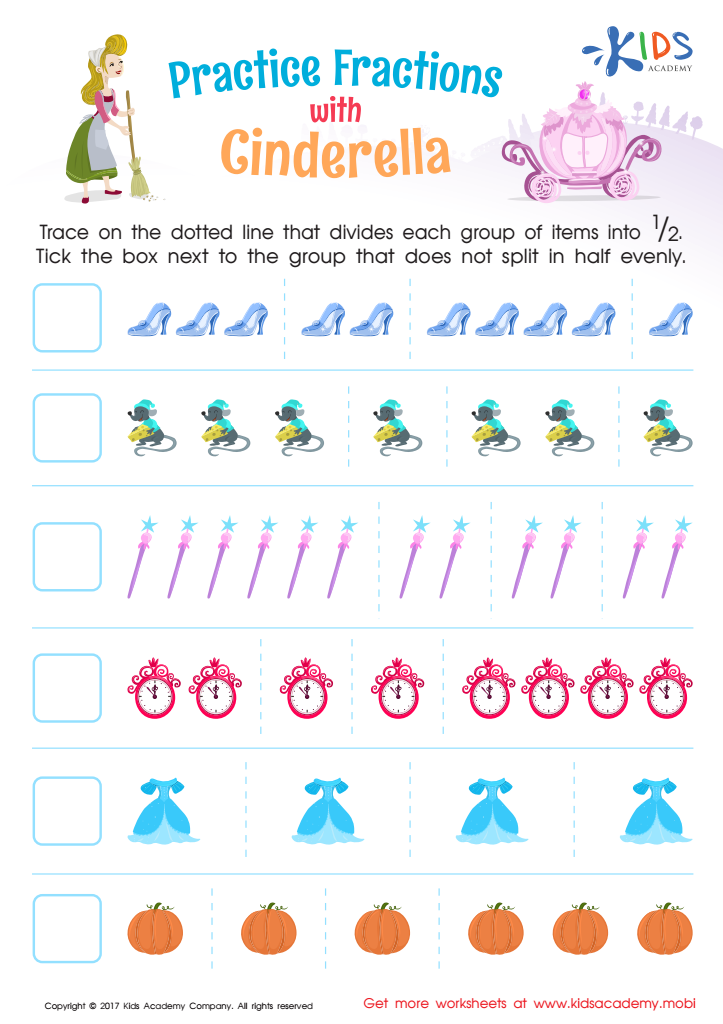
Fractions: Cinderella Printable








Understanding fractions is a crucial aspect of mathematics education, as it lays the foundation for more complex concepts in math and science. Parents and teachers should place a high value on Comparing Fractions Extra Challenge Addition & Subtraction exercises for several reasons.
Firstly, these exercises enhance analytical skills. When students compare and manipulate fractions, they develop a deeper understanding of numerical relationships, which strengthens their overall mathematical reasoning. Secondly, engaging with such challenges improves computational fluency. Practice in adding and subtracting fractions helps students become more comfortable with operations involving different denominators, a critical skill in arithmetic.
Moreover, perseverance and problem-solving abilities are nurtured through these extra challenges. When faced with more complex fraction problems, students learn to approach solutions methodically and persistently. Additionally, these exercises often promote a growth mindset. By tackling challenging problems, students come to realize that effort leads to improvement.
Parents and educators investing time in reinforcing these skills through additional fraction challenges are not just teaching mathematics. They are cultivating critical thinkers and persistent problem-solvers. Encouraging students in these areas paves the way for academic success, boosts their confidence, and equips them with skills valuable well beyond the classroom.








