Contextual understanding Kindergarten Worksheets
6 filtered results
Difficulty Level
Grade
Age
-
From - To
Subject
Activity
Standards
Introduce your child to the fascinating world of language with our Contextual Understanding Kindergarten Worksheets. At Kids Academy, we've crafted fun and engaging activities that help young learners grasp the meaning of words and phrases within their context. These worksheets are designed to enhance critical thinking and comprehension by presenting kids with relatable scenarios and simple questions. Perfect for home or classroom use, our worksheets encourage active reading and effective communication skills. By exploring these exercises, kindergarteners will build a strong foundation for future language development and academic success. Unlock the joy of learning with Kids Academy today!
Favorites
With answer key
Interactive
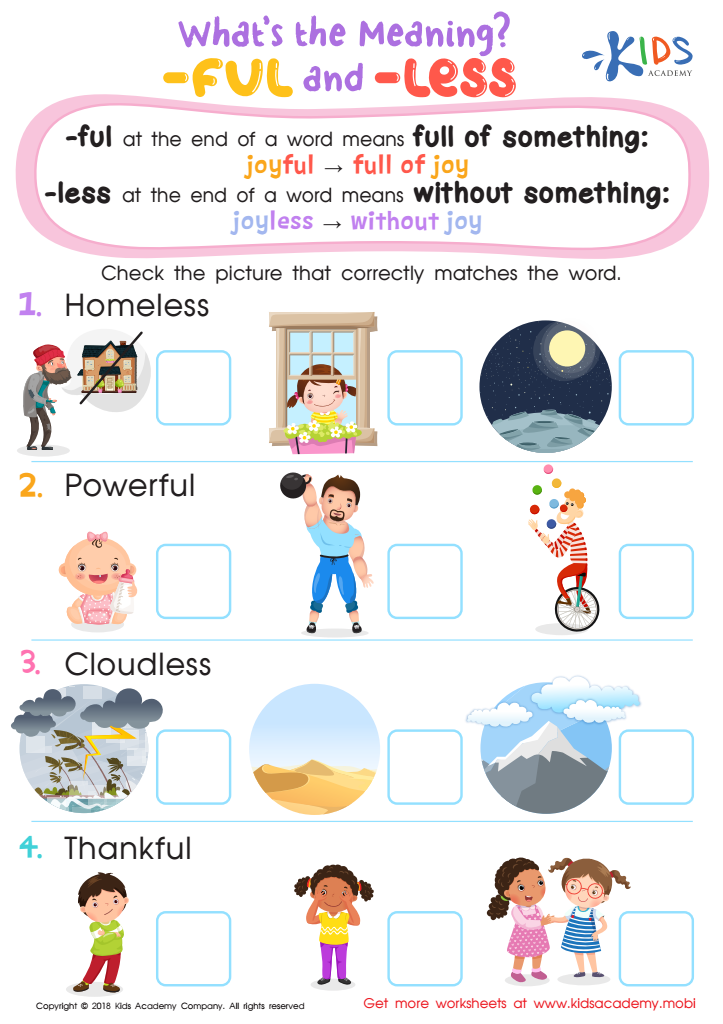
What's the Meaning? Worksheet
Look with your youngster through this colorful worksheet and match the pictures to the words at the top. These words have different meanings due to either a prefix or suffix being added, such as "ful" or "less".
 Assign to My Students
What's the Meaning? Worksheet
Worksheet
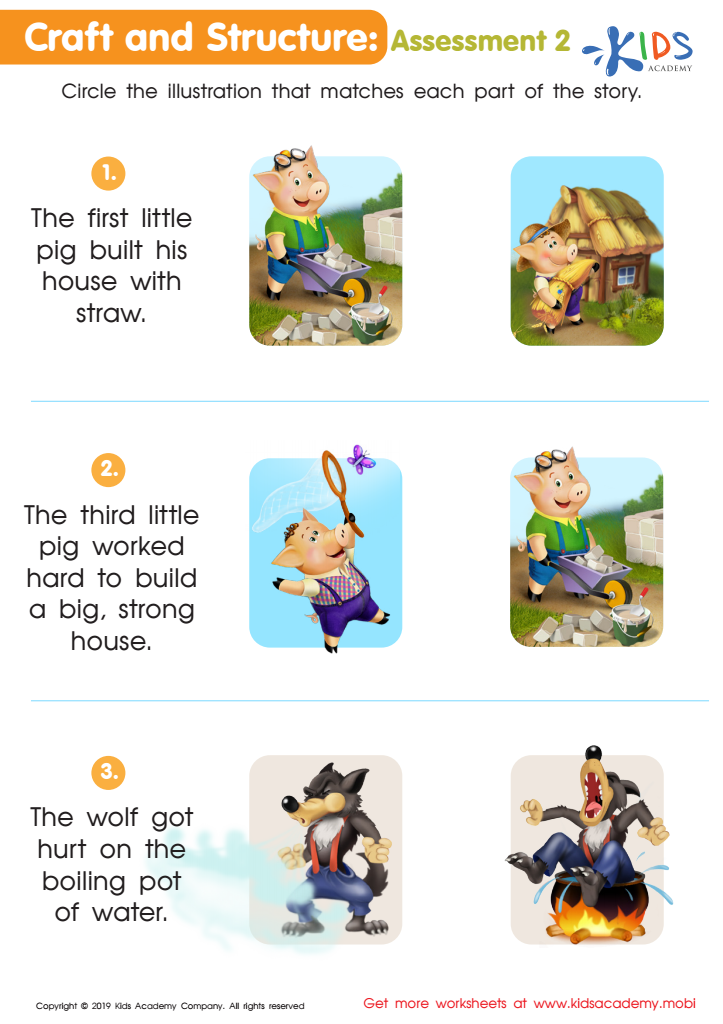
Craft and Structure: Assessment 2 Worksheet 2
This fun printout with colorful illustrations will assess how much your kids pay attention to story time. Go through the pictures and help them circle the ones that match each part of the story. Stimulate their brains and have fun in the process!
Craft and Structure: Assessment 2 Worksheet 2
Worksheet
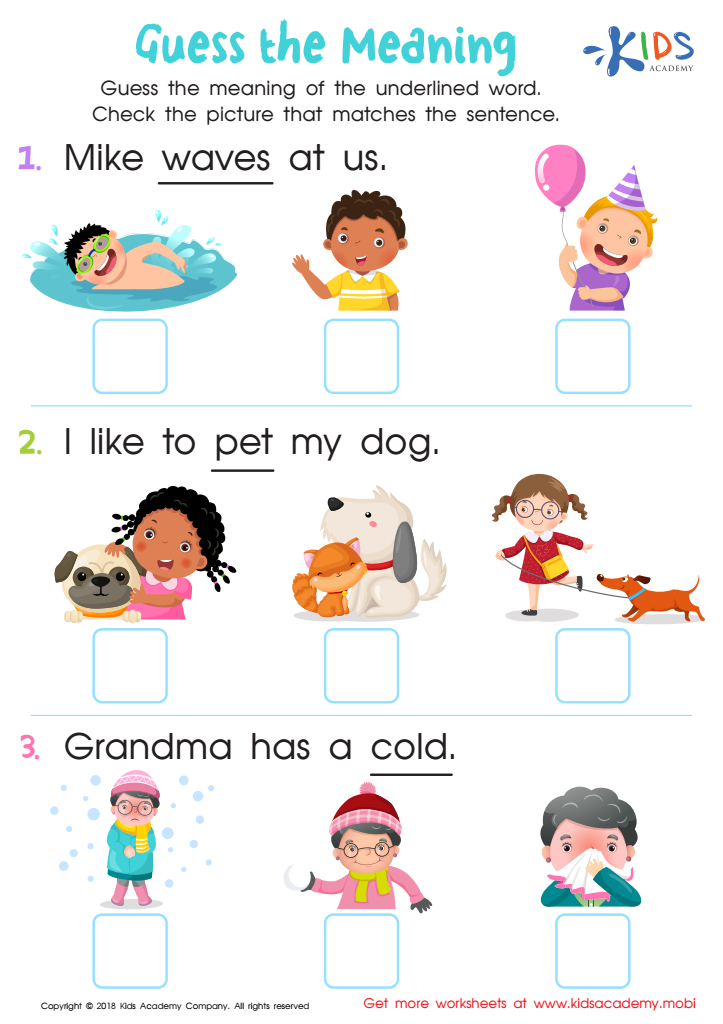
Guess the Meaning Worksheet
Help your child learn the meanings of words in different contexts by using this colourful, free worksheet. What is the meaning of the underlined words in each sentence? Look at the images and pick the one that accurately describes the word's context.
Guess the Meaning Worksheet
Worksheet
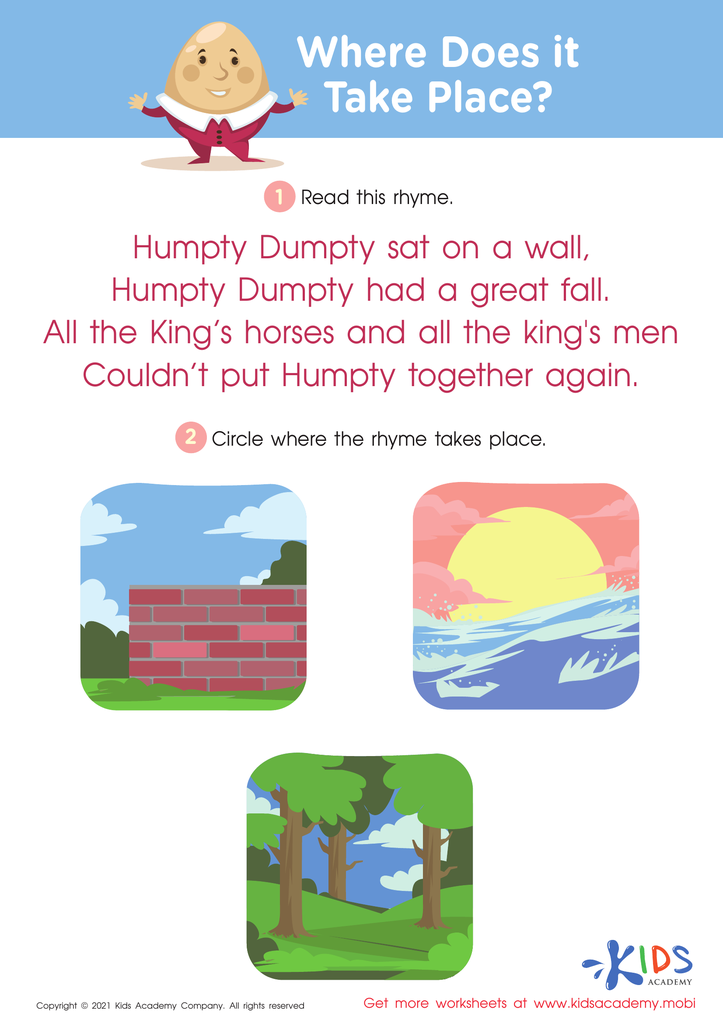
Where Does It Take Place? Worksheet
Original:
The number of children who are enrolled in the school has increased by 10% from the previous year.
Enrollment in the school has increased 10% from last year, with more children attending.
Where Does It Take Place? Worksheet
Worksheet
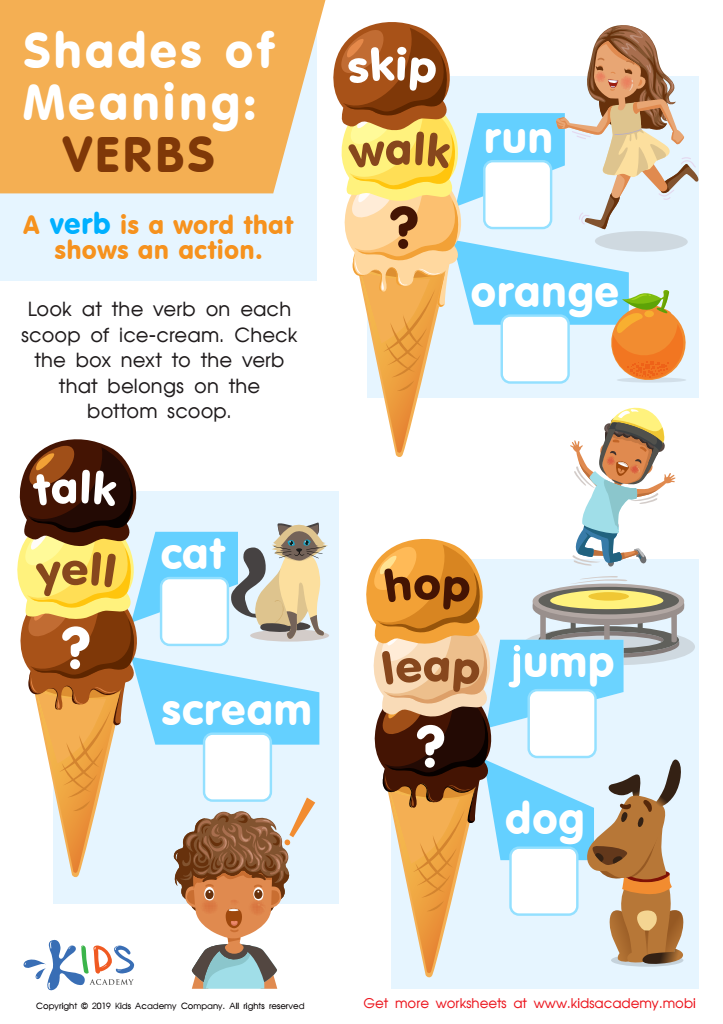
Shades of Meaning: Verbs Worksheet
Verbs are words that show action. Introduce kindergartners to verbs by having them check the box next to the verb that belongs on the bottom scoop in a worksheet. This is a great way to teach them this important part of speech and help them learn to write proper sentences and speak correctly.
Shades of Meaning: Verbs Worksheet
Worksheet
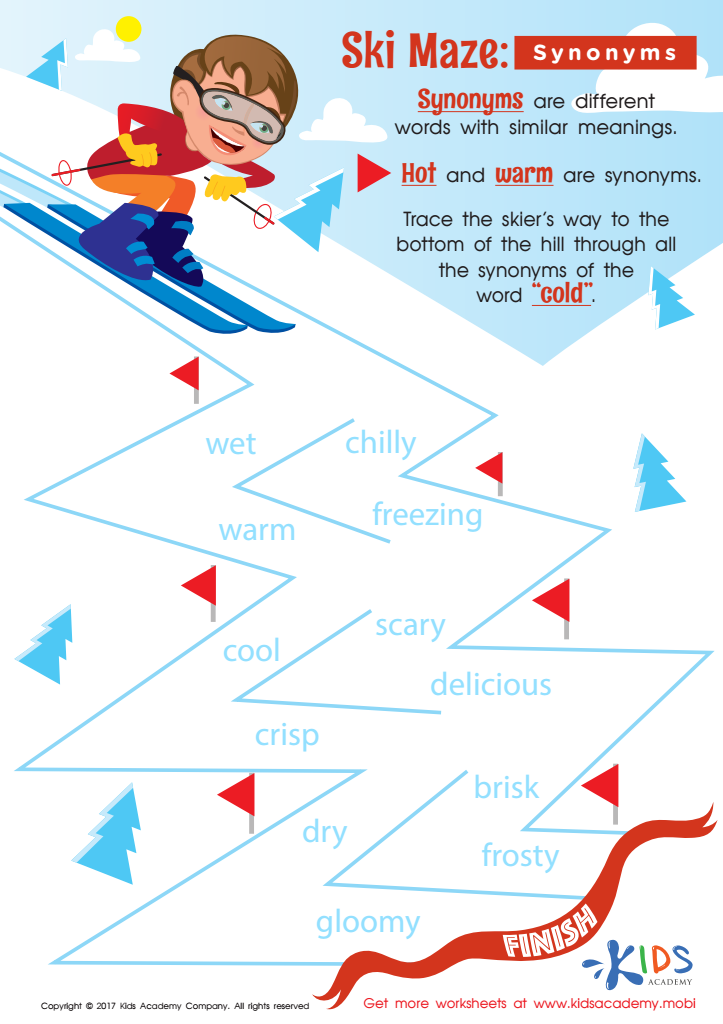
Free Printable Synonym Worksheet
Our free printable synonym worksheet for 2nd grade will help kids learn similar words to expand their vocabulary. Kids will have fun challenging themselves to find all the words that are synonyms for “cold”. Enhance their language and writing with this joyful worksheet!
Free Printable Synonym Worksheet
Worksheet
Join Kids Academy for Free
Who is primarily going to use this learning content?







Contextual understanding in kindergarten is vital because it forms the bedrock for a child’s future learning and social development. At this age, children are like sponges, absorbing information from their surroundings. Contextual learning connects new knowledge to their existing experiences and environment, making learning meaningful and memorable. For instance, children who understand the context of a story better grasp narrative structure, improve language skills, and enrich their imagination.
Teachers who emphasize contextual learning create a more engaging and effective educational setting. This approach caters to diverse learning styles and helps students understand complex concepts through real-life connections. For example, using hands-on activities to explain counting, rather than rote memorization, makes math practical and relevant.
For parents, contextual understanding fosters a supportive home learning environment. When home and school experiences are linked, children receive reinforced learning, leading to better retention and application. Simple activities like cooking together can incorporate lessons on measurements and sequences, enhancing their grasp of math and science.
Overall, an emphasis on contextual understanding in kindergarten supports holistic development, nurturing cognitive, social, and emotional growth. It equips children with the tools to make sense of the world around them and encourages lifelong critical thinking and curiosity.