Fine Motor Skills (coloring) Kindergarten Worksheets
3 filtered results
-
From - To
Boost your child's fine motor skills with our engaging kindergarten coloring worksheets from Kids Academy! Designed to enhance hand-eye coordination and dexterity, these printable worksheets offer a fun and interactive way for little learners to practice coloring within lines and improve pencil control. Our diverse range of themes and characters captivates young minds, ensuring that building these critical skills is a joyful and rewarding experience. Ideal for at-home learning or classroom activities, these worksheets provide the perfect foundation for writing and other essential tasks. Download now and watch your kindergartener’s abilities flourish!
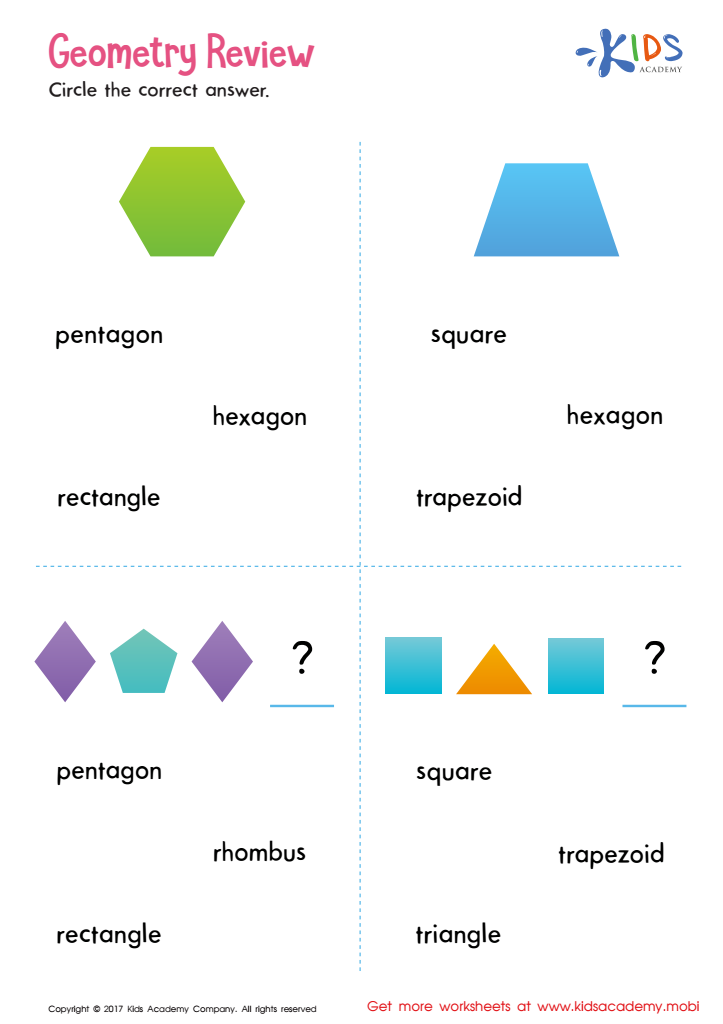
Geometry Review Printable
 Assign to My Students
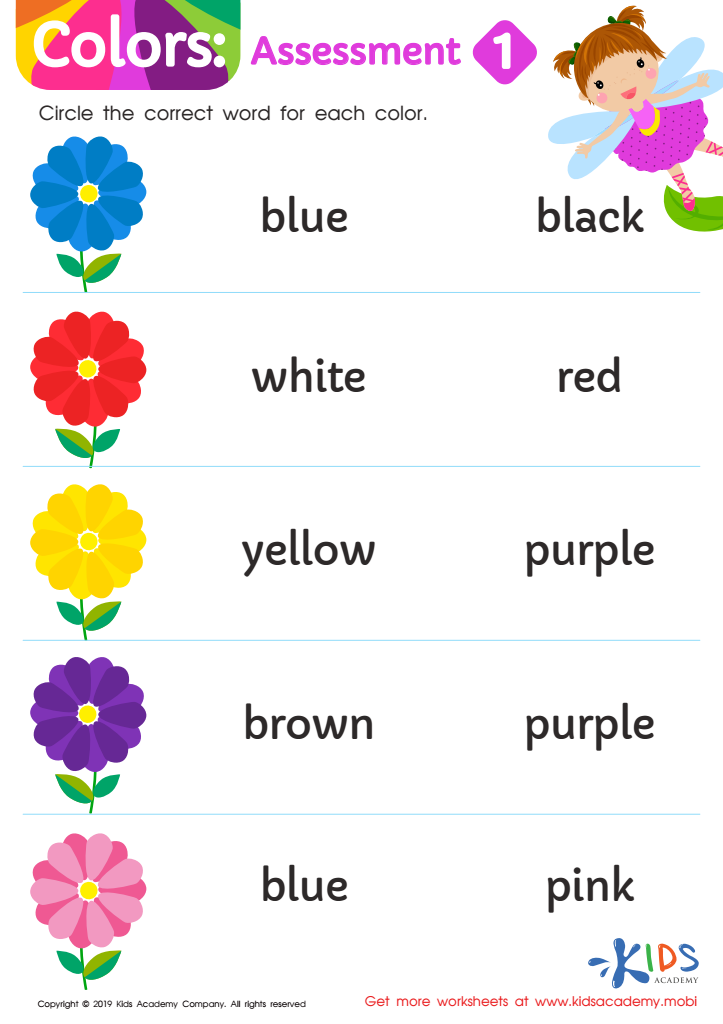
Colors: Assessment 1 Worksheet
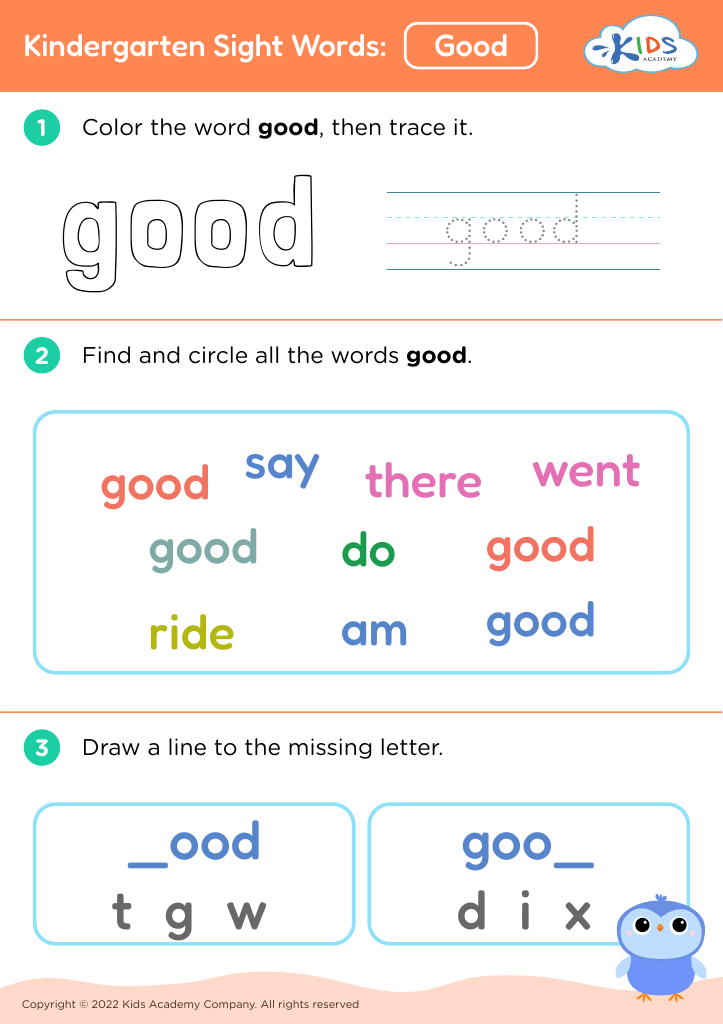








Fine motor skills, such as those developed through coloring in kindergarten, are foundational for children's overall development. These skills involve the use of small muscles in the hands and fingers, which are crucial for tasks like writing, buttoning a shirt, and tying shoelaces. Encouraging children to practice coloring helps them improve their hand-eye coordination, dexterity, and control, thereby facilitating their ability to perform everyday tasks independently.
Coloring also supports cognitive development. It requires children to make decisions about color choices and provides an early understanding of concepts like boundaries and spatial relationships. By deciding which color to use and staying within the lines, children enhance their problem-solving abilities and attention to detail, which are essential for successful learning in all subjects.
Socially and emotionally, coloring can be a therapeutic activity that promotes relaxation and reduces stress. It offers children a chance to express their creativity and individuality, boosting their confidence and self-esteem. During group coloring activities, children learn to share, cooperate, and engage with their peers, fostering important social skills.
Parents and teachers should therefore view coloring not just as a pastime, but as a critical component of a child's development that sets the groundwork for future academic and personal success.








