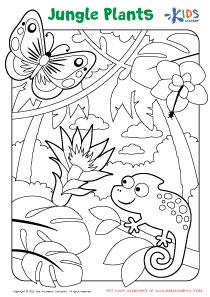
Identifying Animals Kindergarten Worksheets
3 filtered results
-
From - To
Unlock the world of animal identification with our engaging Kindergarten Worksheets. Designed for young learners, these worksheets feature delightful illustrations and simple tasks to help children recognize and name various animals. Students will enhance their observational skills and expand their vocabulary as they enjoy fun activities such as matching animals to their habitats, tracing animal names, and coloring exercises. Perfect for both classroom and home use, our identifying animals worksheets make learning entertaining and interactive. Jumpstart your kindergartener’s education and watch them discover the wonders of the animal kingdom today!
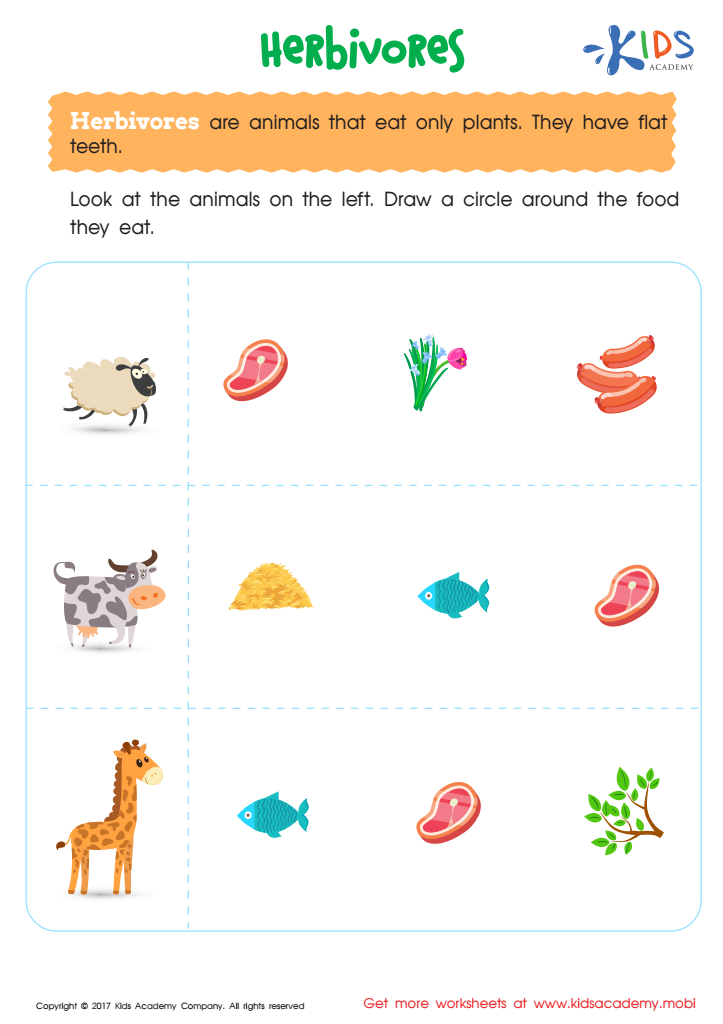
Herbivores Printable
 Assign to My Students
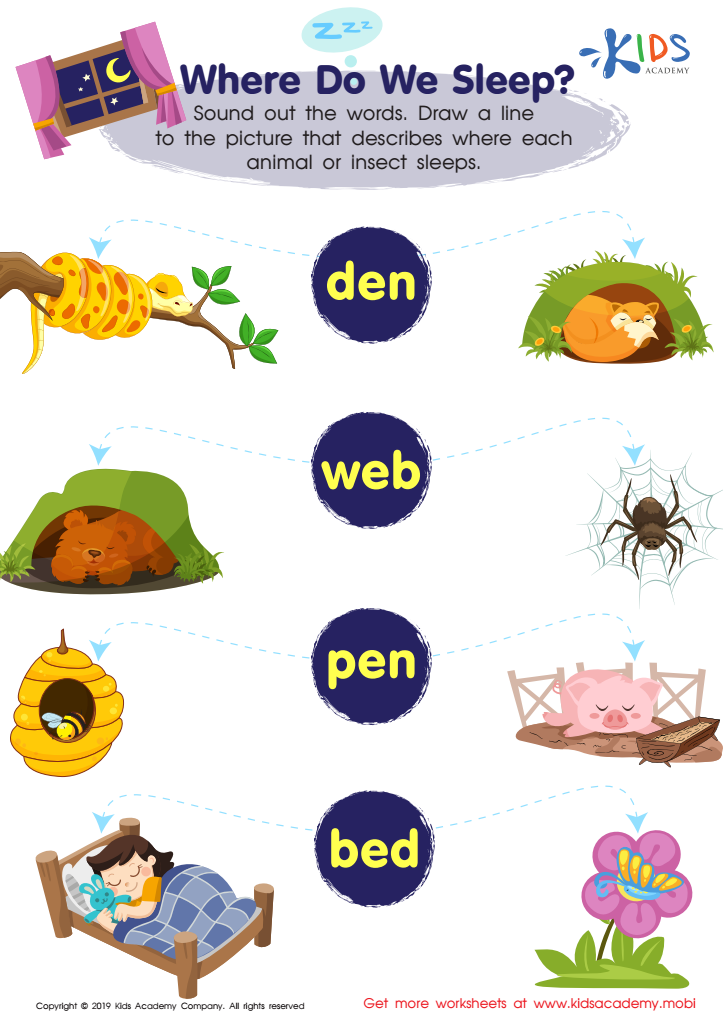
Where Do We Sleep Worksheet
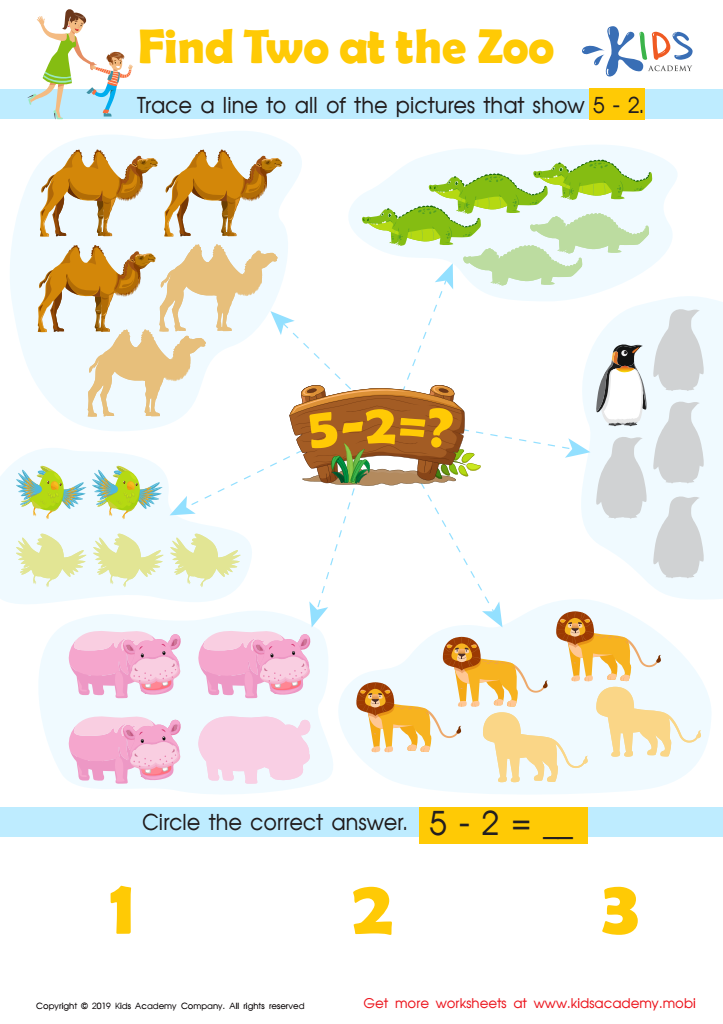
Find Two at the Zoo Worksheet








Identifying animals in kindergarten is crucial for several reasons that contribute to a child's educational foundation. Firstly, it nurtures curiosity and fosters a sense of discovery about the natural world, instilling an early love for science and nature. Understanding diverse animal species and their characteristics broadens a child's knowledge, providing a strong basis for more complex subjects later in their academic journey.
Secondly, animal identification activities help develop critical thinking and observational skills. Children learn to notice differences and similarities, enhancing their cognitive development. These activities also introduce basic categorization and classification concepts, essential skills in various academic fields.
Thirdly, learning about animals can improve language skills and vocabulary as children are introduced to new words and concepts. They learn descriptive terms, names of animals, and actions associated with them, enriching their communication abilities.
Finally, understanding the role of animals in the ecosystem fosters a sense of responsibility and respect for living creatures. It helps children appreciate biodiversity and encourages positive attitudes towards conservation and environmental stewardship from an early age.
Overall, integrating animal identification into early childhood education engages multiple developmental areas, guiding children toward becoming curious, knowledgeable, and environmentally-conscious individuals.