Punctuation understanding Kindergarten Worksheets
4 filtered results
-
From - To
Boost your child's early language skills with our Punctuation Understanding Kindergarten Worksheets! Designed specifically for young learners, these worksheets are a fantastic way to introduce foundational punctuation concepts such as periods, question marks, and exclamation points. Each fun and engaging activity helps kindergarteners recognize punctuation marks, understand their uses, and practice proper sentence structure. Our printable worksheets combine visual aids, simple exercises, and creative prompts to make learning punctuation both enjoyable and effective. Download today to give your kindergartener a strong start in writing and reading comprehension. Help your child master punctuation with confidence!
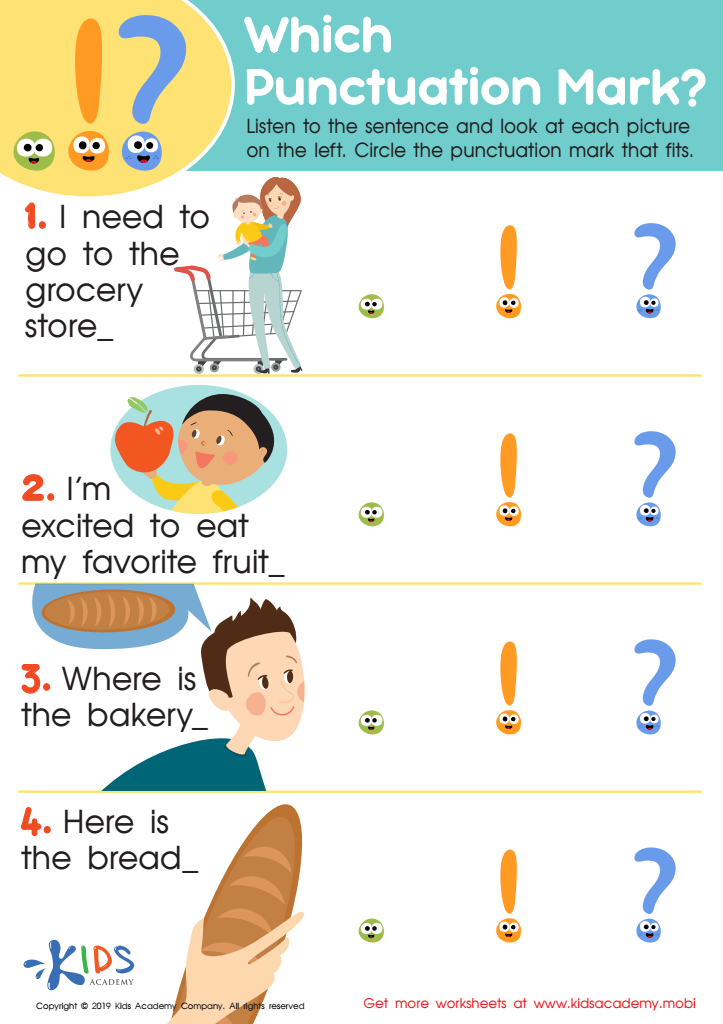
Which Punctuation Mark Worksheet
 Assign to My Students
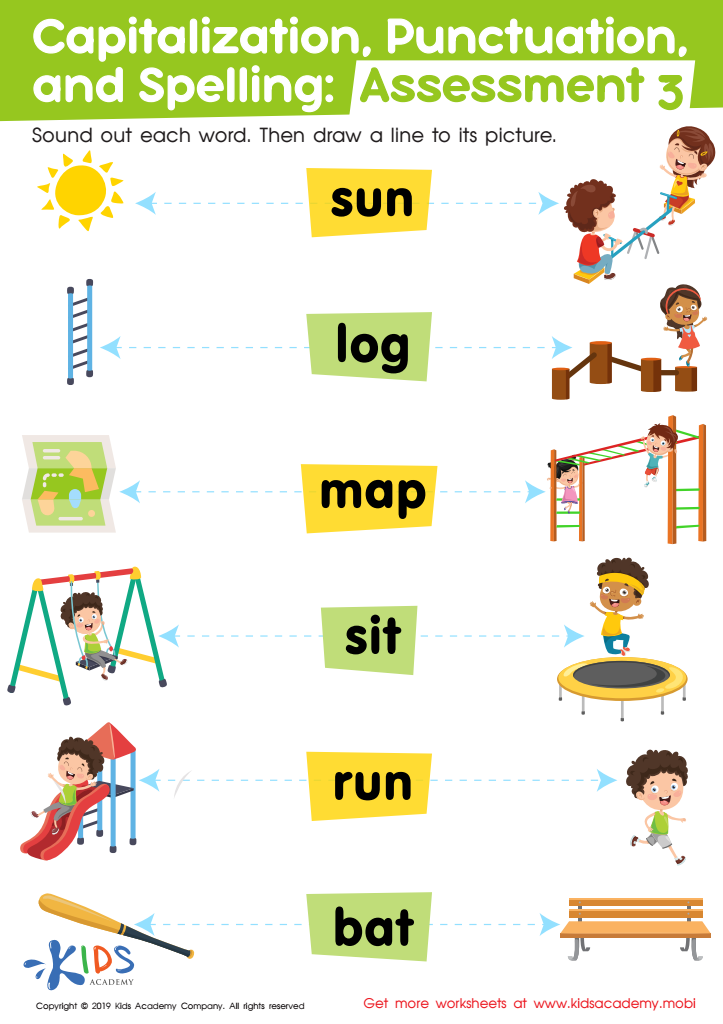
Capitalization. Punctuation. Spelling. Assessment 3 Worksheet
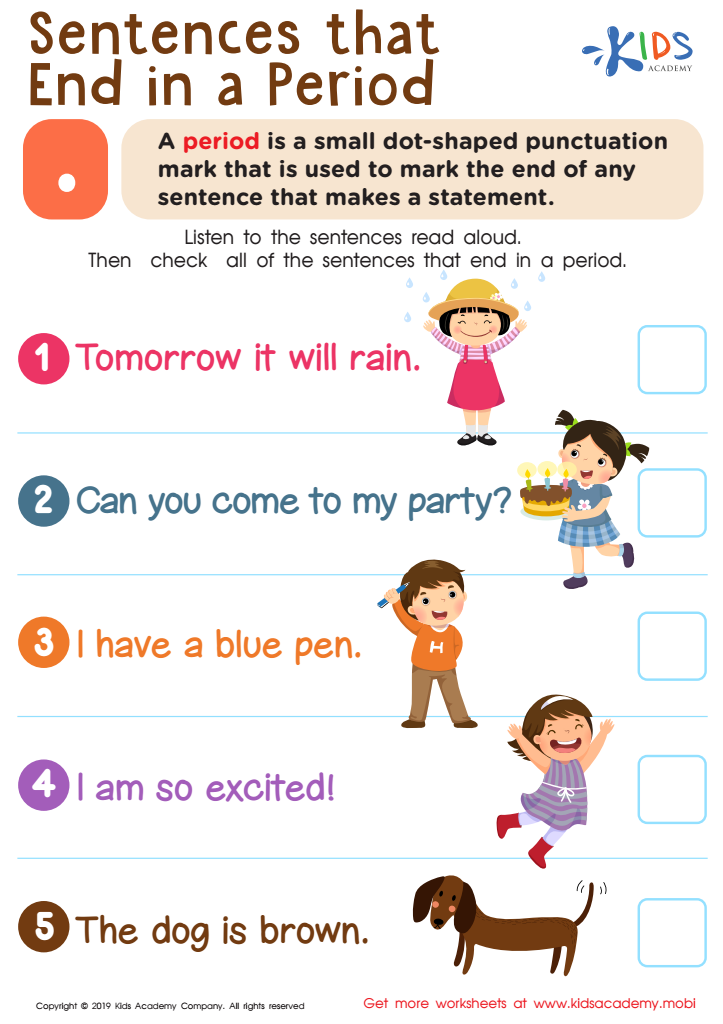
Sentences That End in a Period Worksheet
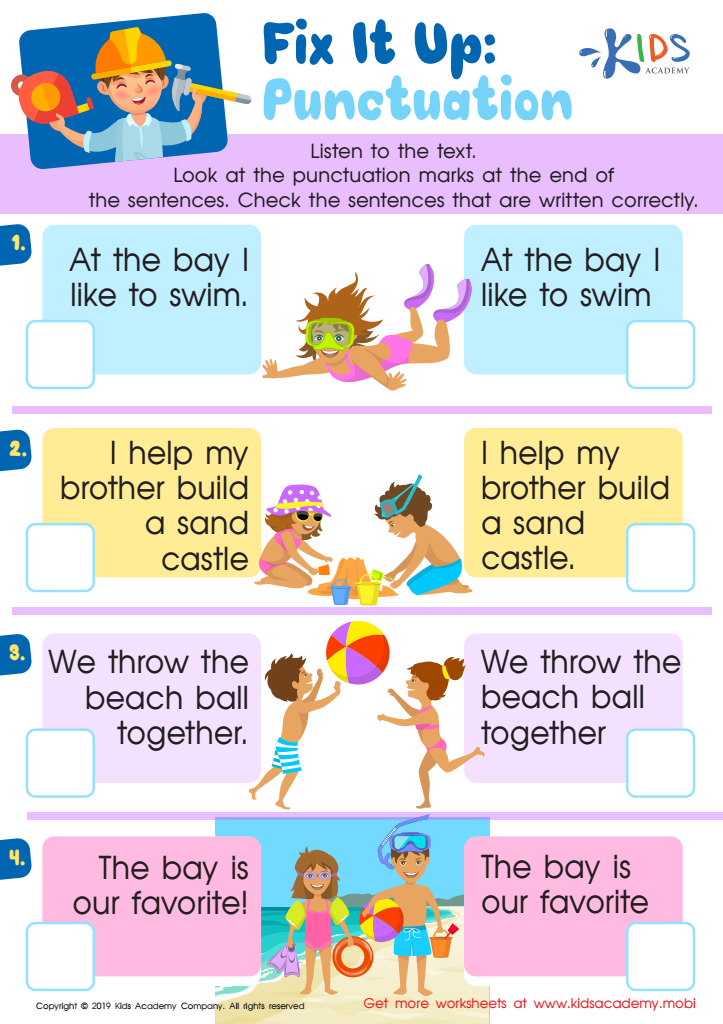
Fix Punctuation Worksheet






Punctuation understanding in Kindergarten lays the essential foundation for a child's literacy skill development. It's more than just knowing when to use periods and question marks; it's about fostering clear communication, comprehension, and critical thinking from an early age. Proper punctuation helps young learners grasp the structure of sentences, making it easier for them to read and convey their ideas effectively.
Moreover, understanding punctuation marks sets the stage for lifelong learning. By knowing where a sentence begins and ends or how a comma can create a short pause, children start to appreciate the rhythm and flow of language. This, in turn, enhances their reading skills by allowing them to read naturally and understand the text better.
From a teacher's viewpoint, incorporating punctuation awareness into early education promotes a structured learning environment. It helps teachers assess children's writing and reading skills more accurately. For parents, it ensures that their child's communication abilities are developing correctly, preparing them for more advanced literacy stages.
Incorporate fun and interactive activities like punctuation songs, storytelling, and games that help children recognize and use punctuation marks correctly. This early attention to punctuation ensures that students are not only good readers and communicators but also confident writers who can express themselves clearly and creatively.








