
Fine Motor Skills Kindergarten Addition Worksheets
5 filtered results
Difficulty Level
Grade
Age
-
From - To
Subject
Activity
Standards
Boost your kindergartener's math skills and fine motor development with our engaging Fine Motor Skills Kindergarten Addition Worksheets. Designed specifically for young learners, these worksheets combine simple addition problems with fun activities that help refine hand-eye coordination, pencil grip, and muscle control. Each worksheet provides clear and age-appropriate math exercises that promote confidence and foundational skills. Perfect for home or classroom use, these activities keep children entertained while learning, ensuring a solid grasp of basic math concepts. Make math practice enjoyable and effective with our expertly crafted worksheets tailored to enhance both cognitive and physical skills.
Favorites
With answer key
Interactive
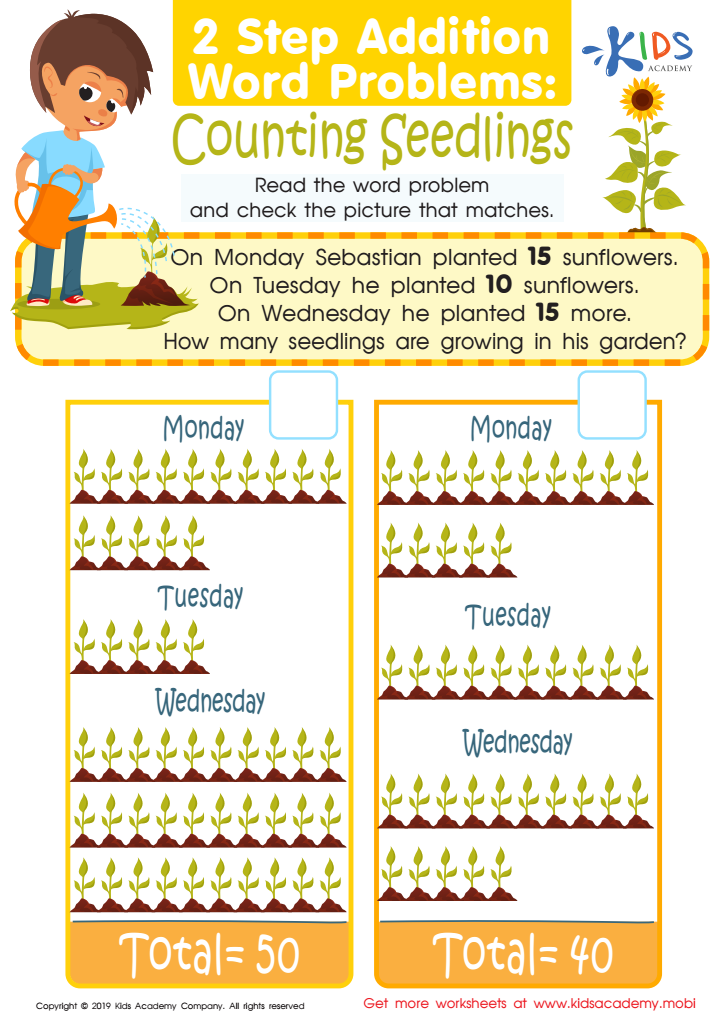
Counting Seedlings Worksheet
Understanding math word problems is key. Multiple steps can prove challenging - this free worksheet provides one-to-one picture representation to help kids solve multi-step addition word problems. Strengthen addition skills by choosing the matching picture to the answer.
 Assign to My Students
Counting Seedlings Worksheet
Worksheet
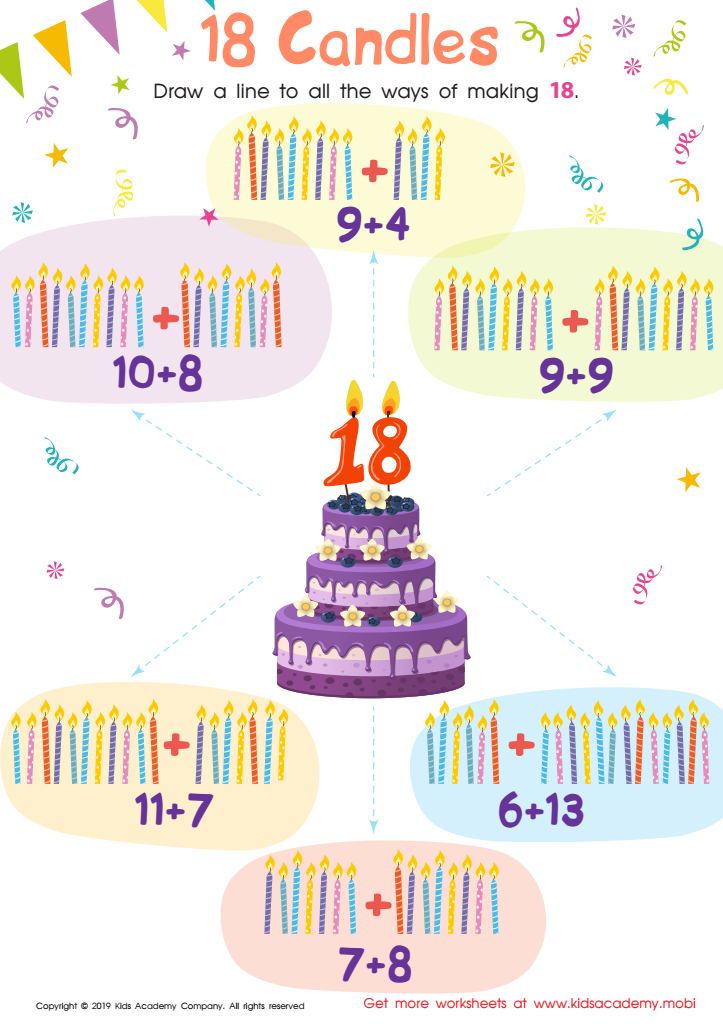
18 Candles Worksheet
This worksheet is great for introducing your students to addition and subtraction. Help your kids solve the simple equations on it and draw a line from the birthday cake with 18 on it to all the solutions. Practice like this will prepare them to tackle more complex math problems.
18 Candles Worksheet
Worksheet
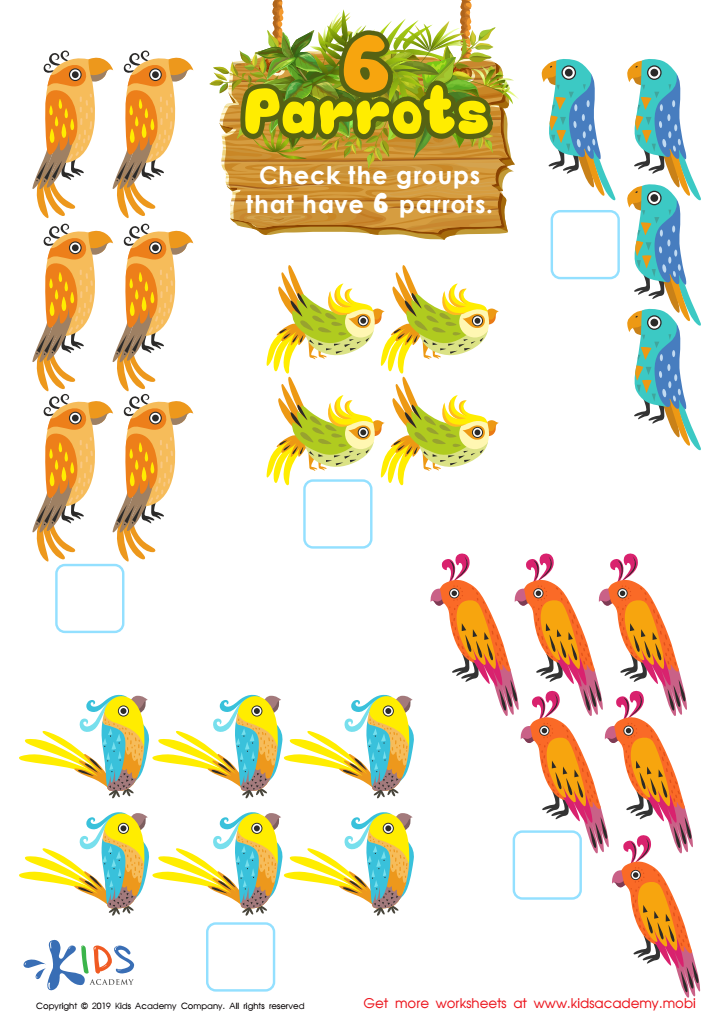
6 Parrots Worksheet
Love parrots? Here's a free worksheet to help your children practice counting to six with colorful parrot representations! Kids will adore counting the parrots and checking off groups of six - and it won't even feel like math! Just a fun way to make some new and exciting friends.
6 Parrots Worksheet
Worksheet
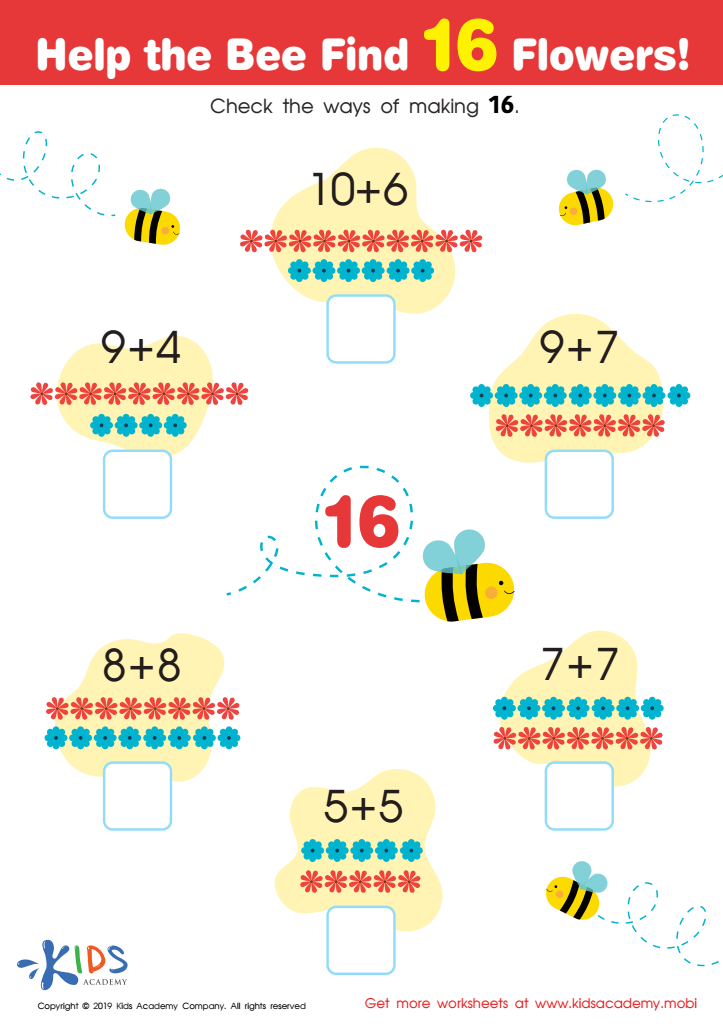
Help the Bee Find 16 Flowers Worksheet
Ask your students to count as high as they can. Show them that different numbers can equal the same figure with examples like 2+2=4 and 3+1=4. Ask for more examples, then help the bees find 16 flowers by checking the ways of making 16.
Help the Bee Find 16 Flowers Worksheet
Worksheet
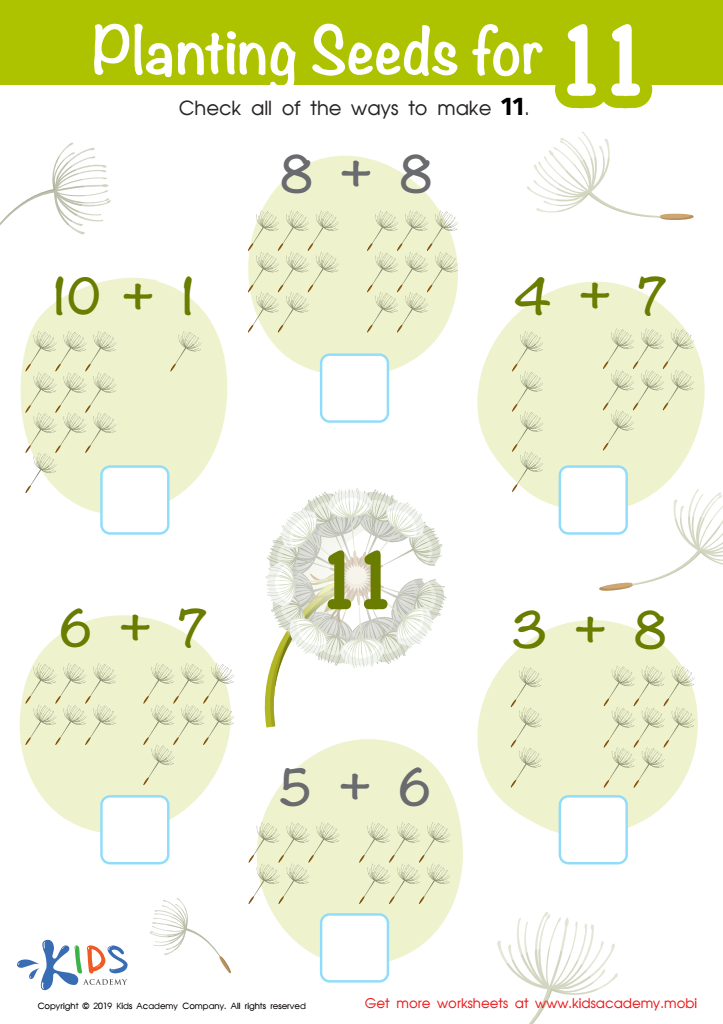
Planting Seeds for 11 Worksheet
Before starting, ask your students to count as high as they can. Explain that different numbers can add up to the same total. Give examples like 2+2 =4 and 3+1 =4. Ask if they can think of other examples. Then have them work through the equations in the printout and circle all that add up to 11.
Planting Seeds for 11 Worksheet
Worksheet
Join Kids Academy for Free
Who is primarily going to use this learning content?




.jpg)



Fine motor skills are crucial for kindergarten students because they form the foundational skills necessary for more advanced tasks. These abilities involve the coordination of small muscle groups, especially in the hands and fingers, which are essential for daily life activities and academics.
For parents and teachers, fostering fine motor skills can significantly enhance a child's ability to carry out tasks like writing, cutting with scissors, buttoning clothes, and even brushing teeth. Developing fine motor skills in kindergarten ensures that children can participate fully in classroom activities, reducing frustration and increasing their sense of independence and confidence.
Moreover, these skills are closely linked to cognitive development. Activities that improve fine motor skills, such as drawing shapes or manipulating small objects, also help with hand-eye coordination and problem-solving. These tasks stimulate neural pathways in the brain, fostering greater attention to detail and better organization skills.
In essence, neglecting fine motor skill development can have long-term effects on a child's academic and personal growth. Therefore, intentional practices like designated play, structured activities, and regular exercise geared toward improving these skills are vital. By placing emphasis on fine motor skills in kindergarten, parents and teachers can set the stage for efficient learning processes and successful future academic performance.








