Mathematical reasoning Kindergarten Addition Worksheets
3 filtered results
-
From - To
Our Mathematical Reasoning Kindergarten Addition Worksheets are designed to ignite young minds with engaging and effective math experiences. These worksheets help kindergarteners build foundational addition skills through fun and interactive activities that promote logical thinking and problem-solving abilities. Each worksheet is carefully crafted to enhance cognitive development by presenting math problems in real-world contexts, aiding children in understanding concepts beyond rote memorization. With vivid illustrations and progressively challenging exercises, children will enjoy learning addition while strengthening their mathematical reasoning and critical thinking skills. Perfect for classroom use or at-home practice, these worksheets are an essential tool for early math education.
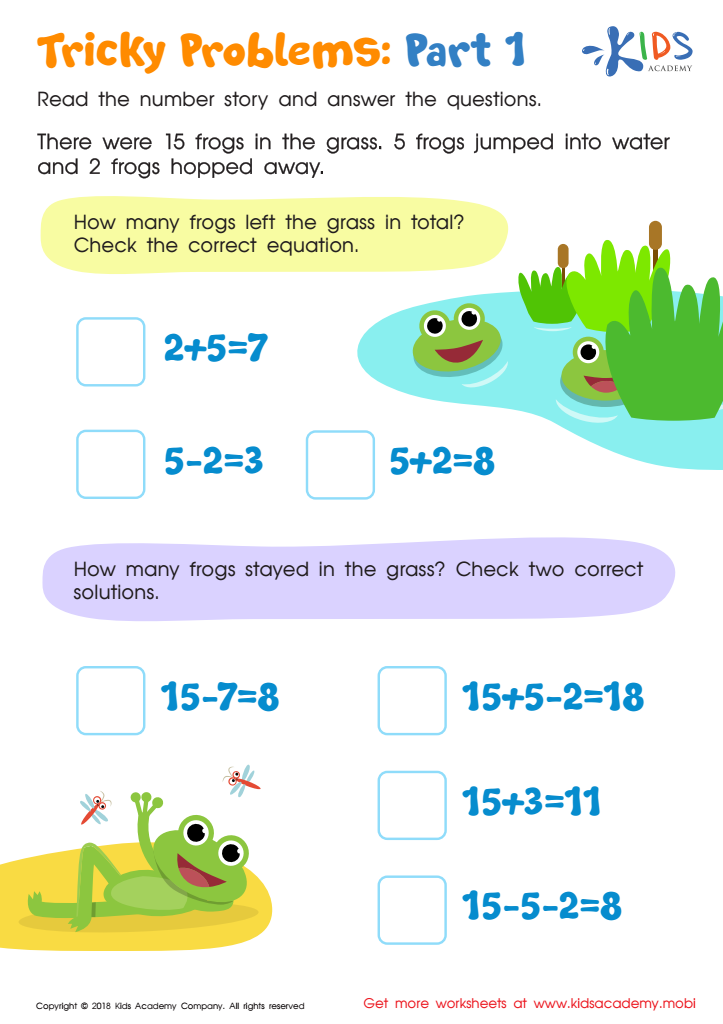
Tricky Problems Worksheet: Part 1
 Assign to My Students
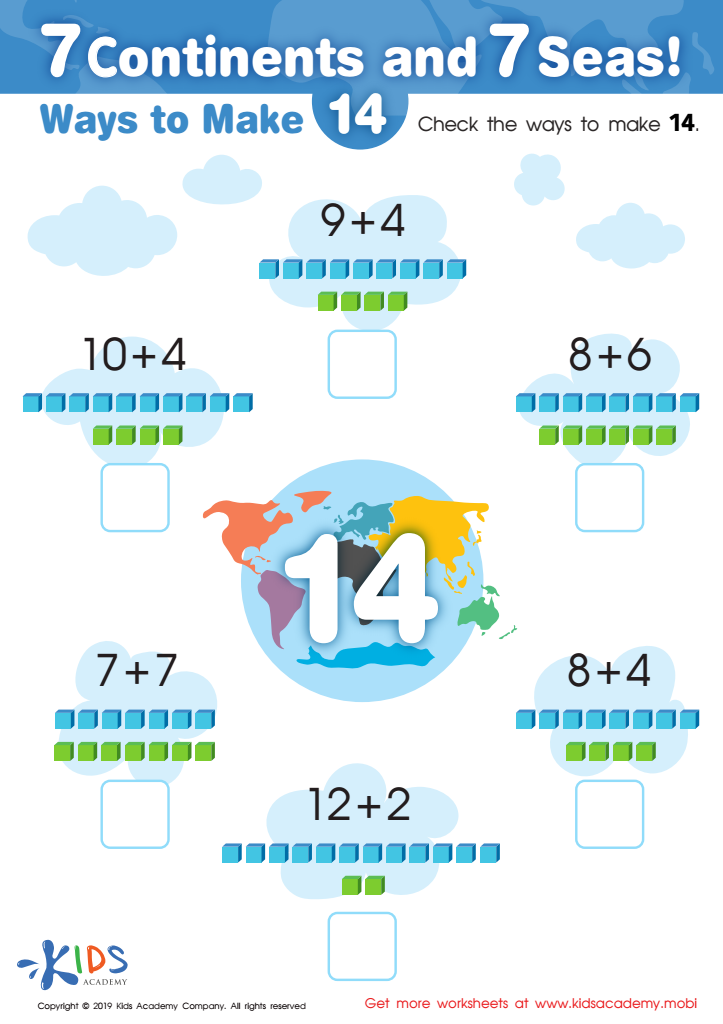
7 Continents and 7 Seas Worksheet
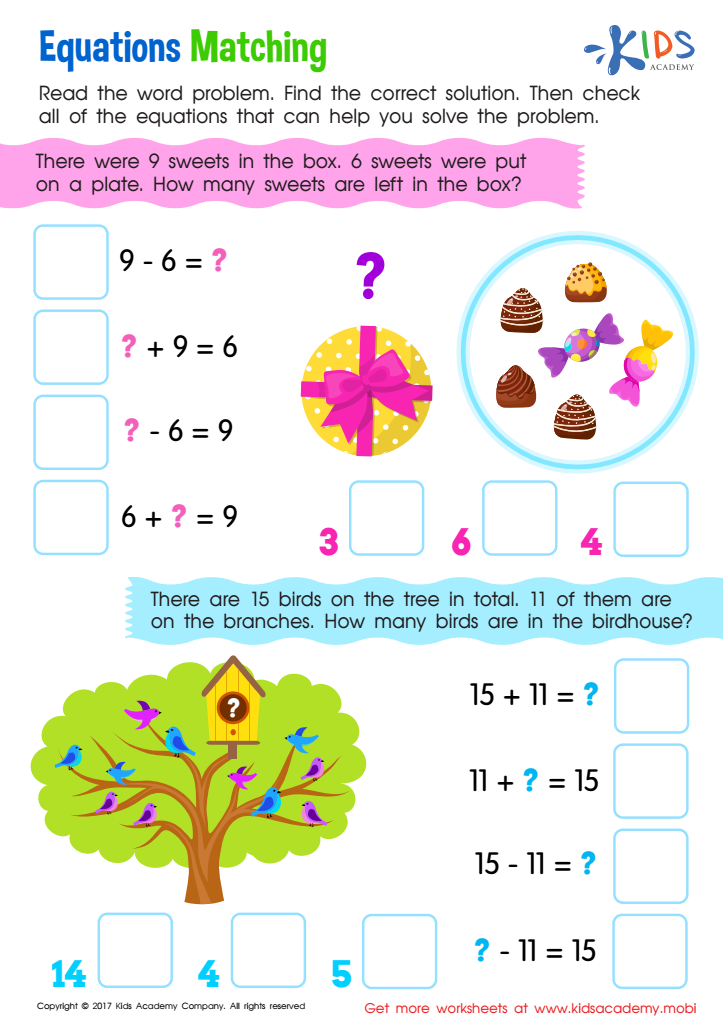
Equations Matching Word Problems Worksheet








Mathematical reasoning in Kindergarten, particularly in addition, is essential because it's the foundation upon which all future math knowledge is built. At this developmental stage, children exhibit rapid cognitive growth, enabling them to grasp basic concepts that will grow in complexity. Kindergarteners use concrete visual aids, like counting blocks or fingers, to begin understanding the concept of addition, nurturing their ability to solve problems and develop critical thinking skills.
Encouraging mathematical reasoning promotes a deeper comprehension of numbers and their relationships, moving beyond rote memorization to true understanding. This, in turn, fosters a positive attitude towards math by making it accessible and enjoyable, which can significantly influence a child's confidence and performance in the subject long-term.
Moreover, early competency in addition sets a precedent for mastering more advanced mathematical concepts. The skills gained from learning how to add—such as carrying over in multiple-digit numbers, understanding number patterns, and applying these principles to real-world scenarios—are building blocks for future academic success. Parents and teachers play a crucial role in nurturing these skills, as their engagement and encouragement can stimulate a child's curiosity and enthusiasm for learning, paving the way for continuous intellectual development and lifelong learning.








