Categorization knowledge Worksheets for Kids
1 filtered results
-
From - To
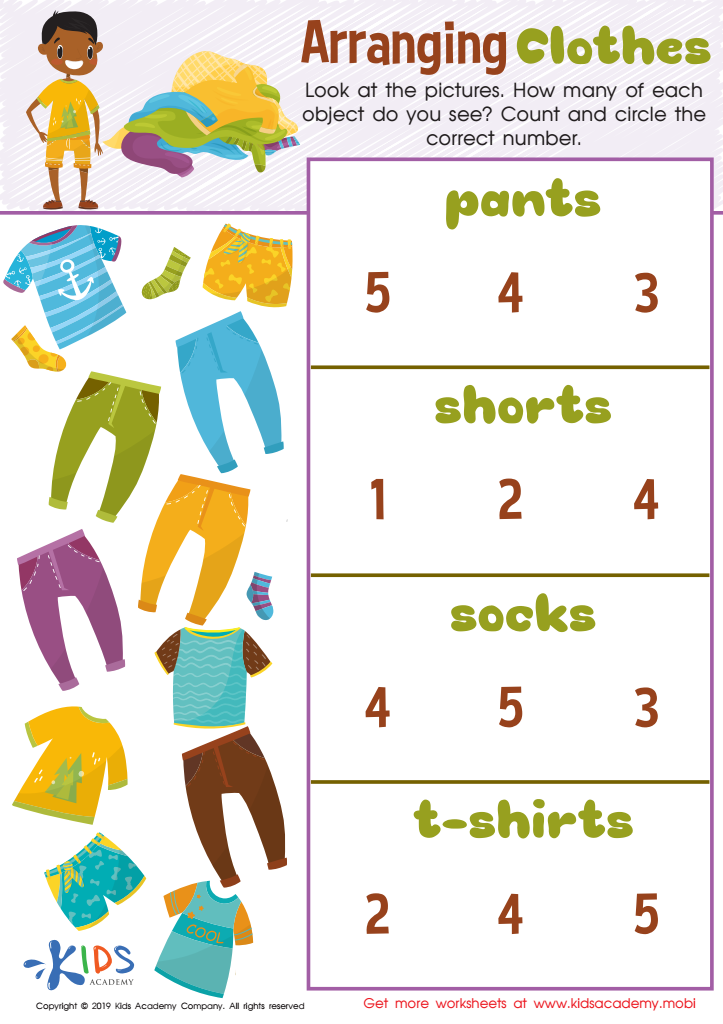
Arranging Clothes Worksheet
 Assign to My Students
Question/Answer

How to test a Preschool student’s Categorization knowledge skills?
To test a preschooler's categorization skills, present them with a variety of objects or images and ask them to group them based on specific characteristics, such as color, shape, size, or function. Observe their ability to identify similarities and differences, and how they explain their grouping choices. This can reveal their understanding of concepts and ability to categorize items logically.
What does the Categorization knowledge skill mean when it comes to Preschool Numbers learning?
The Categorization knowledge skill in the context of Preschool Numbers learning refers to the ability of young children to group and classify objects, shapes, or numbers based on common characteristics. This skill helps preschoolers understand similarities and differences, enabling them to organize information logically, which is fundamental for early math concepts such as sorting, counting, and identifying patterns.
How to train the Categorization knowledge skill in Preschool students learning about Numbers?
To train the Categorization knowledge skill in preschool students learning about numbers, start by using tangible objects like blocks or beads. Group these objects by color, size, or quantity, and guide students in sorting them accordingly. Introduce simple counting exercises to associate number recognition with the groups formed, reinforcing both categorization and numerical understanding simultaneously.