Learning about mathematical operations Worksheets for Kids
1 filtered results
-
From - To
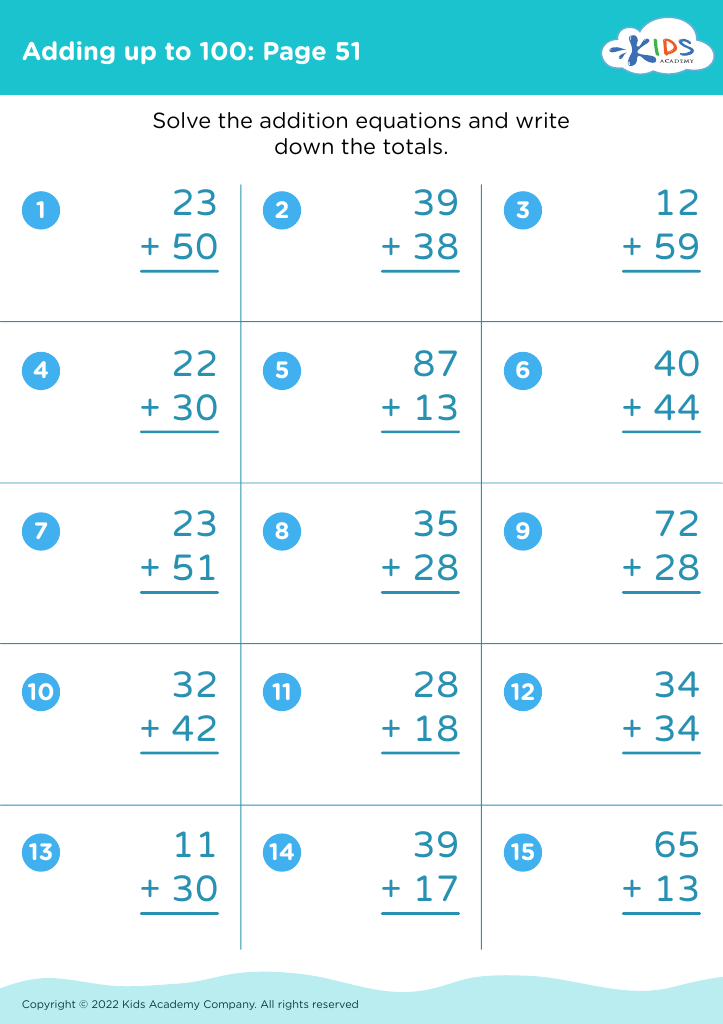
Question/Answer

How does the mastery of the Learning about mathematical operations skill affect a student's performance at an early age?
Mastery of mathematical operations at an early age significantly enhances a student's performance by providing a strong foundation for understanding more complex mathematical concepts. It improves problem-solving skills, logical thinking, and the ability to apply mathematics in real-life situations. Early mastery also boosts confidence and academic success in mathematics and related disciplines as the student progresses through their education.
How to test a Grade 2 student’s Learning about mathematical operations skills?
To test a Grade 2 student's skills in mathematical operations, you can use a mix of written quizzes and oral questions that cover basic addition, subtraction, and the introduction of multiplication and division. Include story problems to assess their ability to apply operations in real-life scenarios. Incorporate visual aids like counters or drawings for conceptual understanding.
What are some effective activities to train students’ Learning about mathematical operations skill when teaching them about Adding up to 100 Misc?
To train students in adding up to 100, effective activities include: using number lines for visual guidance, practicing with flashcards for quick recall, engaging in interactive online games that emphasize speed and accuracy, solving real-life word problems to apply skills contextually, and conducting timed quizzes to improve efficiency.




.jpg)