Shape identification 2D Shapes Worksheets
9 filtered results
-
From - To
Enhance your child’s geometry skills with our engaging "Shape Identification 2D Shapes Worksheets" for early grade learners! These printable worksheets are designed to help kids recognize and name different 2D shapes such as circles, squares, triangles, and more. Each worksheet provides fun and interactive activities that build foundational math skills through colorful and appealing exercises. Perfect for classroom use or at-home learning, our resources support visual learning and fine motor development. Boost your child’s confidence in identifying and differentiating shapes with these enjoyable and educational worksheets. Download now to start a journey of geometric exploration!
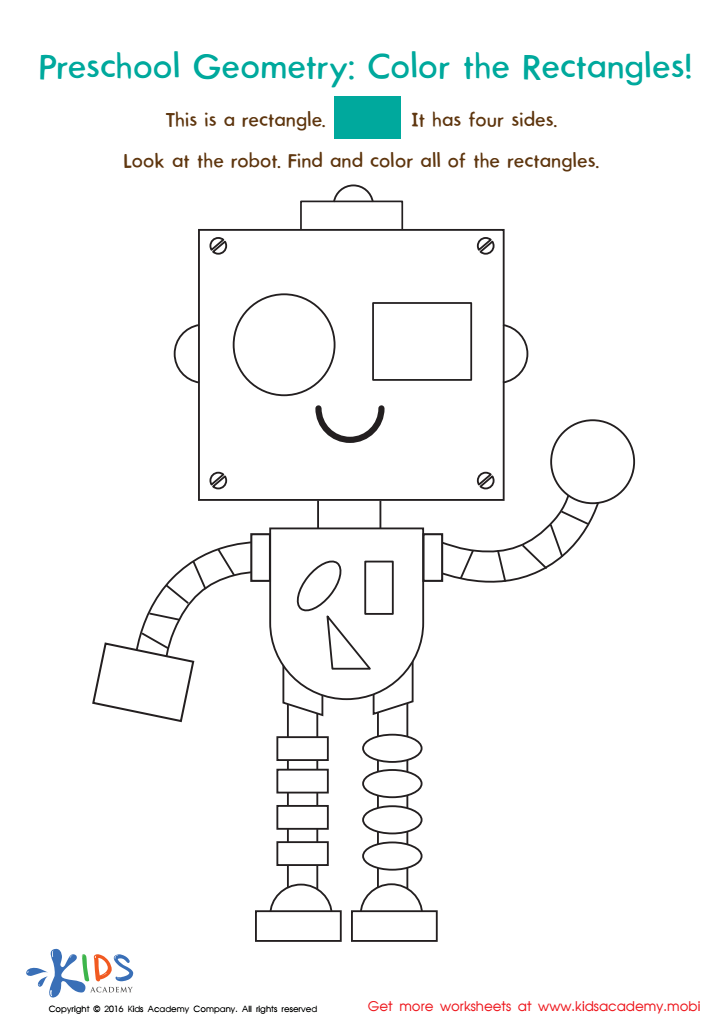
Geometry Worksheet
 Assign to My Students

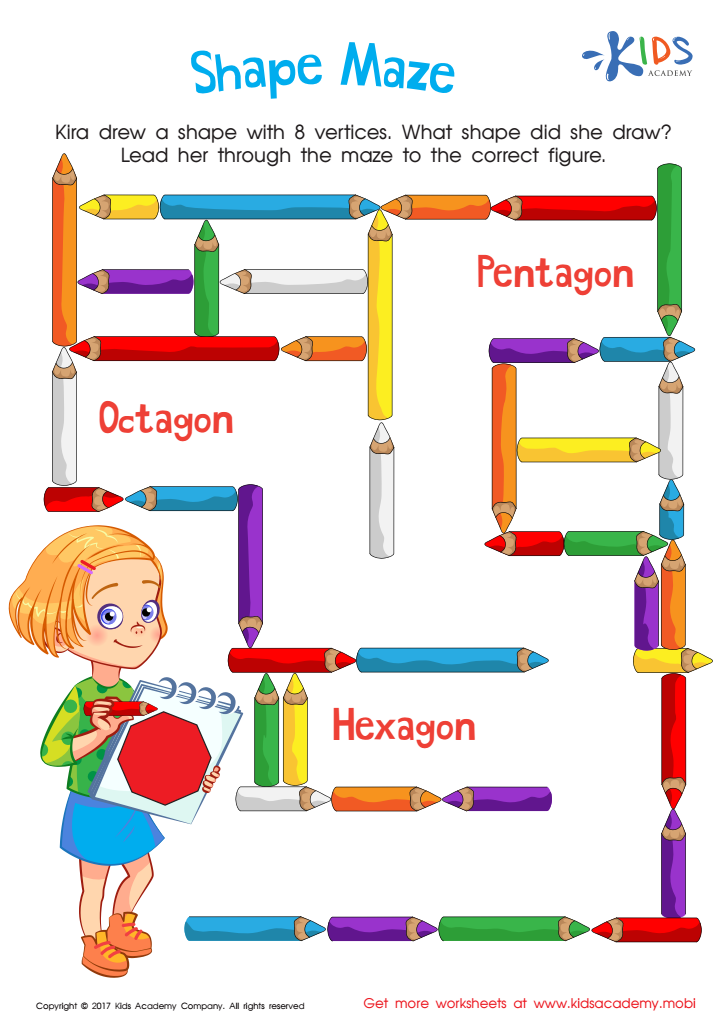
Shape Maze Worksheet
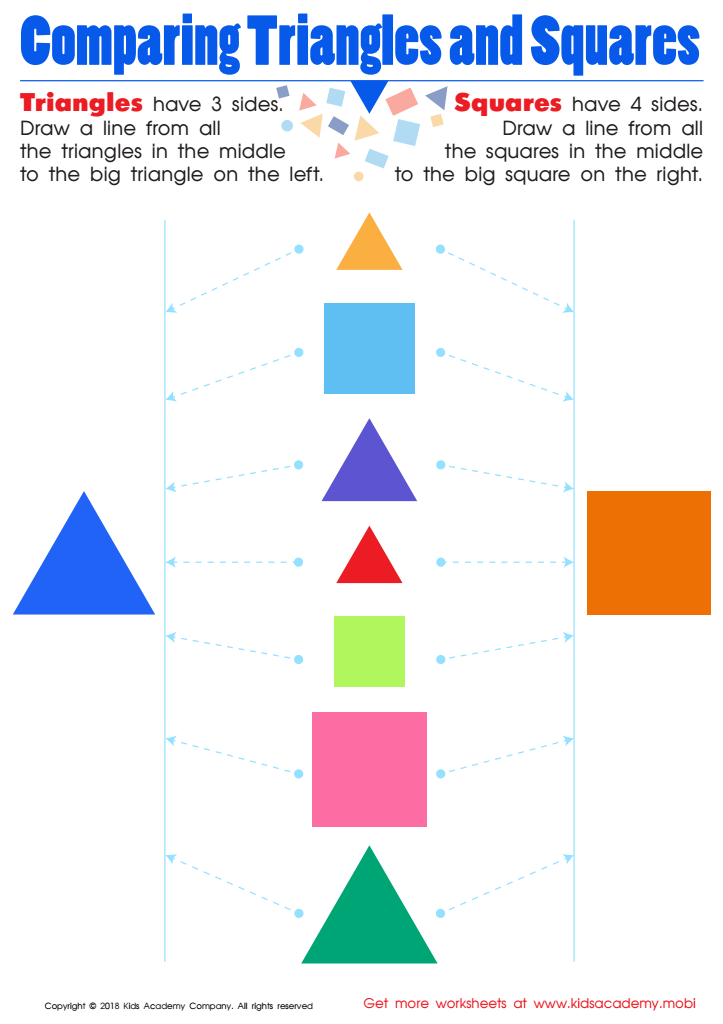
Comparing Triangles Squares Worksheet
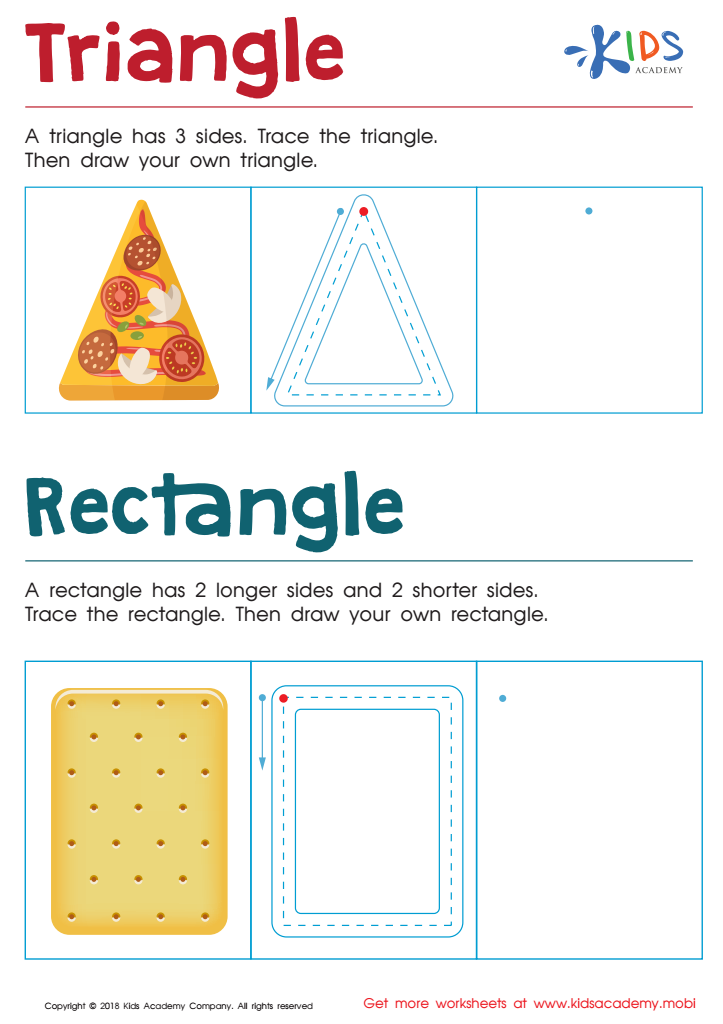
Triangle Rectangle Worksheet
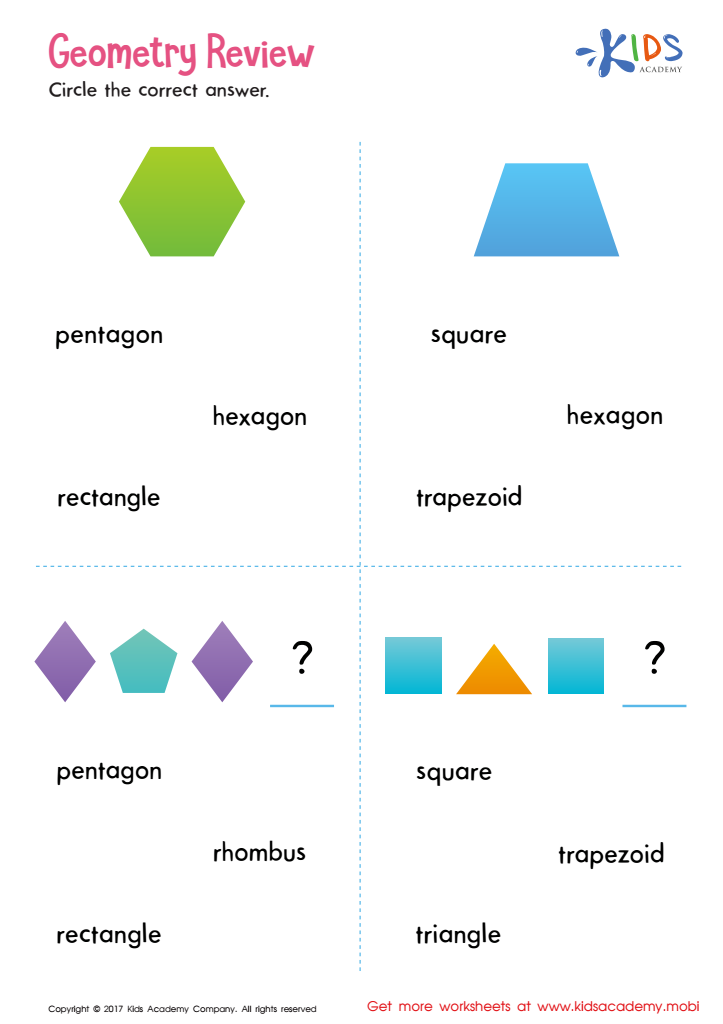
Geometry Review Printable
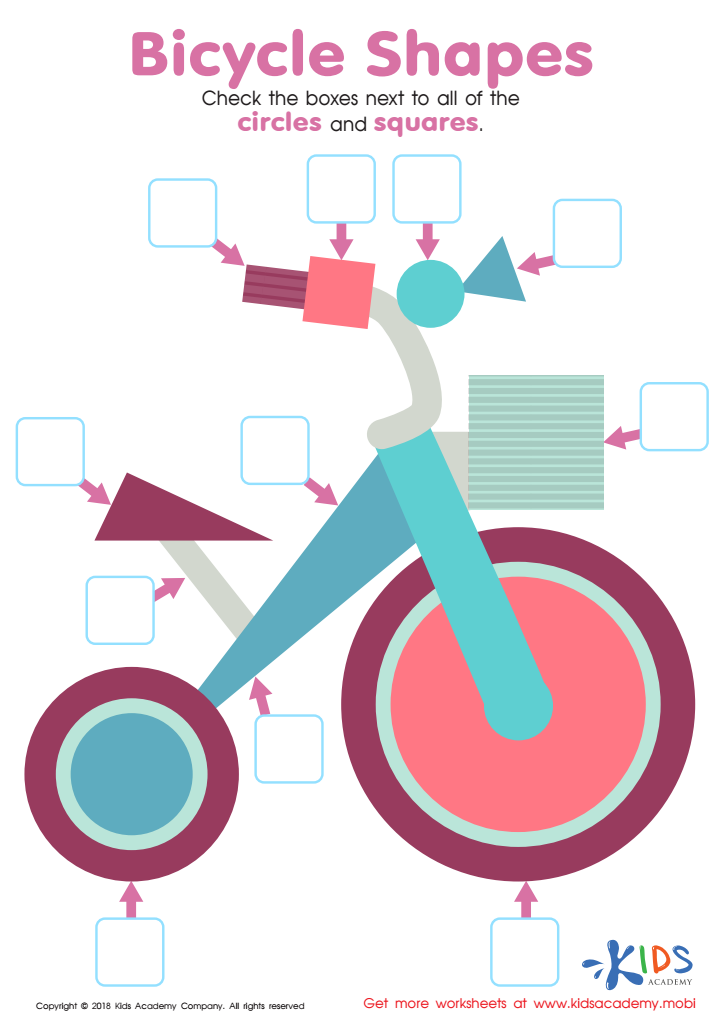
Bicycle Shapes Worksheet
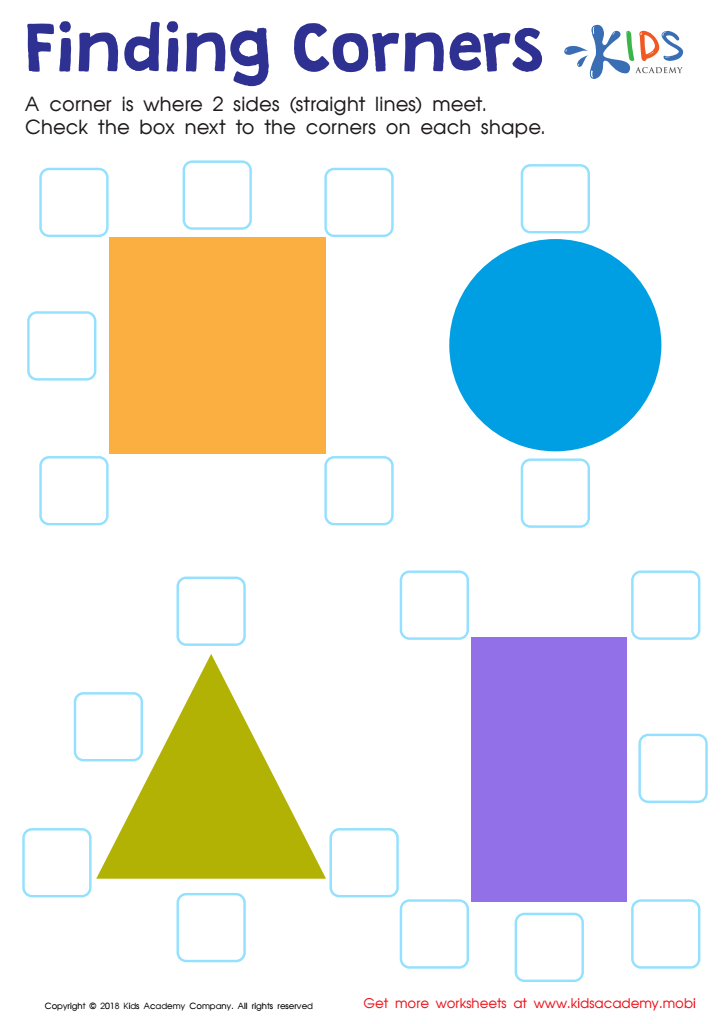
Finding Corners Worksheet
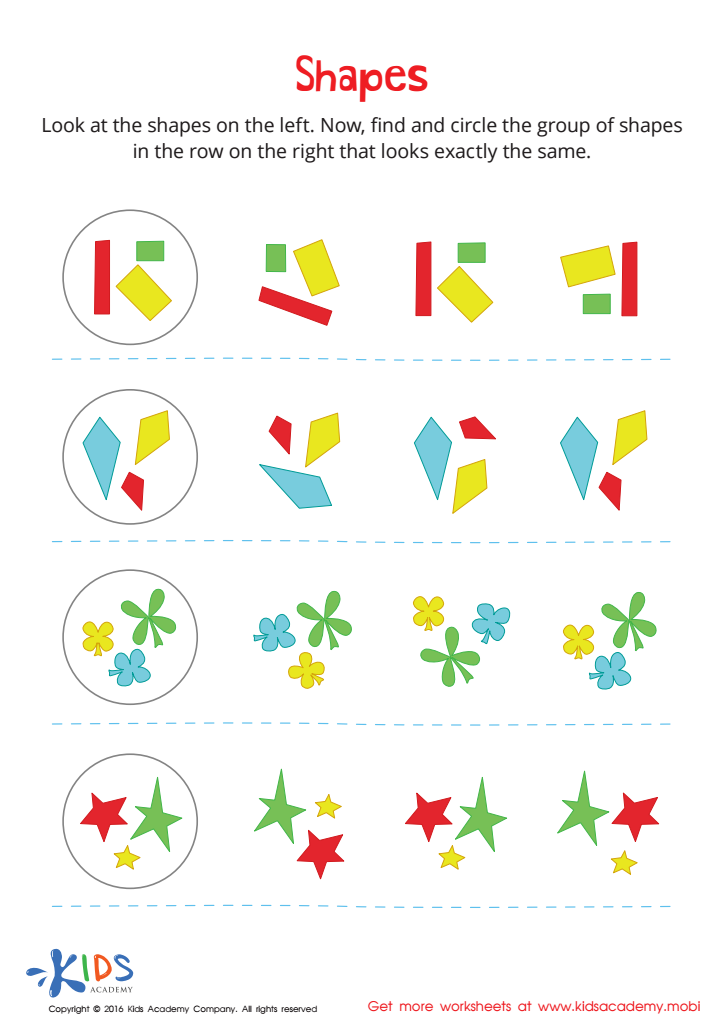
Shapes Worksheet








Parents and teachers play a crucial role in early childhood development, and one of the fundamental skills they should prioritize is teaching children about 2D shapes. Understanding and identifying shapes goes beyond simple visual recognition; it helps lay the foundation for a range of critical cognitive and academic skills.
First, learning about shapes enhances a child’s spatial awareness, an essential cognitive skill that aids in understanding and navigating the world around them. By recognizing and differentiating shapes, children develop the ability to comprehend spatial relationships and orientations.
Secondly, shape identification sets the stage for geometry and other branches of mathematics. When children become familiar with shapes, they start to understand complex geometric concepts, such as area, perimeter, and symmetry, making future math learning easier and more intuitive.
Recognizing shapes also contributes to literacy development. For example, distinguishing between the circular letter 'O' and the square-like 'H' can improve reading and writing skills. Shapes also form the basics of pattern recognition, aiding logical reasoning and problem-solving abilities.
Finally, shapes are everywhere in our daily lives—road signs, educational tools, artworks, and natural objects—so recognizing them enriches a child's interaction with their environment. Therefore, parents and teachers should make shape identification a priority to foster a well-rounded and insightful learning experience.