Filters

114 filtered results

Clear all filters
Favorites
With answer key
Interactive

114 filtered results

Difficulty Level

Grade


Subject

    Our Cognitive Development Addition Worksheets are expertly designed to enhance your child's mathematical abilities while fostering crucial cognitive skills. Tailored for young learners, these engaging worksheets provide systematic addition exercises that improve memory, problem-solving, and logical thinking. By integrating fun themes and intuitive layouts, we ensure that kids not only practice addition but also strengthen their attention span and working memory. A perfect blend of education and entertainment, our Cognitive Development Addition Worksheets make learning math an enjoyable journey. Help your child build a solid foundation in mathematics and cognitive skills with our dynamic and interactive resources.

    Check out this FREE Trial Lesson on Addition!

    Match Objects that Fit Together

    Favorites
    With answer key
    Interactive
    • Cognitive Development
    • Addition
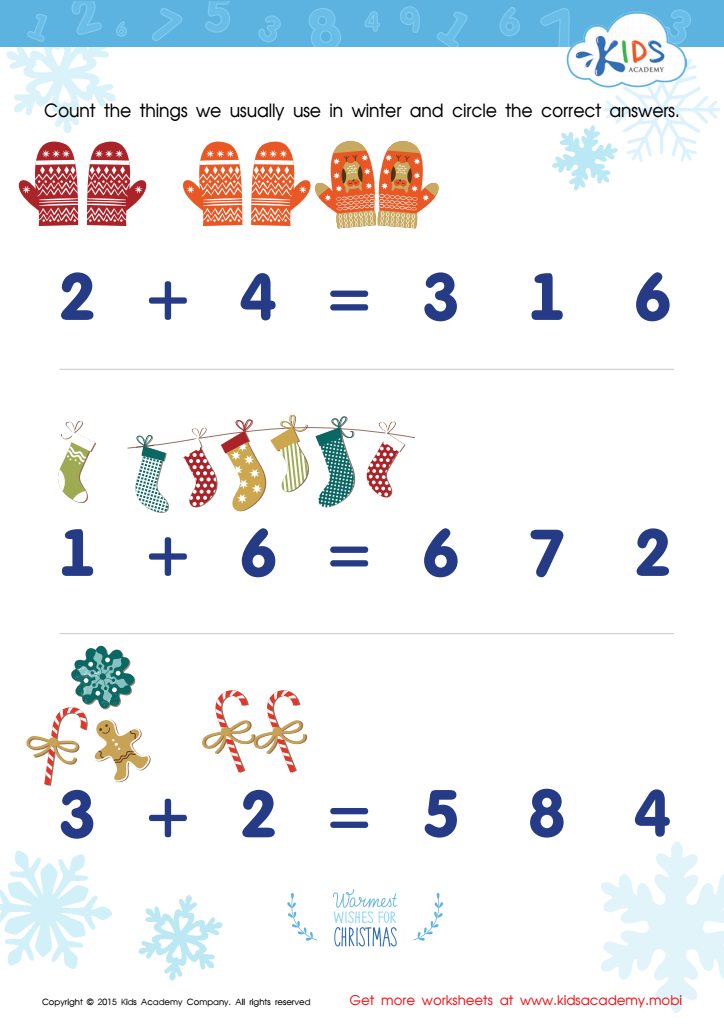
    Math PDF Worksheet: Count Winter Things
    Math PDF Worksheet: Count Winter Things

    Count Winter Things Worksheet

    This chilly winter afternoon, help your kid warm up with Kids Academy's free math worksheet - full of bright pictures and addition practice. Let them count the things and write in the numbers for a great brain training and math head start. Get more free math worksheets here. (80 words)
    Count Winter Things Worksheet
    Worksheet
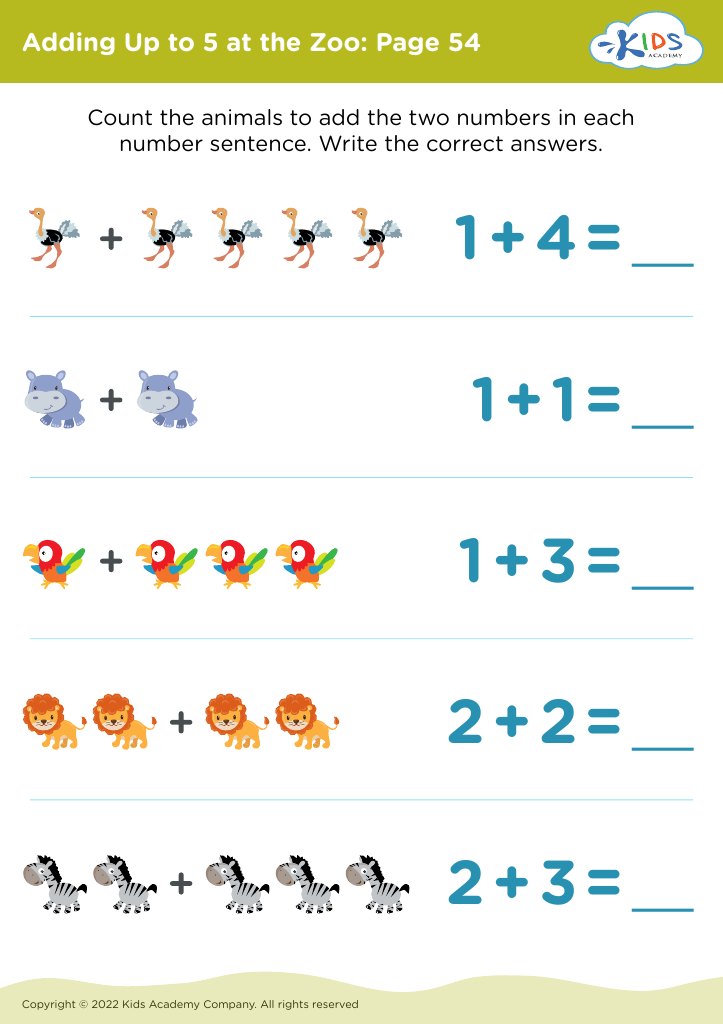
    Adding Up to 5 at the Zoo: Page 54
    Adding Up to 5 at the Zoo: Page 54
    Adding Up to 5 at the Zoo: Page 54
    Worksheet
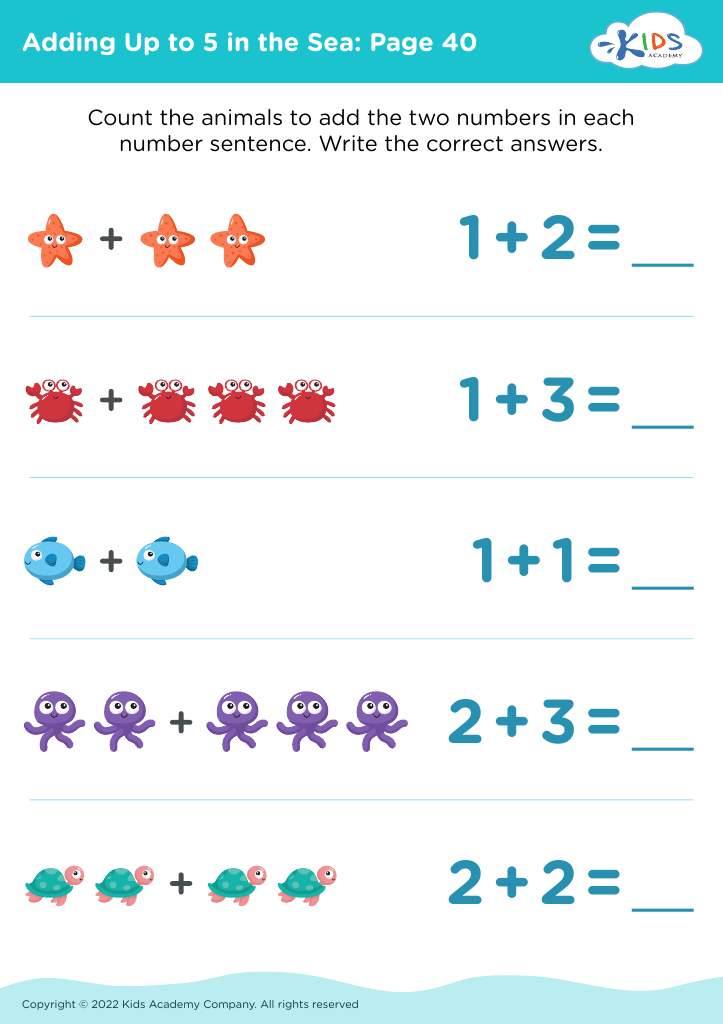
    Adding Up to 5 in the Sea: Page 40
    Adding Up to 5 in the Sea: Page 40
    Adding Up to 5 in the Sea: Page 40
    Worksheet
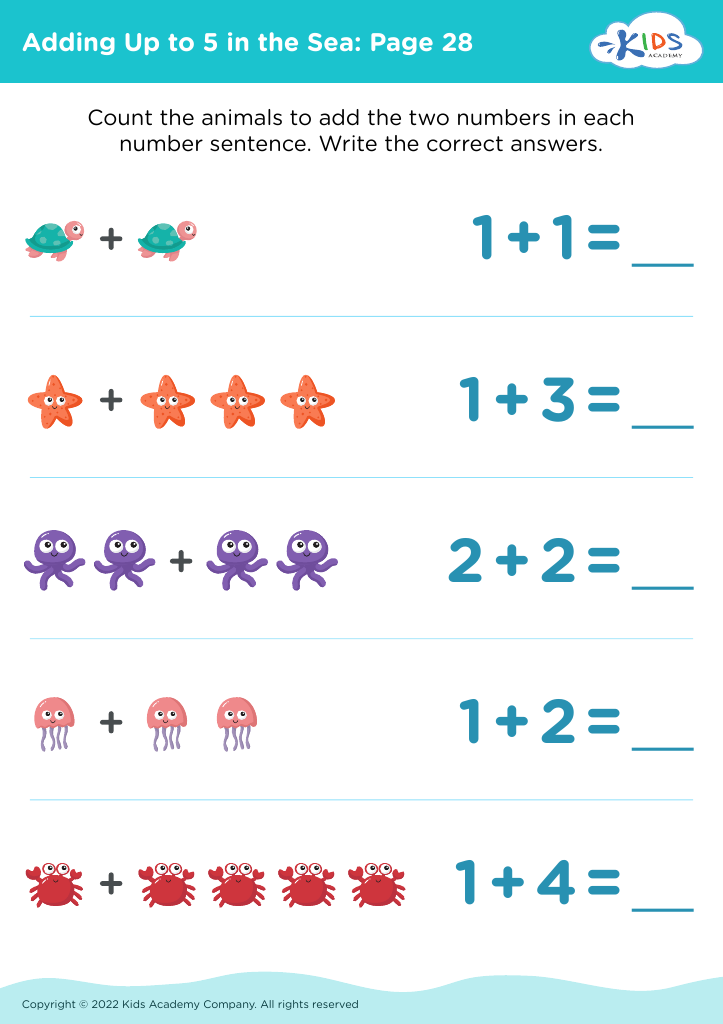
    Adding Up to 5 in the Sea: Page 28
    Adding Up to 5 in the Sea: Page 28
    Adding Up to 5 in the Sea: Page 28
    Worksheet
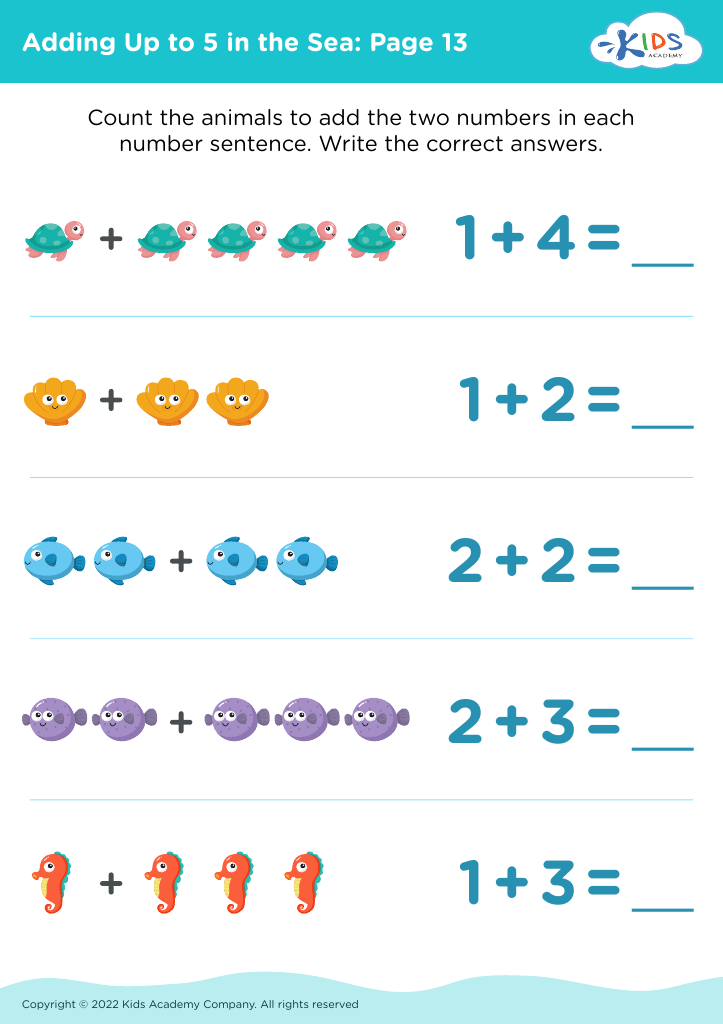
    Adding Up to 5 in the Sea: Page 13
    Adding Up to 5 in the Sea: Page 13
    Adding Up to 5 in the Sea: Page 13
    Worksheet
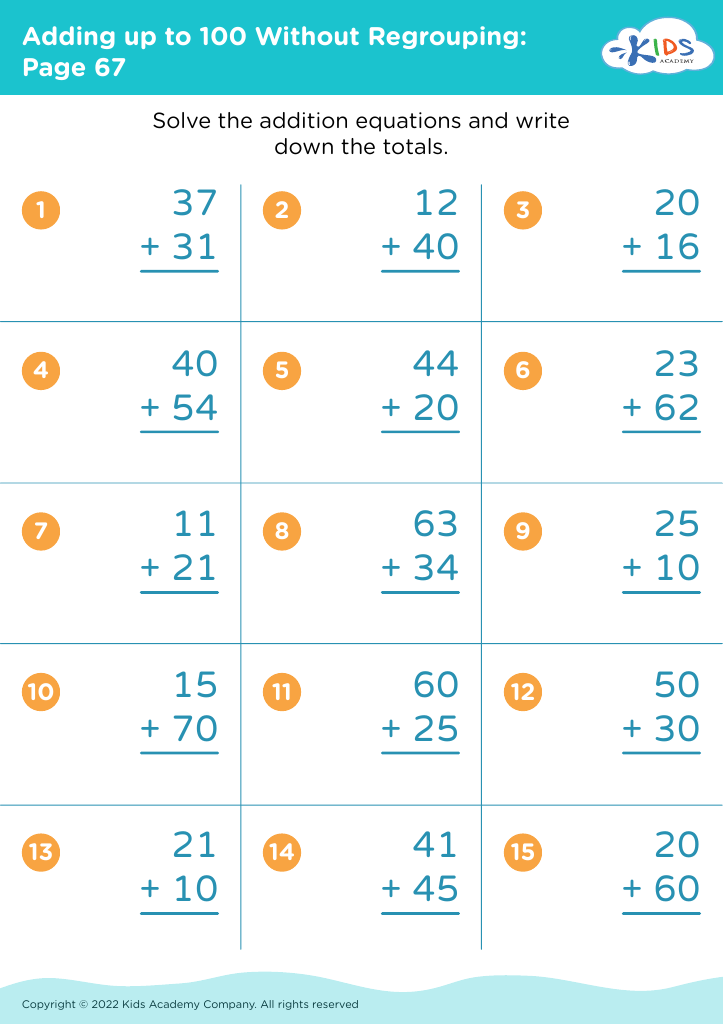
    Adding up to 100 Without Regrouping: Page 67
    Adding up to 100 Without Regrouping: Page 67
    Adding up to 100 Without Regrouping: Page 67
    Worksheet
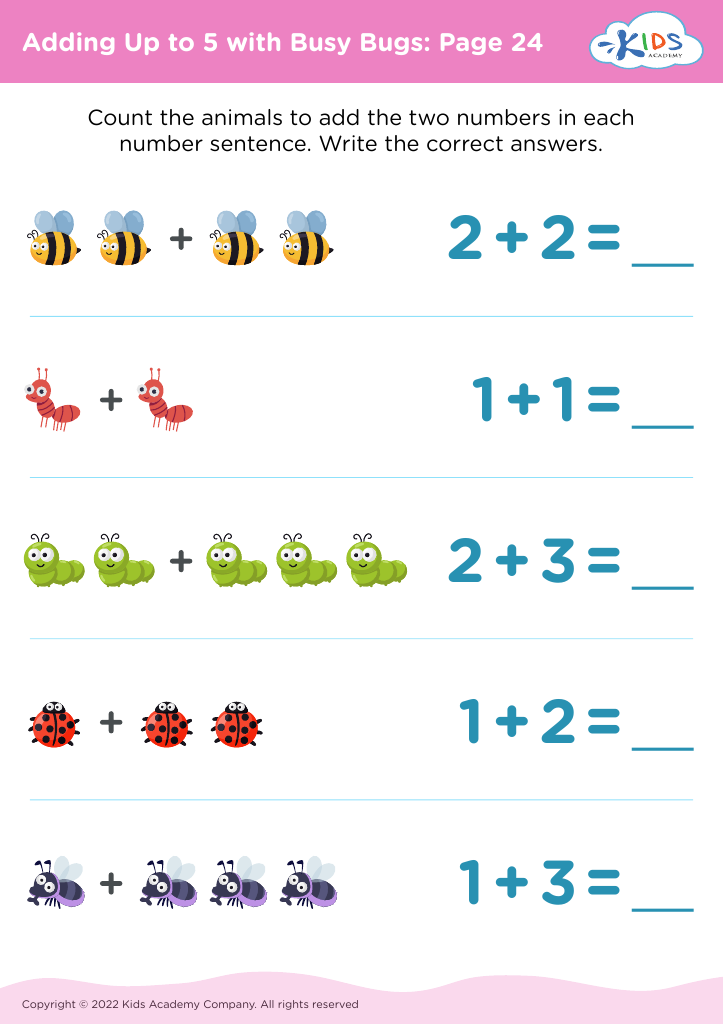
    Adding Up to 5 with Busy Bugs: Page 24
    Adding Up to 5 with Busy Bugs: Page 24
    Adding Up to 5 with Busy Bugs: Page 24
    Worksheet
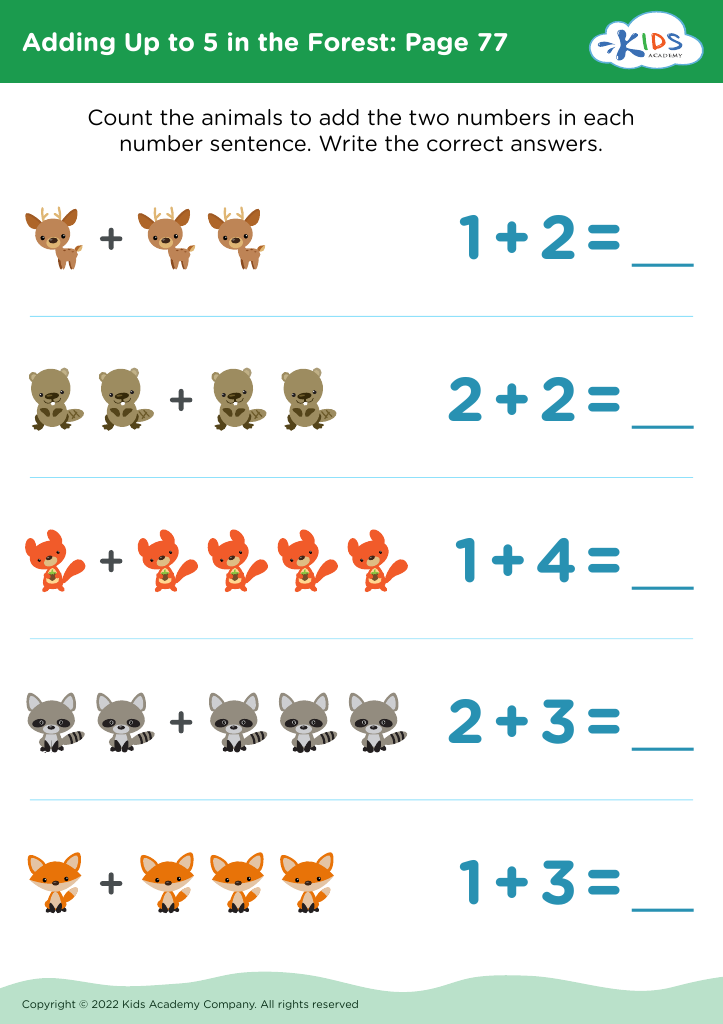
    Adding Up to 5 in the Forest: Page 77
    Adding Up to 5 in the Forest: Page 77
    Adding Up to 5 in the Forest: Page 77
    Worksheet
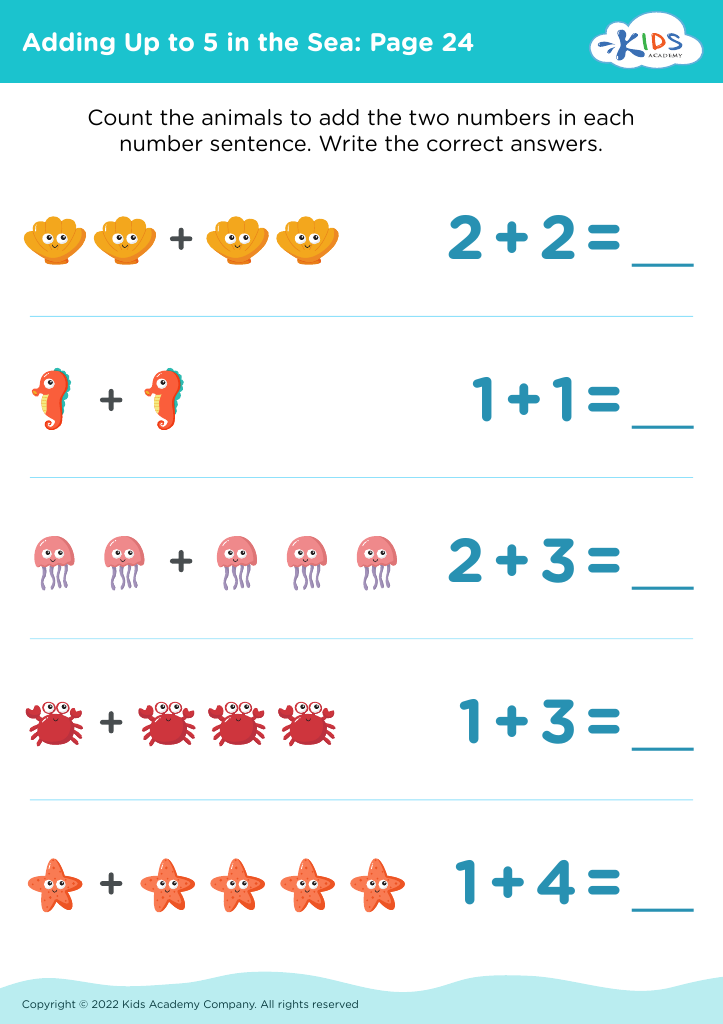
    Adding Up to 5 in the Sea: Page 24
    Adding Up to 5 in the Sea: Page 24
    Adding Up to 5 in the Sea: Page 24
    Worksheet
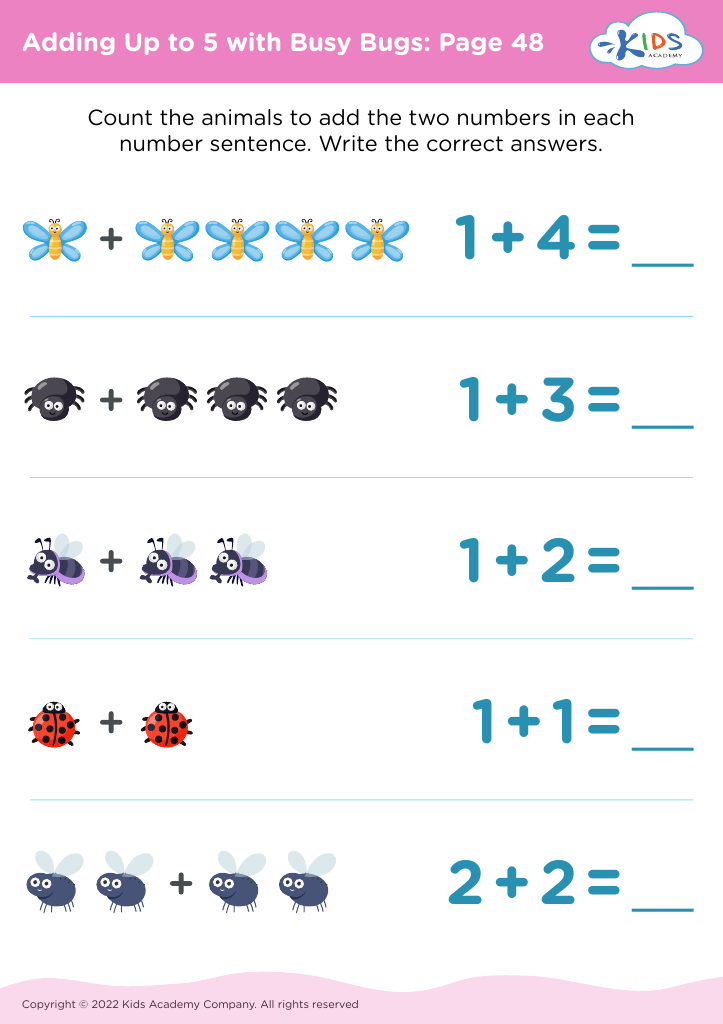
    Adding Up to 5 with Busy Bugs: Page 48
    Adding Up to 5 with Busy Bugs: Page 48
    Adding Up to 5 with Busy Bugs: Page 48
    Worksheet
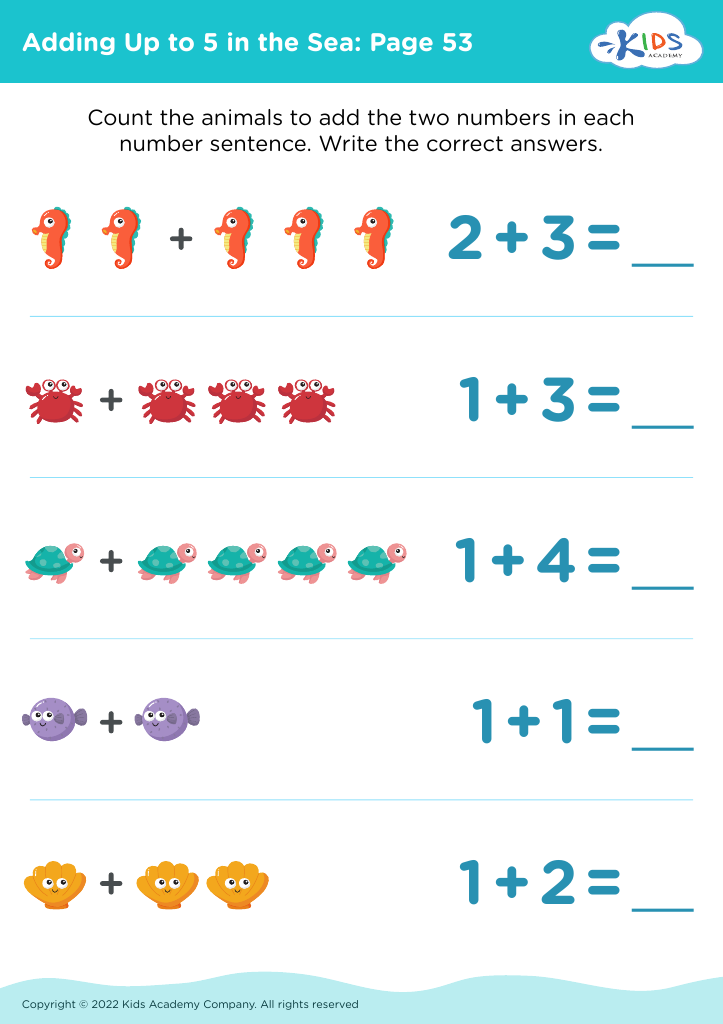
    Adding Up to 5 in the Sea: Page 53
    Adding Up to 5 in the Sea: Page 53
    Adding Up to 5 in the Sea: Page 53
    Worksheet
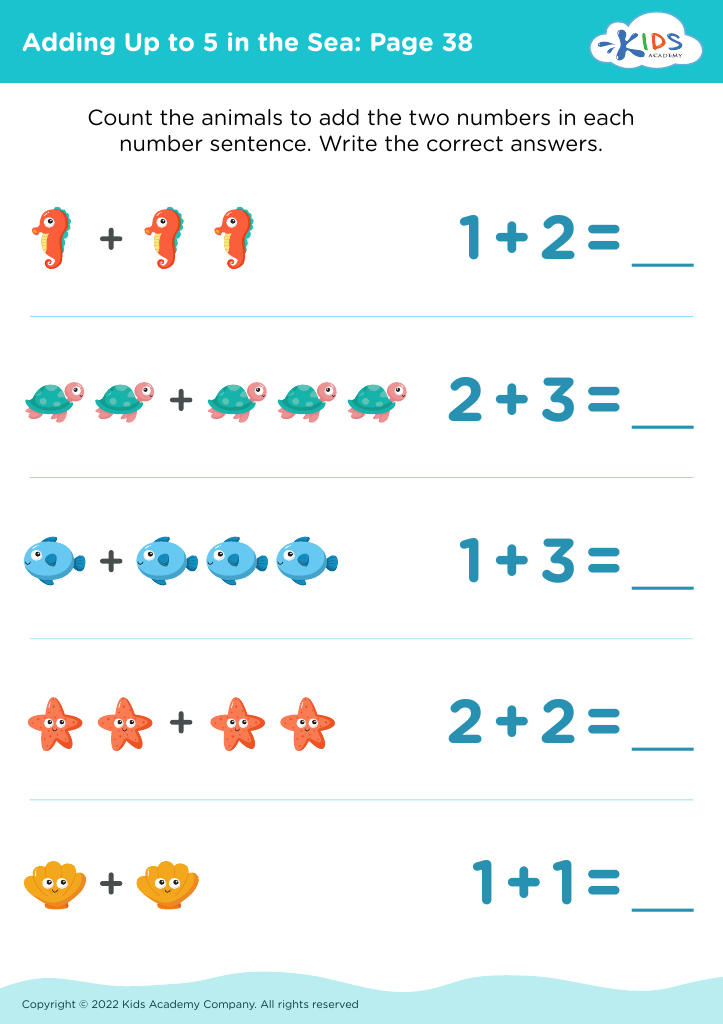
    Adding Up to 5 in the Sea: Page 38
    Adding Up to 5 in the Sea: Page 38
    Adding Up to 5 in the Sea: Page 38
    Worksheet
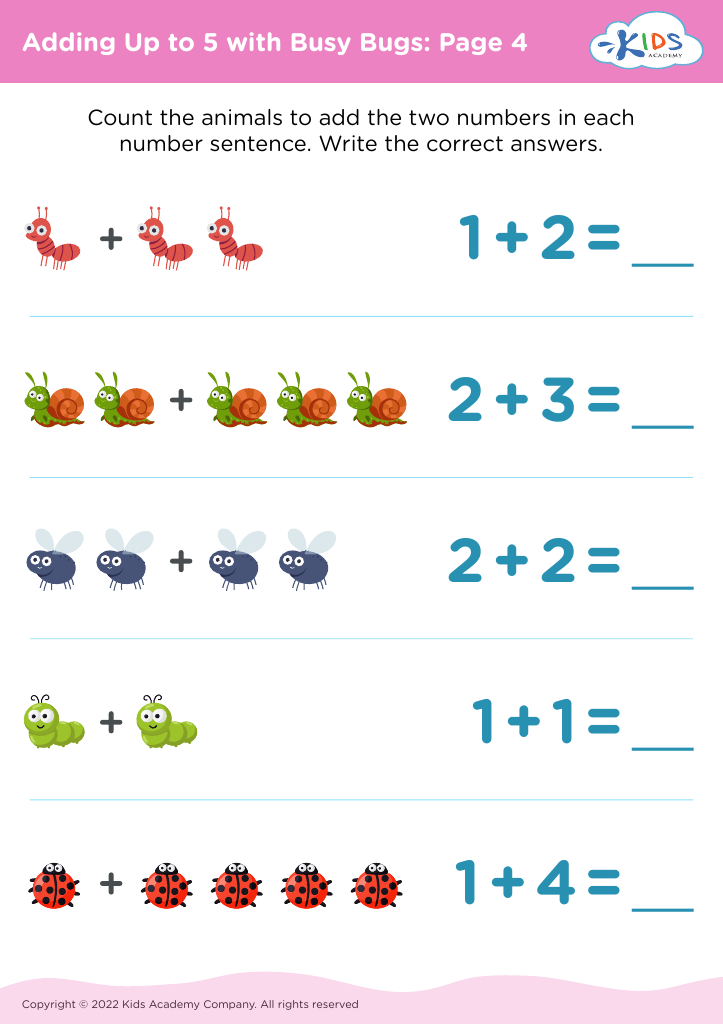
    Adding Up to 5 with Busy Bugs: Page 4
    Adding Up to 5 with Busy Bugs: Page 4
    Adding Up to 5 with Busy Bugs: Page 4
    Worksheet
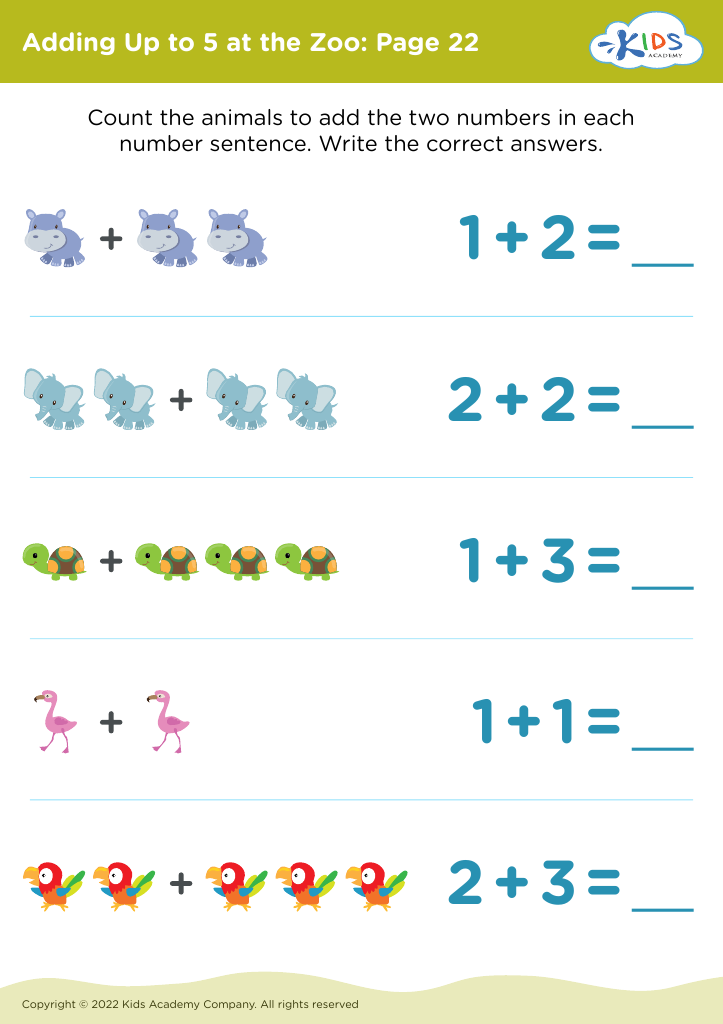
    Adding Up to 5 at the Zoo: Page 22
    Adding Up to 5 at the Zoo: Page 22
    Adding Up to 5 at the Zoo: Page 22
    Worksheet
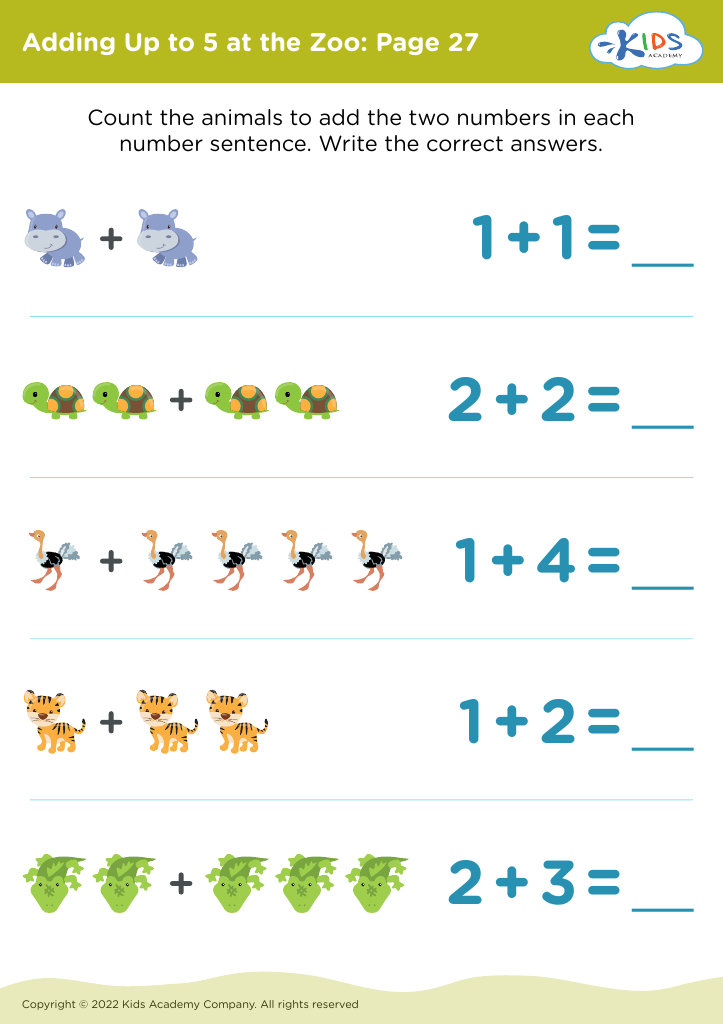
    Adding Up to 5 at the Zoo: Page 27
    Adding Up to 5 at the Zoo: Page 27
    Adding Up to 5 at the Zoo: Page 27
    Worksheet
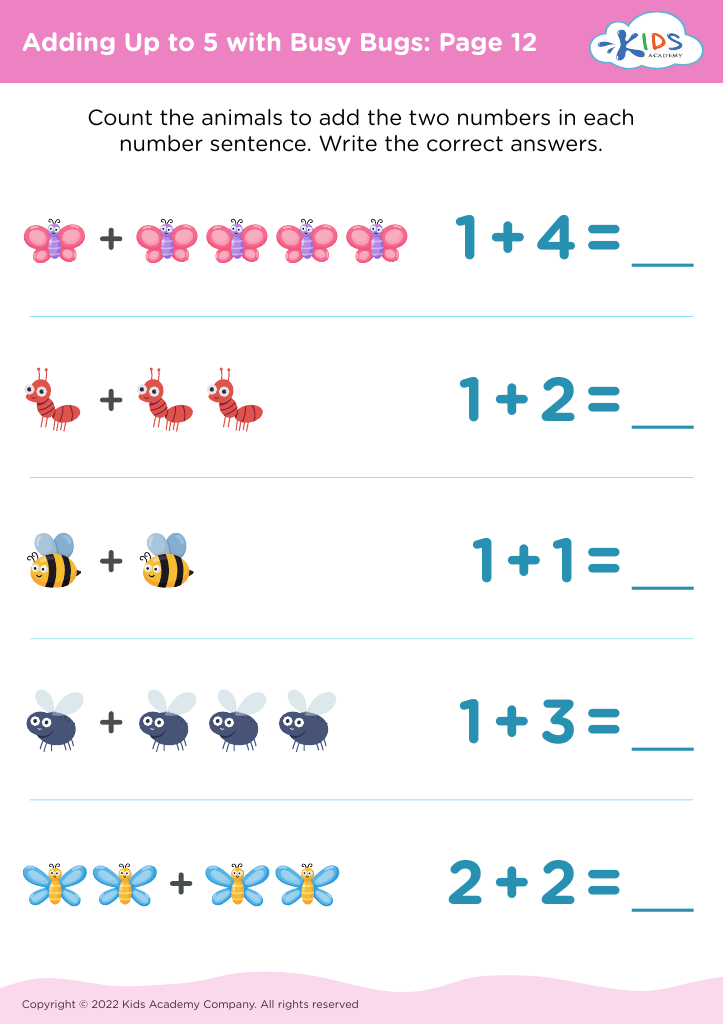
    Adding Up to 5 with Busy Bugs: Page 12
    Adding Up to 5 with Busy Bugs: Page 12
    Adding Up to 5 with Busy Bugs: Page 12
    Worksheet
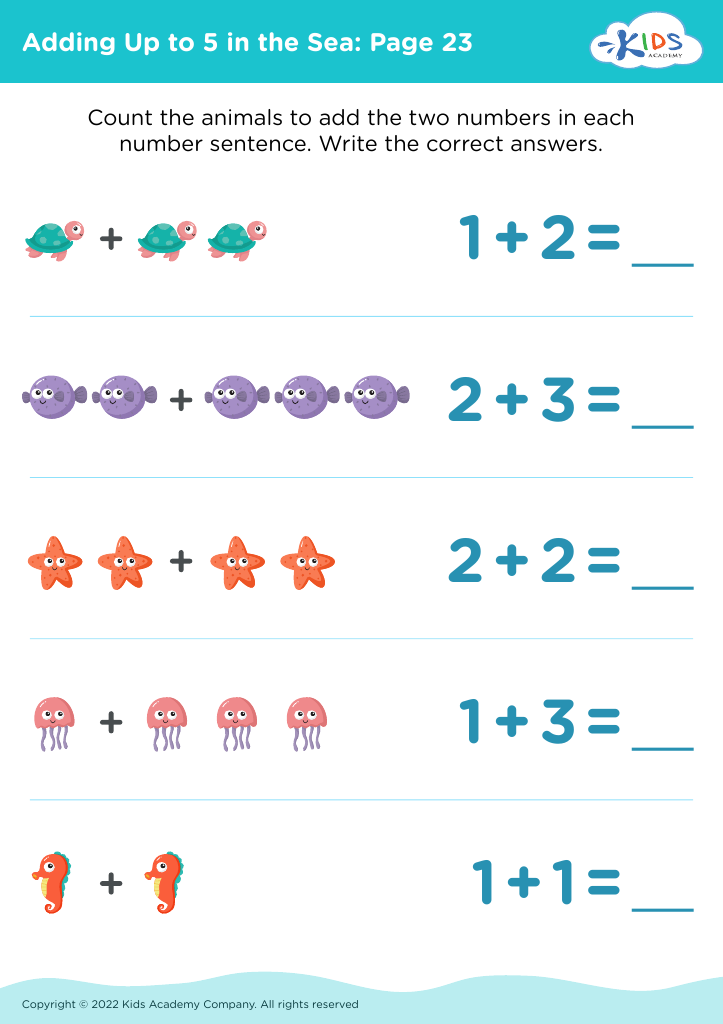
    Adding Up to 5 in the Sea: Page 23
    Adding Up to 5 in the Sea: Page 23
    Adding Up to 5 in the Sea: Page 23
    Worksheet
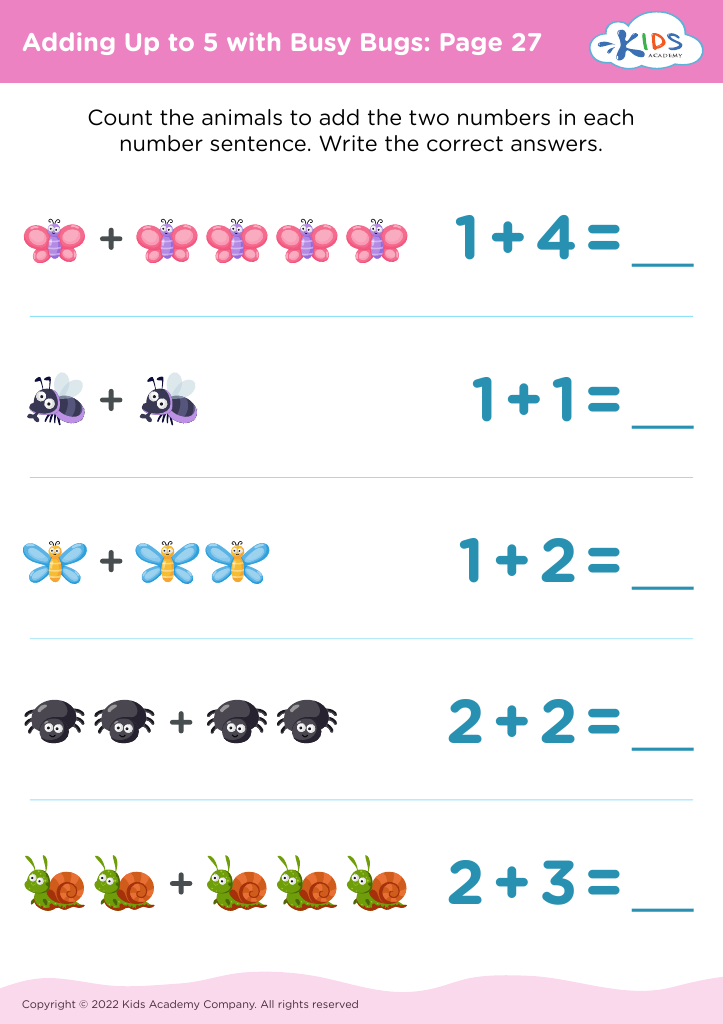
    Adding Up to 5 with Busy Bugs: Page 27
    Adding Up to 5 with Busy Bugs: Page 27
    Adding Up to 5 with Busy Bugs: Page 27
    Worksheet
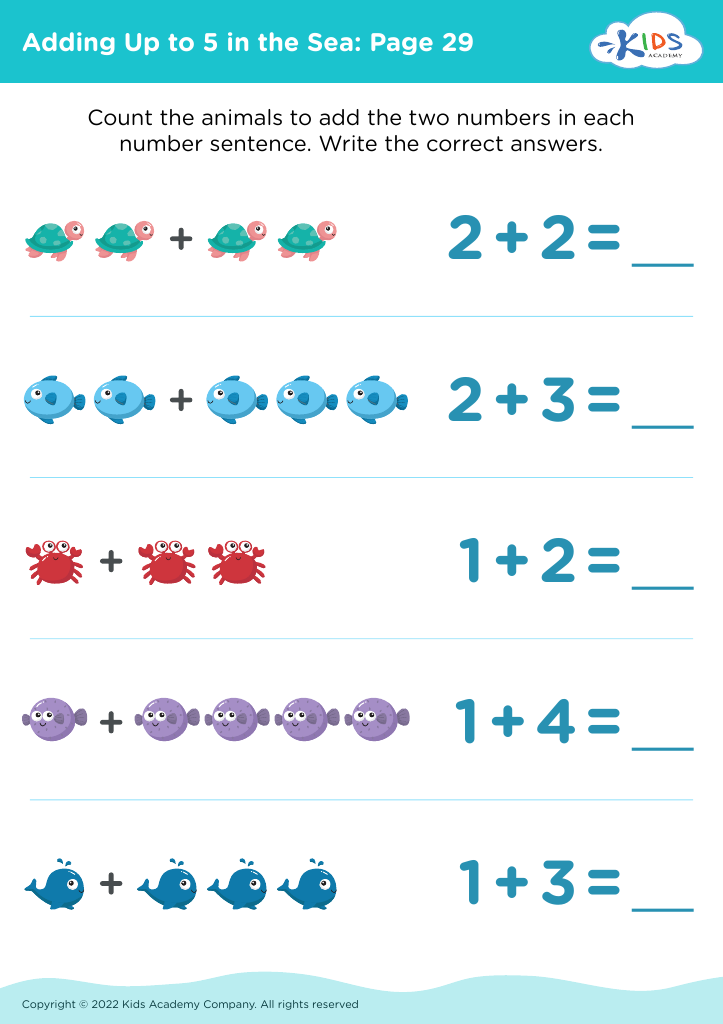
    Adding Up to 5 in the Sea: Page 29
    Adding Up to 5 in the Sea: Page 29
    Adding Up to 5 in the Sea: Page 29
    Worksheet
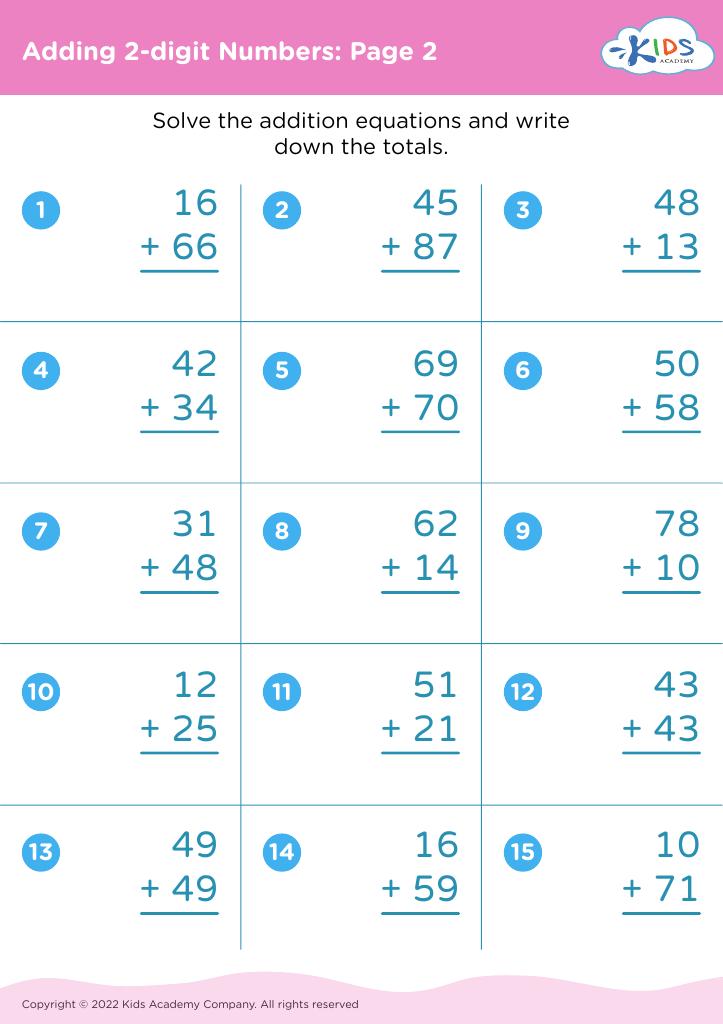
    Adding 2-digit Numbers: Page 2
    Adding 2-digit Numbers: Page 2

    Adding 2-digit Numbers: Page 2

    Adding 2-digit Numbers: Page 2
    Worksheet
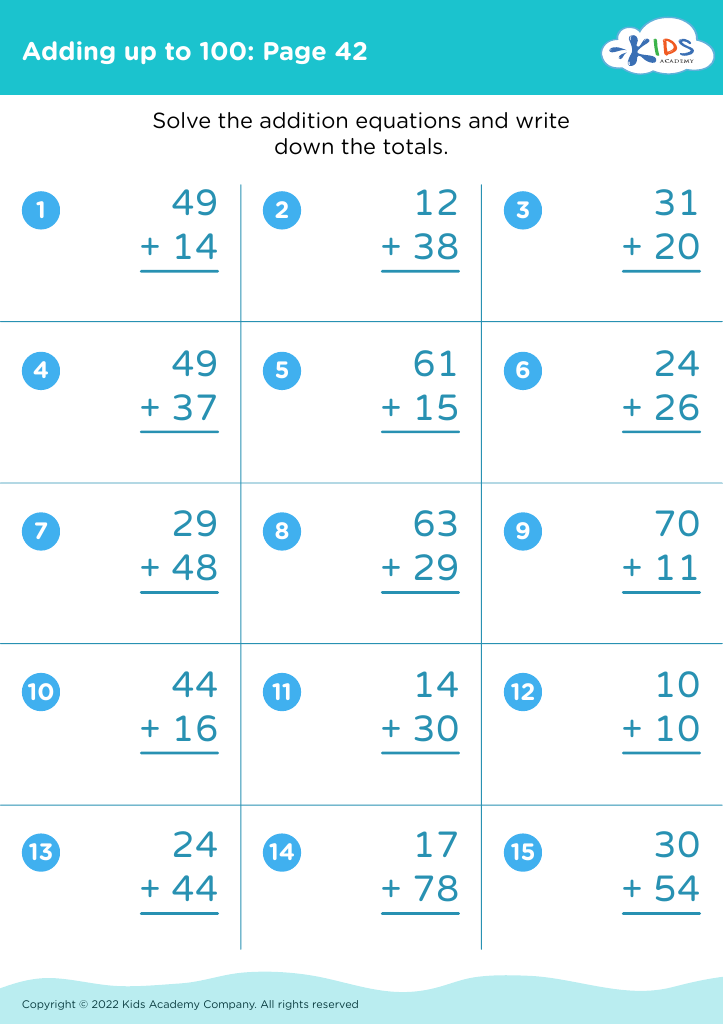
    Adding up to 100: Page 42
    Adding up to 100: Page 42

    Adding up to 100: Page 42

    Adding up to 100: Page 42
    Worksheet
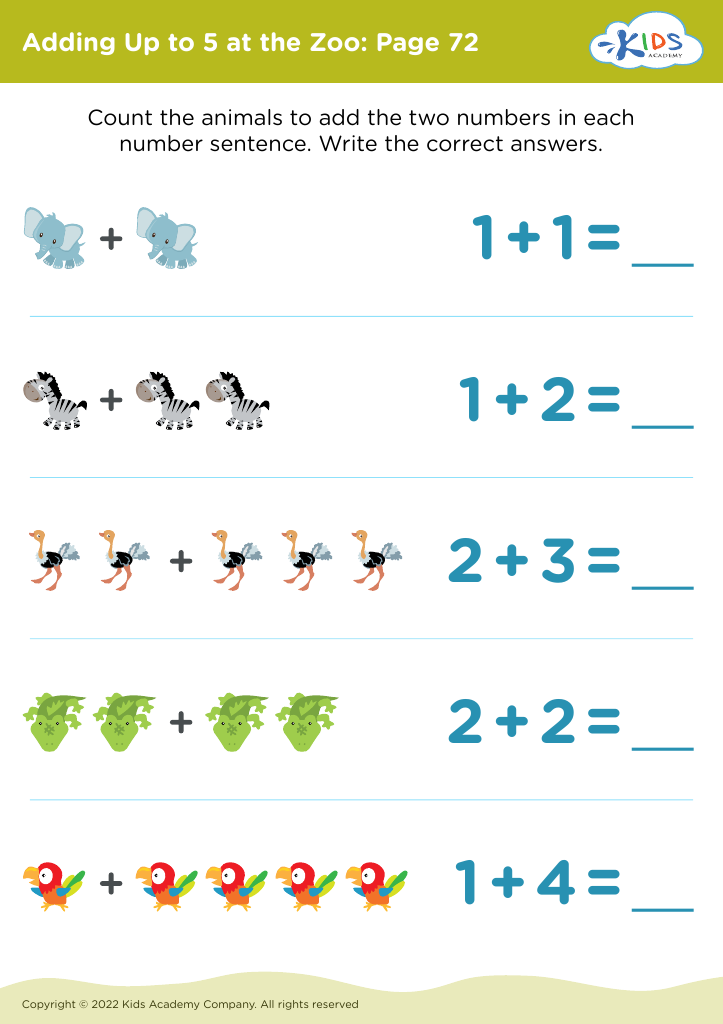
    Adding Up to 5 at the Zoo: Page 72
    Adding Up to 5 at the Zoo: Page 72
    Adding Up to 5 at the Zoo: Page 72
    Worksheet
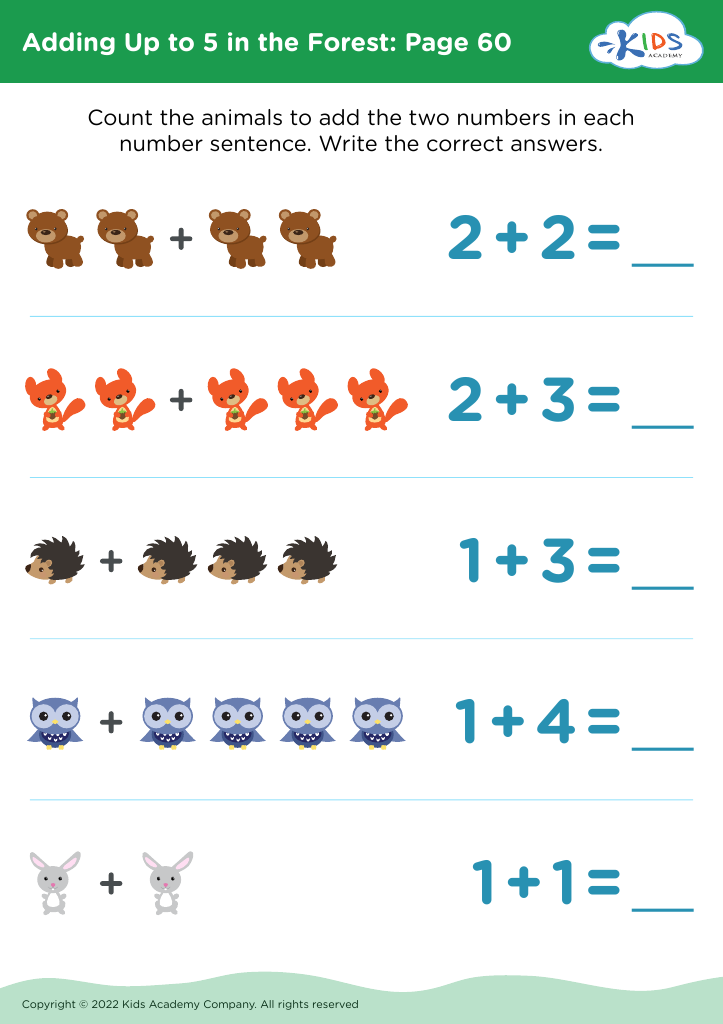
    Adding Up to 5 in the Forest: Page 60
    Adding Up to 5 in the Forest: Page 60
    Adding Up to 5 in the Forest: Page 60
    Worksheet
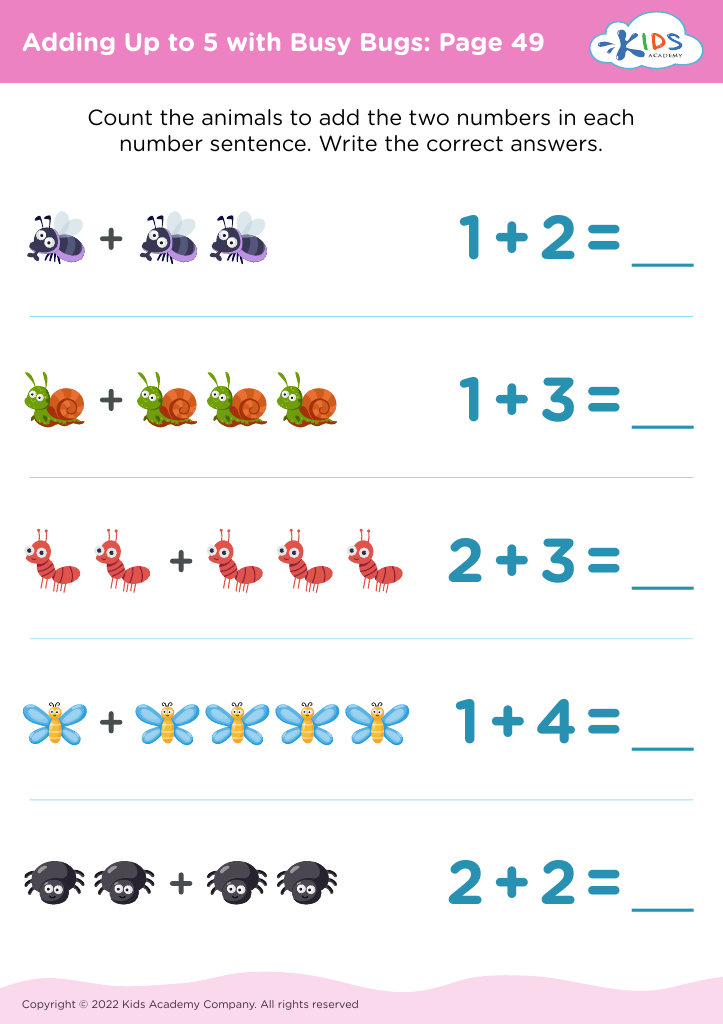
    Adding Up to 5 with Busy Bugs: Page 49
    Adding Up to 5 with Busy Bugs: Page 49
    Adding Up to 5 with Busy Bugs: Page 49
    Worksheet


    Parents and teachers should care about cognitive development and addition in early childhood because these foundational skills are crucial for overall academic success and everyday problem-solving abilities. Cognitive development refers to how children think, explore, and figure things out, which includes acquiring knowledge and increasing understanding of math.

    Understanding addition early on empowers children to build critical thinking and logical reasoning skills. These are crucial not only in mathematics but across all subjects. Specifically, addition is a fundamental math concept that serves as the building block for more complex mathematical operations like subtraction, multiplication, and division.

    By fostering a child's cognitive development in addition, parents and teachers help improve their confidence and ability to tackle academic challenges. Children with strong foundational math skills are more likely to excel in school, have better problem-solving abilities, and develop a positive attitude toward learning new things.

    Moreover, cognitive development in math promotes linguistic, social, emotional, and motor skills. For example, when children discuss how they came to an answer, they enhance their communication skills. Hands-on activities involving adding objects can advance fine motor skills critical for writing.

    Ultimately, caring about cognitive development and addition early on prepares children for future academic achievement and well-rounded intellectual growth. This solid base fosters lifelong learning attitudes, problem-solving skills, and resilience in various scenarios.