Filters

17 filtered results

Clear all filters
Favorites
With answer key
Interactive

17 filtered results

Difficulty Level

Grade


Enhance comprehension with our engaging Addition Worksheets designed to bolster mathematical understanding in early learners. These comprehensive resources focus on improving skills through interactive exercises that include word problems, visual aids, and real-world scenarios. Our worksheets not only teach basic addition but also guide students in developing critical thinking and problem-solving abilities. Tailored for young minds, these activities encourage a deeper grasp of math concepts while keeping learning enjoyable. Suitable for classroom or home use, our worksheets provide educators and parents with valuable tools to foster confidence and competence in addition. Explore our diverse selection today and watch your child thrive!
Check out this FREE Trial Lesson on Addition!

H

Favorites
With answer key
Interactive
  • Enhance comprehension
  • Addition
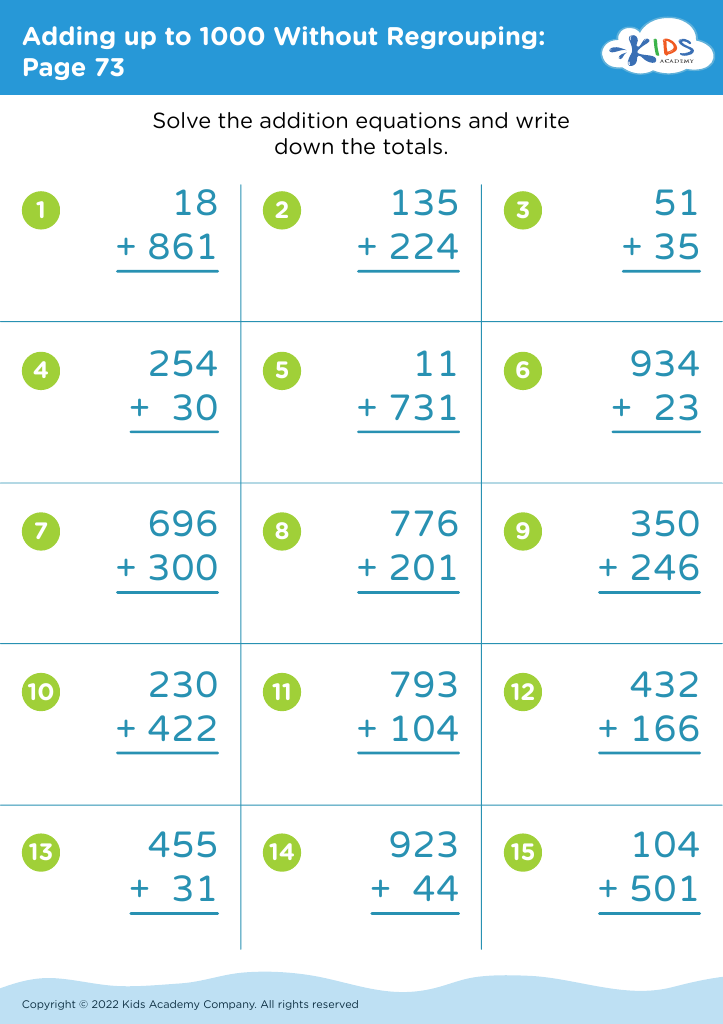
Adding up to 1000 Without Regrouping: Page 73
Worksheet
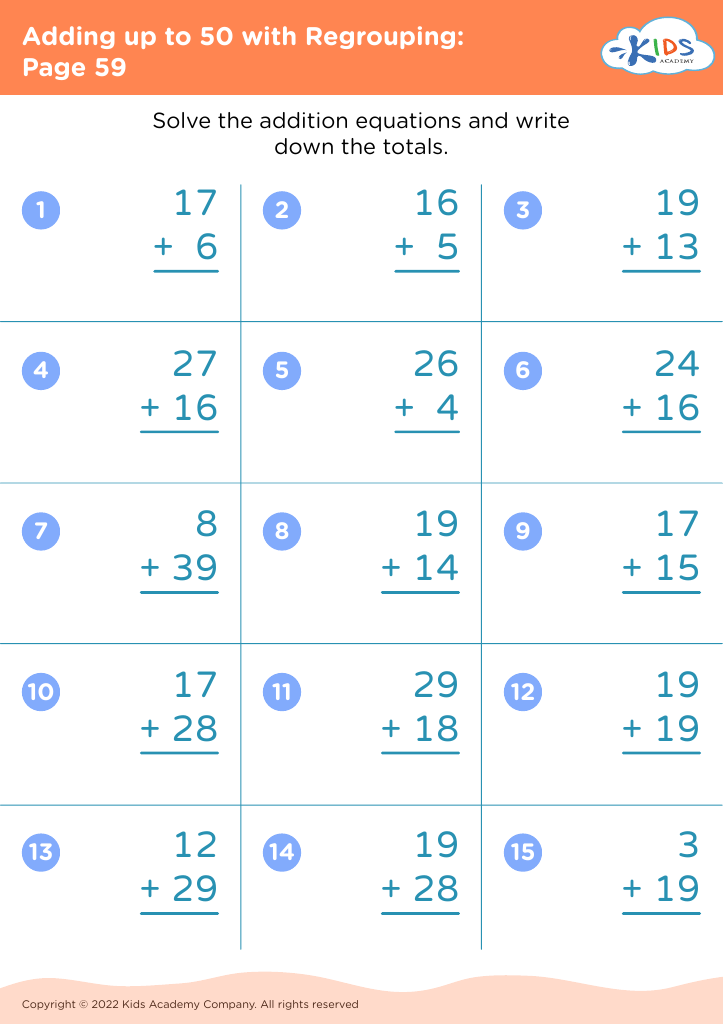
Adding up to 50 with Regrouping: Page 59
Worksheet
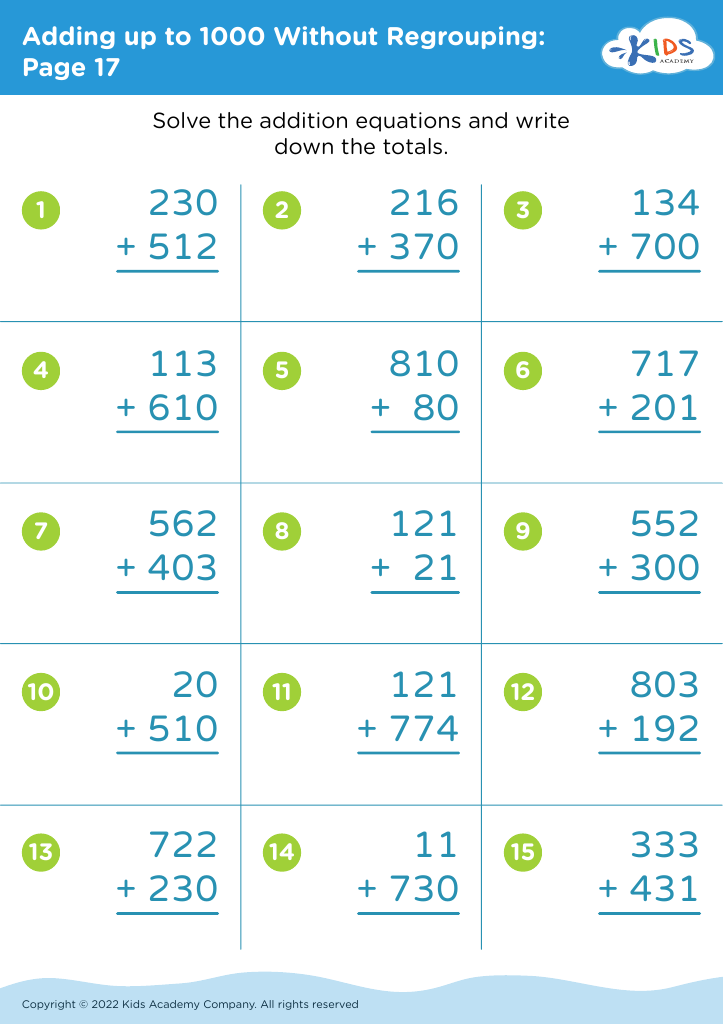
Adding up to 1000 Without Regrouping: Page 17
Worksheet
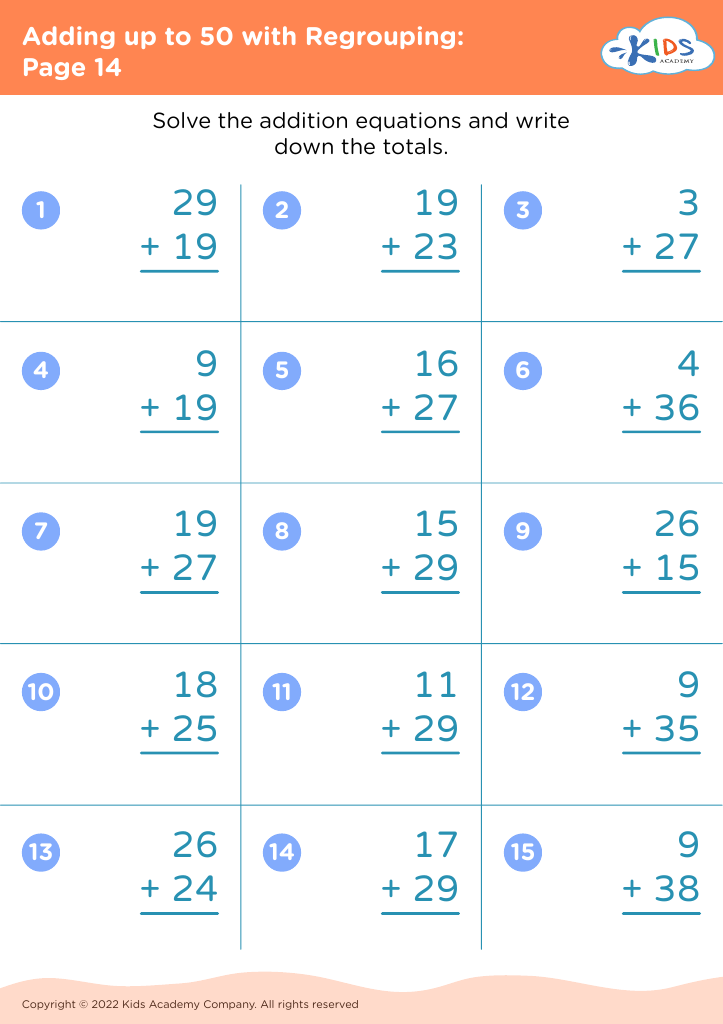
Adding up to 50 with Regrouping: Page 14
Worksheet
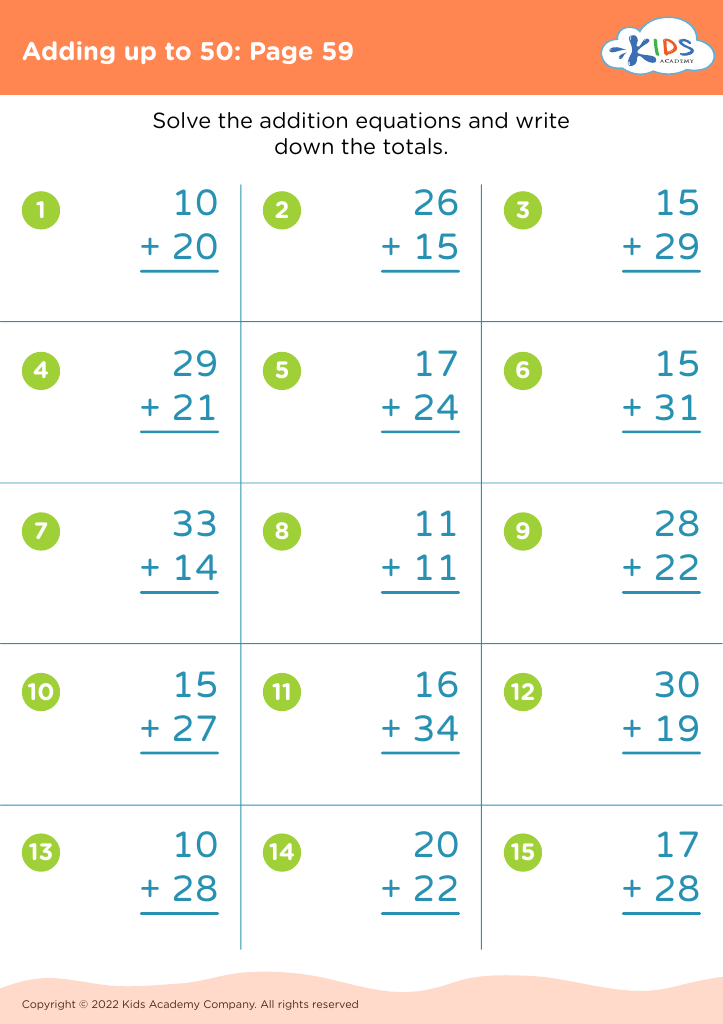
Adding up to 50: Page 59

Adding up to 50: Page 59

Adding up to 50: Page 59
Worksheet
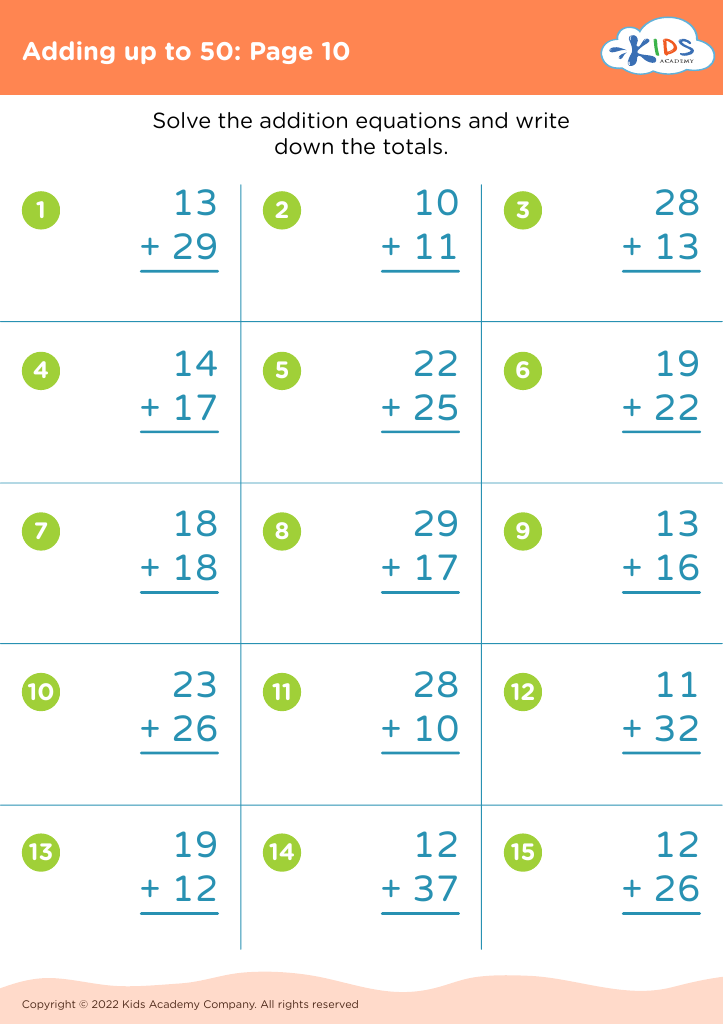
Adding up to 50: Page 10

Adding up to 50: Page 10

Adding up to 50: Page 10
Worksheet
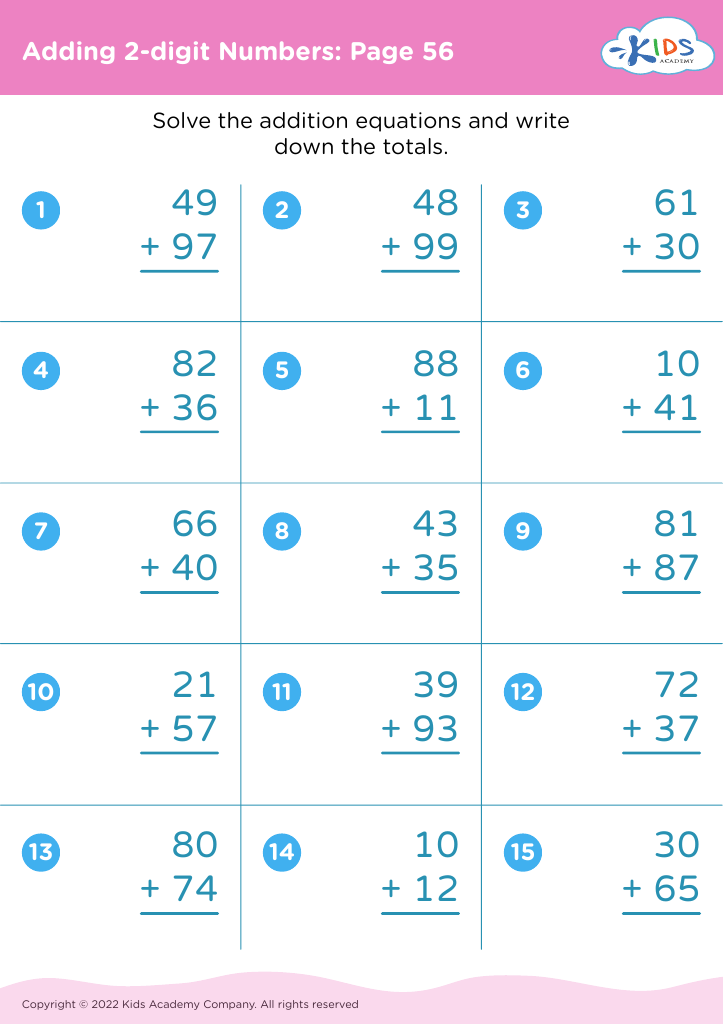
Adding 2-digit Numbers: Page 56

Adding 2-digit Numbers: Page 56

Adding 2-digit Numbers: Page 56
Worksheet
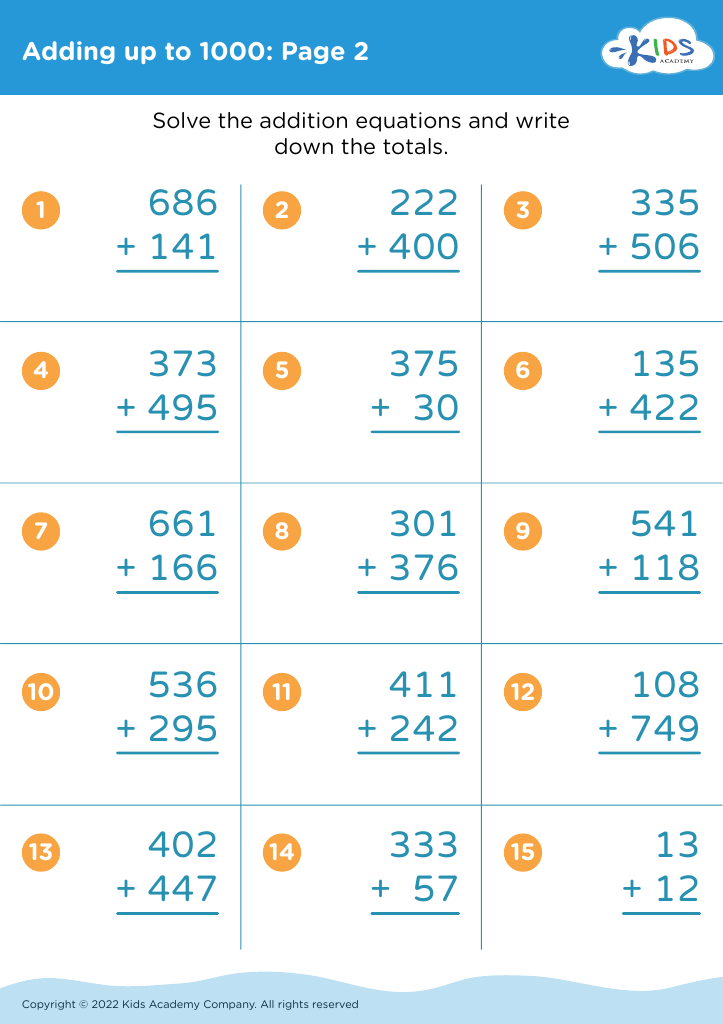
Adding up to 1000: Page 2

Adding up to 1000: Page 2

Adding up to 1000: Page 2
Worksheet
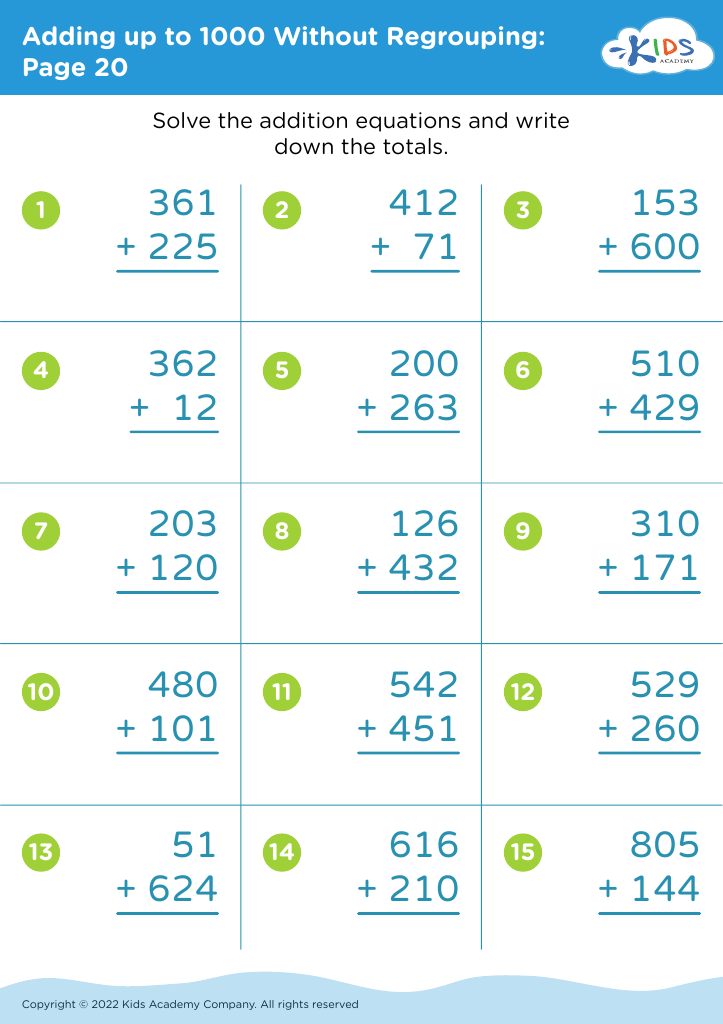
Adding up to 1000 Without Regrouping: Page 20
Worksheet
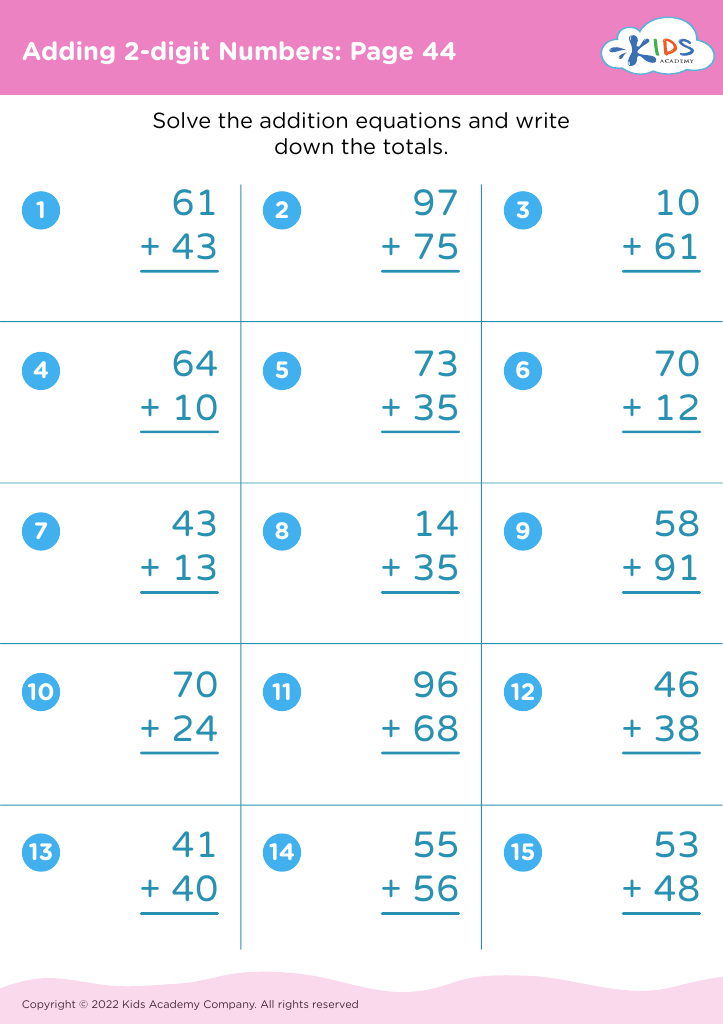
Adding 2-digit Numbers: Page 44

Adding 2-digit Numbers: Page 44

Adding 2-digit Numbers: Page 44
Worksheet
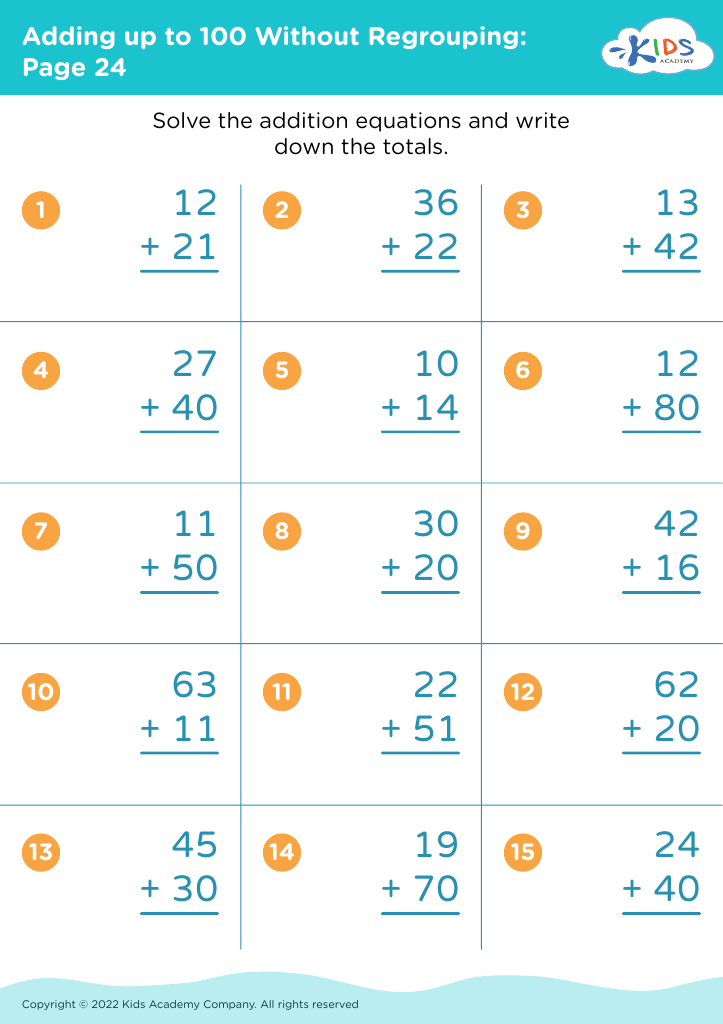
Adding up to 100 Without Regrouping: Page 24
Worksheet
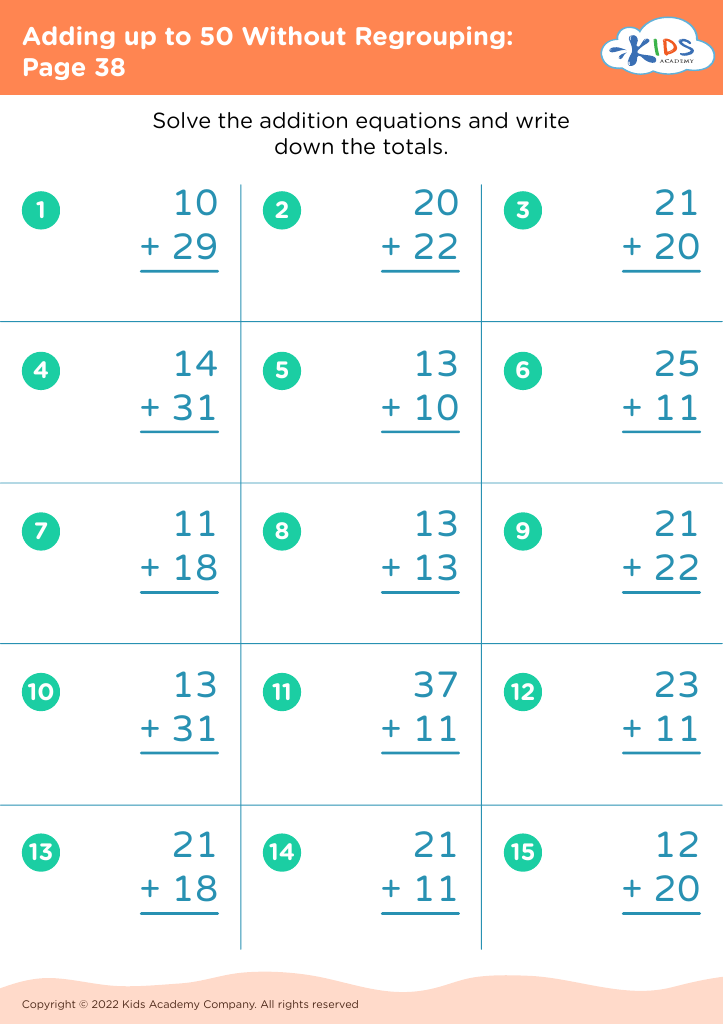
Adding up to 50 Without Regrouping: Page 38
Worksheet
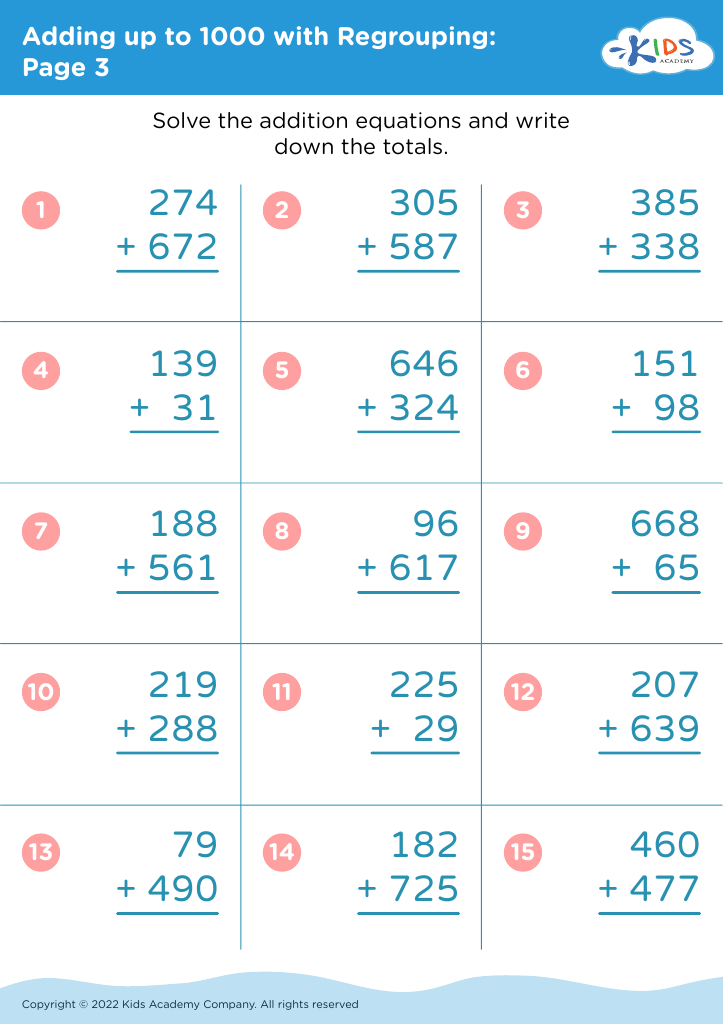
Adding up to 1000 with Regrouping: Page 3
Worksheet
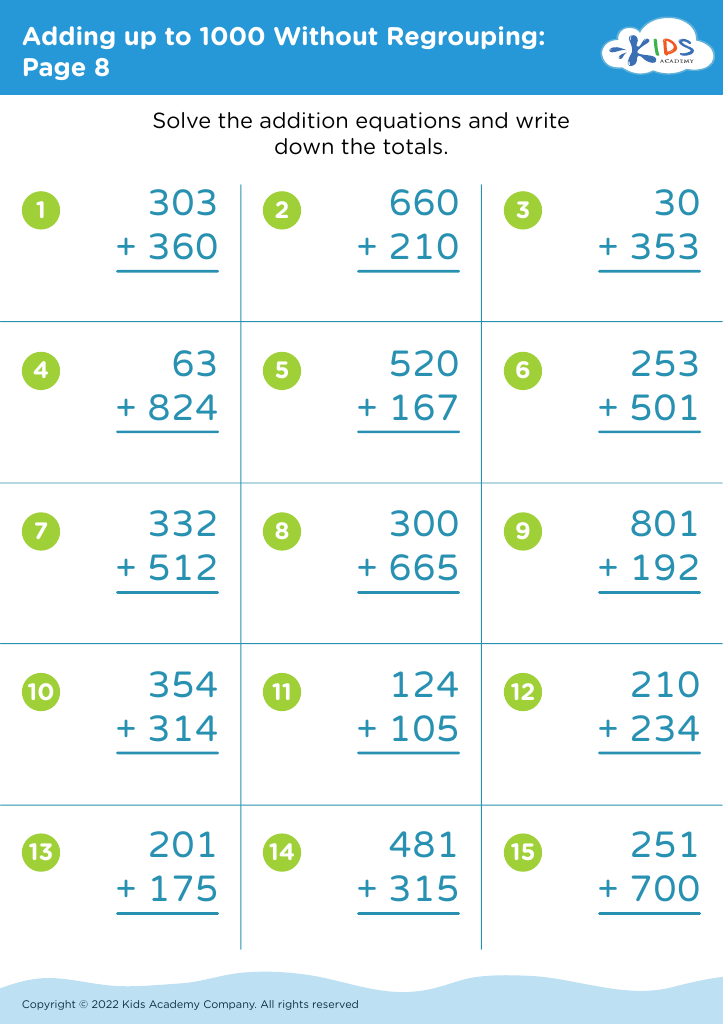
Adding up to 1000 Without Regrouping: Page 8
Worksheet
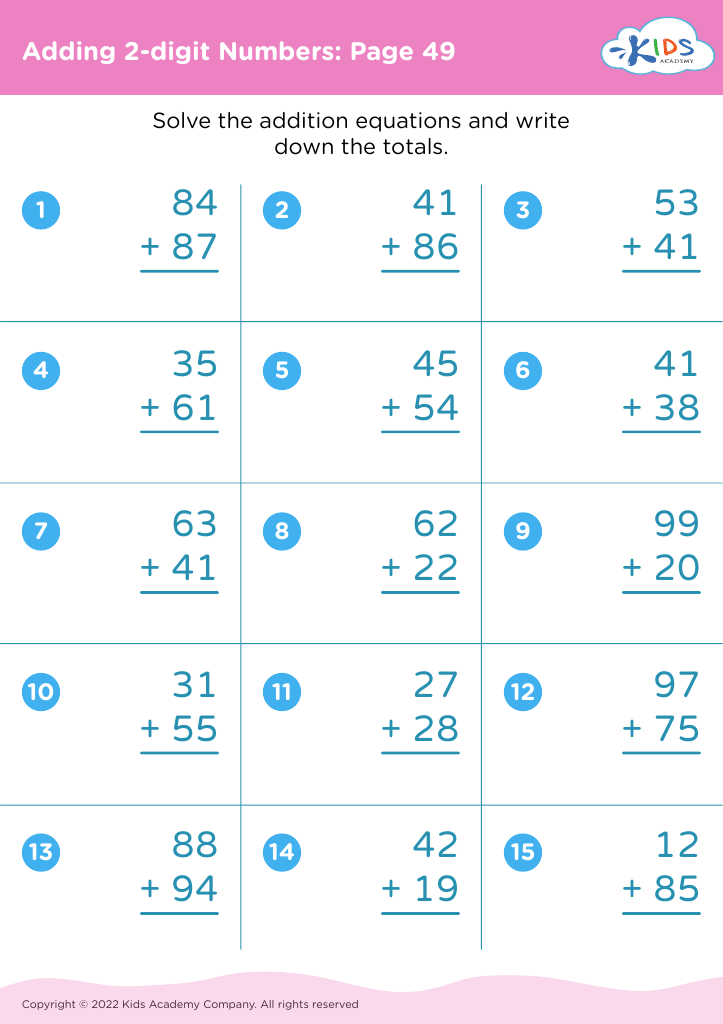
Adding 2-digit Numbers: Page 49

Adding 2-digit Numbers: Page 49

Adding 2-digit Numbers: Page 49
Worksheet
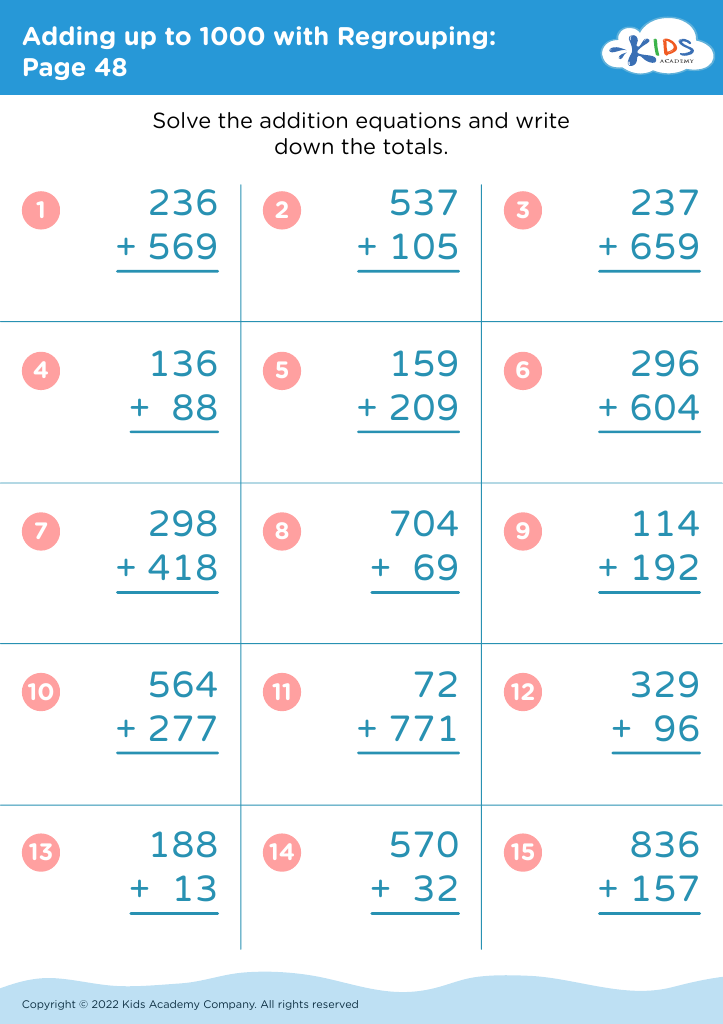
Adding up to 1000 with Regrouping: Page 48
Worksheet
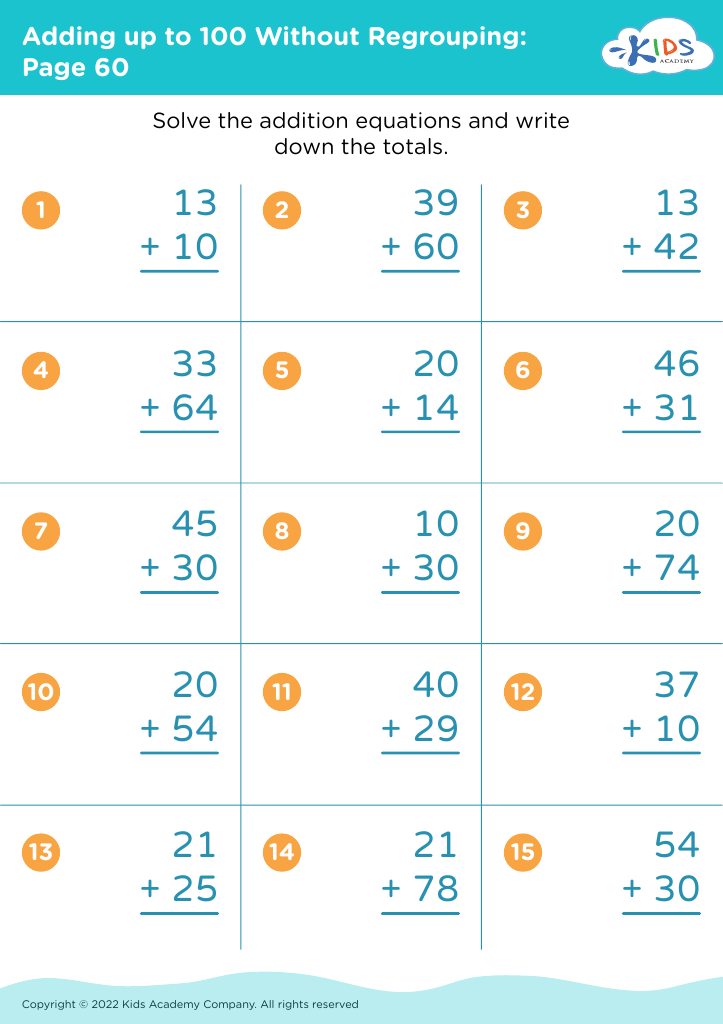
Adding up to 100 Without Regrouping: Page 60
Worksheet


Enhancing comprehension in early grade students is crucial for their academic and emotional development. When students grasp concepts effectively, they build a strong foundation for future learning. This understanding not only boosts their confidence but also fosters a love for reading and learning, which can last a lifetime. Comprehension skills enable children to connect ideas, analyze information, and engage critically with texts, ensuring they become thoughtful and informed individuals.

For parents and teachers, focusing on comprehension enhances collaboration in fostering a child's growth. Parents can engage in open dialogues about stories or lessons, reinforcing what their child learns in school. Teachers, on the other hand, can adapt instructional strategies to meet diverse learning needs, pushing students to delve deeper into content.

Overall, parents and teachers play a pivotal role in supporting comprehension through regular discussions, diverse reading materials, and encouraging questions. When comprehension is prioritized, it leads to improved academic performance, better communication skills, and greater overall success for children. By valuing and enhancing comprehension, educators and parents contribute to creating a generation of capable, confident learners ready to tackle future challenges.