Recognizing Patterns Addition Worksheets
21 filtered results
-
From - To
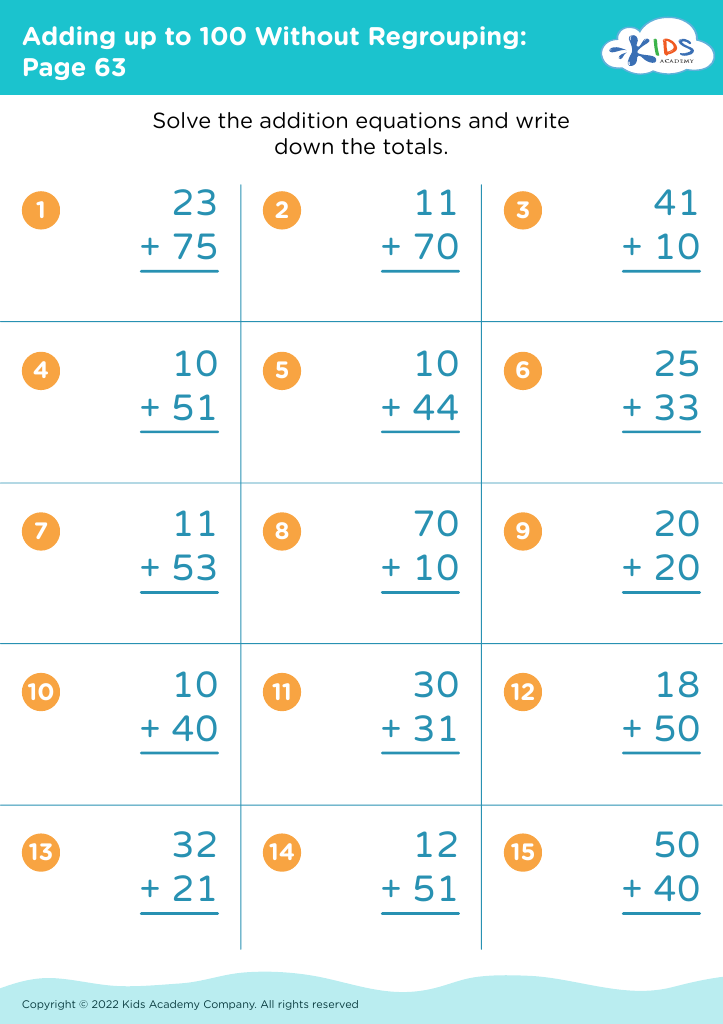
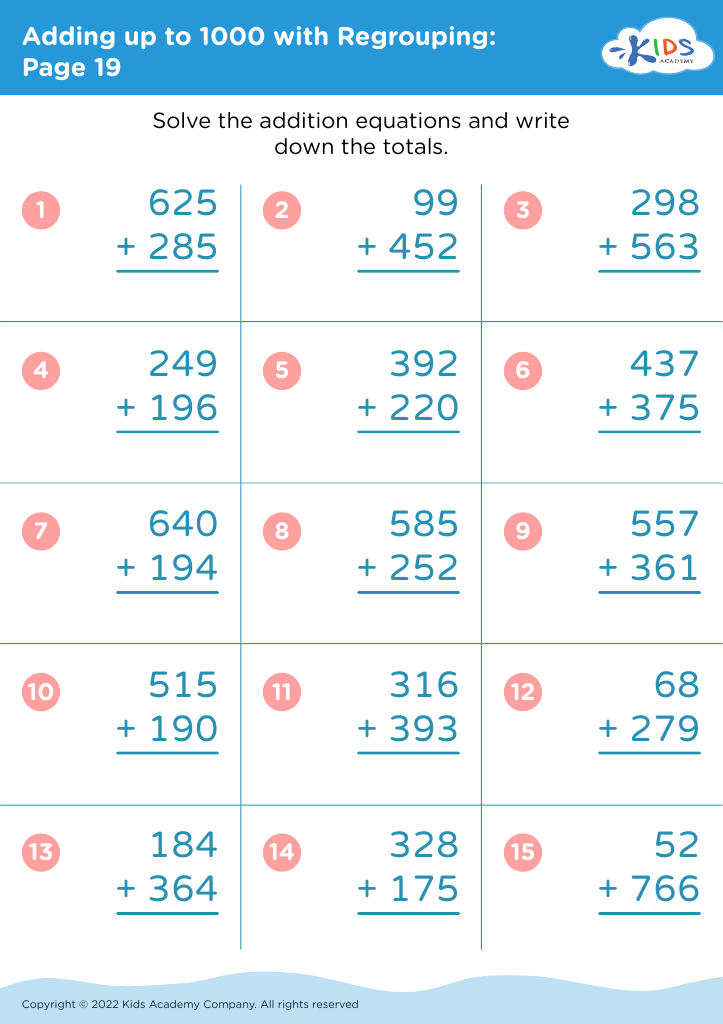
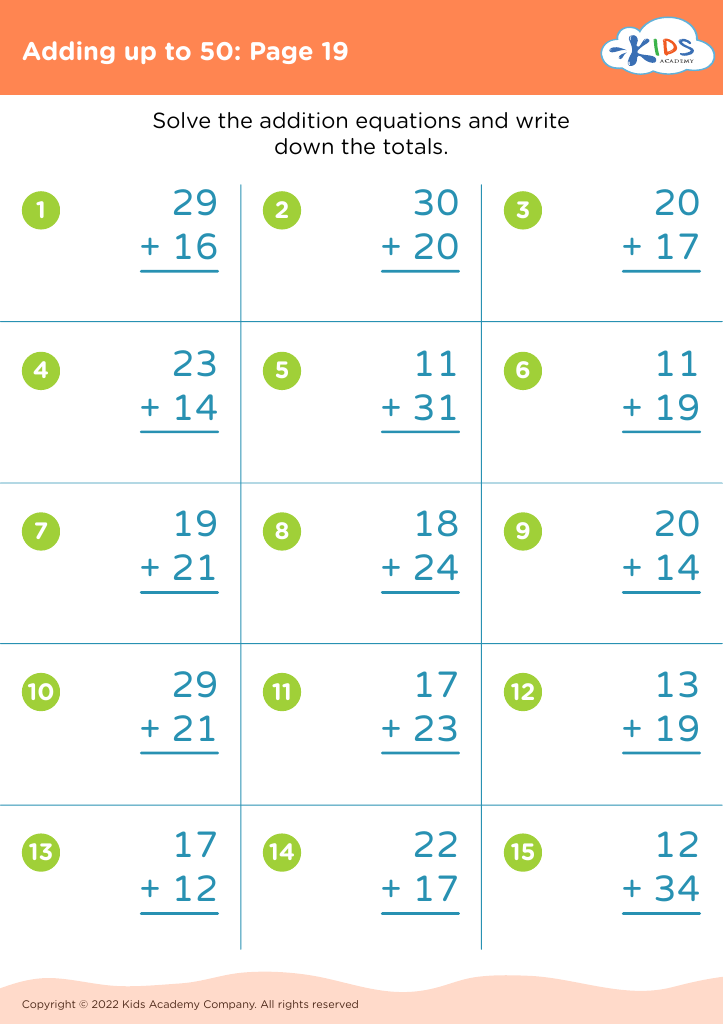
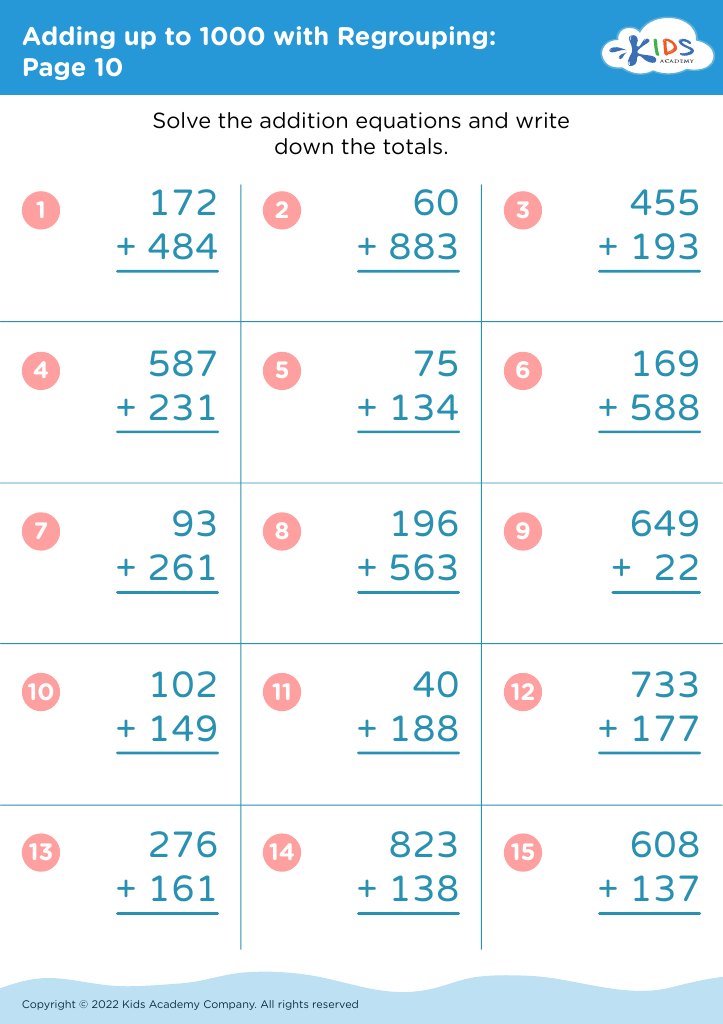
Discover our engaging "Recognizing Patterns Addition Worksheets," designed to enhance your child's mathematical skills through fun and interactive activities. These worksheets focus on helping young learners identify and understand numerical patterns, laying a strong foundation for addition. By practicing with various exercises, kids will improve their problem-solving abilities and gain confidence in their arithmetic skills. Each worksheet offers vibrant illustrations and clear instructions, making learning enjoyable and effective. Perfect for teachers or parents aiming to supplement their child's education at home or in the classroom, our worksheets will inspire a love for math while developing essential early math skills. Let the learning begin!
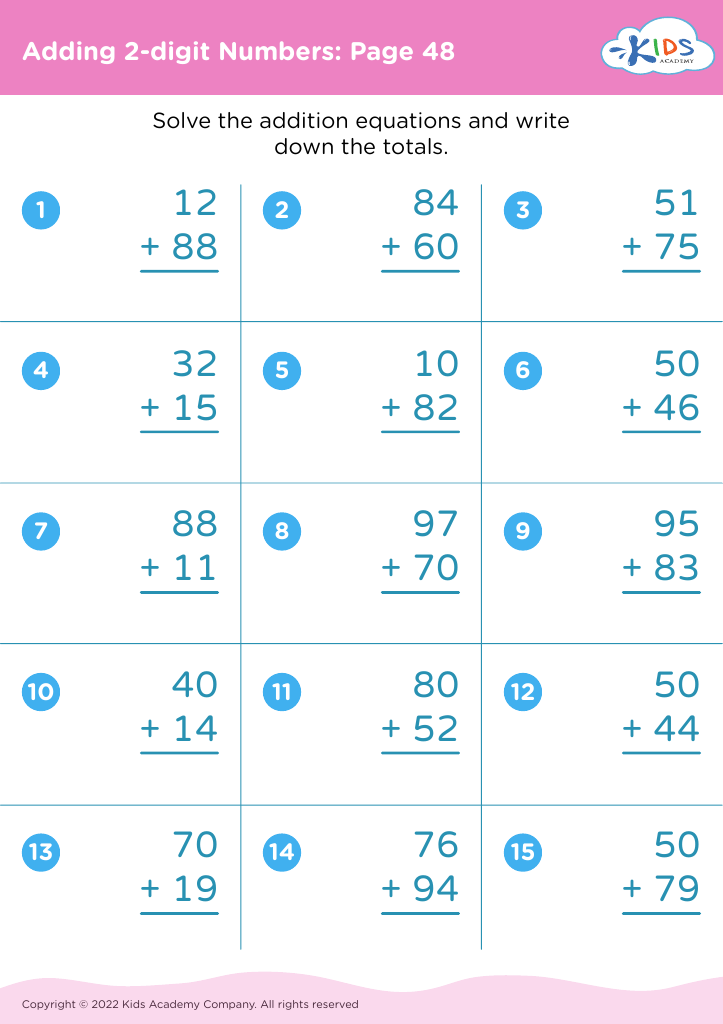
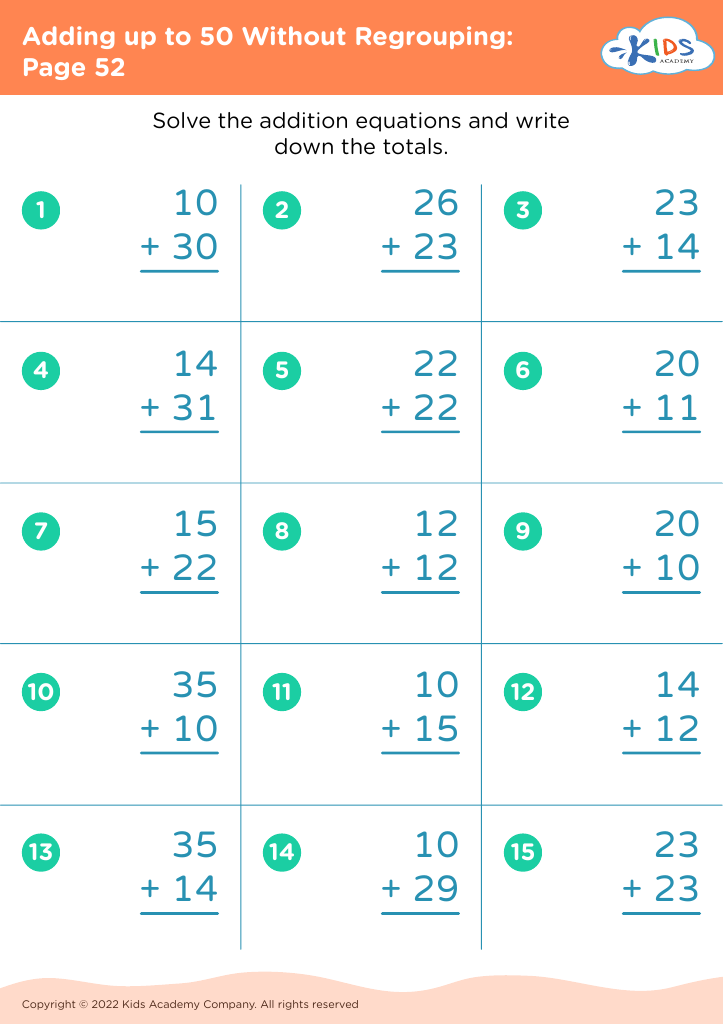
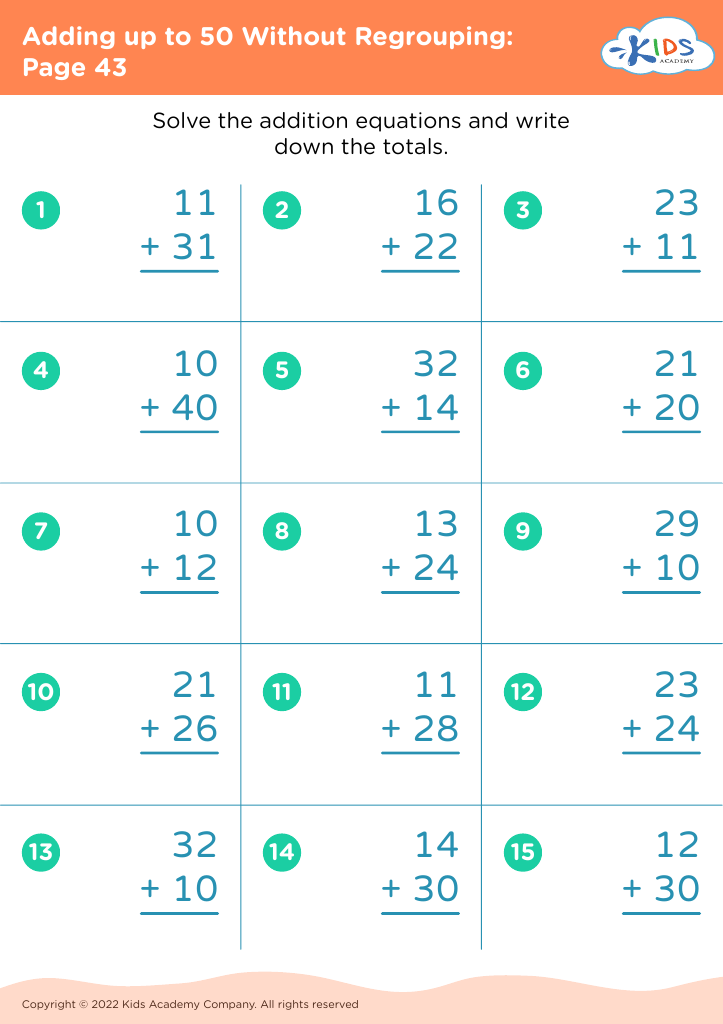
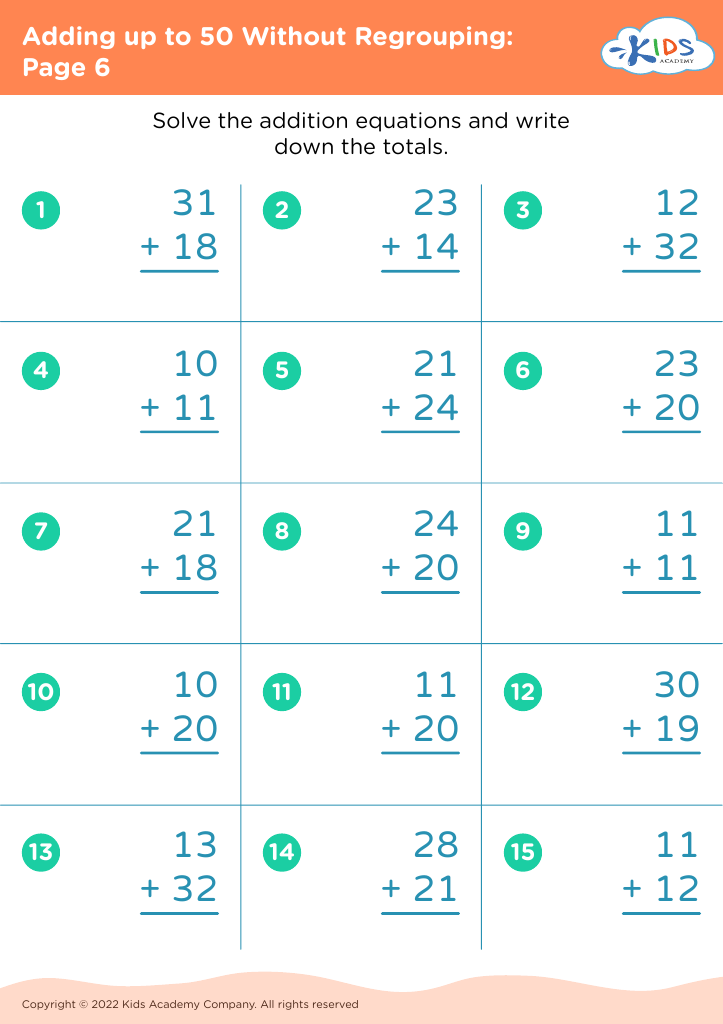
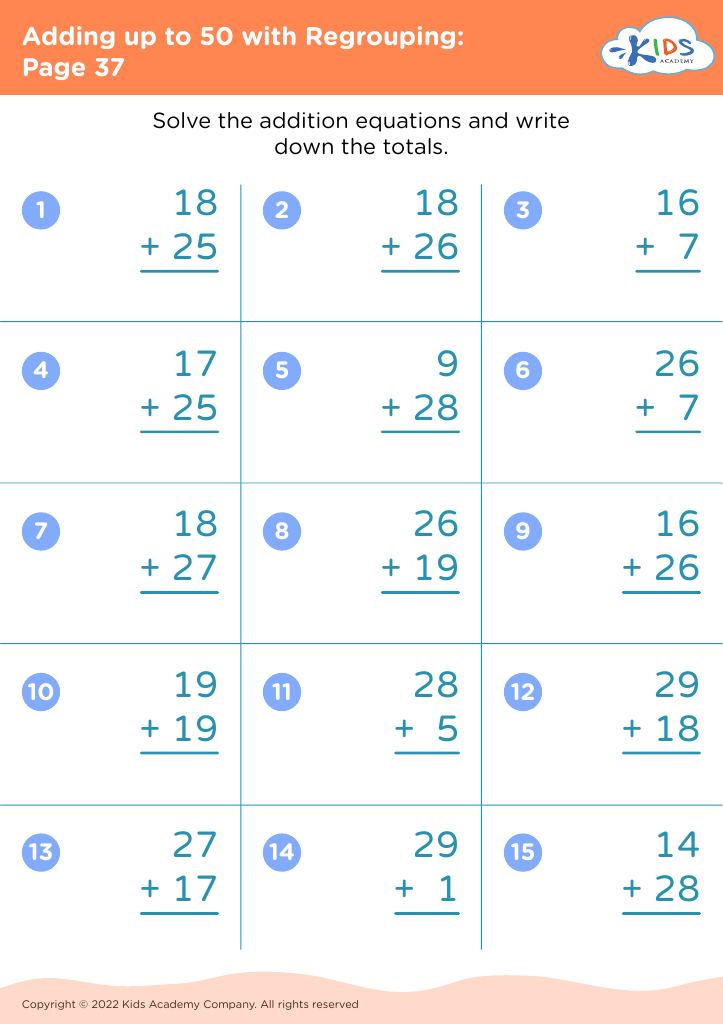
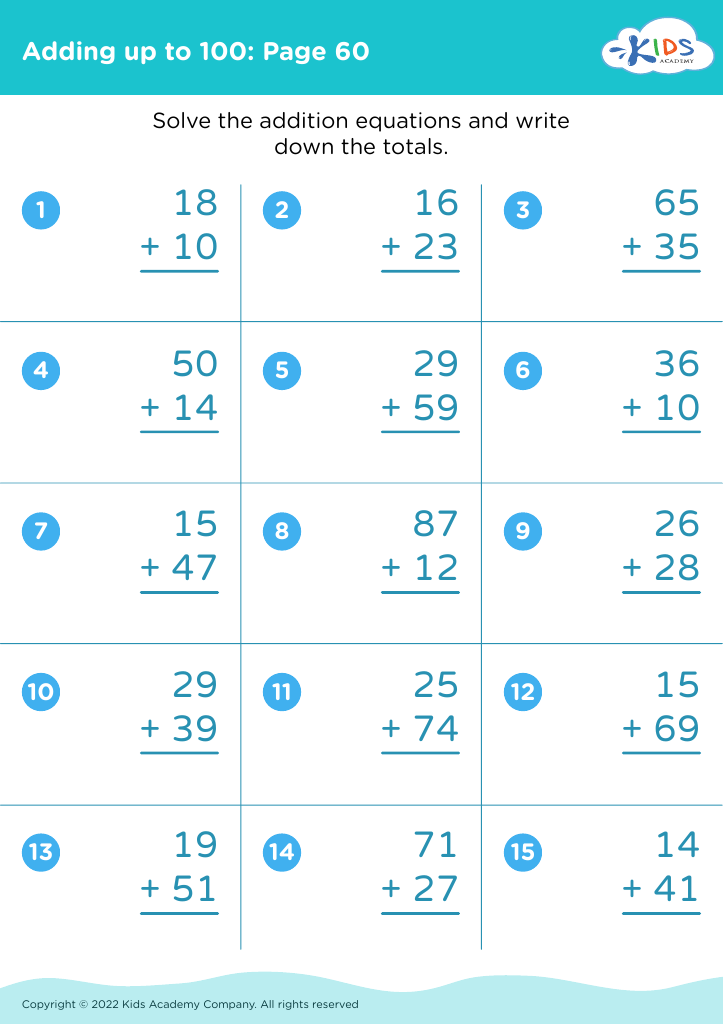
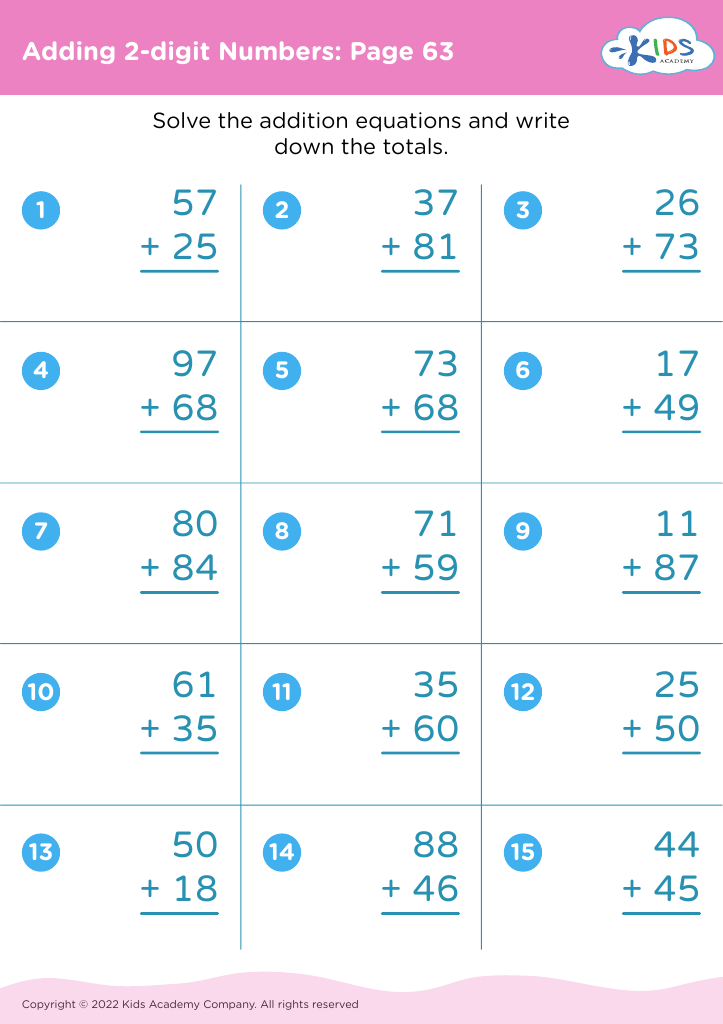
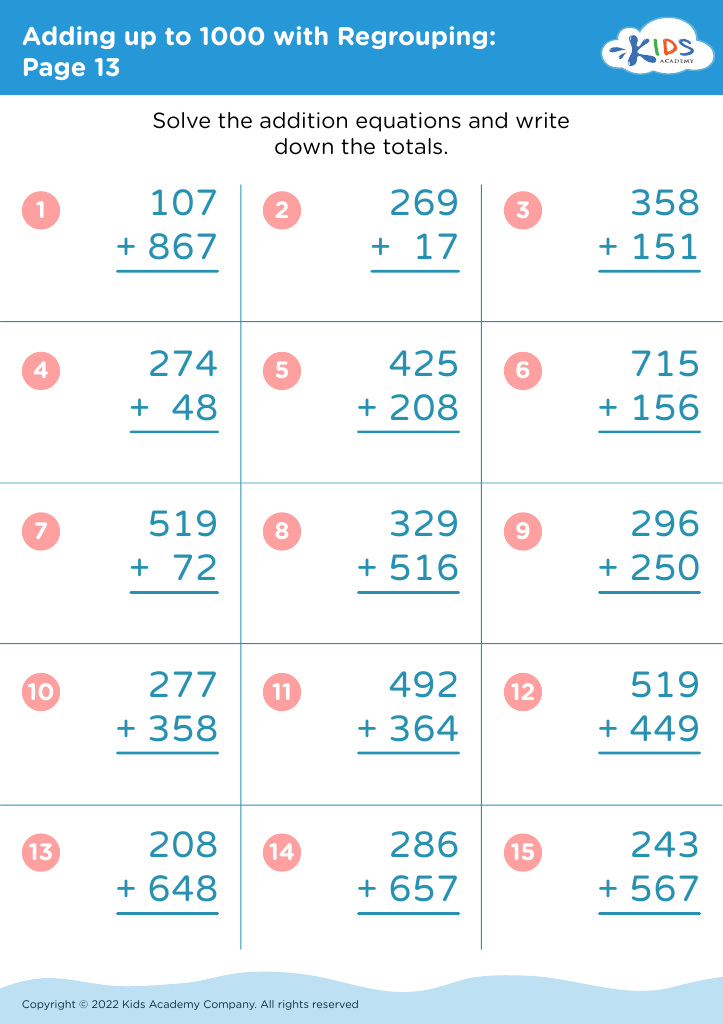
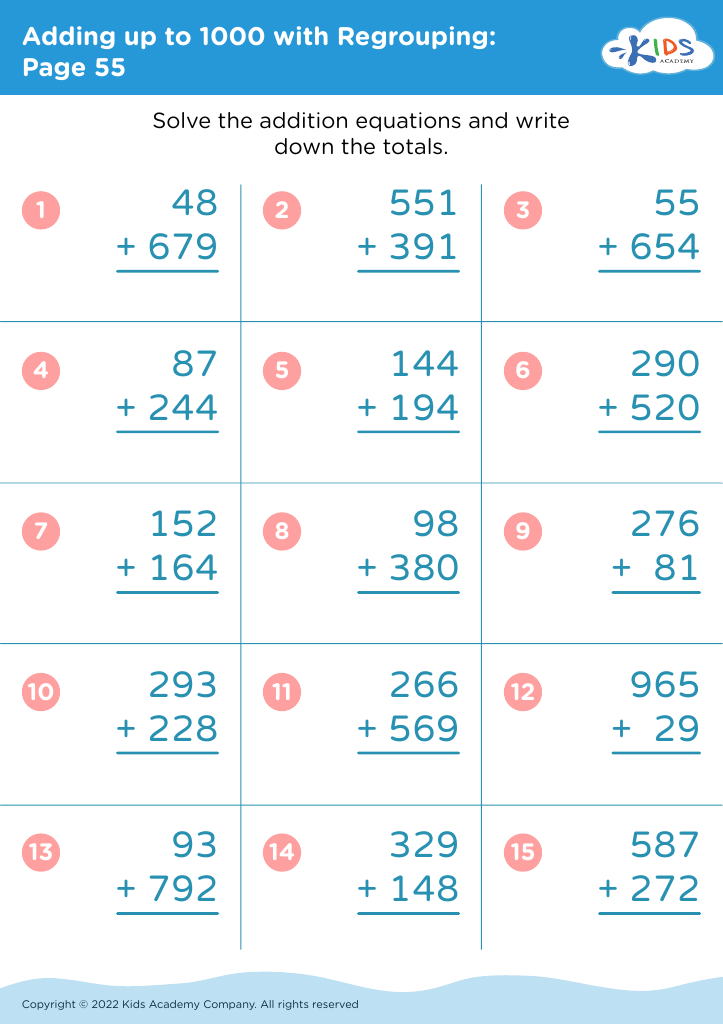
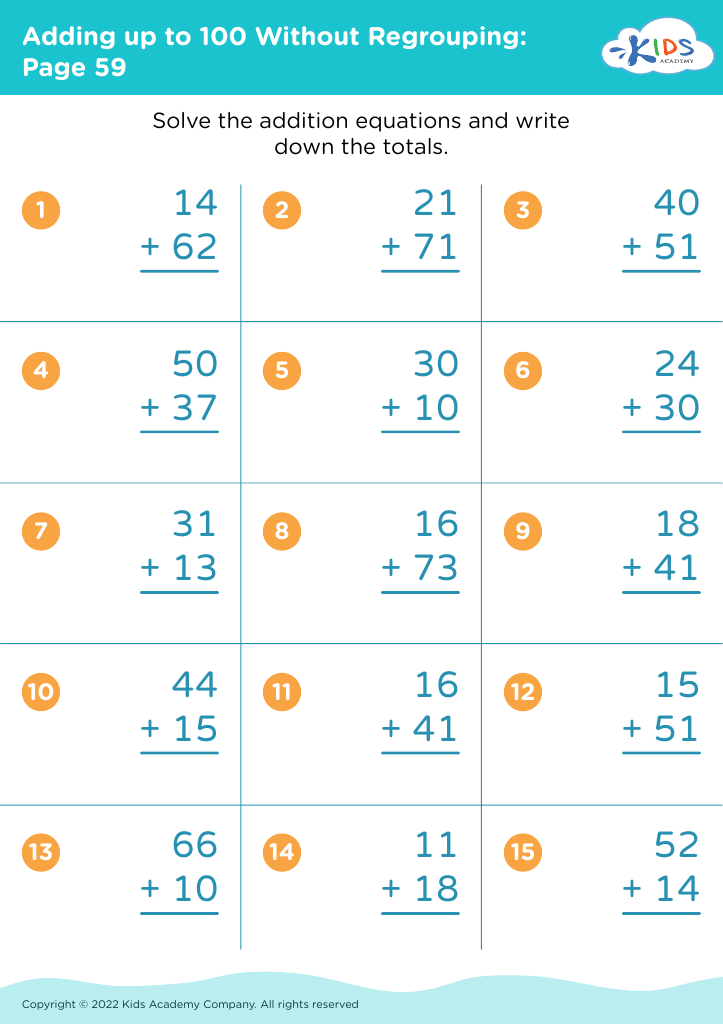
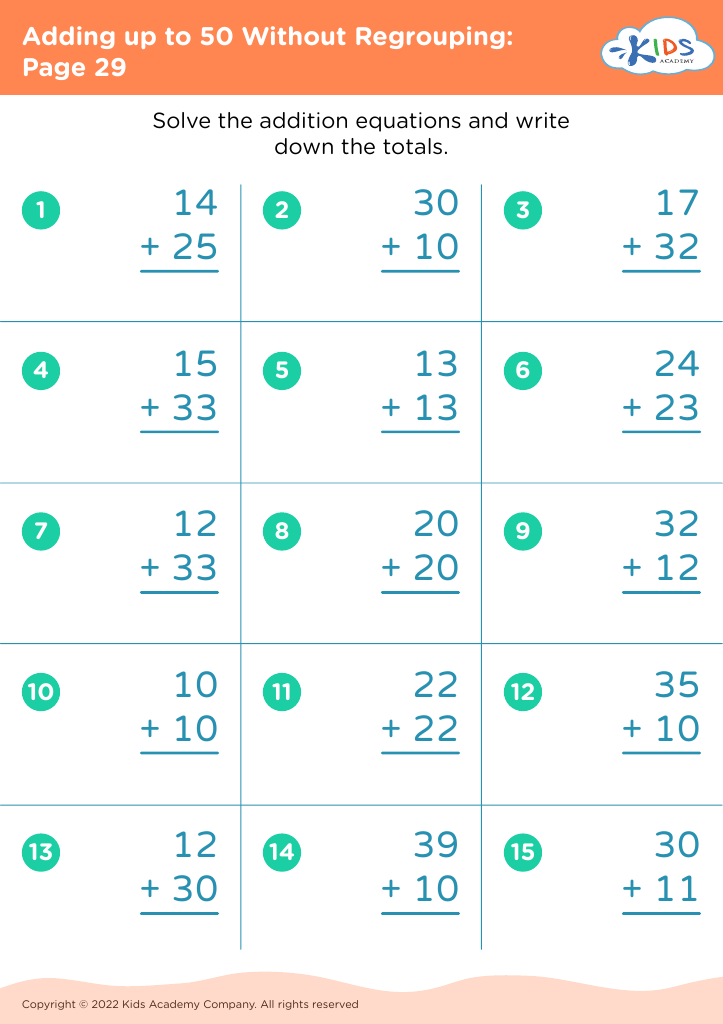
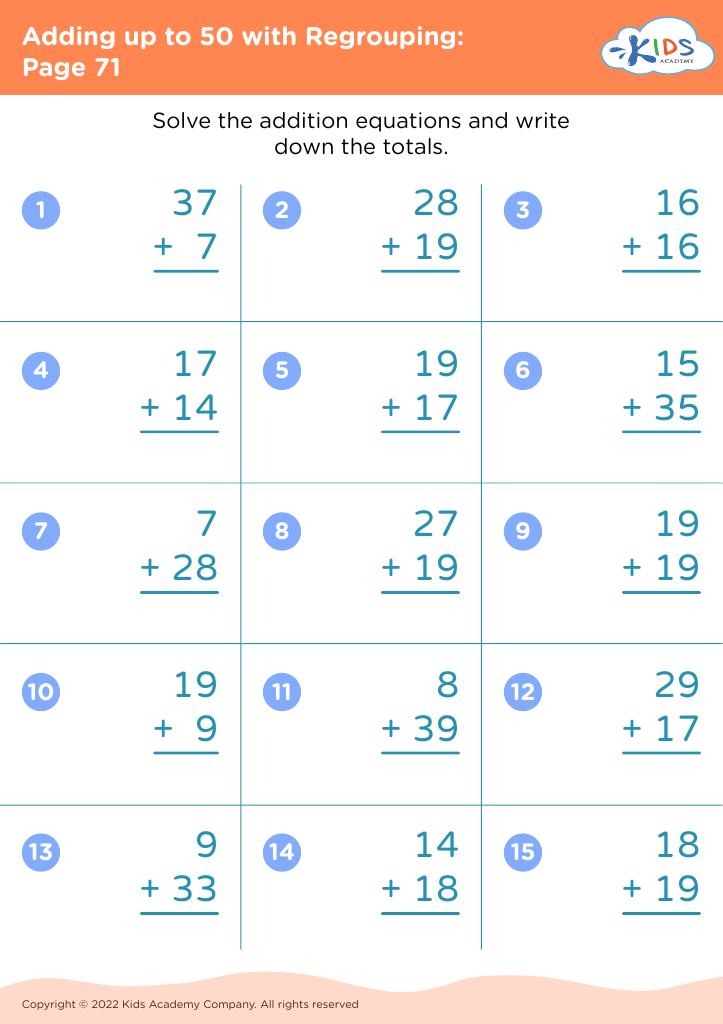
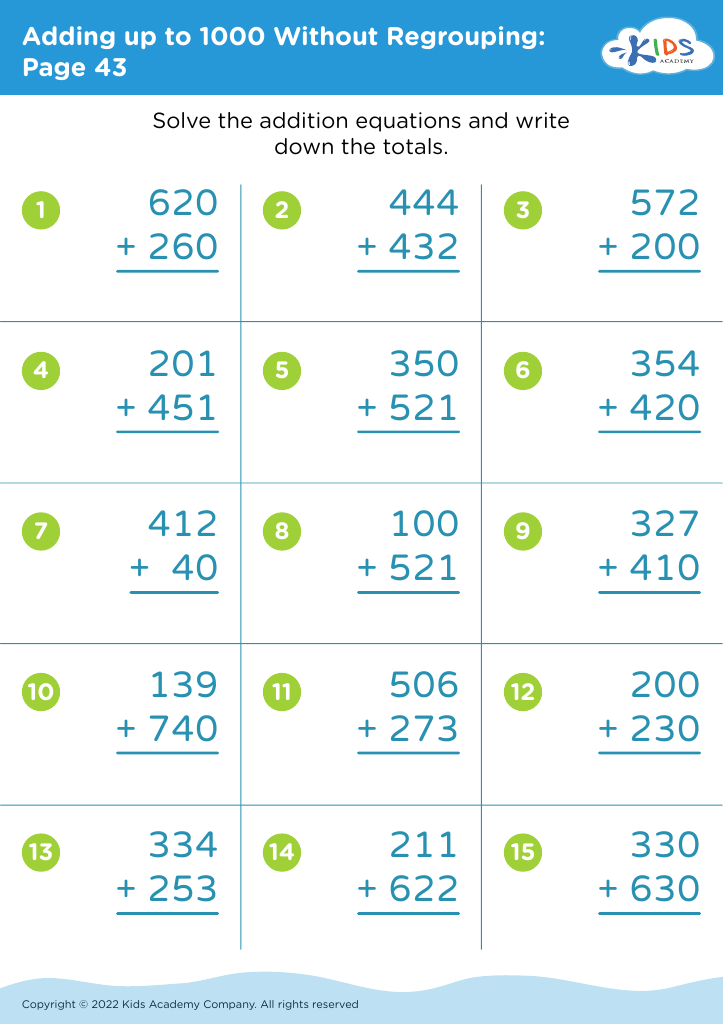
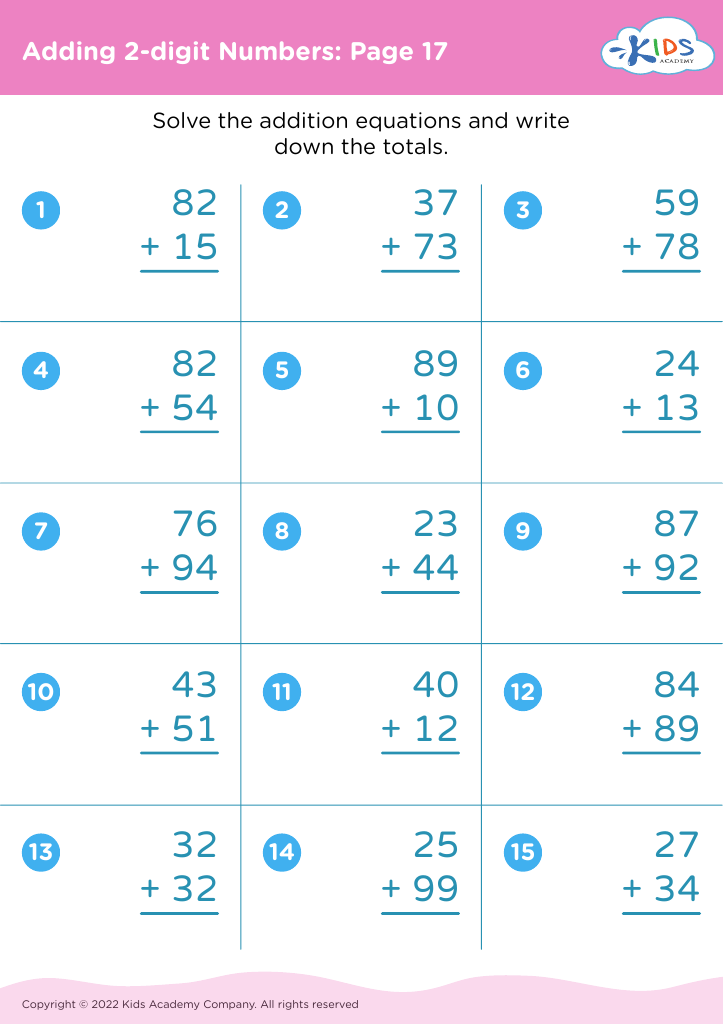
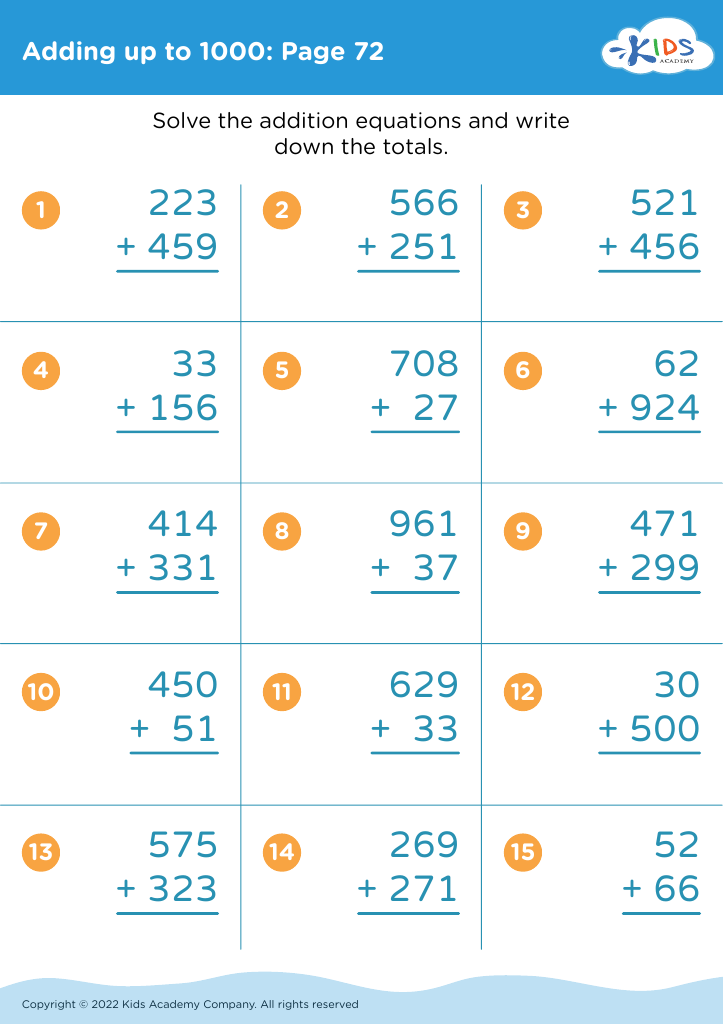
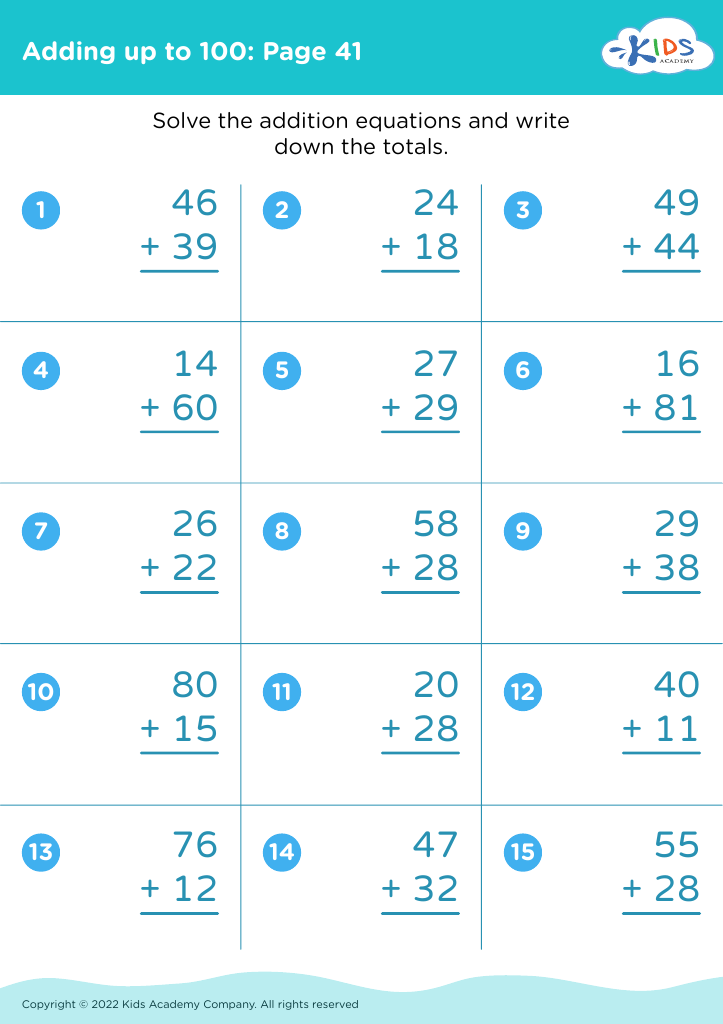
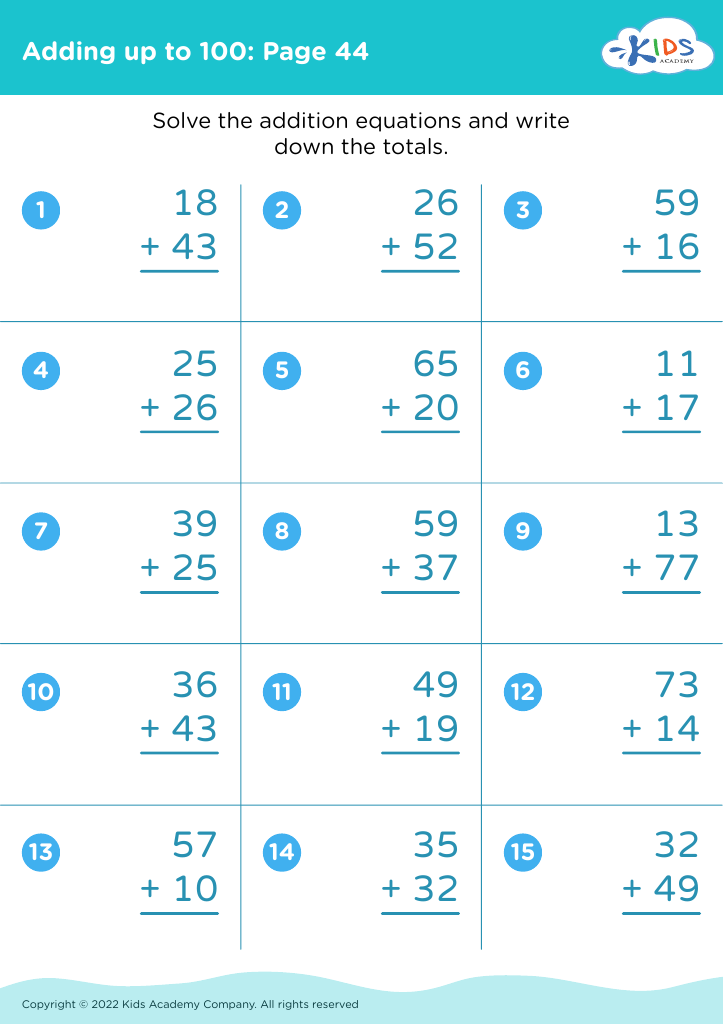








Recognizing patterns in addition is a crucial skill that lays the foundation for mathematical understanding in early education. Parents and teachers should care about this concept for several reasons. First, recognizing patterns helps children identify relationships between numbers, fostering their ability to predict outcomes and solve problems efficiently. For instance, when students learn the pattern of adding two, they can quickly derive answers and apply this knowledge to more complex arithmetic problems.
Additionally, pattern recognition promotes cognitive development. It enhances logical thinking and critical analysis, skills vital not only in mathematics but across various subjects. Engaging with patterns also strengthens memory and attention, as children learn to spot and recall sequences and relationships between numbers.
Moreover, this foundational skill builds confidence in young learners. When students recognize and understand patterns, they feel a sense of achievement, motivating them to engage further with mathematics. It enables a smoother transition to more advanced concepts, such as multiplication and fractions, as understanding patterns is vital for grasping these ideas.
Ultimately, emphasizing the importance of recognizing patterns in addition empowers students, making them more competent and confident in their mathematical journey. Parents and teachers play a crucial role in nurturing this skill, ensuring students thrive academically and enjoy math throughout their educational experiences.








