Mathematical reasoning Geometry Worksheets
3 filtered results
-
From - To
Enhance your child's geometric understanding and critical thinking skills with our engaging Mathematical Reasoning Geometry Worksheets. Perfectly crafted for young learners, these worksheets utilize fun activities and visual aids to make learning shapes, angles, and spatial reasoning a delightful experience. Children will develop their problem-solving abilities while mastering essential geometry concepts. Suitable for home and classroom use, these resources align with educational standards, ensuring your child's progress in mathematics. Dive into a world of shapes and logic with our expertly designed mathematical reasoning worksheets, and watch your child's confidence in geometry soar!
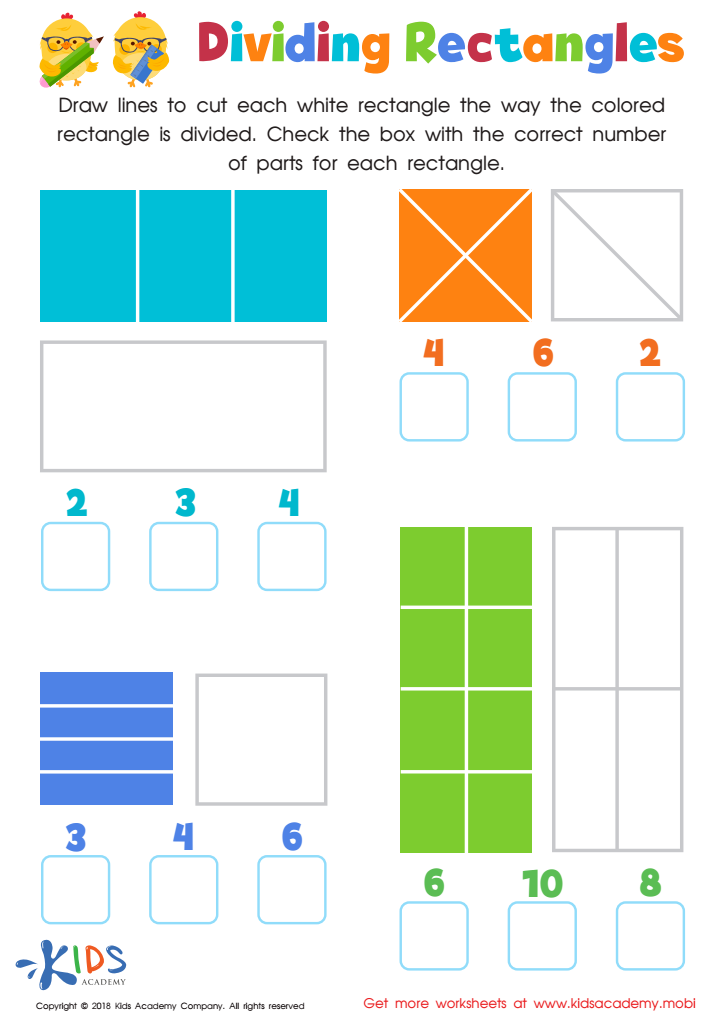
Dividing Rectangles Worksheet
 Assign to My Students











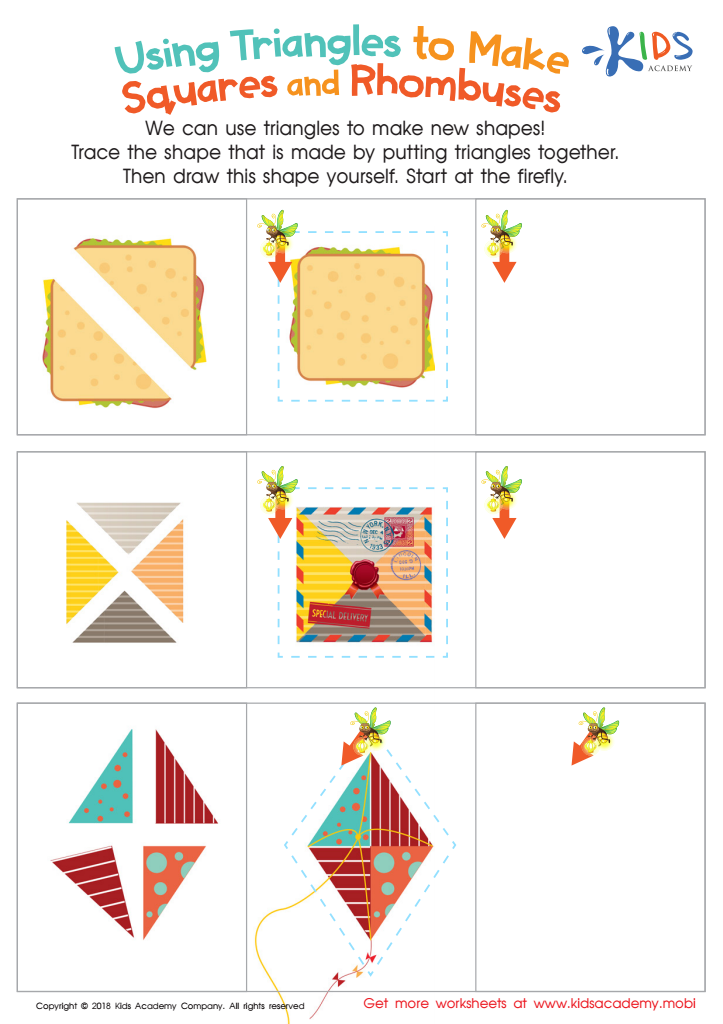
Using Triangles to Make Squares and Rhombuses Worksheet
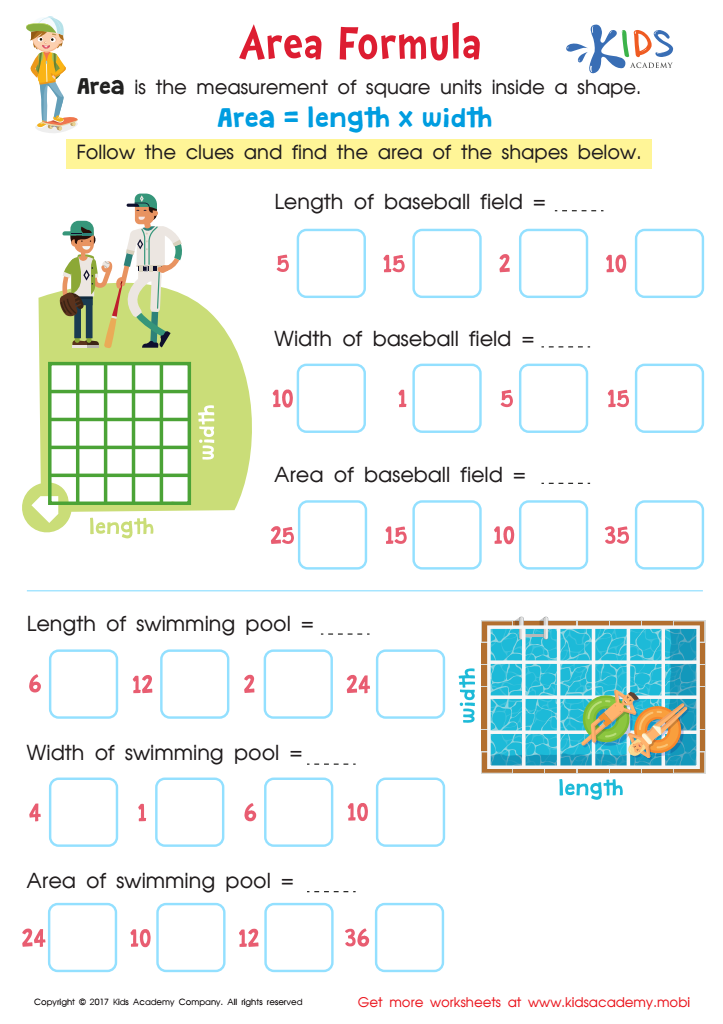
Area Formula Worksheet








Parents and teachers should care deeply about mathematical reasoning in geometry because it serves as a crucial foundation for students' overall cognitive development and problem-solving abilities. Geometry, with its shapes, sizes, and spatial understanding, challenges children to think logically and visualize patterns—skills essential not just in math, but in everyday life. It helps students make sense of the world around them, as they learn to reason about space and relationships between objects, which is key in fields ranging from architecture to art.
Moreover, engaging with geometric concepts strengthens students' abilities to convey ideas visually and verbally, promoting clear communication. For parents and teachers, encouraging geometric reasoning helps identify and nurture a child's mathematical potential early on, building confidence and enthusiasm for STEM (Science, Technology, Engineering, and Mathematics) subjects.
Geometry also fosters critical thinking, as students must understand and apply various theorems and properties to solve problems. These cognitive skills translate to higher-order thinking and improved logical reasoning, essential for future academic and career success.
Ultimately, supporting mathematical reasoning in geometry isn’t solely about academic achievement—it’s about equipping children with vital skills for both everyday tasks and complex problem-solving, translating to well-rounded, critical thinkers who are prepared for a dynamic world.








