Number representation Numbers Worksheets
3 filtered results
-
From - To
Dive into our "Number Representation Numbers Worksheets," designed to enhance your child's understanding of numbers and their representation. These engaging, printable activities are tailored to help kids grasp number concepts, from basic counting to recognizing written numerals and quantities. Each worksheet is thoughtfully crafted to build foundational math skills through fun, interactive exercises that stimulate young minds. Perfect for early learners, our resources support classroom lessons and home practice, ensuring kids develop confidence and proficiency in math. Explore now and watch your child's number comprehension soar!
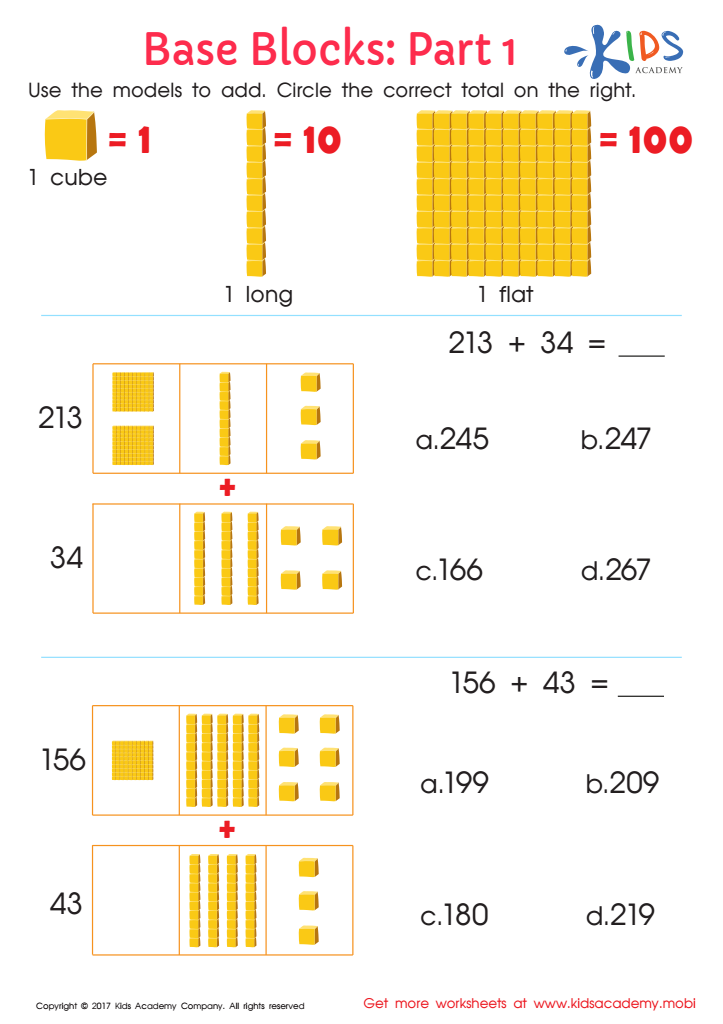
Base Ten Blocks Worksheet: Part 1
 Assign to My Students
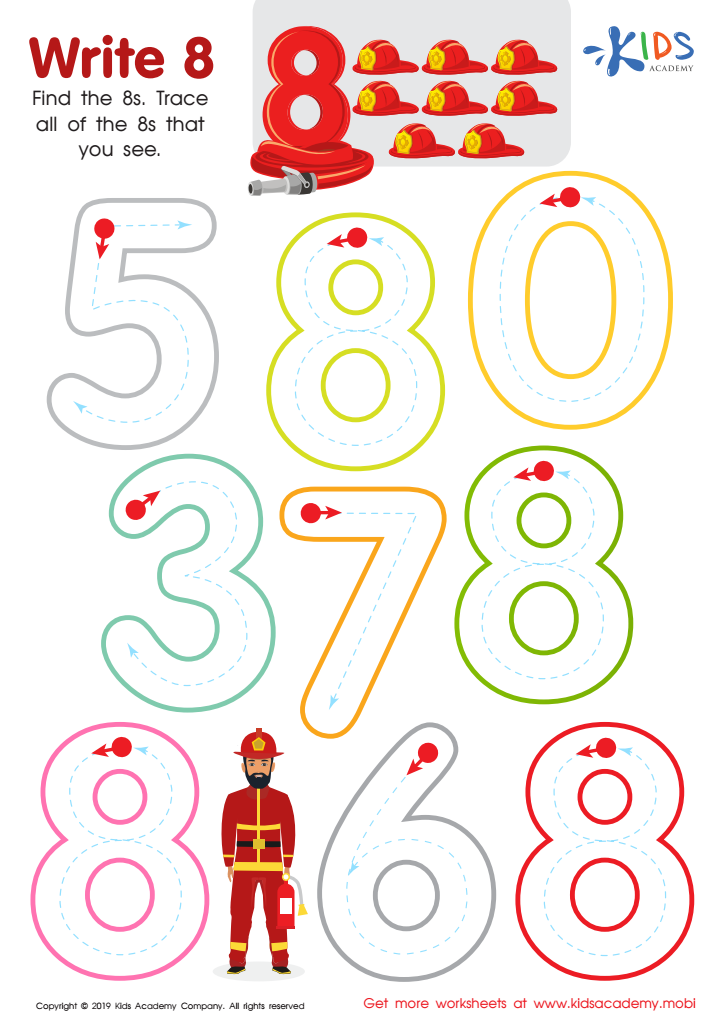
Write 8 Worksheet
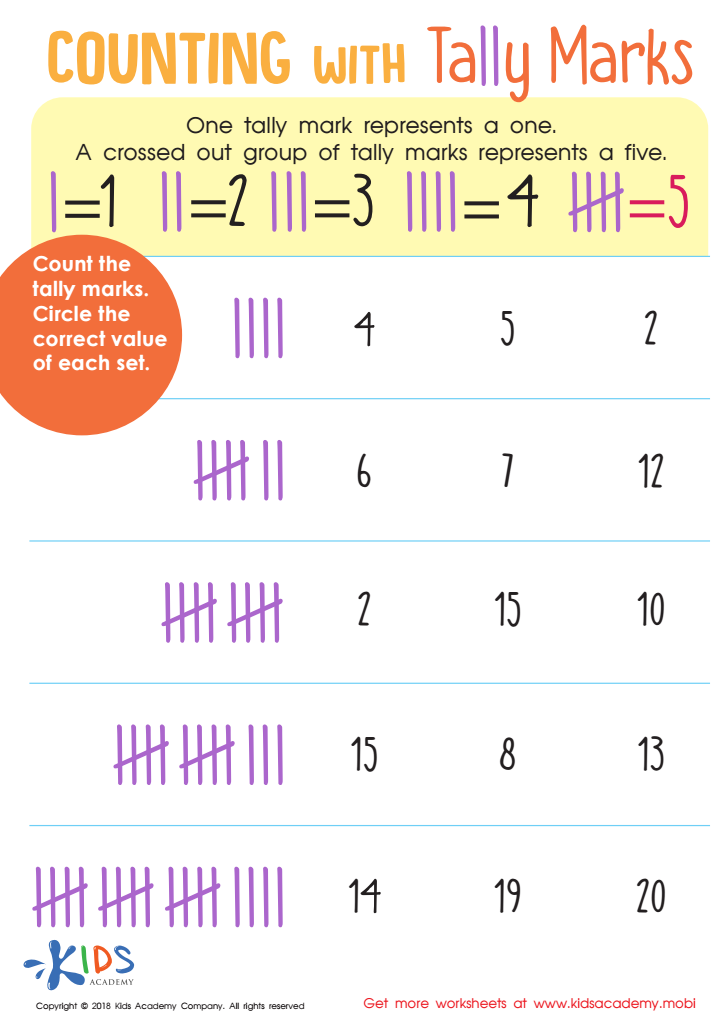
Counting with Tally Marks Worksheet







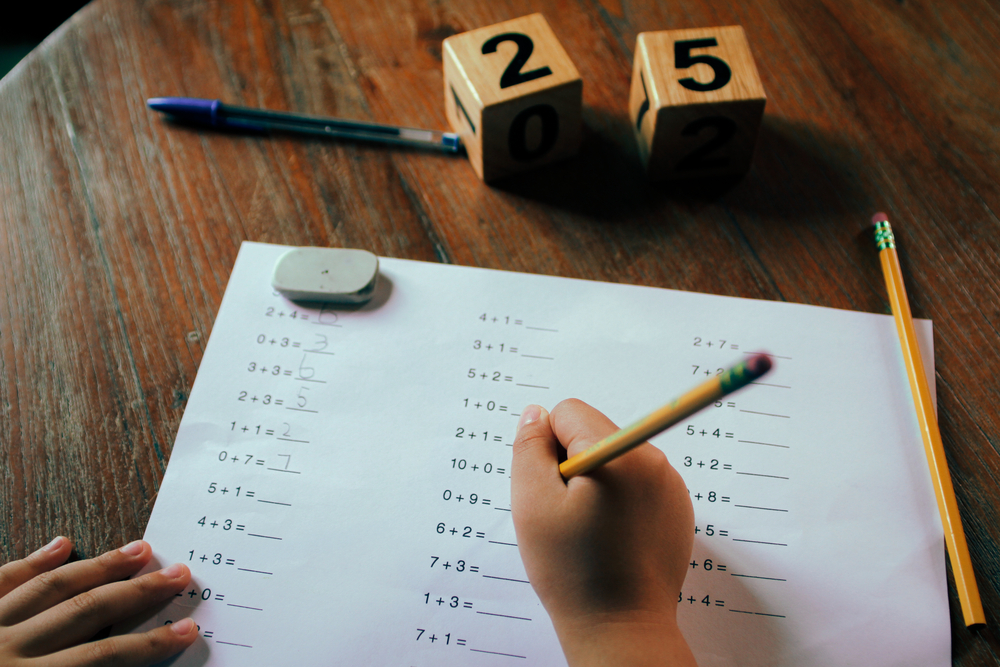
Number representation is a fundamental concept in early childhood education because it forms the basis for understanding more complex mathematical concepts later on. For parents and teachers, fostering a solid grasp of number representation is crucial because it aids children in visualizing and making sense of numbers beyond just rote memorization. This understanding includes knowing that numbers can be represented in various ways such as symbols, words, physical objects, and pictures.
By teaching children the different ways numbers can be represented, they learn to develop flexibility in thinking, which is essential for problem-solving. For instance, recognizing that the number five can be represented as five apples, the digit 5, or the word “five” helps children make connections between concrete and abstract representations of numbers. It also aids in comprehension and fluency in basic arithmetic operations such as addition and subtraction when they understand visual grouping or see the composition of numbers in different forms.
Moreover, number representation underpins vital life skills, including financial literacy, time management, and logical reasoning, which transcend academic success. Therefore, enabling children to understand and manipulate different forms of number representation gives them the tools to become not just proficient in mathematics but also competent problem-solvers and critical thinkers in everyday life. For these reasons, parents and teachers should prioritize and give careful attention to number representation in early education.








