Comparing shapes Math Worksheets
6 filtered results
-
From - To
Unlock the world of geometry with our "Comparing Shapes Math Worksheets"! Designed for early learners, these engaging worksheets help children identify and compare various shapes such as circles, squares, triangles, and more. With vibrant illustrations and interactive exercises, students will enhance their shape recognition skills while developing critical thinking. Perfect for classroom use or at-home practice, these resources cater to different learning styles and abilities. Whether your child is sorting shapes by size, color, or type, our worksheets offer a fun and effective way to build a strong foundation in math. Dive into shape exploration today and spark your child's mathematical curiosity!
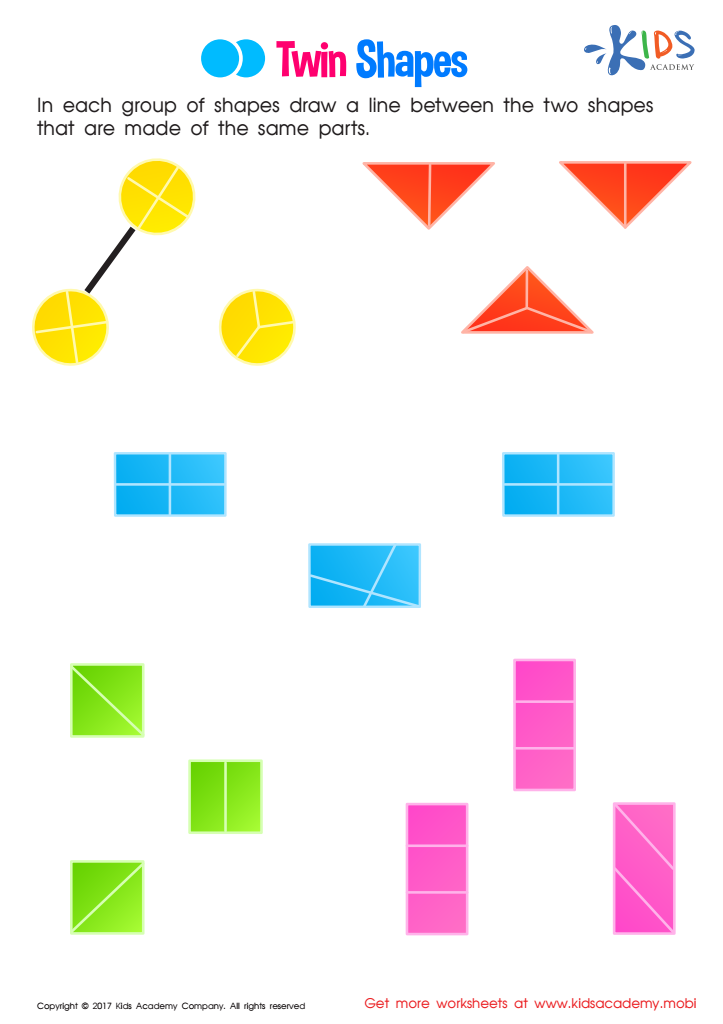
Twin Shapes Worksheet
 Assign to My Students
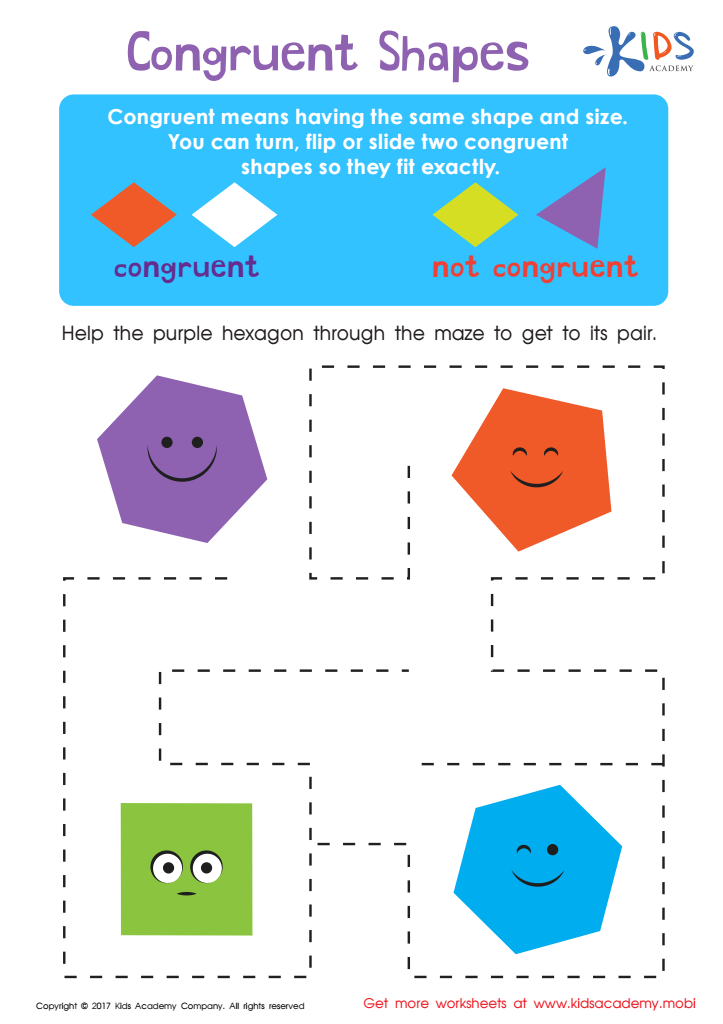
Congruent Shapes Worksheet
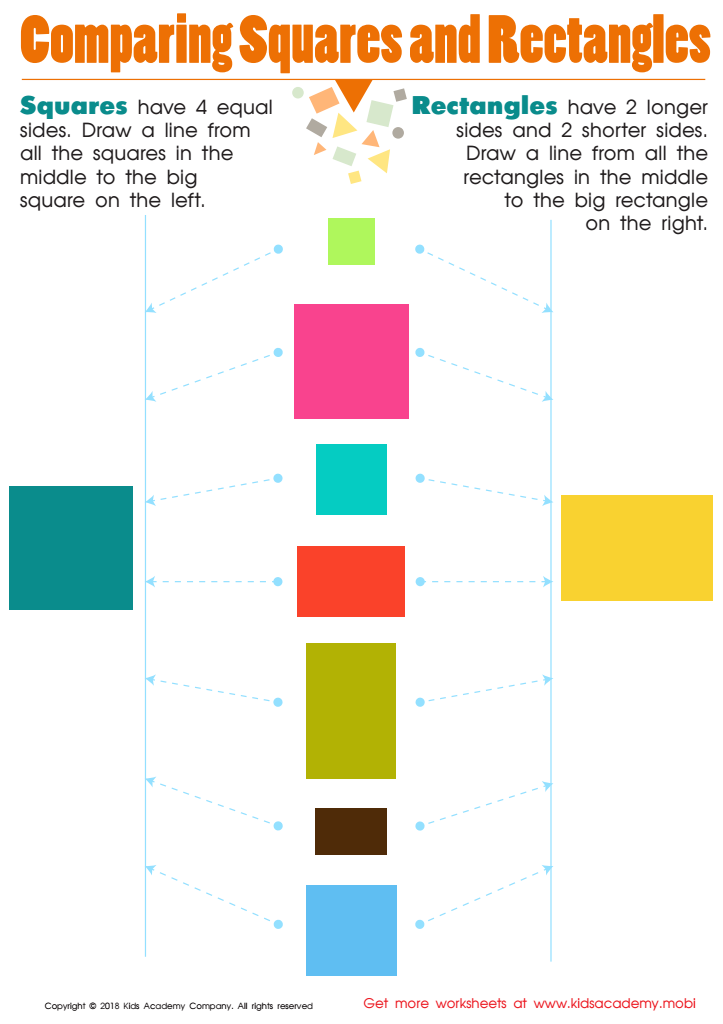
Comparing Squares Rectangles Worksheet
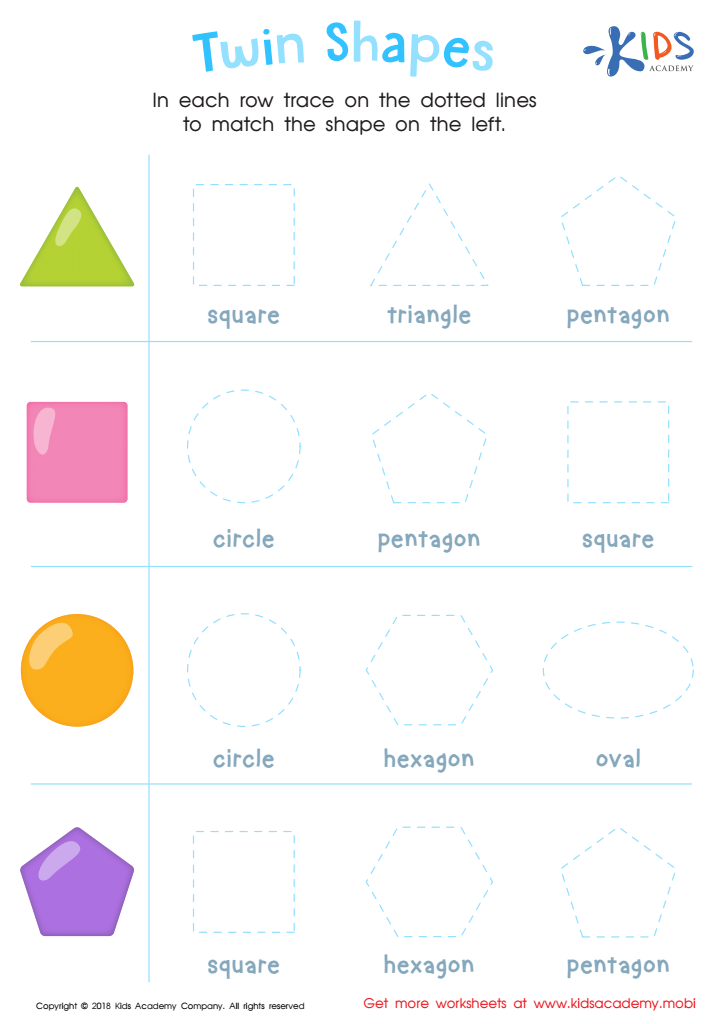
Twin Shapes Dot-to-Dot Worksheet







Comparing shapes is a foundational skill in early mathematics that helps children develop critical thinking and analytical abilities. Parents and teachers should care about this concept for several reasons. Firstly, engaging with shapes promotes spatial awareness, a key component in understanding the world around us. This skill is not only essential in math but is also linked to success in science, engineering, and technology.
Secondly, comparing shapes fosters problem-solving skills. As children categorize and differentiate between shapes based on size, perimeter, area, or angles, they learn to make observations, identify patterns, and draw conclusions—all vital components of higher-level math and logical reasoning.
Moreover, activities that involve comparing shapes can be enjoyable and interactive, enhancing not just cognitive development but also nurturing communication skills as children discuss their thoughts with peers or adults. This social aspect of learning builds confidence and enhances teamwork.
Lastly, understanding shapes lays the groundwork for more complex math concepts. By ensuring children master these fundamental skills, parents and teachers can help them build a solid mathematical foundation, sparking a lifelong interest in learning and problem-solving. Ultimately, prioritizing shape comparison contributes to well-rounded cognitive development.








