Developing critical thinking Math Worksheets
4 filtered results
-
From - To
Enhance your child's mathematical abilities with our Developing Critical Thinking Math Worksheets! Designed for early learners, these engaging worksheets encourage students to analyze, evaluate, and solve math problems creatively. By applying critical thinking skills to various math concepts, including addition, subtraction, shapes, and patterns, children bolster their reasoning abilities while having fun. Our worksheets cater to diverse learning styles, fostering independence and confidence in young mathematicians. Ideal for classrooms or home learning, these resources empower students to think critically and develop problem-solving skills that are crucial in today’s academic environment. Unlock your child’s potential with our thoughtfully crafted worksheets!
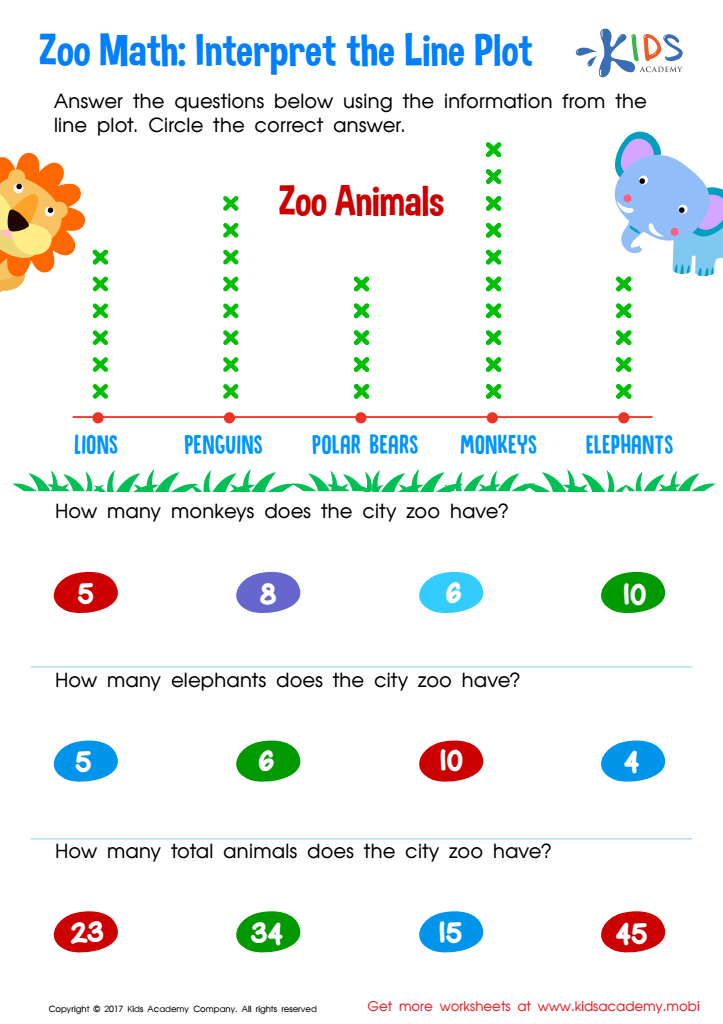
Interpret Line Plot Worksheet
 Assign to My Students
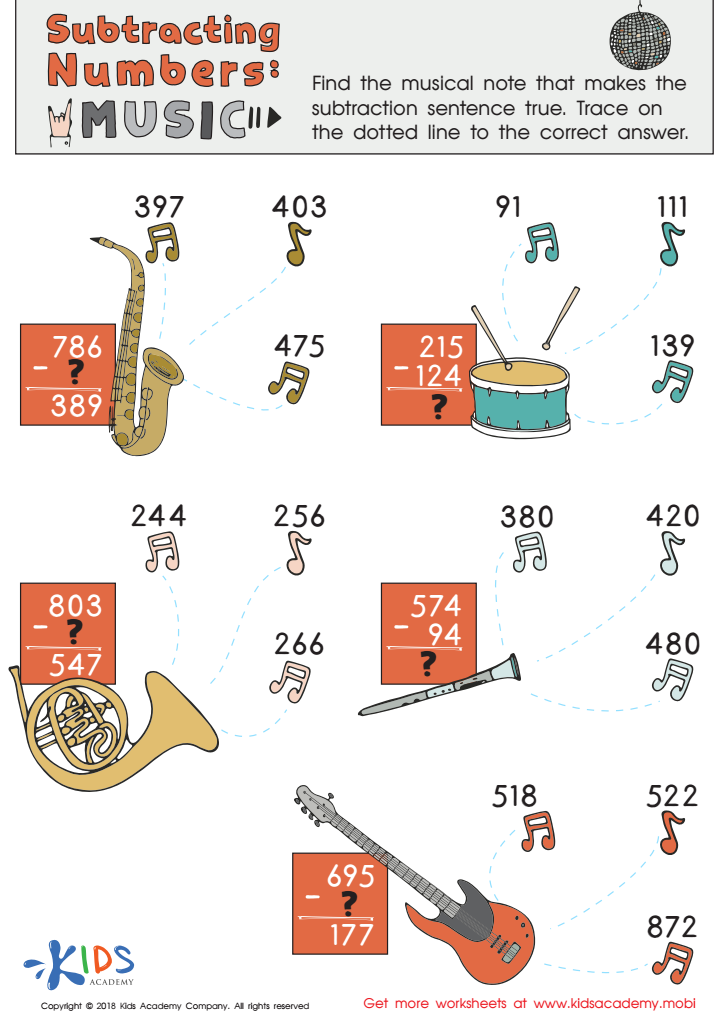
Subtracting Numbers: Music Worksheet


.jpg)





Developing critical thinking in math is essential for both parents and teachers because it empowers students to approach problems analytically and creatively. Math is not just about memorizing formulas; it encourages logical reasoning, problem-solving, and the ability to connect concepts. By cultivating critical thinking skills, students learn to evaluate information, make decisions based on evidence, and develop a deeper understanding of mathematical principles.
For parents, fostering critical thinking in math enhances their child’s confidence and resilience in facing challenges. Instead of getting frustrated with difficult problems, children learn to break down tasks, explore multiple solutions, and embrace a growth mindset. This skill set is invaluable not only in the classroom but also in daily life situations, as mathematical reasoning is a fundamental aspect of informed decision-making.
For teachers, emphasizing critical thinking helps create a more engaging and dynamic learning environment. It encourages students to ask questions, collaborate with peers, and think independently, leading to richer discussions and deeper learning experiences. Moreover, developing critical thinking skills equips students to tackle complex issues in future academics and real-world scenarios, ultimately preparing them for success in an increasingly data-driven world. Therefore, fostering these skills is a critical investment in the future of students.








