Reading clocks Math Worksheets
7 filtered results
-
From - To
Welcome to our Reading Clocks Math Worksheets page, where young learners can master the essential skill of telling time! Our engaging and interactive worksheets are designed specifically for early grade students, making learning about analog and digital clocks both fun and effective. With a variety of exercises, children will practice skills like identifying hour and minute hands, reading different time formats, and solving time-related word problems. These worksheets not only reinforce mathematical concepts but also develop critical life skills. Download and print our expertly crafted resources to help your child build confidence in reading clocks and understanding time. Start the journey to time-telling mastery today!
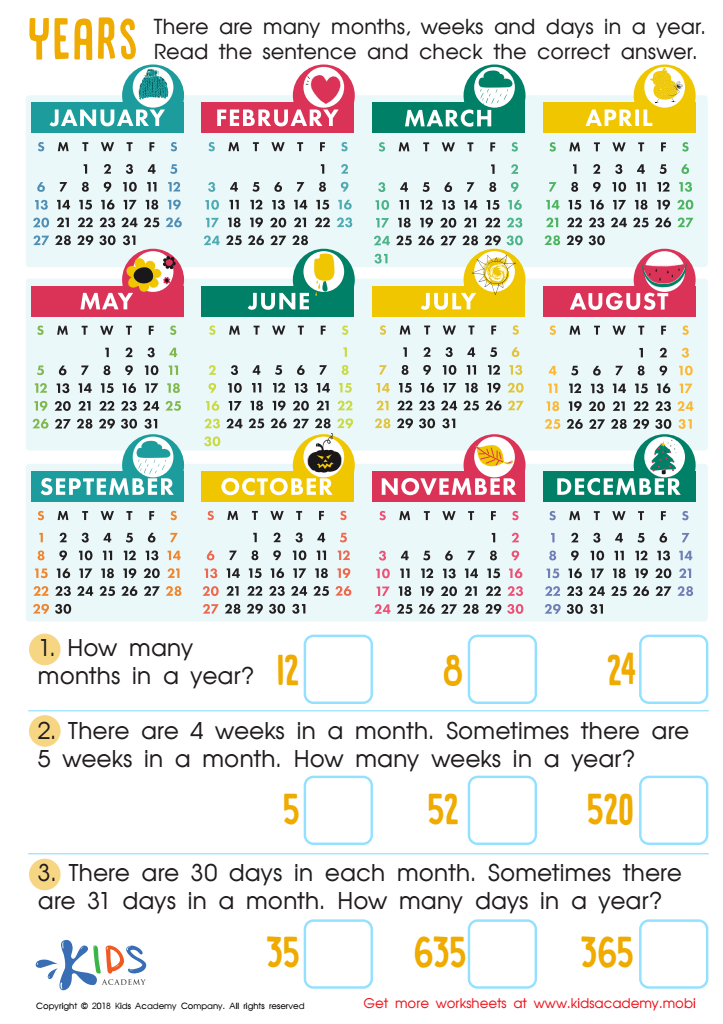
Years Worksheet
 Assign to My Students
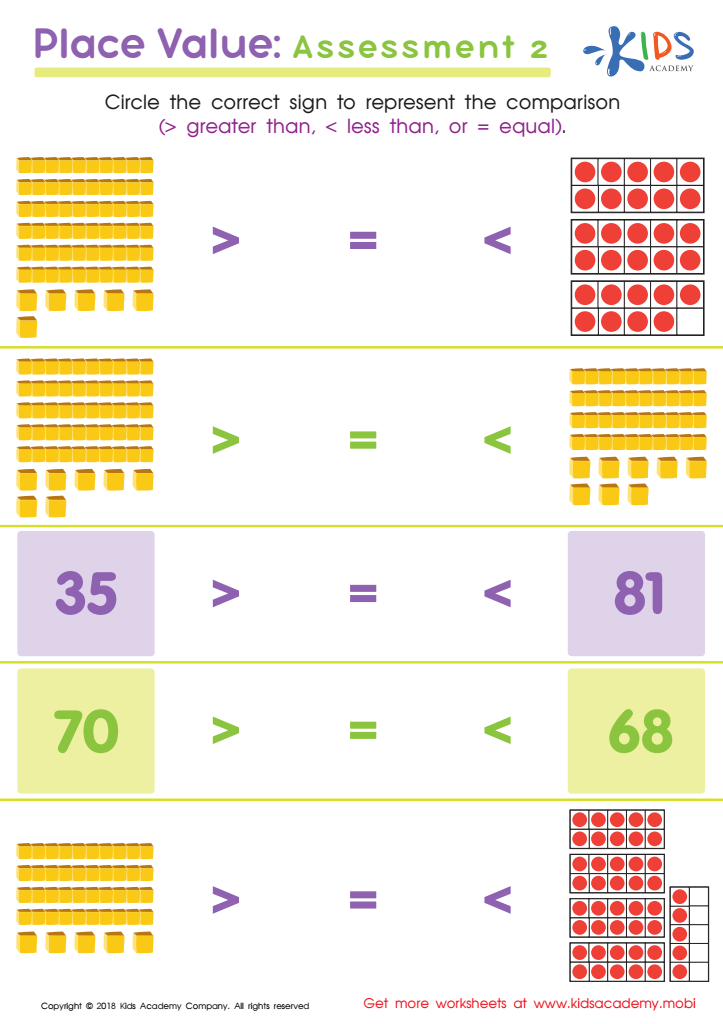
Place Value: Assessment 2 Worksheet
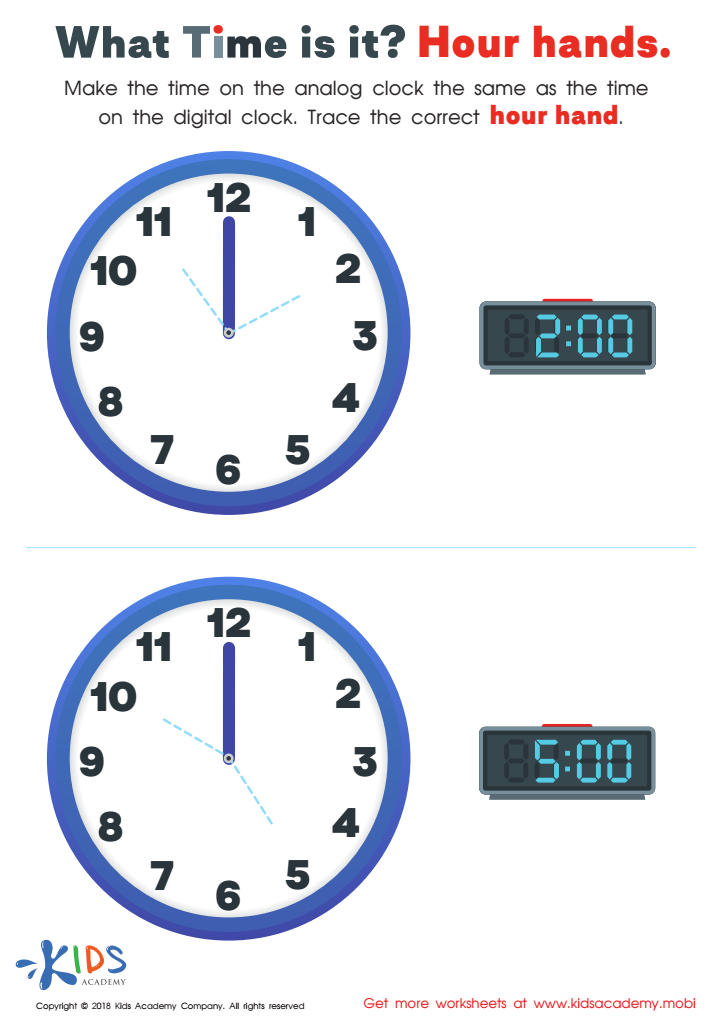
What Time Is it? Hour Hands Worksheet
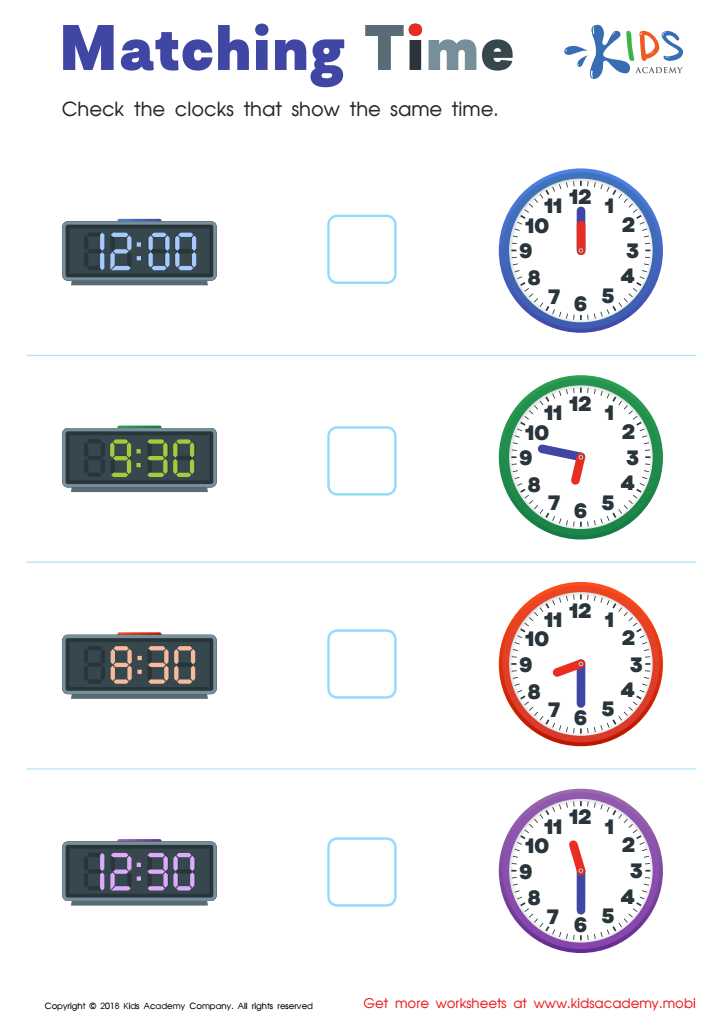
Matching Time Worksheet








Reading clocks is an essential math skill that extends beyond telling time; it fosters cognitive development and practical understanding in young learners. Understanding how to read both analog and digital clocks helps children grasp important concepts related to numbers, sequences, and patterns. It enhances their ability to calculate and manage time effectively, which is fundamental in today’s fast-paced world.
For parents, encouraging fluency in reading clocks promotes responsibility and independence in their children. They learn time management skills that aid in daily routines, such as getting ready for school or completing homework on time. That fosters a sense of accountability.
Teachers play a vital role in integrating time-telling activities into the curriculum. Using engaging, tactile methods to teach this skill can support various learning styles. Incorporating math games, hands-on activities, and real-life scenarios encourages collaboration among peers and contextualizes learning.
Moreover, the act of reading time also engages with vital math skills, including addition and subtraction, as students often calculate elapsed time and schedule durations. Through fostering these skills, parents and teachers prepare children not only for academic success but also for life, reinforcing discipline, organization, and critical thinking skills along the way.








