Matching skills Matching Worksheets
6 filtered results
-
From - To
Unlock your child's potential with our engaging Matching Skills Worksheets! Designed for early learners, these printable resources promote cognitive development through fun activities that enhance memory and coordination. Featuring vibrant visuals and diverse themes, our worksheets encourage children to match images, numbers, letters, and objects effectively. As they work through these exercises, students practice critical thinking and sharpen their visual recognition skills, laying a solid foundation for future academic success. Our user-friendly layout makes it easy for parents and educators to incorporate these worksheets into lesson plans or home learning sessions, ensuring an enriching experience. Start matching today!
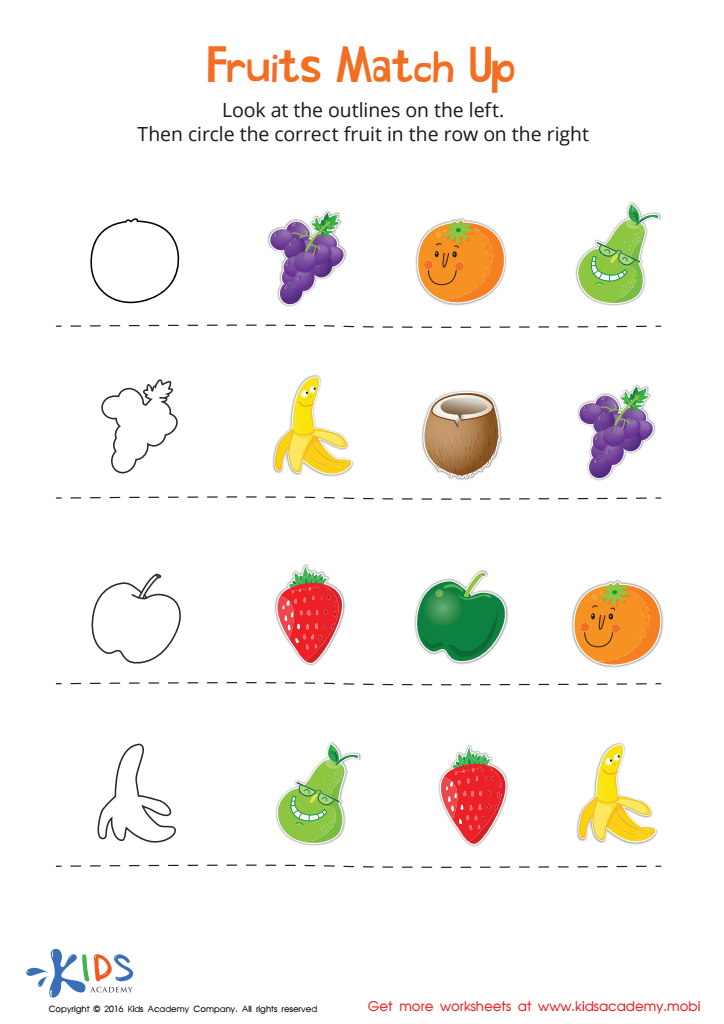
Fruits Match Up Worksheet
 Assign to My Students
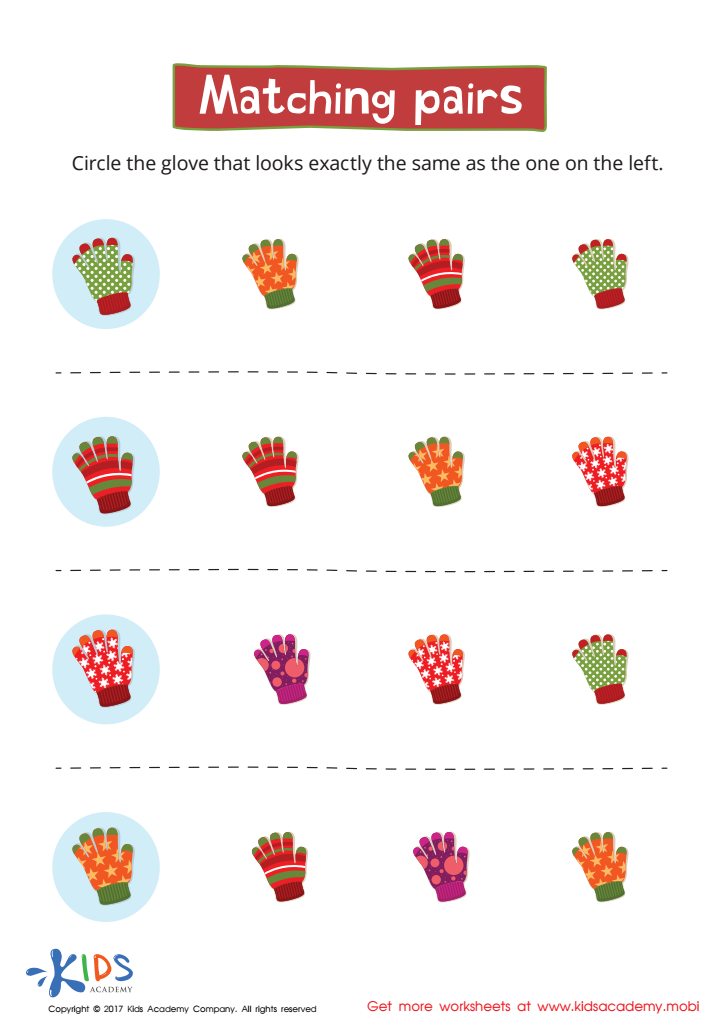
Matching: Matching Pairs Worksheet
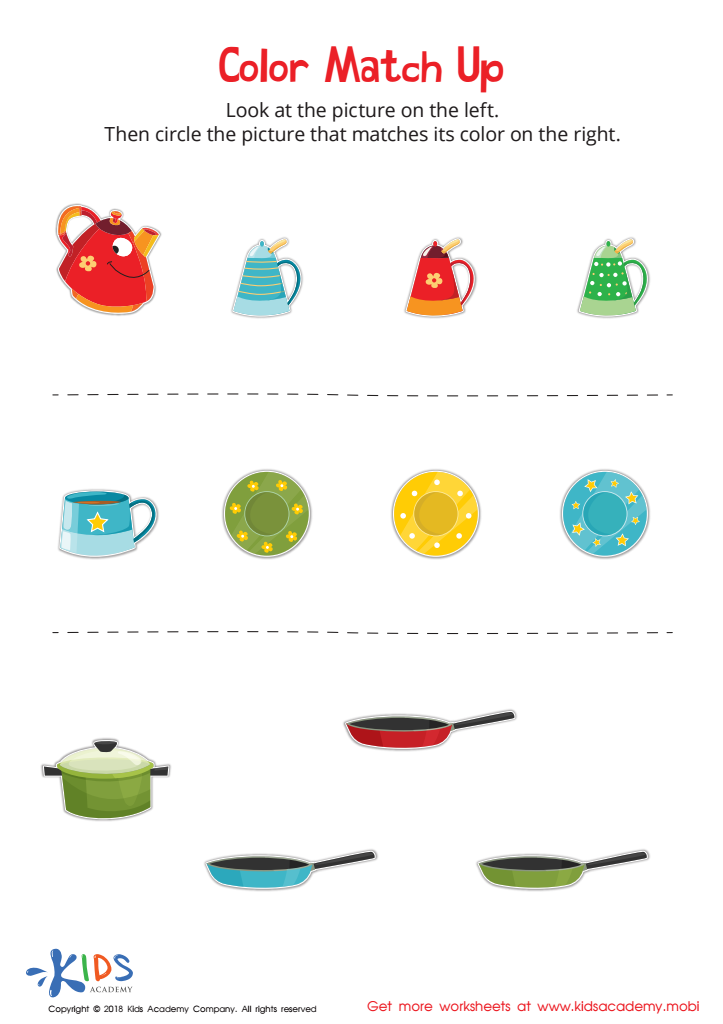
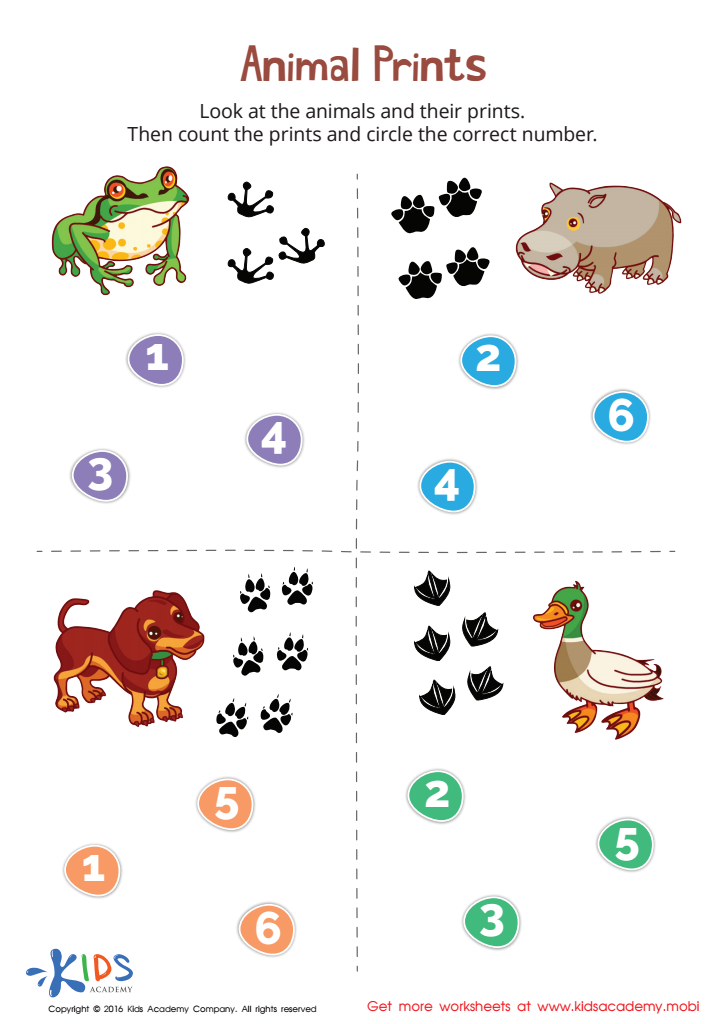
Animal Prints Match-Up Worksheet
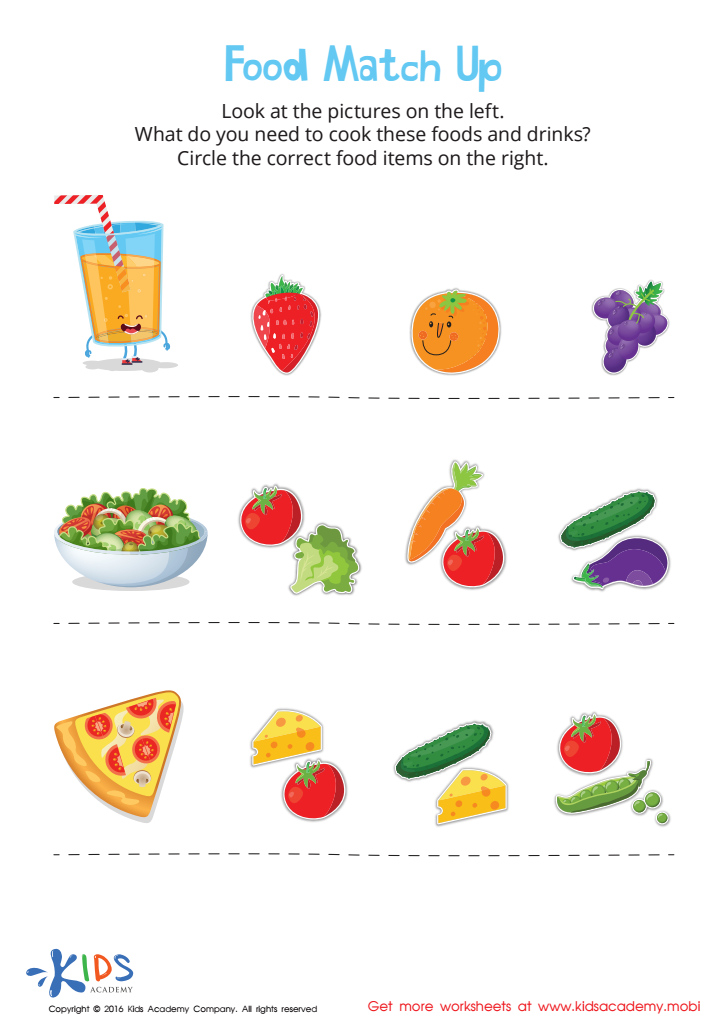
Food Match Up Worksheet
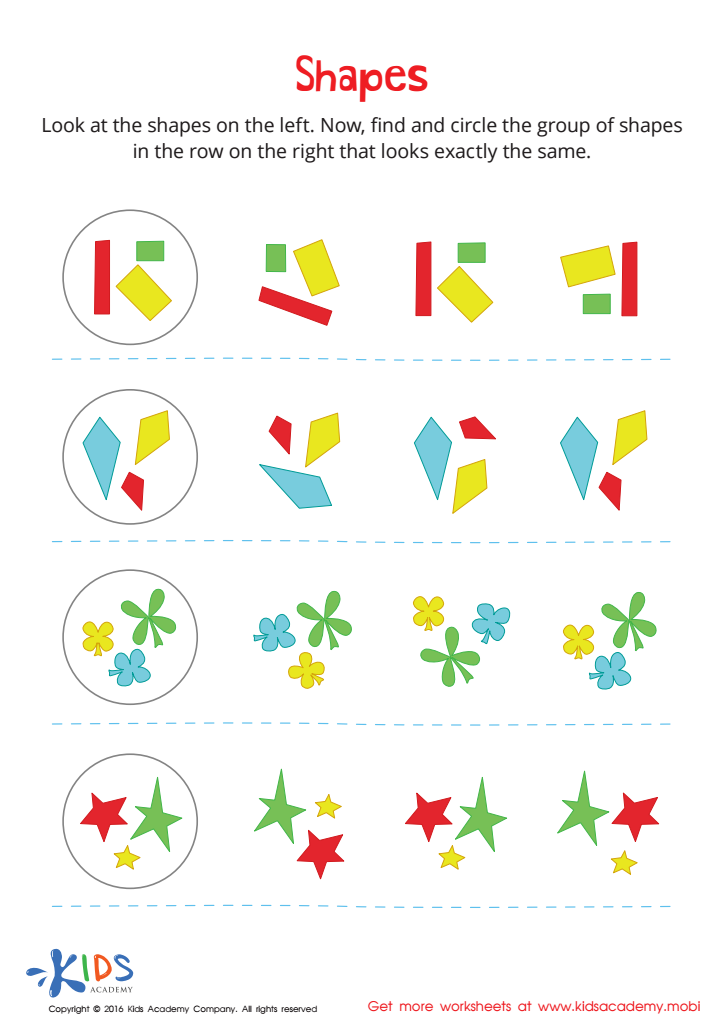
Shapes Worksheet








Matching skills, the ability to recognize and pair similar items or concepts, are foundational for early childhood development and learning. Parents and teachers should care about these skills because they play a crucial role in cognitive growth and academic success.
Firstly, matching skills enhance critical thinking and problem-solving abilities. As children identify relationships between items, they develop the capacity to categorize, analyze, and make connections — key components of higher-order thinking. This sets the groundwork for future learning in subjects like mathematics and science.
Additionally, matching activities are integral to developing language and communication skills. As children engage in these tasks, they learn to describe similarities and differences, expanding their vocabulary and improving comprehension.
Moreover, these skills are significant for social-emotional development. Collaborative matching games encourage teamwork, patience, and sharing, teaching children how to work cooperatively with peers.
Incorporating matching activities into daily routines can create engaging learning opportunities. Whether through games, digital apps, or everyday objects, fostering matching skills not only promotes academic readiness but also nurtures a love for learning, teamwork, and cognitive flexibility that benefits children throughout their education and beyond.








