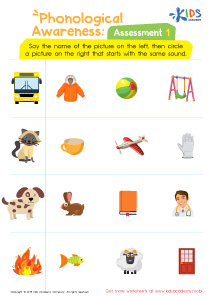
Normal Vowels and Consonants Worksheets for Ages 3-4
10 filtered results
Difficulty Level
Grade
Age
-
From - To
Subject
Activity
Standards
Introduce your little learners to the exciting world of letters with our "Normal Vowels and Consonants Worksheets for Ages 3-4." Designed specifically for preschoolers, these engaging worksheets help children identify and distinguish between vowels and consonants. Through fun and colorful activities, kids will enhance their early literacy skills, reinforcing letter recognition and phonemic awareness. Perfect for at-home practice or classroom use, our worksheets ensure a solid foundation in early reading, making learning enjoyable and effective. Give your child a head start on their educational journey with our thoughtfully-crafted vowel and consonant worksheets!
Favorites
With answer key
Interactive
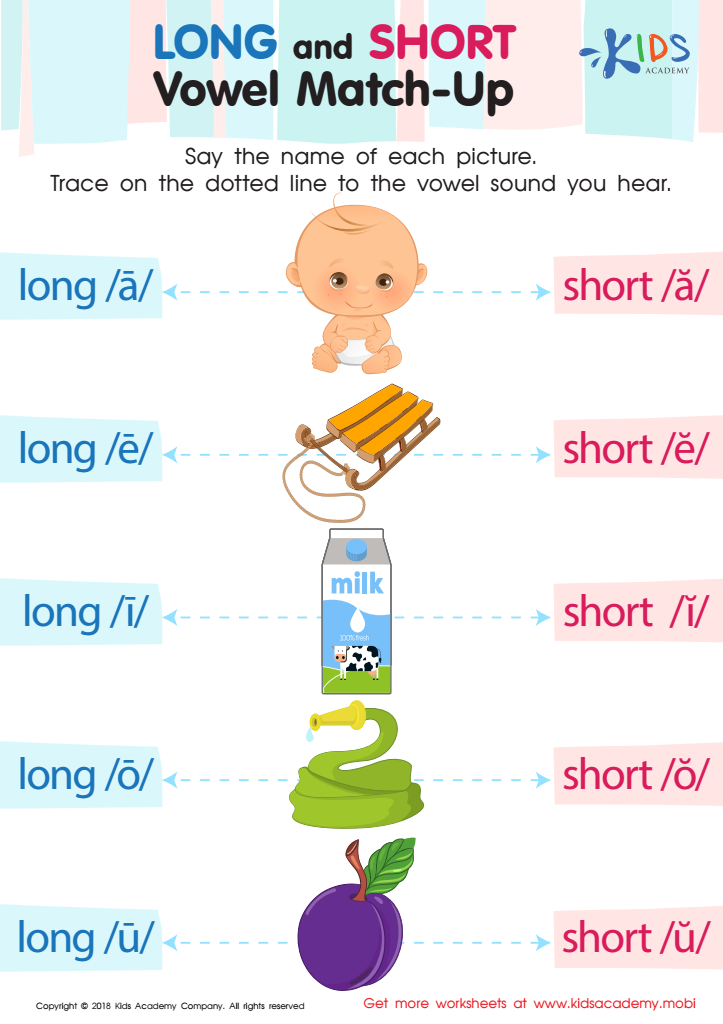
Long and Short Vowel Match up Reading Worksheet
Help your reader build confidence and refine their decoding skills! This worksheet combines long and short vowel recognition with a traceable component to improve fine motor skills. Your learner will name each picture and trace the dotted lines to get to the correct vowel sounds.
 Assign to My Students
Long and Short Vowel Match up Reading Worksheet
Worksheet
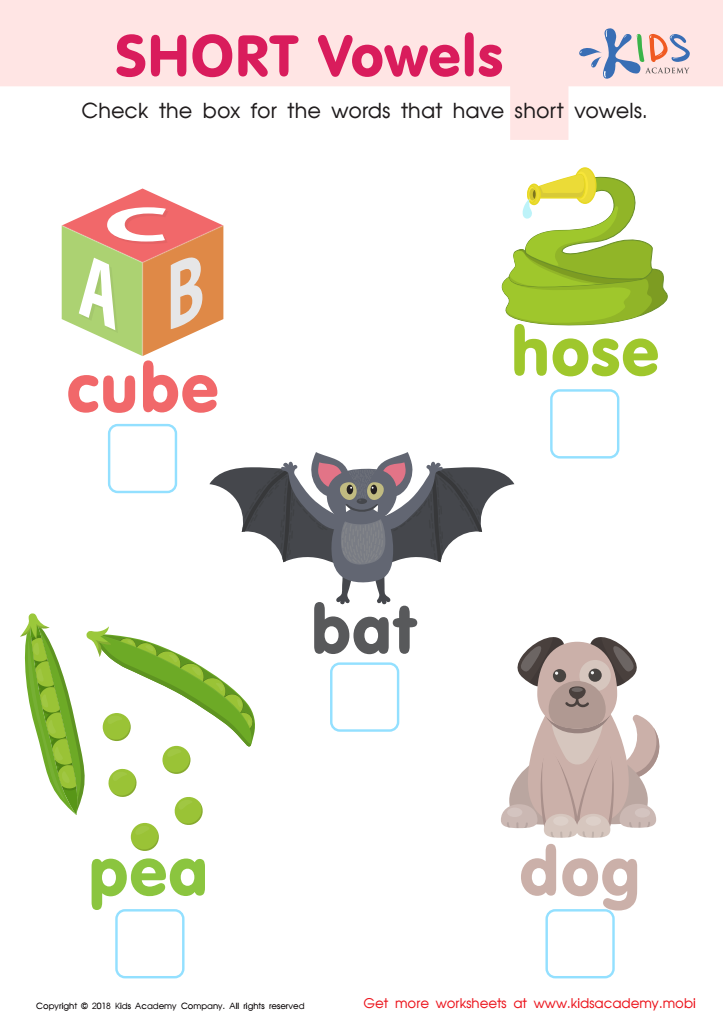
short vowels Worksheet
Say "dog" and notice how long it takes to pronounce the vowel. Is it short or long? Compare it to "pea" and use this worksheet to quickly assess your child's mastery. Have them name each picture and listen for the vowel sounds. Only check the boxes for words with short vowel sounds.
short vowels Worksheet
Worksheet
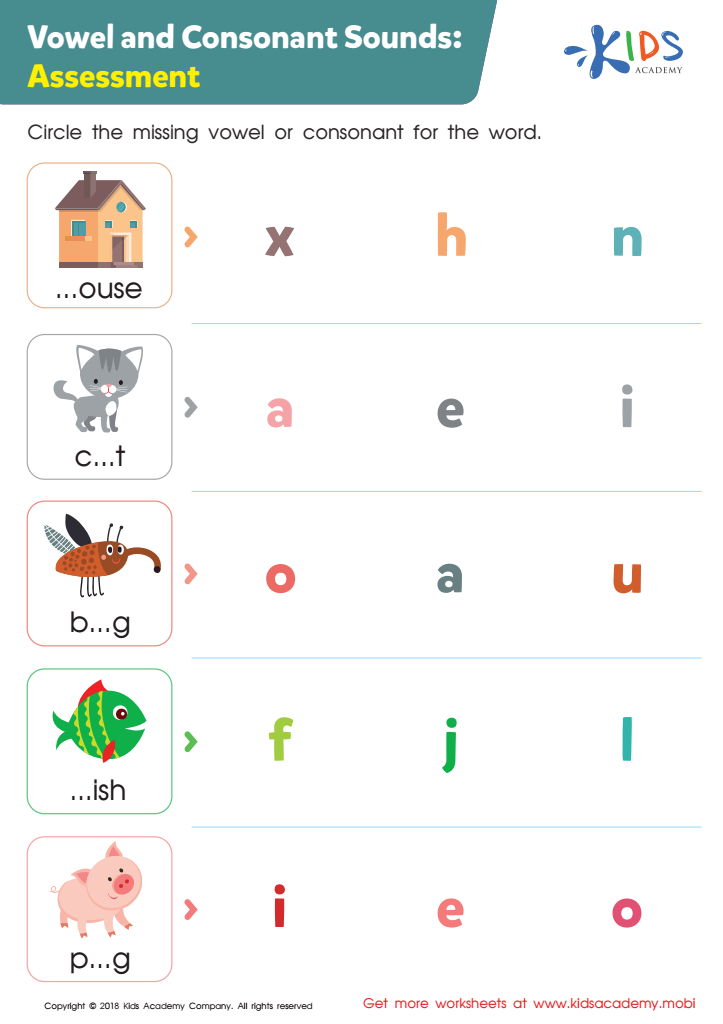
Vowel and Consonant Sounds: Assessment Worksheet
Test young elementary students on vowel and consonant sounds with this friendly phonics assessment worksheet. Get kids to name each image and look at the word underneath. Ask them to sound out the word, then circle the missing letter to complete. This will help assess their knowledge and skills!
Vowel and Consonant Sounds: Assessment Worksheet
Worksheet
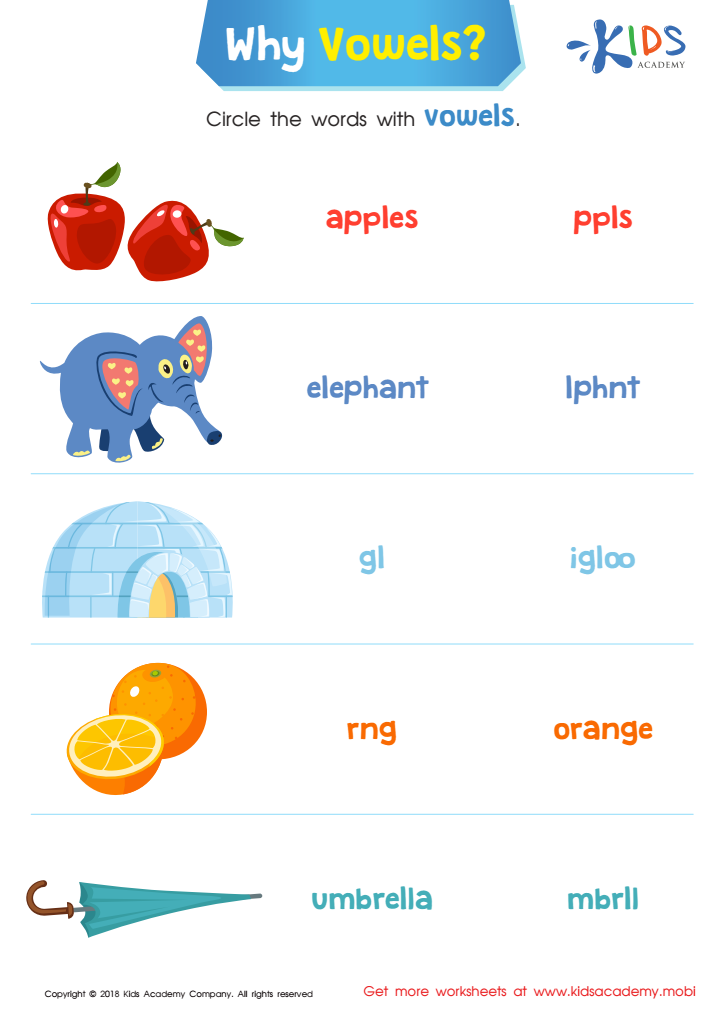
Why Vowels? Reading Worksheet
This worksheet teaches kids to spell words with vowels. It features familiar pics for them to recognize, and they practice fine motor skills by circling the correct spelling. It's an enjoyable way for kids to learn how to spell and promote reading skills.
Why Vowels? Reading Worksheet
Worksheet
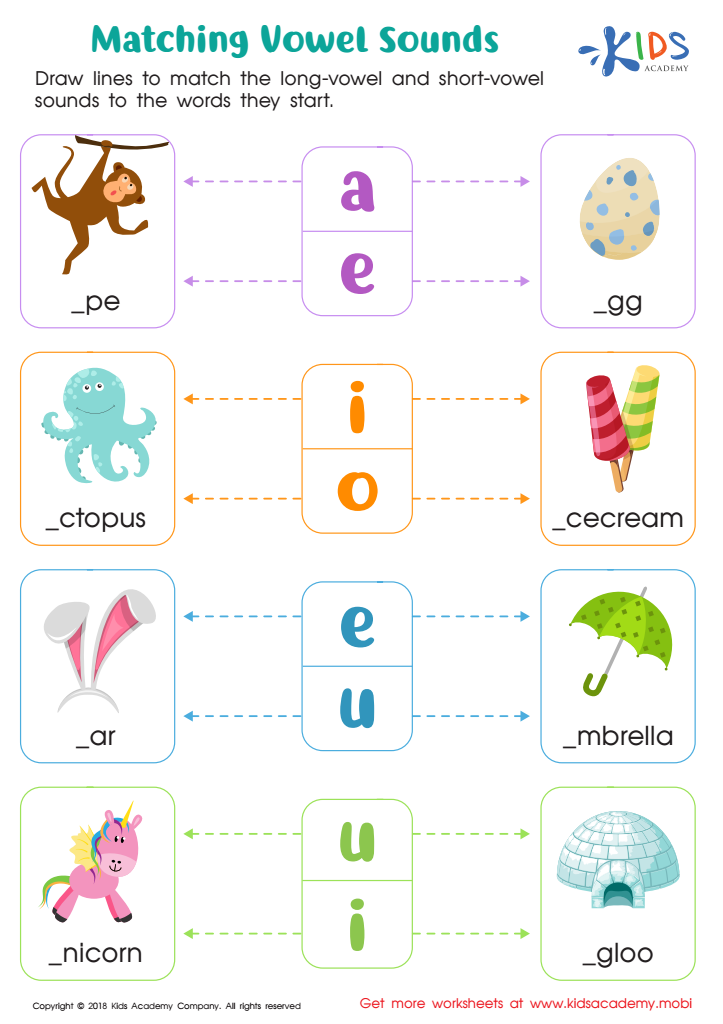
Matching Vowel Sounds Worksheet
Teach your child phonics with a fun worksheet! Ask your child to name a vowel sound and listen if it's long or short. Differentiating between long and short vowel sounds can be tricky, but this matching worksheet makes it easy for kids to understand. Have fun and master phonics - the worksheet will help them understand the difference between long and short vowel sounds!
Matching Vowel Sounds Worksheet
Worksheet
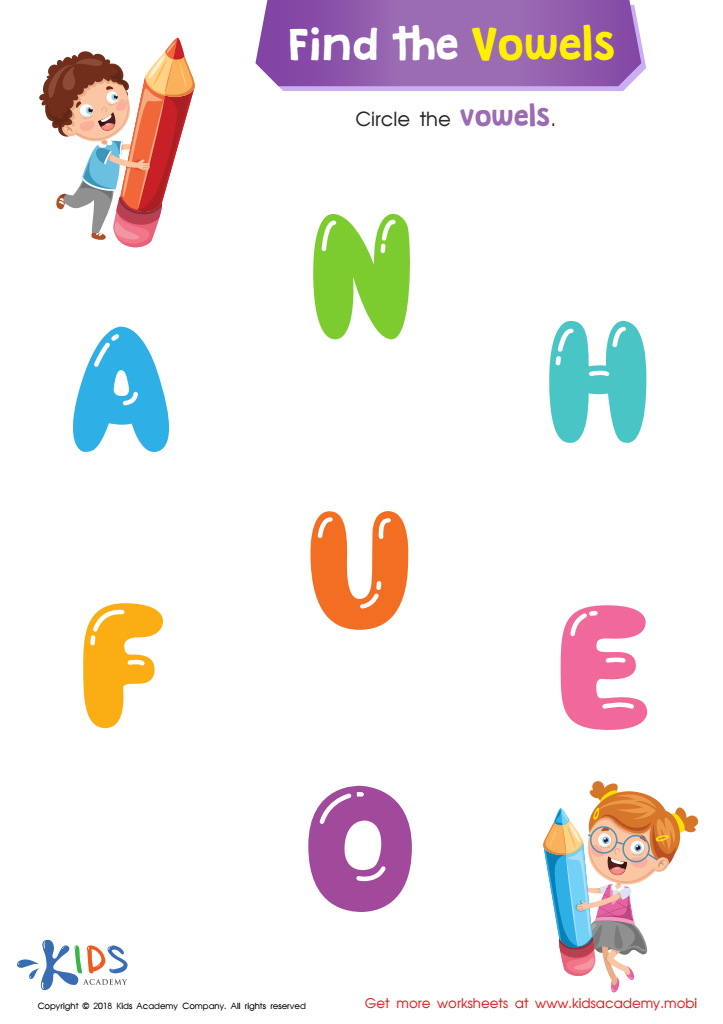
Find the Vowels Reading Worksheet
This worksheet helps kids identify vowels with bright colors and engaging activities to strengthen their visual discrimination and fine motor skills. Young learners will find it easy to succeed and be excited to keep reading!
Find the Vowels Reading Worksheet
Worksheet
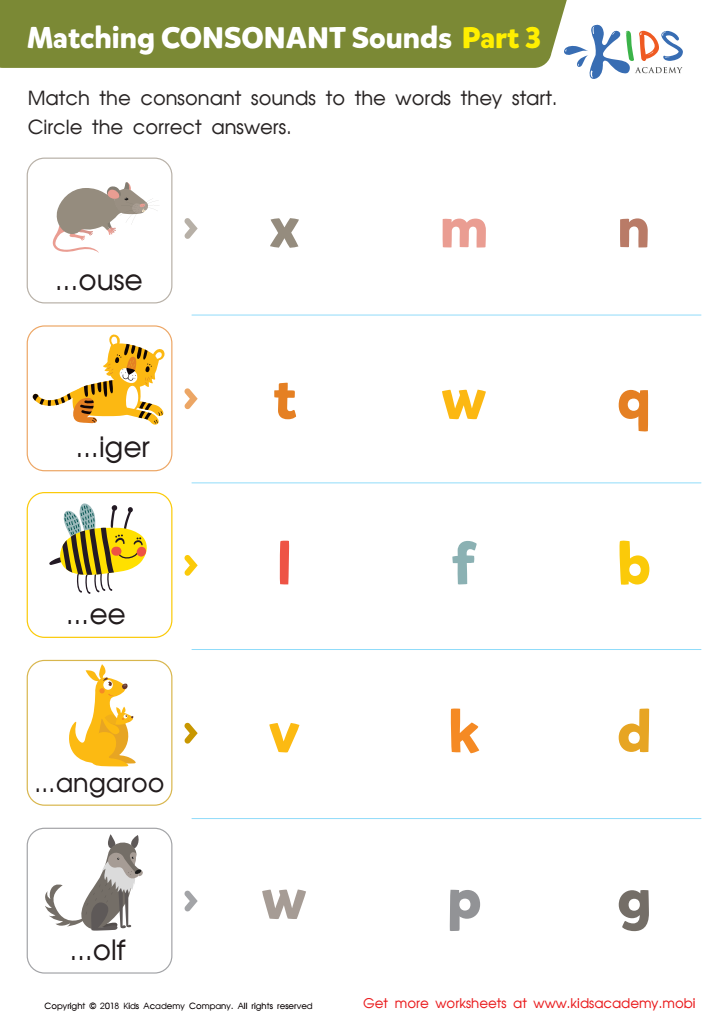
Matching Consonant Sounds: Part 3 Worksheet
Help your early learner match consonant sounds to words with this fun worksheet! Have them name the pictures and try out each letter in the corresponding column. When they hear the sound that matches, circle it. Have them write the letter in the box to complete the word. Work their way down the page until the critters' names all match with consonants!
Matching Consonant Sounds: Part 3 Worksheet
Worksheet
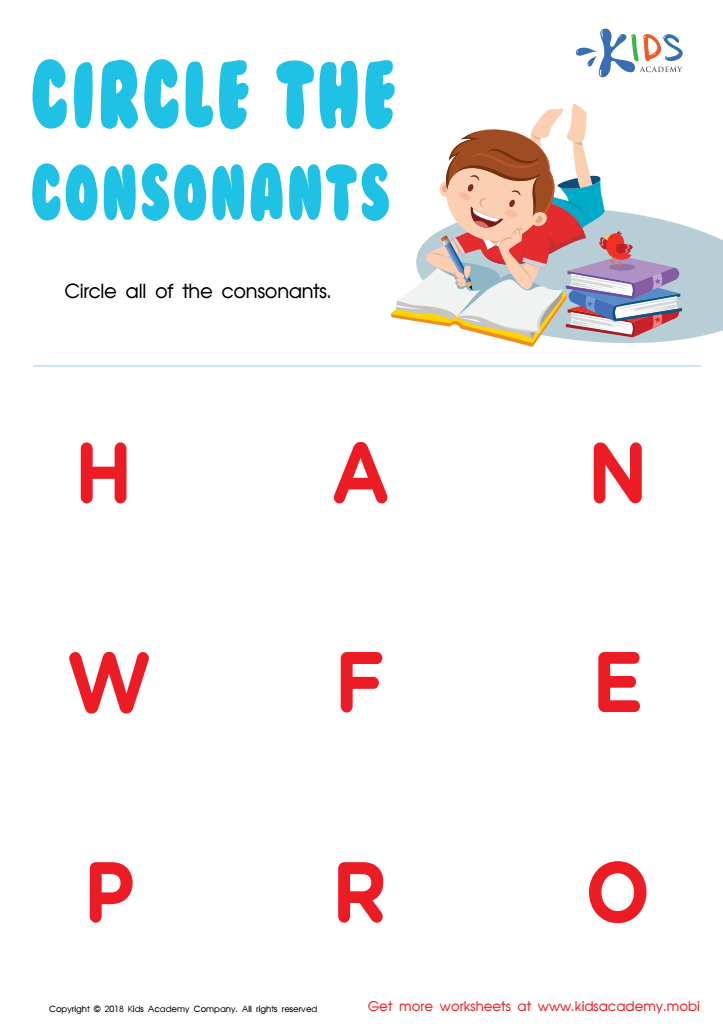
Circle the Consonants Worksheet
Teach your kids that there are 5 vowels and 21 consonants in the alphabet. Give examples of words that begin with consonants and ask them to recite the alphabet. Help them circle all of the consonants in a simple printout.
Circle the Consonants Worksheet
Worksheet
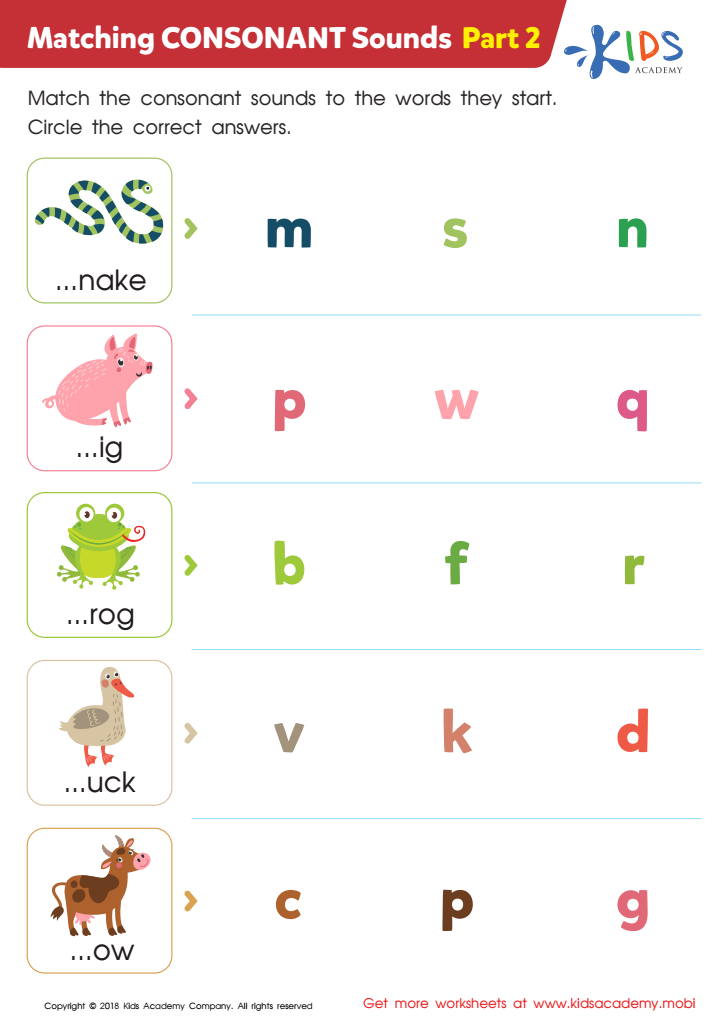
Matching Consonant Sounds: Part 2 Worksheet
Look at the picture, say the word and match the consonant sound with the letter. Coach your child to name the animal and complete the word. For extra challenge, write the missing letter in the box! This PDF worksheet helps kids learn to read words with familiar animal pictures.
Matching Consonant Sounds: Part 2 Worksheet
Worksheet
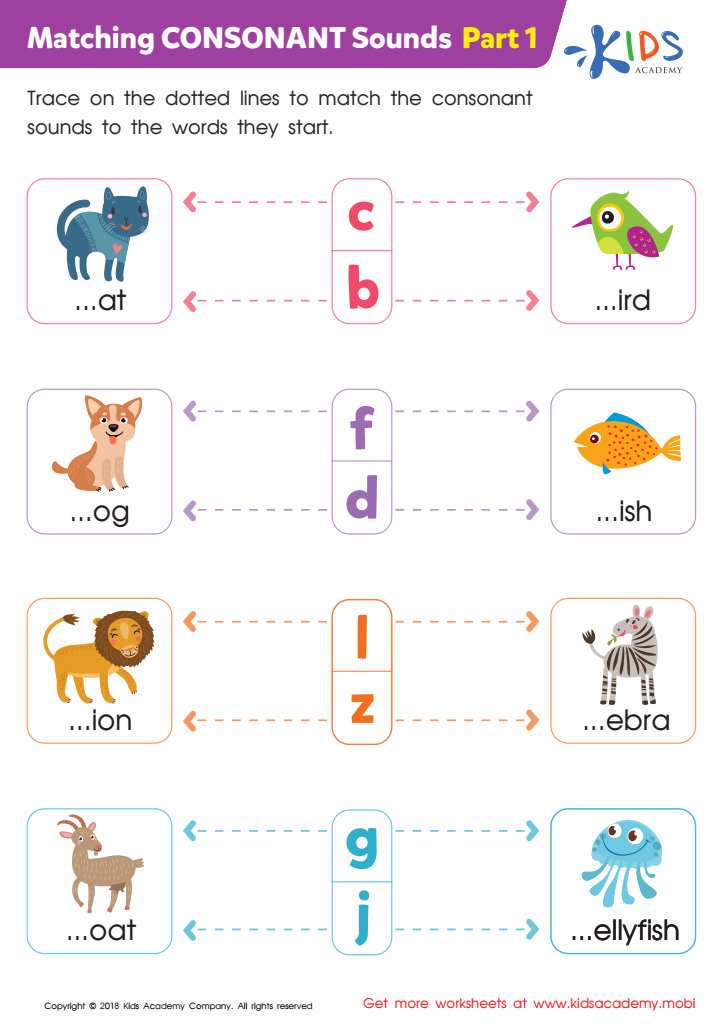
Matching Consonant Sounds: Part 1 Worksheet
Decide which letter matches each word and picture in this fun phonics worksheet. Slide your finger over each word, trying out each letter to check for matches. Once each pair is solved, trace the dotted lines with pencil to complete the printable. Who knew learning could be so enjoyable?
Matching Consonant Sounds: Part 1 Worksheet
Worksheet
Join Kids Academy for Free
Who is primarily going to use this learning content?



Understanding normal vowels and consonants is fundamental for young children ages 3-4, as it lays the groundwork for critical language and literacy development. At this age, children's brains are exceptionally receptive to learning sounds, which eventually form words and sentences. If parents and teachers emphasize normal vowel and consonant sounds early on, children are more likely to develop strong phonemic awareness, a key predictor of future reading success.
When kids consistently hear and practice correct pronunciations, they build an auditory library that helps them decode words accurately as they begin reading. For instance, recognizing the different sounds that vowels can make or distinguishing between similar consonant sounds, such as 'b' and 'd,' enables them to sound out words with confidence. This phonetic foundation not only enhances their reading skills but also boosts their speaking and listening abilities, making communication clearer and more effective.
Moreover, mastering these sounds can significantly impact a child’s self-esteem and academic performance. Confident young readers are more likely to participate in class, enjoy books, and push their boundaries in learning, which fosters a lifelong passion for education. Therefore, by paying attention to normal vowel and consonant development, parents and teachers can set children on a path toward academic achievement and effective communication.