
Verb identification Normal Worksheets for Ages 3-4
3 filtered results
Difficulty Level
Grade
Age
-
From - To
Subject
Activity
Standards
Welcome to our Verb Identification Normal Worksheets designed especially for children aged 3-4! These engaging worksheets are perfect for helping young learners recognize and understand verbs in a fun and interactive way. Each activity features colorful illustrations and simple prompts that encourage kids to identify and use action words in context. As they complete these worksheets, children will enhance their language skills, critical thinking, and cognitive abilities. Our resources are easy to print, making learning accessible at home or in the classroom. Start your child’s journey into the exciting world of verbs and watch their confidence soar!
Favorites
With answer key
Interactive
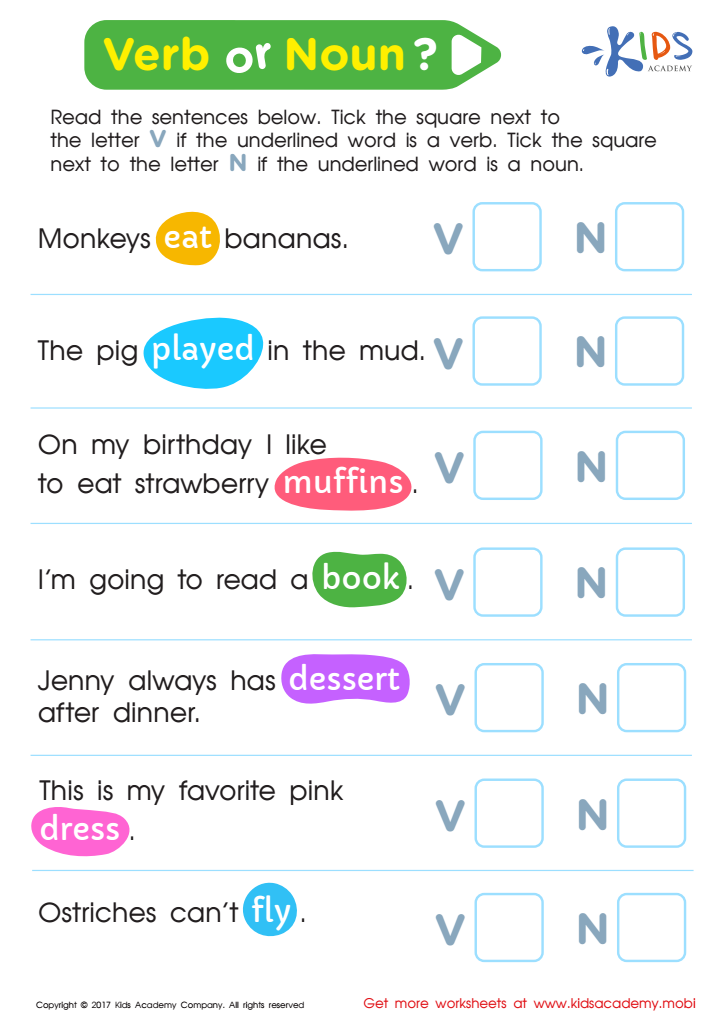
Verb or Noun Worksheet
This worksheet will help your child identify verbs and nouns quickly. With colorful highlights and simple sentences, they'll master parts of speech in no time! Get ahead of the game with this incredible worksheet.
 Assign to My Students
Verb or Noun Worksheet
Worksheet
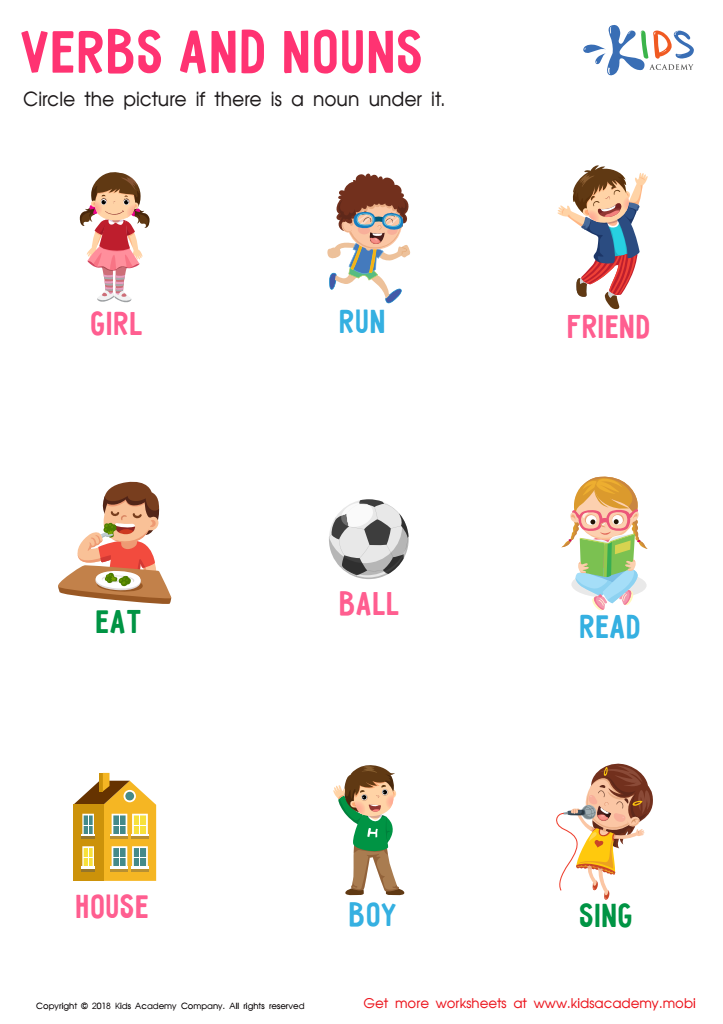
Verbs and Nouns Worksheet
Your child should have basic knowledge of verbs and nouns before starting this worksheet. Go through it with them and ask them to circle the pictures with nouns under them. This way, they'll become more familiar with parts of speech.
Verbs and Nouns Worksheet
Worksheet
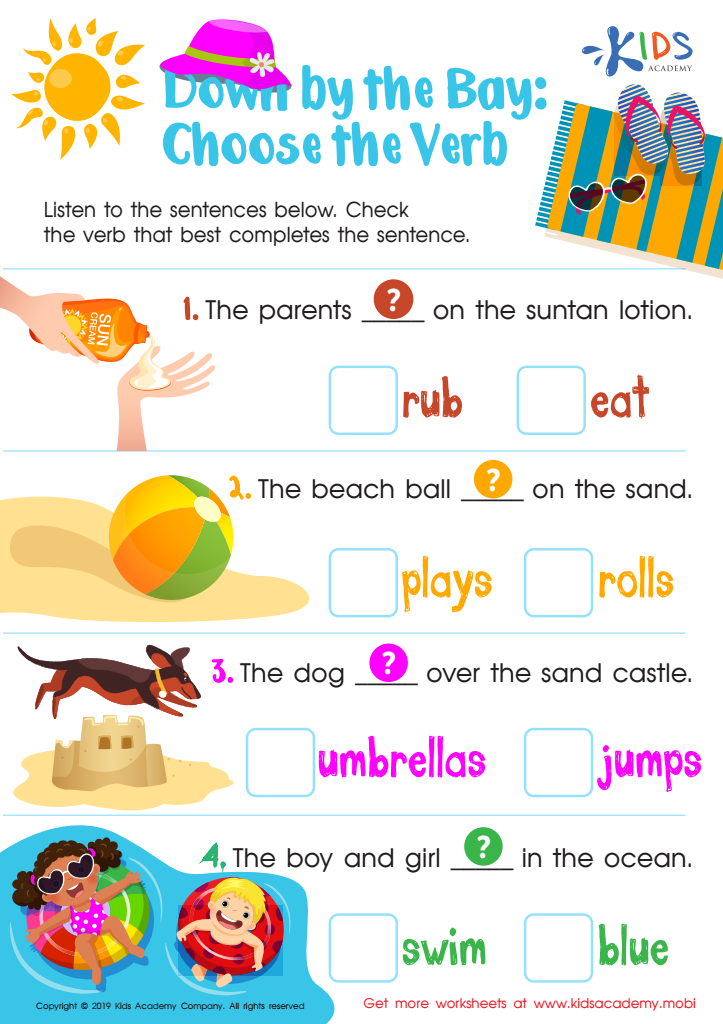
Down by the Bay: Choose the Verb Worksheet
Teach your kids about verbs: words that describe actions, like 'playing', 'eating', 'talking'. Ask your child to give their own verbs, then read the sentences in a worksheet and help them pick the best one for each question.
Down by the Bay: Choose the Verb Worksheet
Worksheet
Join Kids Academy for Free
Who is primarily going to use this learning content?






Verb identification is a crucial developmental milestone for children aged 3-4 years. During this stage, young learners engage in exploring language, and recognizing verbs is key to building foundational literacy skills. Verbs represent actions, being, and occurrence, which help children understand and describe the world around them. When parents and teachers emphasize verb identification, they are fostering vocabulary development and aiding children in expressing themselves clearly.
By recognizing verbs, children enhance their communication skills, allowing them to narrate experiences, participate in conversations, and engage in storytelling. This not only boosts language proficiency but also strengthens their cognitive development as they begin to understand concepts of action and change.
Additionally, verb identification supports early reading skills. As children encounter texts, knowing verbs helps them follow narratives and comprehend stories. For educators, incorporating play-based activities focused on verbs can make learning enjoyable, while parents can reinforce this at home through everyday interactions.
Ultimately, prioritizing verb identification cultivates a love for language, provides children with essential communication tools, and lays the groundwork for future literacy success, making it a vital focus for both parents and teachers during these formative years.








