
Normal Addition Facts Worksheets for Ages 3-4
8 filtered results
Difficulty Level
Grade
Age
-
From - To
Subject
Activity
Standards
Introduce your young learner to the basics of math with our "Normal Addition Facts Worksheets for Ages 3-4". Designed to make learning fun and engaging, these worksheets feature colorful illustrations and simple problems that help children grasp the concept of addition with ease. Perfect for preschoolers and early kindergarteners, our worksheets ensure that your child can practice and reinforce their skills through hands-on activities. Parents and educators can use these worksheets to provide kids with a solid foundation in mathematics, fostering early numeracy and confidence in problem-solving. Make math enjoyable with our expertly crafted addition facts worksheets!
Favorites
With answer key
Interactive
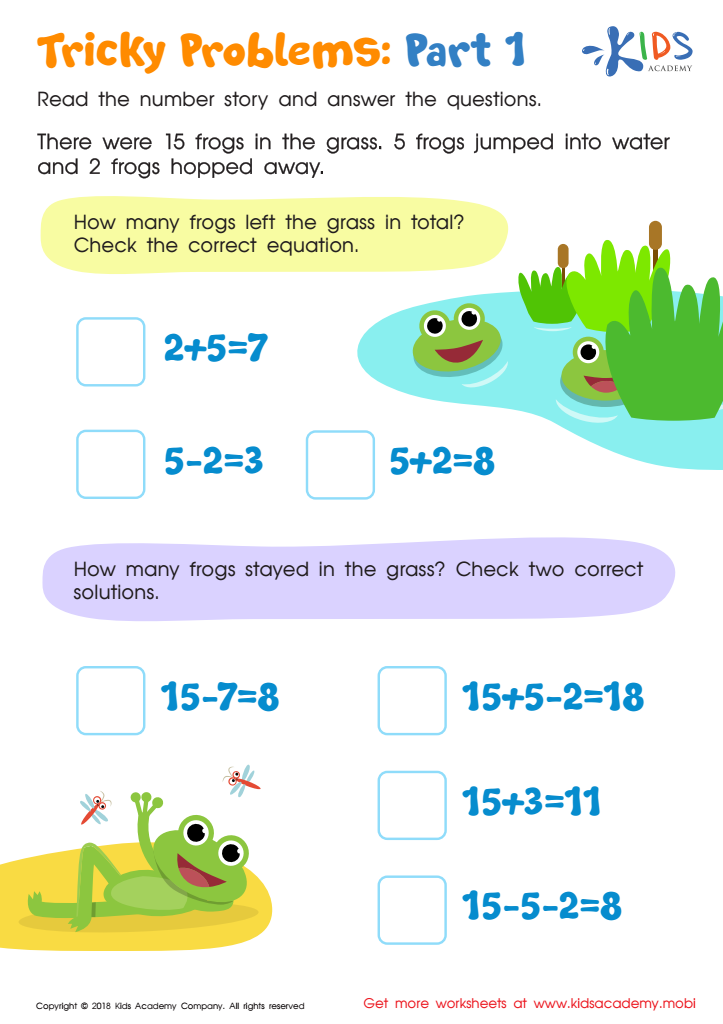
Tricky Problems Worksheet: Part 1
Visualizing word problems can help students solve them. This fun PDF worksheet encourages students to create mental images using math facts, then check boxes to match the equations for basic addition problems. It's a great way to build confidence in solving math.
 Assign to My Students
Tricky Problems Worksheet: Part 1
Worksheet
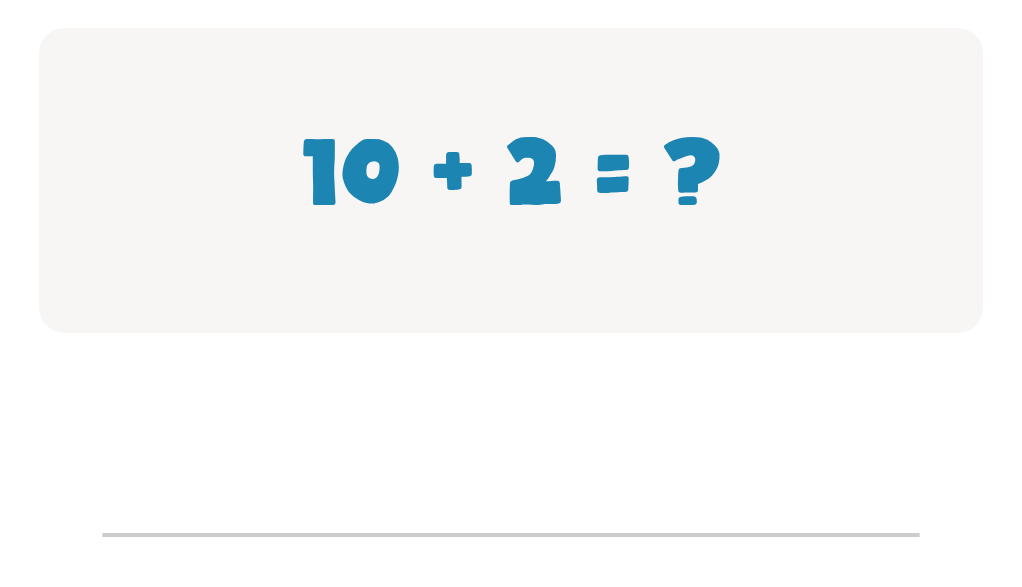

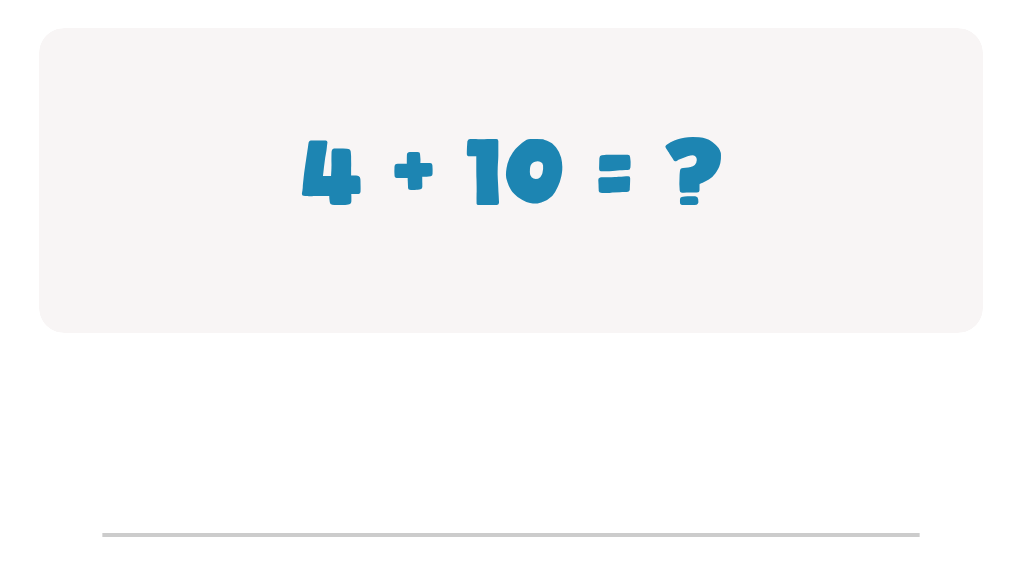
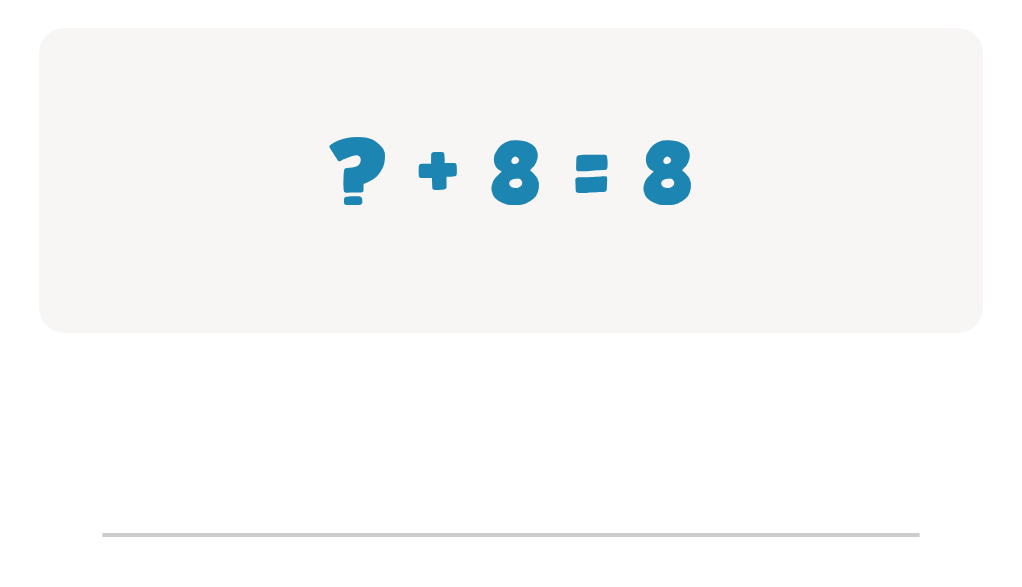

7 Continents and 7 Seas Worksheet
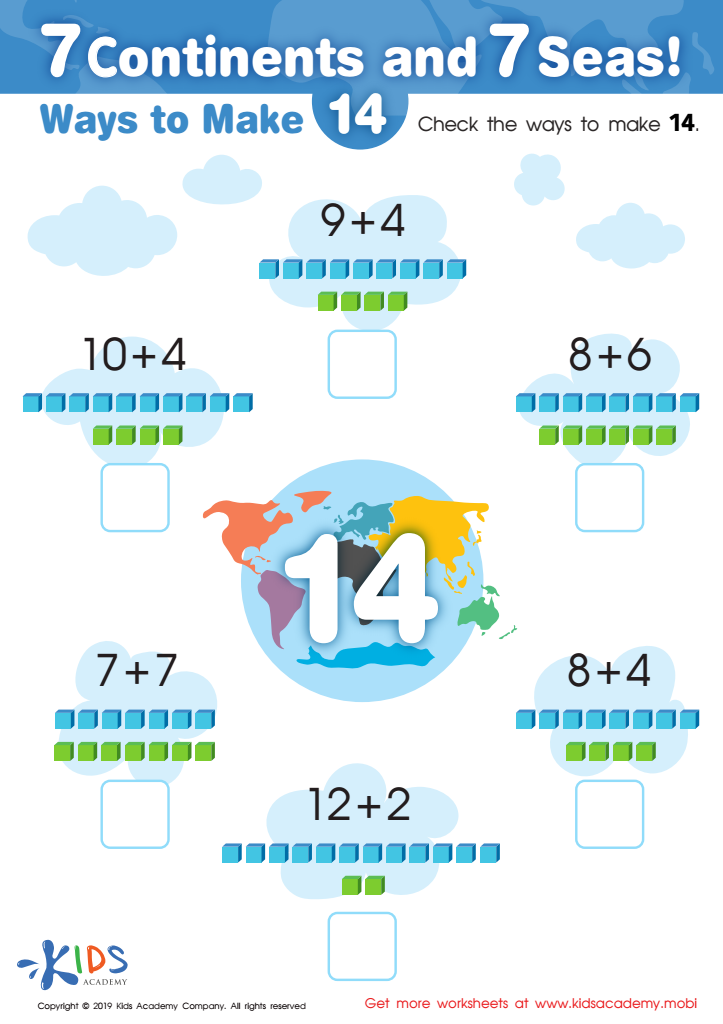
Remind kids of the continents and show them how different numbers can add up to the same figure. Give examples, like 2+2 =4, and 3+1 =4. Ask if they can provide other examples, then work through the simple additions in this worksheet with them. Ask them to circle all equations that make 14.
7 Continents and 7 Seas Worksheet
Worksheet
18 Candles Worksheet
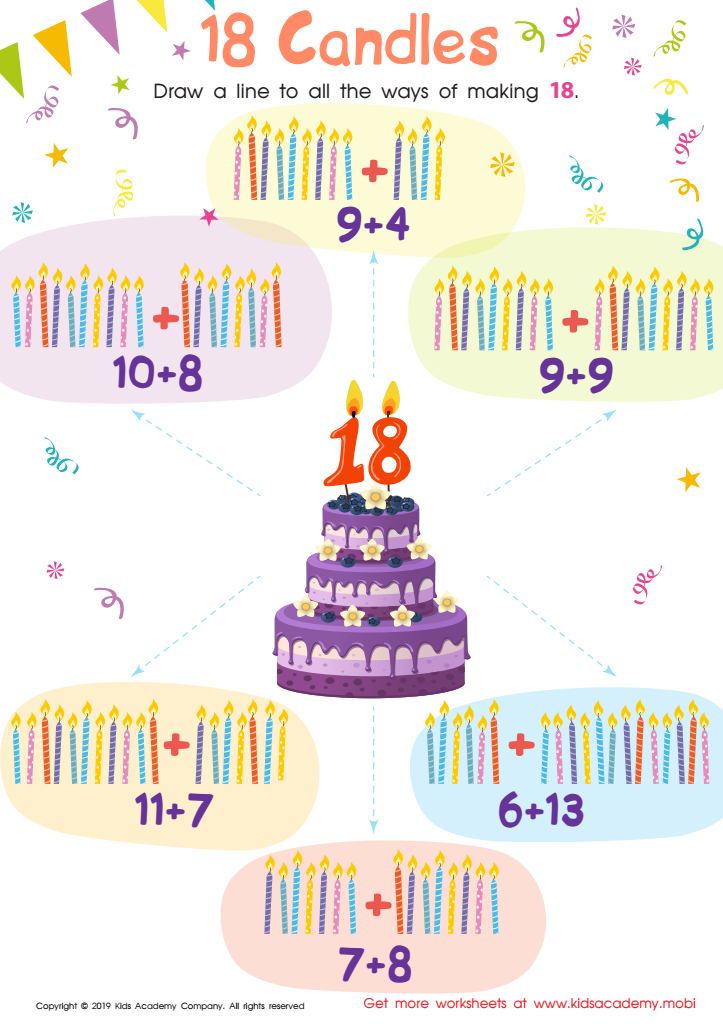
This worksheet is great for introducing your students to addition and subtraction. Help your kids solve the simple equations on it and draw a line from the birthday cake with 18 on it to all the solutions. Practice like this will prepare them to tackle more complex math problems.
18 Candles Worksheet
Worksheet
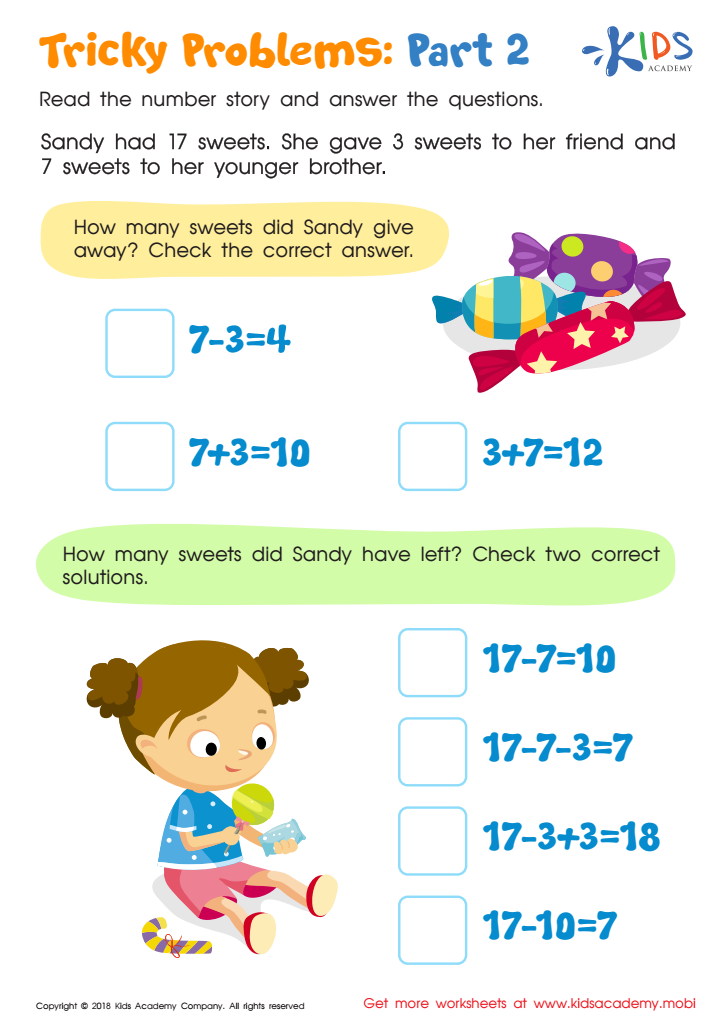
Tricky Problems Worksheet: Part 2
Help your little math learner visualize number stories with this engaging worksheet. They'll connect pictures to the story and use math facts to find the sums. After that, they'll be able to identify the correct number sentences to match. Let them practice and get better at problem solving!
Tricky Problems Worksheet: Part 2
Worksheet
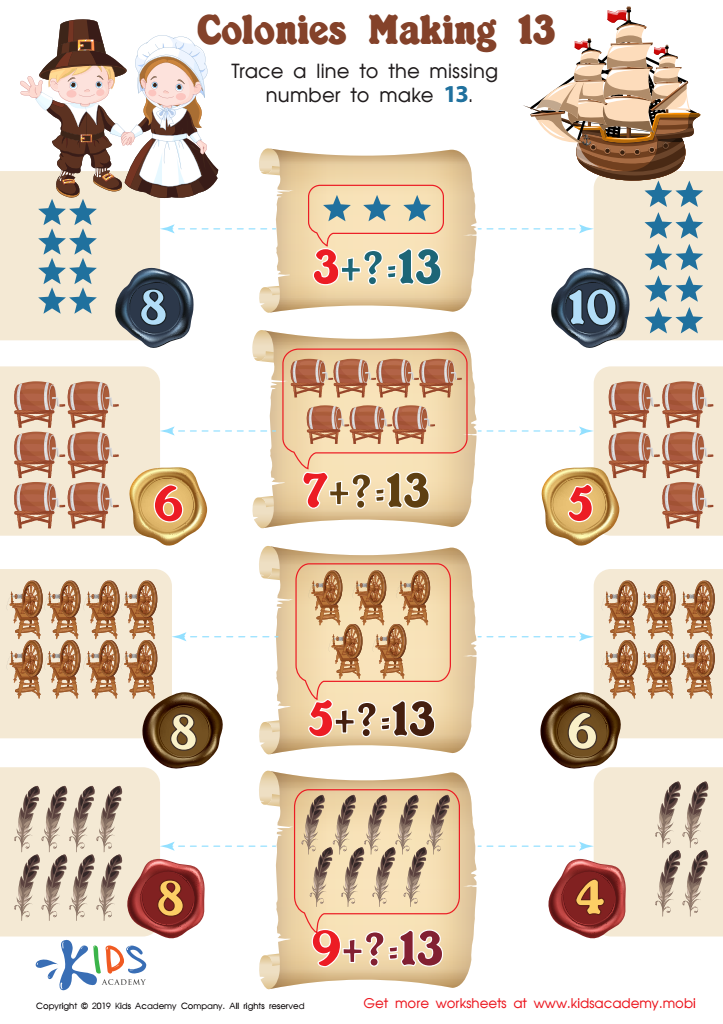
Colonies Making 13 Worksheet
Help your students trace the lines to complete the puzzle! They must identify the objects in the pictures and find the missing numbers that add up to 13. Colonizers arrived in America on a ship, forming an agreement with the Native Americans. Can your students fill in the gaps?
Colonies Making 13 Worksheet
Worksheet
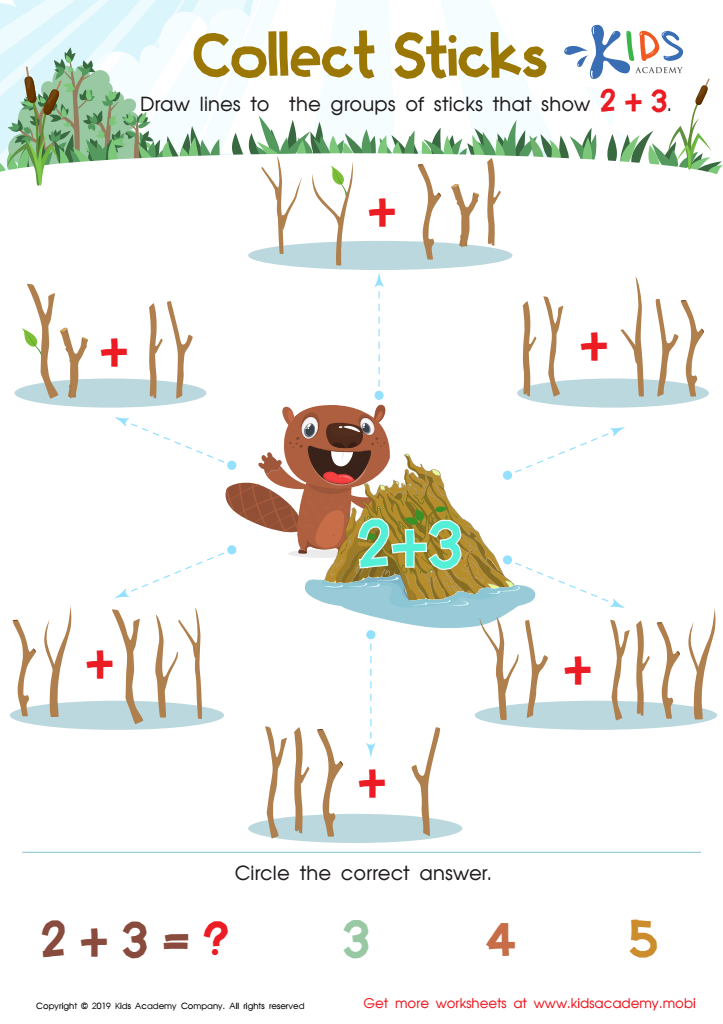
Collect Sticks Worksheet
Let math be fun for your kids with a simple and colorful worksheet exercise. Addition and subtraction can be daunting, but you can make it enjoyable with exercises like this one. Get them to draw lines to the groups of sticks that show 2+3 and watch them light up.
Collect Sticks Worksheet
Worksheet
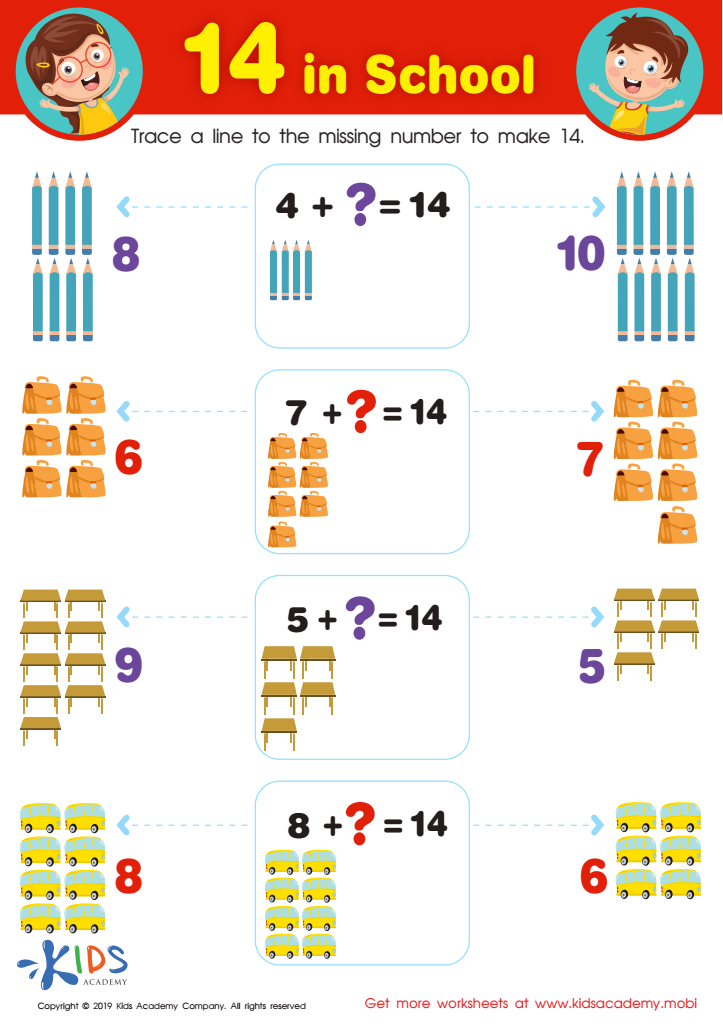
14 in School Worksheet
Remind your kids that adding different sets of numbers can give the same total (e.g. 2+3=5, 4+1=5). Ask them for more examples. Afterwards, work through the exercise. Help them count the objects and trace a line to the missing number that makes the total 14.
14 in School Worksheet
Worksheet
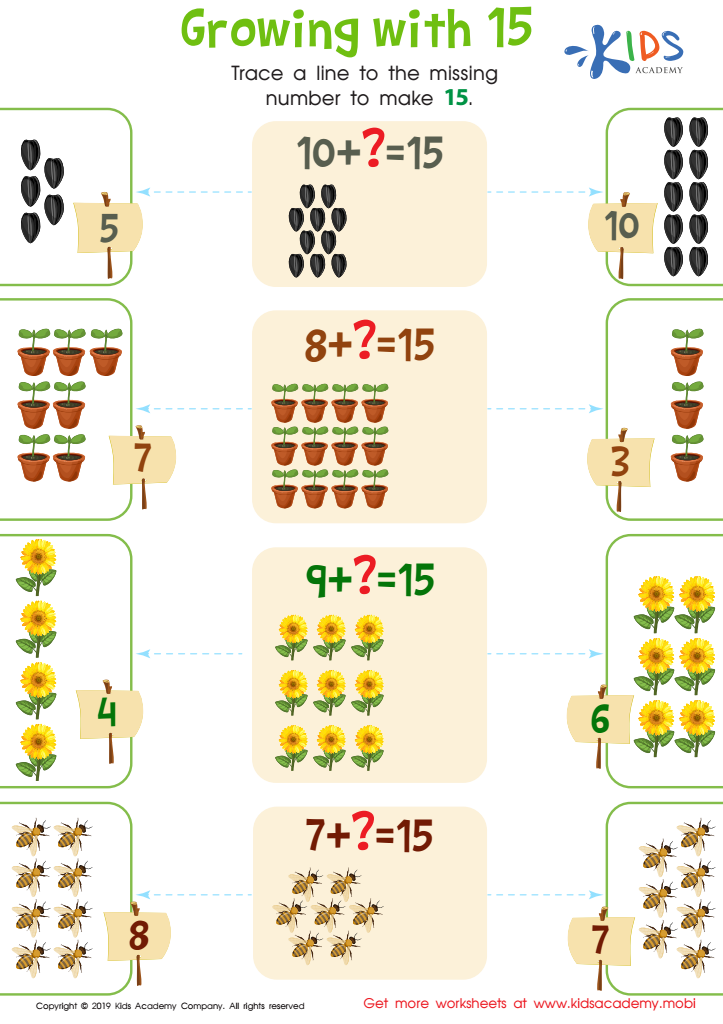
Growing with 15 Worksheet
Remind your kids that adding different sets of numbers can give the same total (e.g. 2+3=5, 4+1=5). Test their understanding by asking them for more examples. Move onto the worksheet: count objects, then trace the line to the number making a total of 15.
Growing with 15 Worksheet
Worksheet
Join Kids Academy for Free
Who is primarily going to use this learning content?








Parents and teachers should care about normal addition facts for children aged 3-4 because early math skills form the foundation for later academic success. At this young age, children's brains are highly receptive to learning, and introducing basic math concepts can boost cognitive development. Understanding simple addition helps children develop number sense, which is crucial for solving more complex math problems later on.
Early exposure to addition fosters critical thinking and problem-solving skills. It also helps children become comfortable with numbers and mathematical operations, reducing math anxiety in the future. Engaging in math activities can strengthen memory and help young children grasp patterns and relationships between numbers, essential for higher-level math.
Moreover, learning addition facts through fun, interactive play enhances engagement and retention. Activities like counting objects, using number lines, or playing educational games make learning enjoyable. This early positive experience with math can instill a lifelong love of learning and curiosity.
For teachers, understanding each child's grasp of basic addition allows for tailored instruction, helping all students progress at their own pace. For parents, reinforcing these concepts at home through everyday activities, like counting groceries, can reinforce classroom learning and provide opportunities for bonding. Together, parents and teachers can create a supportive environment that nurtures a strong mathematical foundation.








