Critical Thinking Normal Geometry Worksheets for Ages 3-4
5 filtered results
-
From - To
Discover our engaging Critical Thinking Normal Geometry Worksheets designed for young learners aged 3-4! These worksheets introduce foundational geometric concepts through fun activities that promote critical thinking skills. Children will develop problem-solving abilities as they identify shapes, compare sizes, and explore spatial relationships. Each worksheet is crafted to captivate young minds, encouraging them to think creatively and analytically while they play. Perfect for parents and educators, these printable resources enhance early mathematics understanding in an enjoyable way. Foster your child's cognitive development with our thoughtfully designed activities that seamlessly blend learning and play! Start their critical thinking journey today!
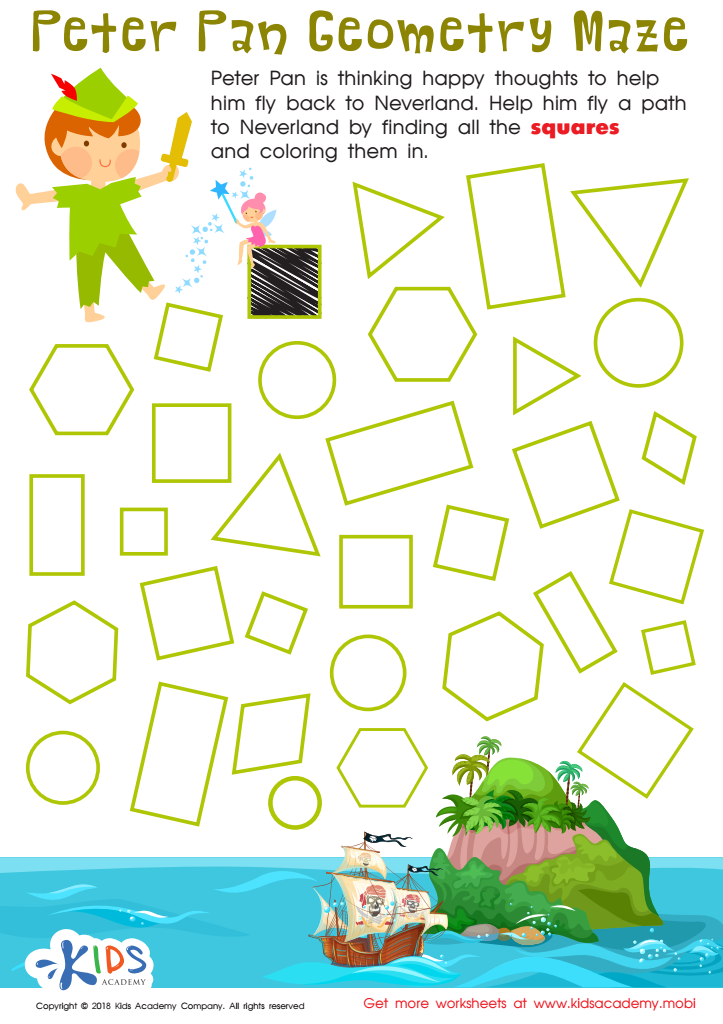
Peter Pan Worksheet
 Assign to My Students











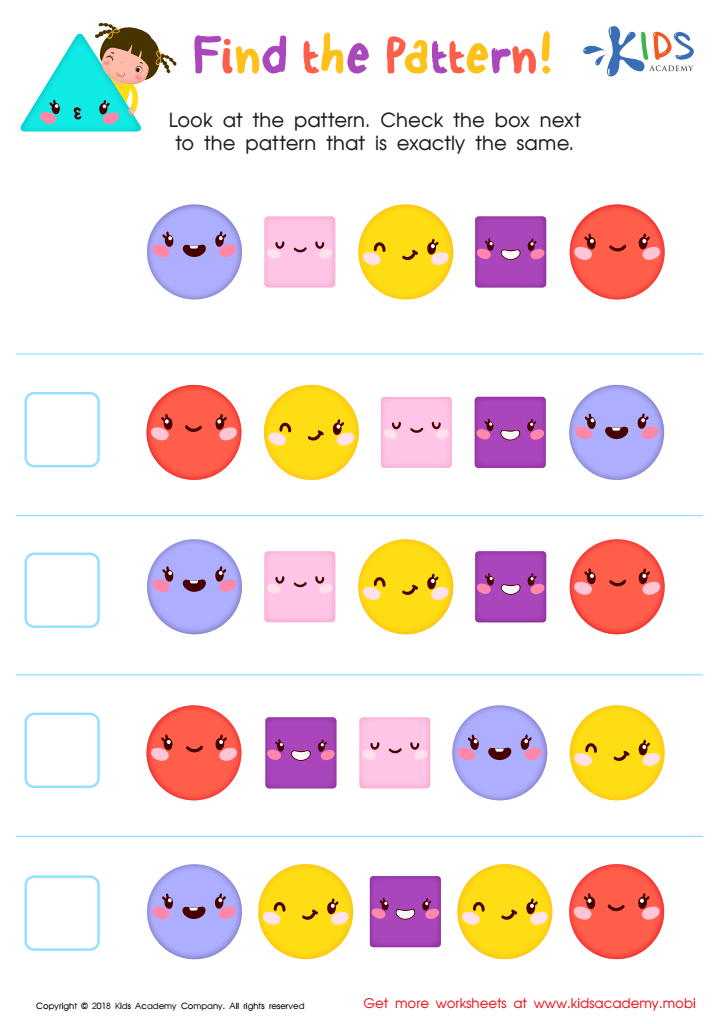
Find the Pattern Worksheet
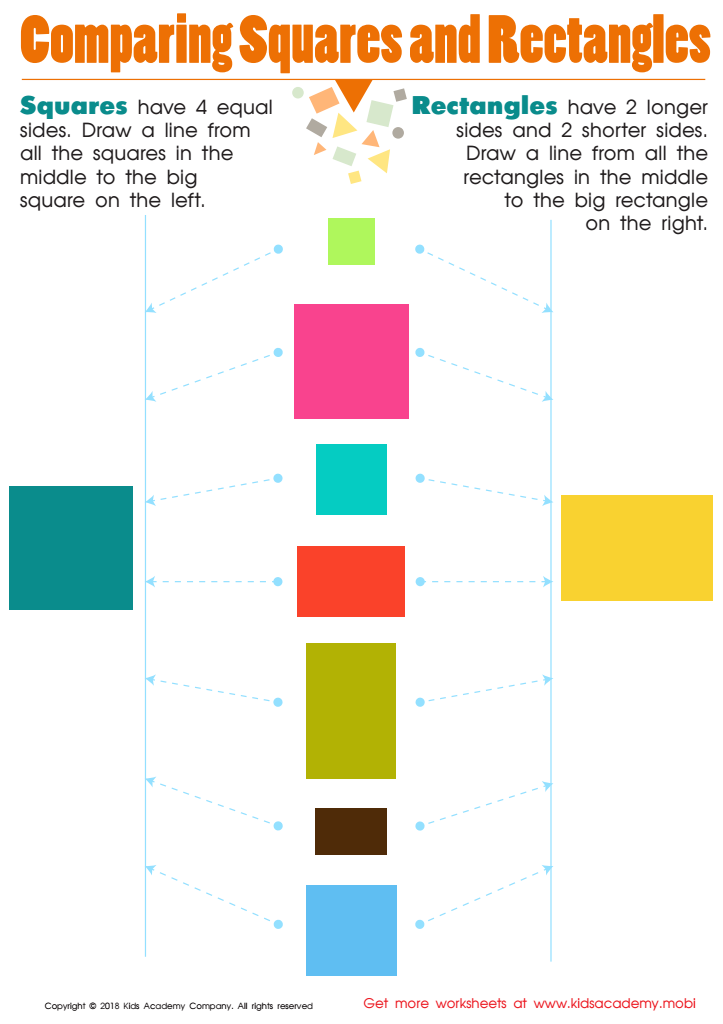
Comparing Squares Rectangles Worksheet
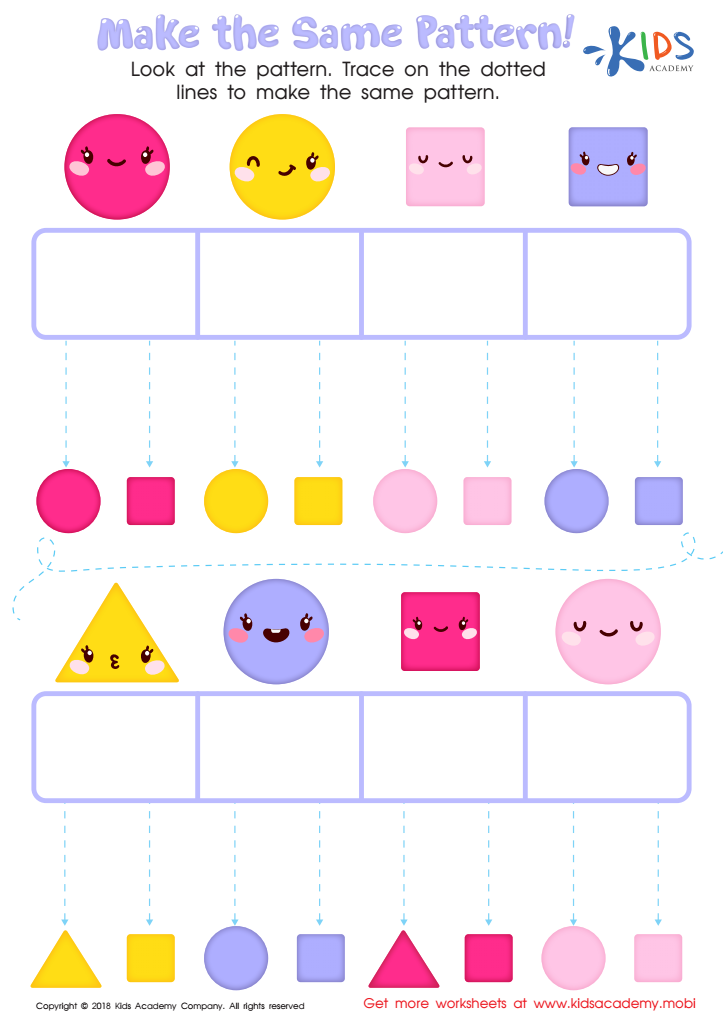
Make the Same Pattern Worksheet
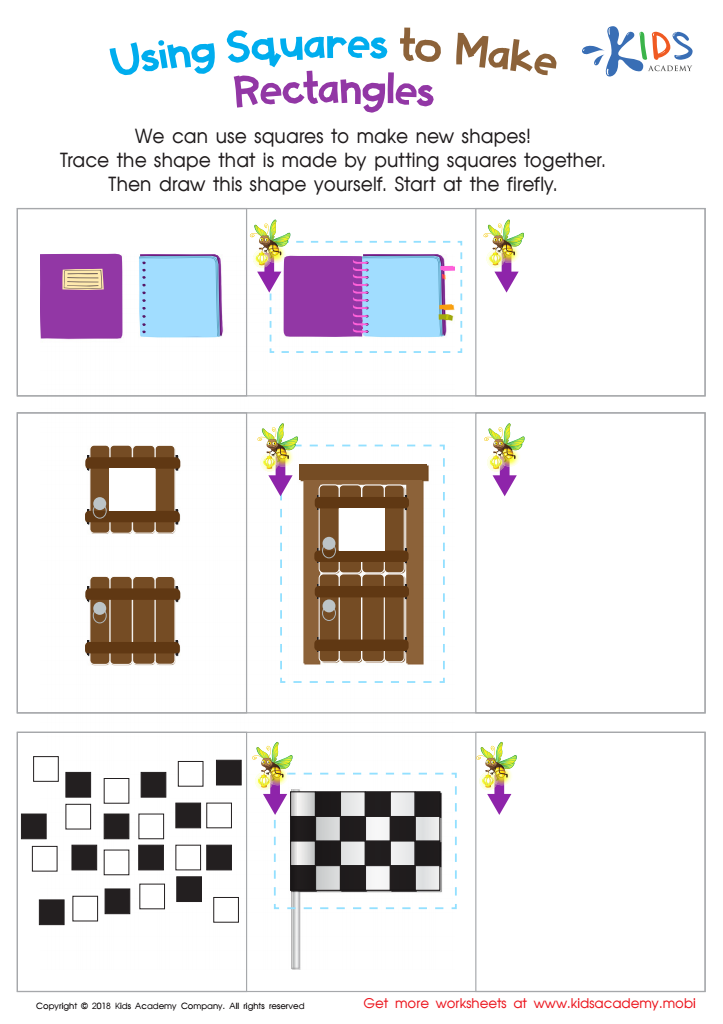
Using Squares to Make Rectangles Worksheet








Parents and teachers should prioritize Critical Thinking Normal Geometry for Ages 3-4 as it lays the foundation for essential cognitive skills. At this developmental stage, children are naturally curious and eager to explore their environment. Engaging them in geometry activities helps foster spatial awareness and problem-solving abilities, which are crucial in everyday life and academic success.
Critical thinking in geometry encourages children to observe patterns, classify shapes, and make connections. Through playful activities like sorting shapes, building with blocks, or engaging in simple puzzles, children learn to analyze and synthesize information. This not only enhances their understanding of geometric concepts but also nurtures overall cognitive development.
Moreover, critical thinking skills are linked to creativity and innovation. By encouraging kids to think critically about shapes and space, we inspire them to envision new possibilities, whether in art, design, or even science. As they engage in discussions about their thought processes, children also develop communication skills and confidence in expressing their ideas.
In summary, focusing on Critical Thinking Normal Geometry at ages 3-4 equips children with vital problem-solving tools, bolsters their creativity, and sets the stage for future learning, making it an essential investment in their educational journey.








