Basic geometry understanding Normal Math Worksheets for Ages 3-4
3 filtered results
-
From - To
Introduce your child to the exciting world of shapes with our "Basic Geometry Understanding" math worksheets designed for ages 3-4. These engaging printables from Kids Academy simplify geometric concepts with fun, interactive activities tailored to young learners. Your child will explore shapes, identify patterns, and develop foundational math skills through playful exercises. Our worksheets are crafted to boost early cognitive development, enhancing spatial awareness and problem-solving abilities. Download today and start building your little one's love for geometry and overall math proficiency at this crucial developmental stage!
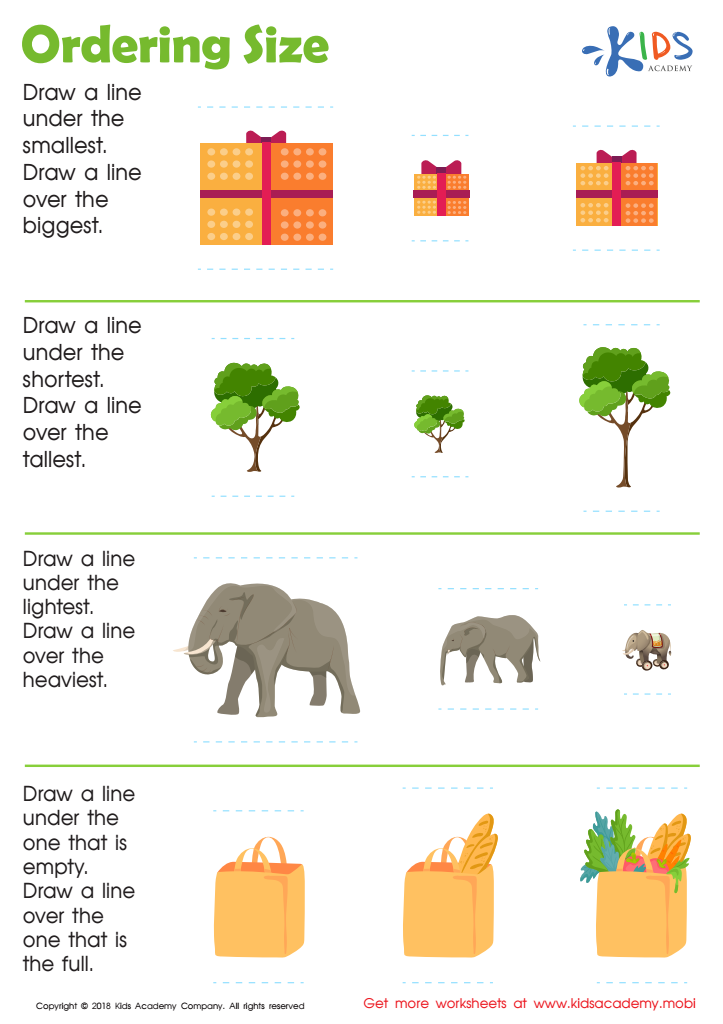
Ordering Size Worksheet
 Assign to My Students
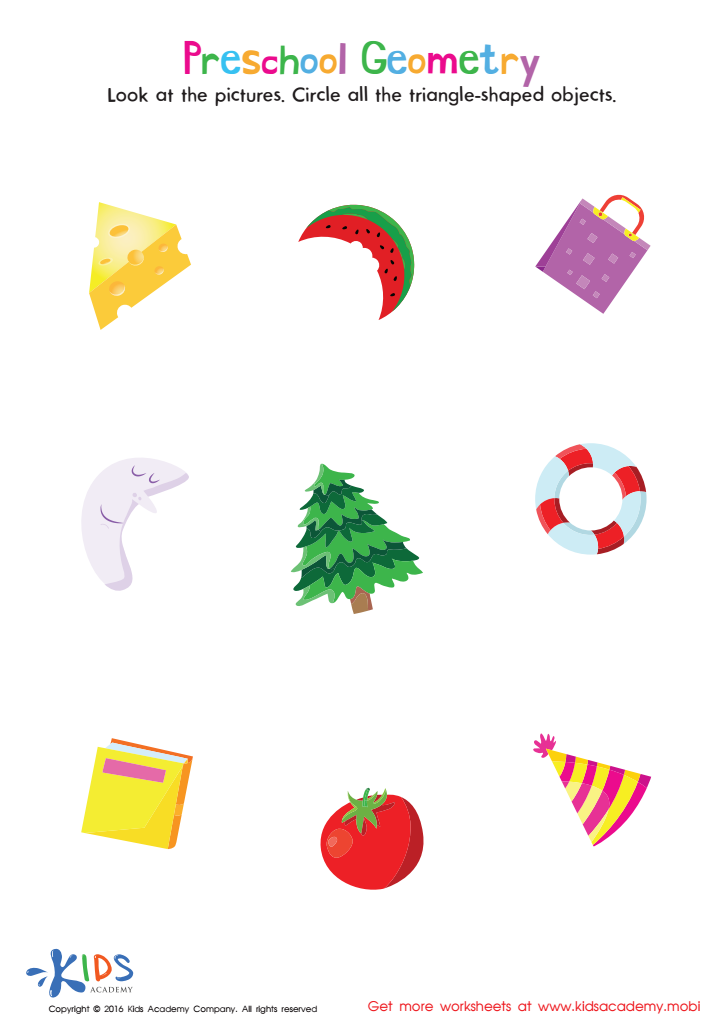
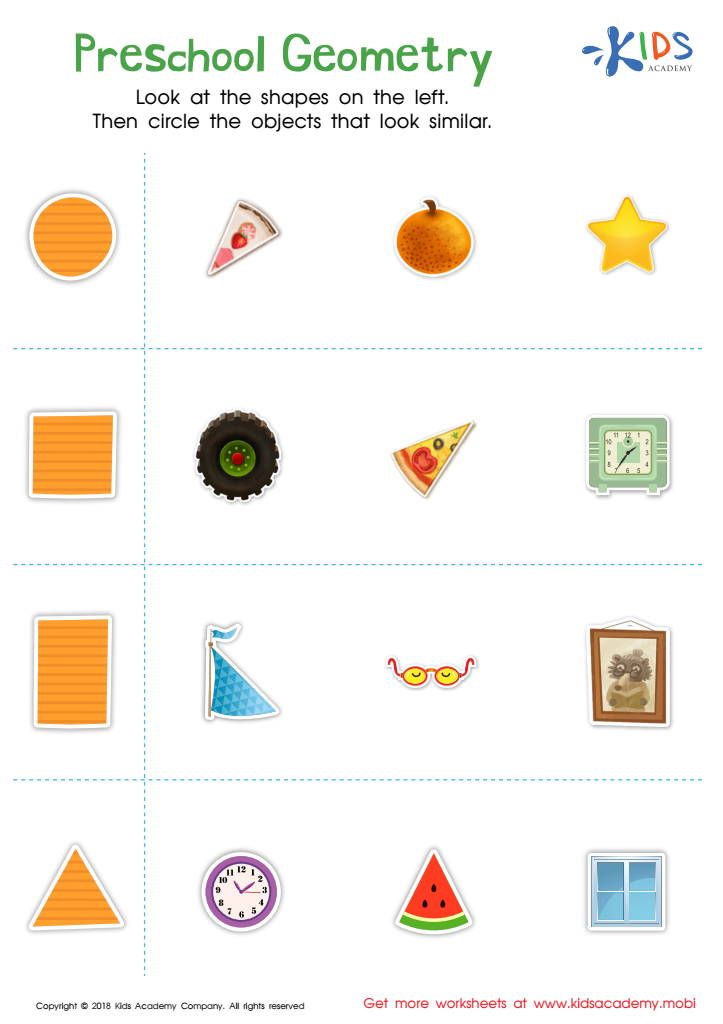
Preschool Geometry Worksheet







Building a foundation in basic geometry and early math skills for children ages 3-4 is crucial for their cognitive development and future academic success. At this age, children are naturally curious and have an immense capacity for learning, making it the ideal time to introduce foundational concepts.
Understanding shapes, sizes, and spatial relationships through basic geometry prepares children for more complex mathematical concepts they'll encounter later. It enhances their problem-solving skills and spatial awareness, which are essential for subjects like science, technology, engineering, and mathematics (STEM).
For example, recognizing geometric shapes helps children understand patterns and structures in the environment around them. Identifying circles, squares, and triangles can improve their fine motor skills and visual perception. These skills underpin their ability to tackle puzzles, build with blocks, and even start handwriting.
Early exposure to math concepts such as counting, sorting, and recognizing numbers develops a positive attitude toward math. This foundational knowledge helps children transition smoothly into kindergarten and beyond, where they will face more challenging tasks.
Parents and teachers play a vital role in nurturing this development. Through play, everyday interactions, and structured activities, they can foster a love for learning and build a strong mathematical foundation, setting the stage for lifelong academic and critical-thinking success.








