
Reading comprehension Normal Animals Worksheets for Ages 3-4
5 filtered results
Difficulty Level
Grade
Age
-
From - To
Subject
Activity
Standards
Enhance your child's reading skills with our "Reading Comprehension Normal Animals Worksheets" specifically designed for ages 3-4. These engaging worksheets introduce young learners to a variety of normal animals in an enjoyable and interactive way. Each activity is tailored to develop foundational reading comprehension skills, providing opportunities for kids to identify, connect, and express their understanding of different animals. With vibrant illustrations and simple questions, your little ones will have fun while mastering essential literacy concepts. Support their early education and ignite a love for reading with our thoughtfully crafted worksheets, ideal for parents and educators alike!
Favorites
With answer key
Interactive
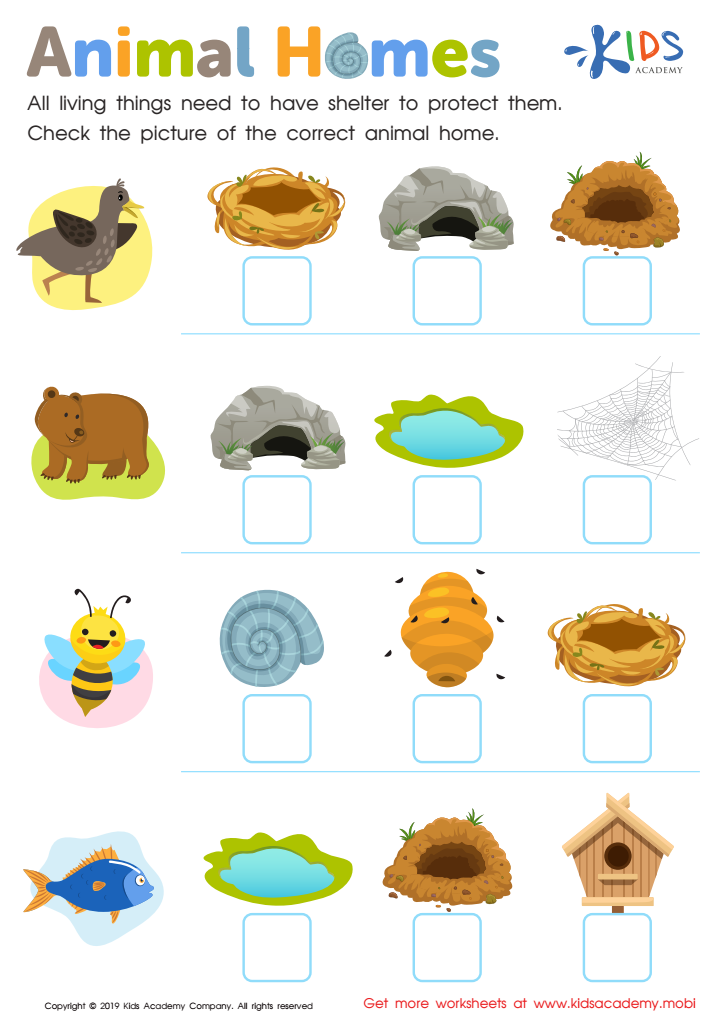
Animal Homes Worksheet
Students have homes where they can do things they love, sleep and stay safe from bad weather. Check the worksheet for animals and their shelters. Ask your kids to identify each and match the animal home to the picture. (80 words)
 Assign to My Students
Animal Homes Worksheet
Worksheet
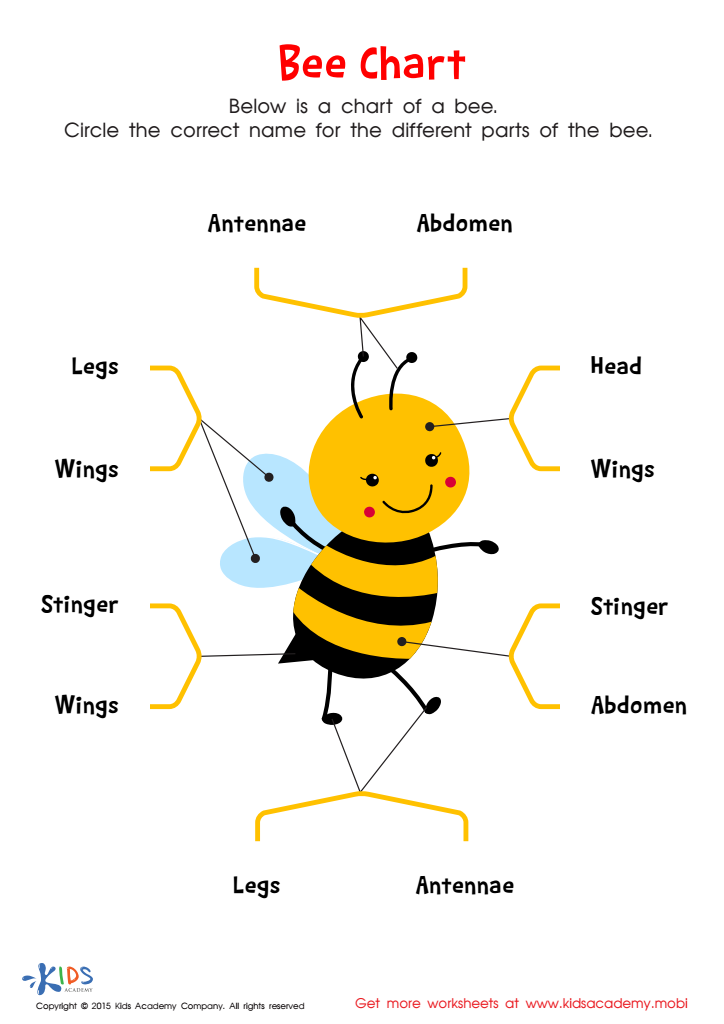
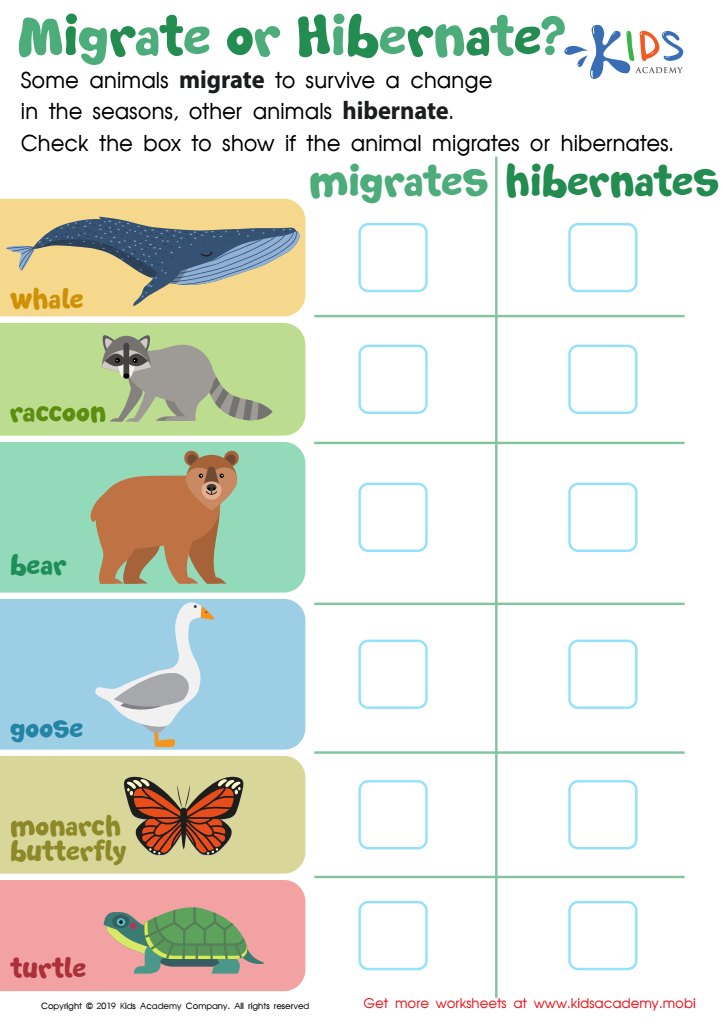
Migrate or Hibernate? Worksheet
Many animals survive by either migrating or hibernating when the weather changes. Migration involves traveling in flocks or herds to a more temperate climate, while hibernation is when animals stay in their homes and eat and sleep for a long period of time. Show your kids this worksheet and help them decide which strategy animals use to cope with the changing weather.
Migrate or Hibernate? Worksheet
Worksheet
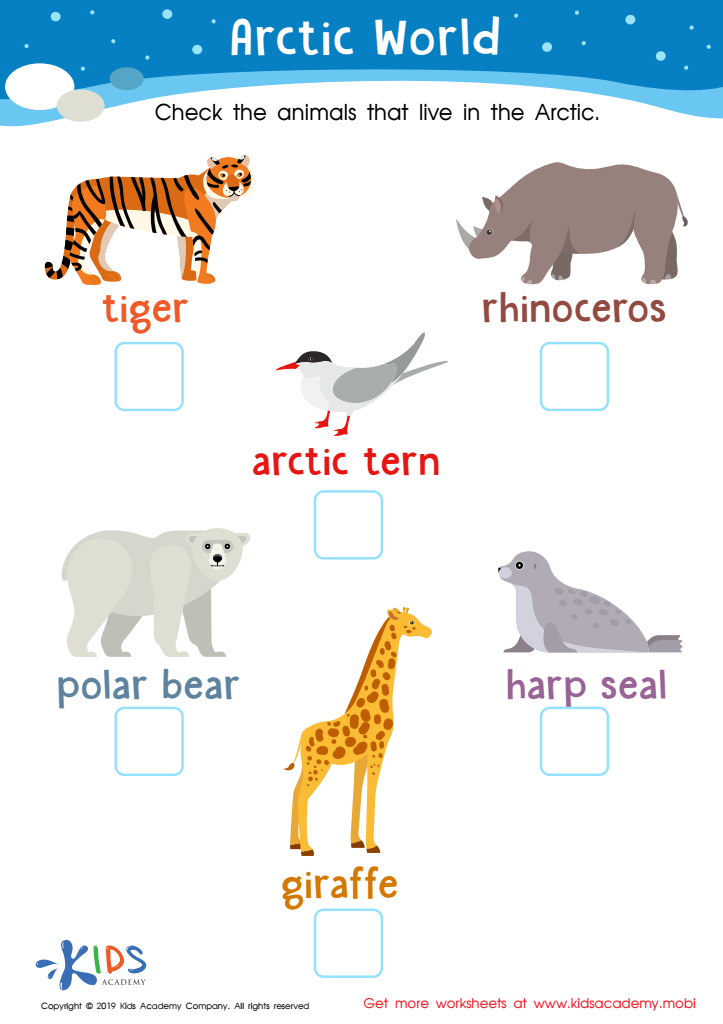
Arctic World Worksheet
Ask your students if they know where the Arctic is located and what lives there. If not, use a world atlas to show them. The Arctic is very cold and snow-covered; native animals have adapted to survive the harsh conditions. Look at the animals in the worksheet and help your students decide which ones live in the Arctic.
Arctic World Worksheet
Worksheet
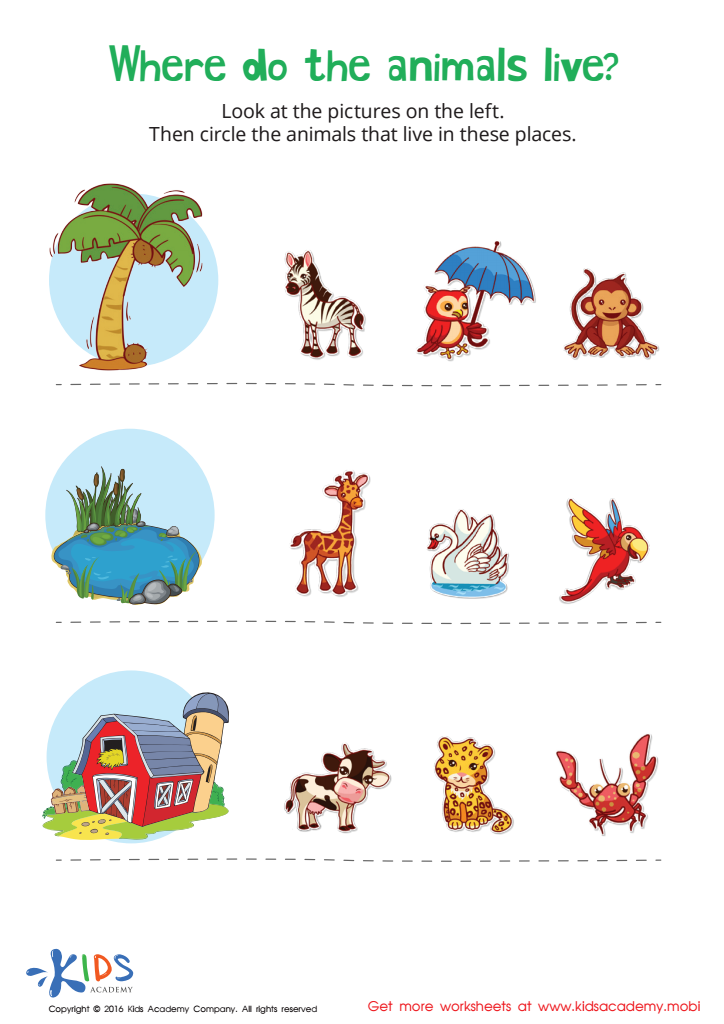
Where Animals Live Worksheet
Teaching early reading and math skills is important, but don't forget about science. With the Where Animals Live PDF worksheet, kids can identify their favorite animals and the environments they live in. Ask them what type of environment the animals like and introduce them to geography. It's great for logical reasoning and classification skills. Your kid will practice with their favorite animals and love the trip to the zoo afterwards!
Where Animals Live Worksheet
Worksheet
Join Kids Academy for Free
Who is primarily going to use this learning content?








Reading comprehension is a crucial foundation for early childhood development, particularly for children aged 3-4. At this stage, introducing literacy through enjoyable themes, such as normal animals, not only captures young attention but also enhances their understanding of the world. When parents and teachers focus on reading comprehension in this group, they cultivate essential cognitive skills, including understanding, analyzing, and connecting stories to real life.
By engaging with animal-themed stories, children learn new vocabulary and concepts, fostering language development. This approach also encourages critical thinking as young readers question the behaviors and features of animals, promoting curiosity and exploration.
Moreover, reading together creates valuable bonding moments between adults and children, nurturing emotional connections and enhancing social skills. Parents and teachers can employ interactive reading strategies—like asking open-ended questions or encouraging children to share their thoughts about animals—which bolster comprehension and retention.
Ultimately, focusing on reading comprehension through "normal animals" fosters a love of reading, helping children build confidence and motivate them to further explore literature. This strong reading foundation will benefit them academically as they progress, setting the stage for lifelong learning. Thus, embracing reading comprehension at this early age is an investment in a child’s future success.








