Normal Multiplication Worksheets for Ages 3-5
3 filtered results
-
From - To
Explore our Normal Multiplication Worksheets designed especially for children ages 3-5! These engaging and age-appropriate worksheets introduce young learners to the fundamentals of multiplication in a fun and interactive way. Perfect for preschoolers and kindergartners, our resources feature colorful illustrations and hands-on activities that make learning easy and enjoyable. Each worksheet helps develop essential math skills while boosting confidence and creativity. With varying levels of difficulty, kids can progress at their own pace, gradually mastering multiplication concepts. Download our printable worksheets today and watch your child's mathematical abilities soar as they build a strong foundation for future learning!
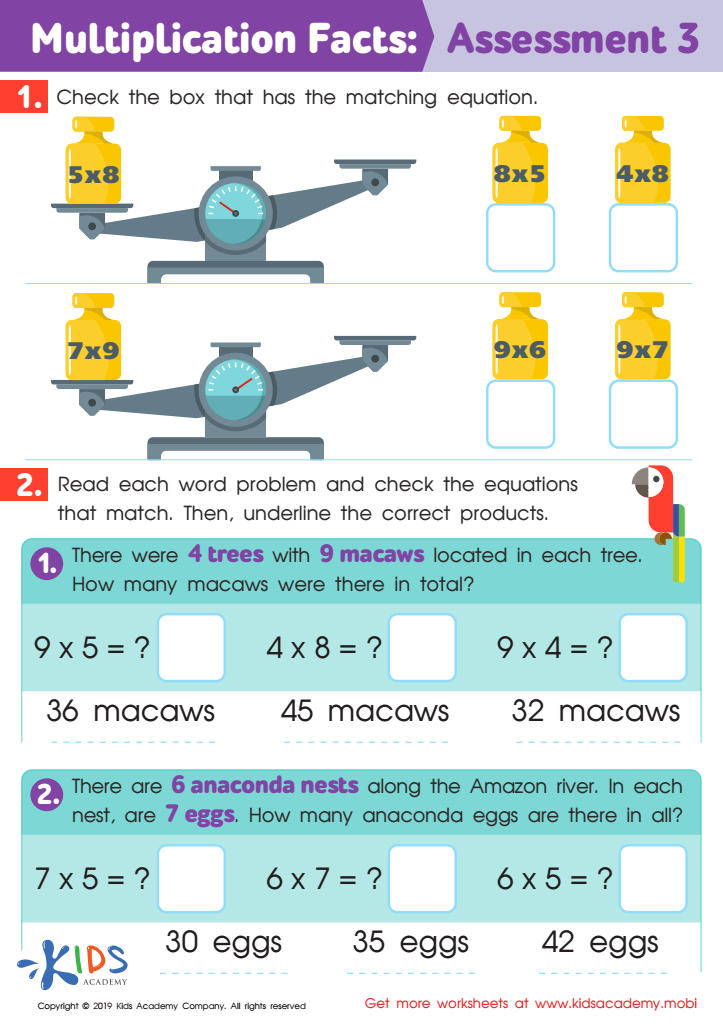
Multiplication Facts: Assessment 3 Worksheet
 Assign to My Students
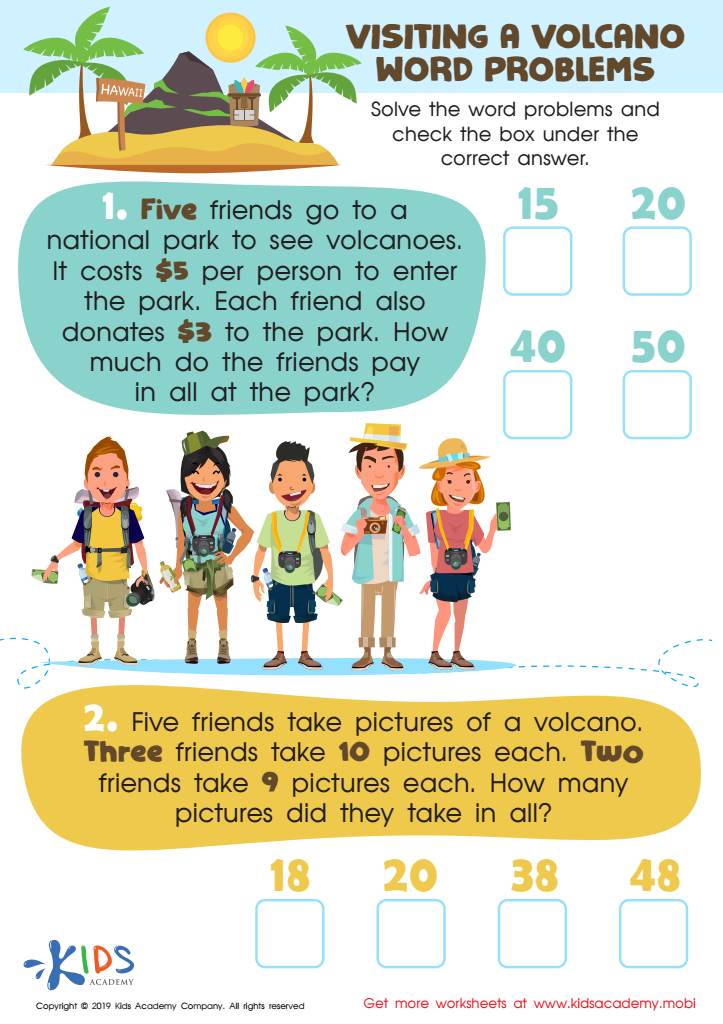
Visiting a Volcano Word Problems Worksheet
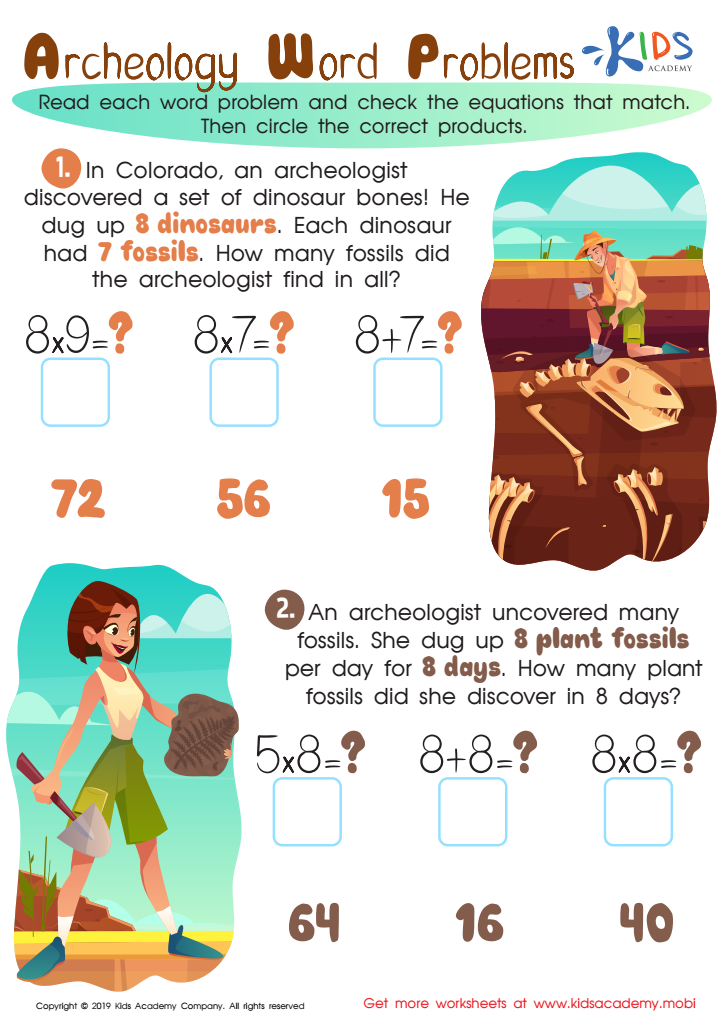
Archeology Word Problems Worksheet








Normal multiplication is a foundational mathematical concept that is essential for young learners aged 3-5, even if they aren't explicitly carrying out multiplication tasks yet. At this age, children are developing early numeracy skills, including counting, recognizing numbers, and understanding basic arithmetic. Introducing the concept of multiplication in a relatable and playful manner helps foster a deeper understanding of numbers and their relationships.
Parents and teachers should care about normal multiplication because it encourages critical thinking and problem-solving abilities. Engaging in activities that involve grouping (e.g., counting objects in sets of two or three) lays the groundwork for multiplication. Playing games and using visual aids, like blocks or drawings, can make learning multiplication concepts fun and interactive.
Moreover, this early exposure builds confidence in mathematical capabilities, helping children see math as an enjoyable subject rather than a daunting task as they progress in their education. Establishing a strong mathematical foundation at such a young age is key to improving overall academic performance later on while cultivating lifelong skills. Ultimately, focusing on normal multiplication helps equip young learners with the tools they need to navigate more complex mathematical concepts in the future.








