Animal Classification Normal Sorting Worksheets for Ages 3-5
3 filtered results
Difficulty Level
Grade
Age
-
From - To
Subject
Activity
Standards
Introduce your child to the fascinating world of animals with our "Animal Classification Normal Sorting Worksheets for Ages 3-5." These engaging worksheets are designed to help young learners identify and classify animals based on different characteristics. Perfect for ages 3-5, these activities enhance critical thinking and observational skills in a fun, interactive way. Each worksheet features colorful images and simple categories, making it easy for preschoolers to sort and classify animals. Boost their understanding of the animal kingdom while developing essential early learning skills. Ideal for both classroom and at-home practice, ignite curiosity and promote hands-on learning today!
Favorites
With answer key
Interactive
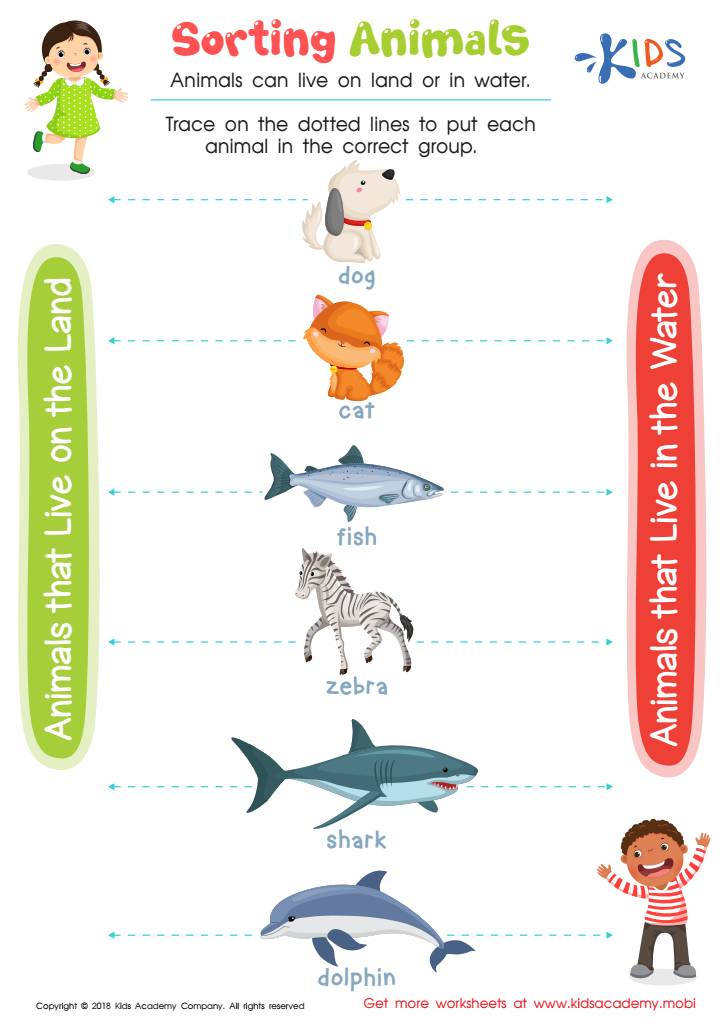
Sorting Animals Worksheet
Your kids will love this free, interactive worksheet! With image clues, they can read and trace the animal names, and then sort them into groups of land or water animals. It's an enjoyable way to boost their critical thinking, fine motor and prior knowledge skills.
 Assign to My Students
Sorting Animals Worksheet
Worksheet
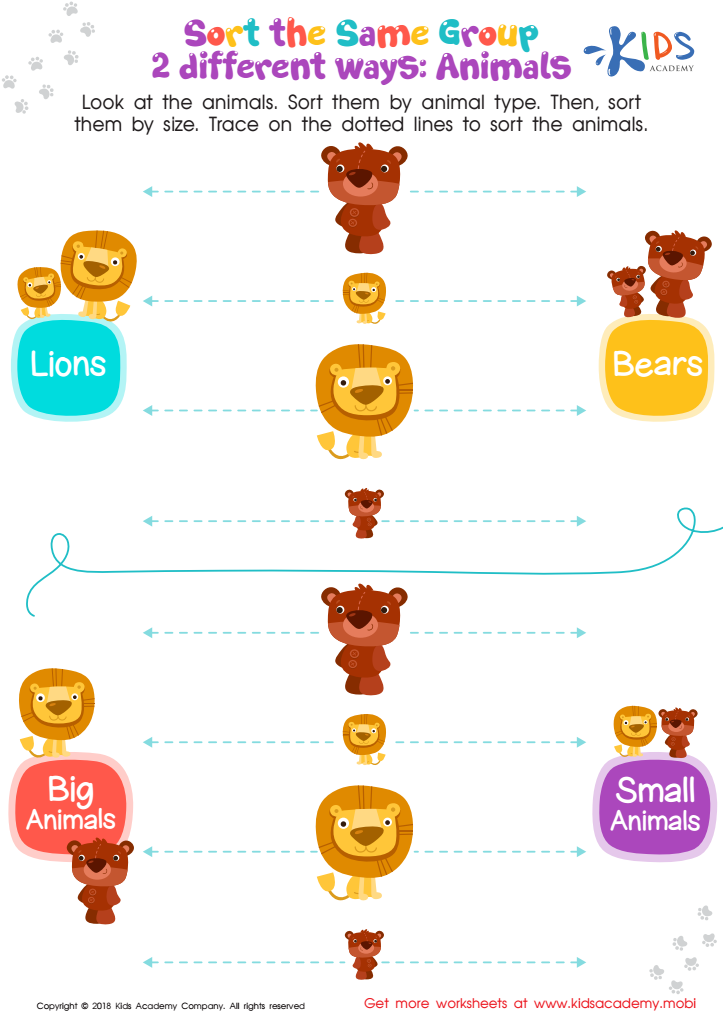
Sort the Same Group 2 Different Ways: Animals Worksheet
Look at the animals with your child. Ask them to name them, then sort them by type (e.g. lions and bears). Next, help them sort by size, tracing the dotted lines. This will teach them sorting skills.
Sort the Same Group 2 Different Ways: Animals Worksheet
Worksheet
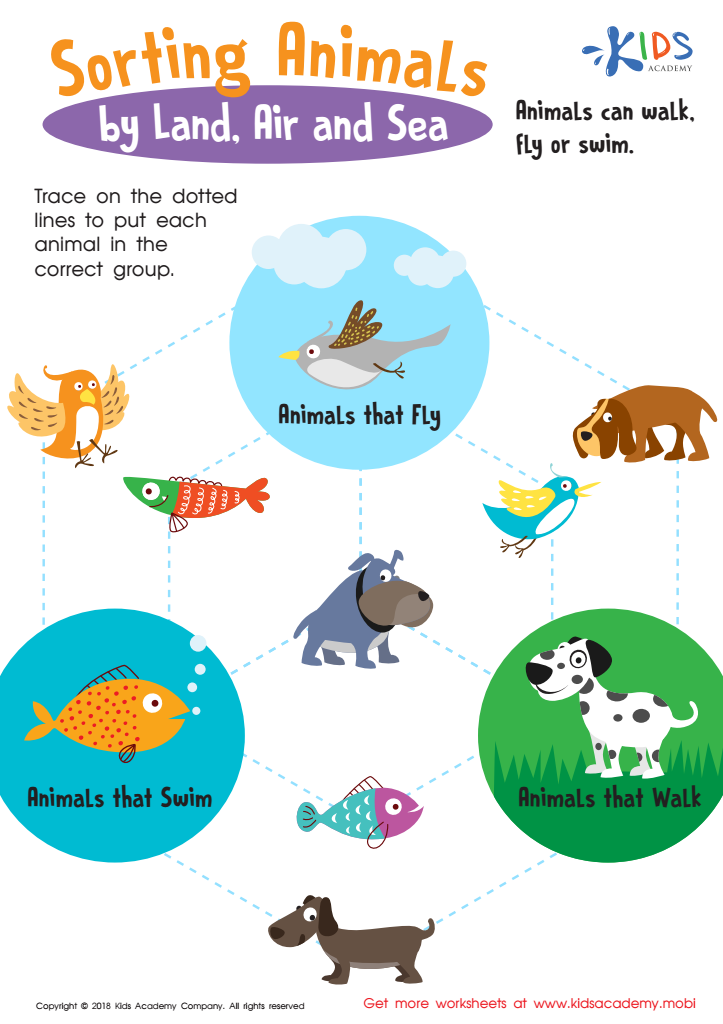
Sorting Animals by Land, Air and Sea Worksheet
Kids will use critical thinking and fine motor skills with this worksheet! They'll analyze animal traits and draw lines to sort them into groups of those that fly, swim, or walk. It's a fun way to hone skills and have a great time!
Sorting Animals by Land, Air and Sea Worksheet
Worksheet
Join Kids Academy for Free
Who is primarily going to use this learning content?








Animal classification activities, like normal sorting, are invaluable for young children aged 3-5, as they lay a crucial foundation for their cognitive and academic development. At this tender age, children's minds are incredibly receptive to new information, and engaging them in sorting activities helps to cultivate a variety of essential skills.
Firstly, sorting animals enables children to enhance their observational skills. Noticing differences and similarities in animals' physical traits sharpens their attention to detail. This activity also fosters critical thinking and problem-solving abilities. As children learn to classify animals based on characteristics such as habitat, size, or diet, they begin to understand basic categorization and organization concepts.
Furthermore, these activities enrich children’s vocabulary and language development. Discussing animal types and their features encourages the use of new words and reinforces language skills. Social and emotional growth is an additional benefit. Group activities involving animal sorting can promote cooperation, turn-taking, and communication among peers.
Understanding and appreciating biodiversity at a young age also instills a sense of curiosity and respect for nature. By learning about different animals and their environments, children develop an early interest in biology and ecology, laying the groundwork for future scientific learning. Therefore, incorporating animal classification into early childhood education is both a fun and fundamental stepping stone in a child's holistic development.