Filters

1111 filtered results

Clear all filters
Favorites
With answer key
Interactive

1111 filtered results

Difficulty Level

Grade


Check out this FREE Trial Lesson for age 3-6!

Sight words: You, Like

Favorites
With answer key
Interactive
  • 3-6
  • Normal
Finish Rhyming Poem Worksheet

Finish Rhyming Poem Worksheet

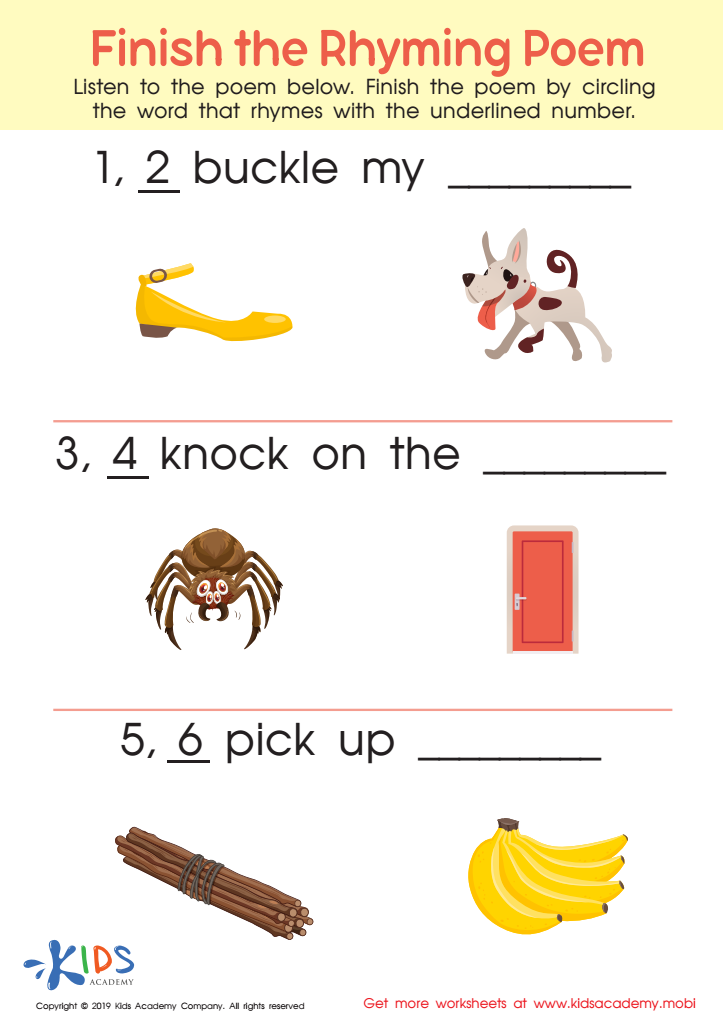
Poems are a great way to express emotions and spark imagination. Does your child enjoy poetry and even have their own creations? If so, they'll love this worksheet. It's a great way to develop their rhyming skills. Challenge them to find and circle the words that rhyme with the ones underlined.
Finish Rhyming Poem Worksheet
Worksheet
Empty or Full? Worksheet

Empty or Full? Worksheet

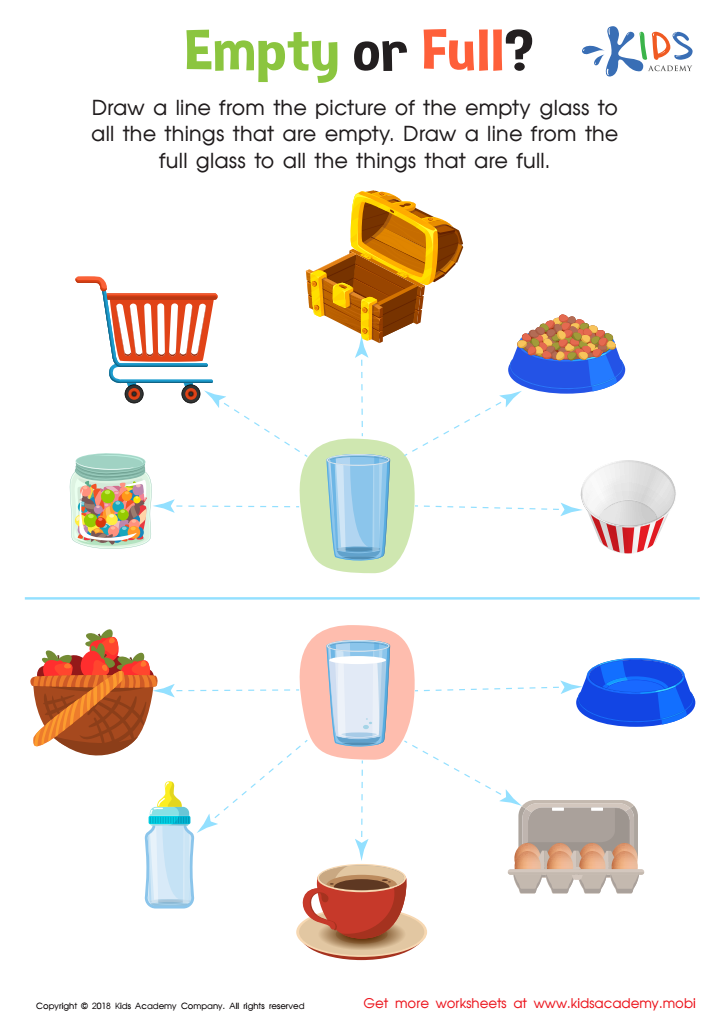
Let students get to grips with the concepts of empty and full with this PDF worksheet. It uses fun, bright pictures to help them comprehend the difference and also helps develop fine-motor skills with tracing lines. Kids will be proud of themselves as they get answers right!
Empty or Full? Worksheet
Worksheet
Ben Franklin’s Inventions – Count to 120 Worksheet

Ben Franklin’s Inventions – Count to 120 Worksheet

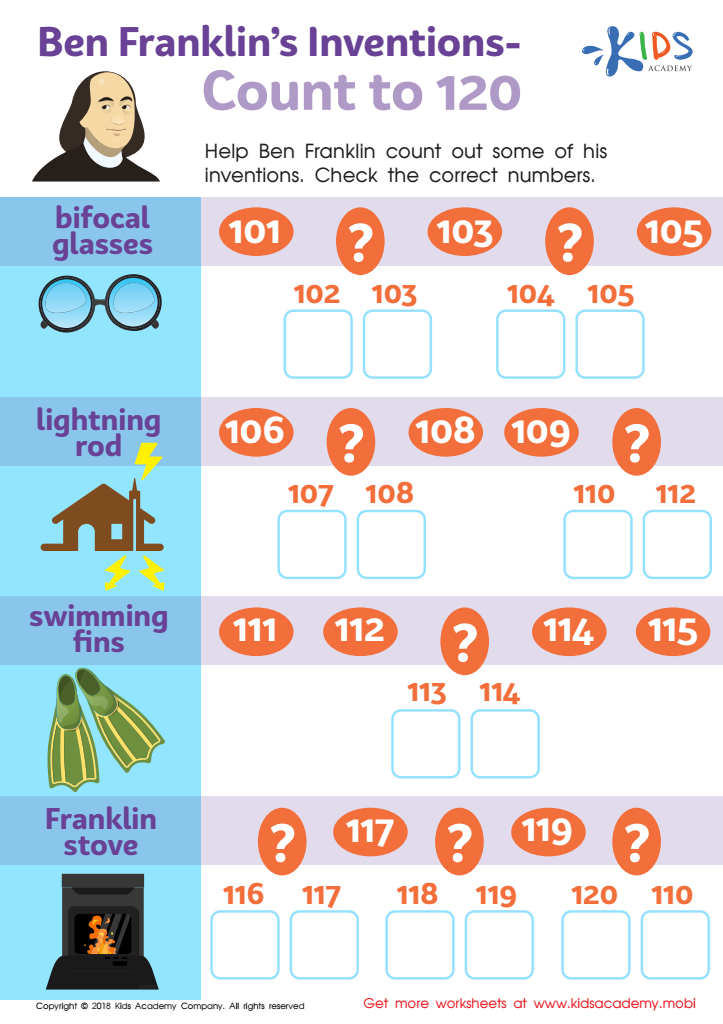
Benjamin Franklin is a significant figure in US history. He invented objects we use daily. If your child is interested in object history and invention, they'll love this worksheet. See if they can help Mr Franklin count his inventions and check their answers. It's a simple and enjoyable task!
Ben Franklin’s Inventions – Count to 120 Worksheet
Worksheet
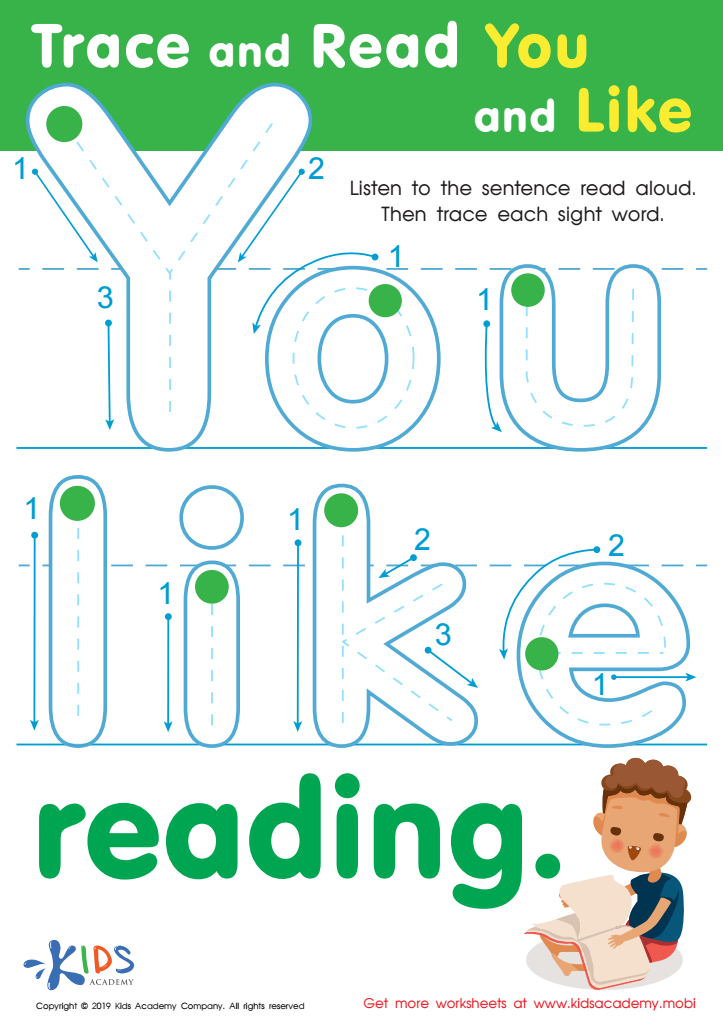
Trace Read You Like Worksheet

Trace Read You Like Worksheet

Sight words help children become confident and fluent readers. This free worksheet encourages success with basic 'you' and 'like' words. Writing them with traceable lines and green dots shows motion and builds sight word vocabulary. Help your child master the basics and boost their reading progress!
Trace Read You Like Worksheet
Worksheet
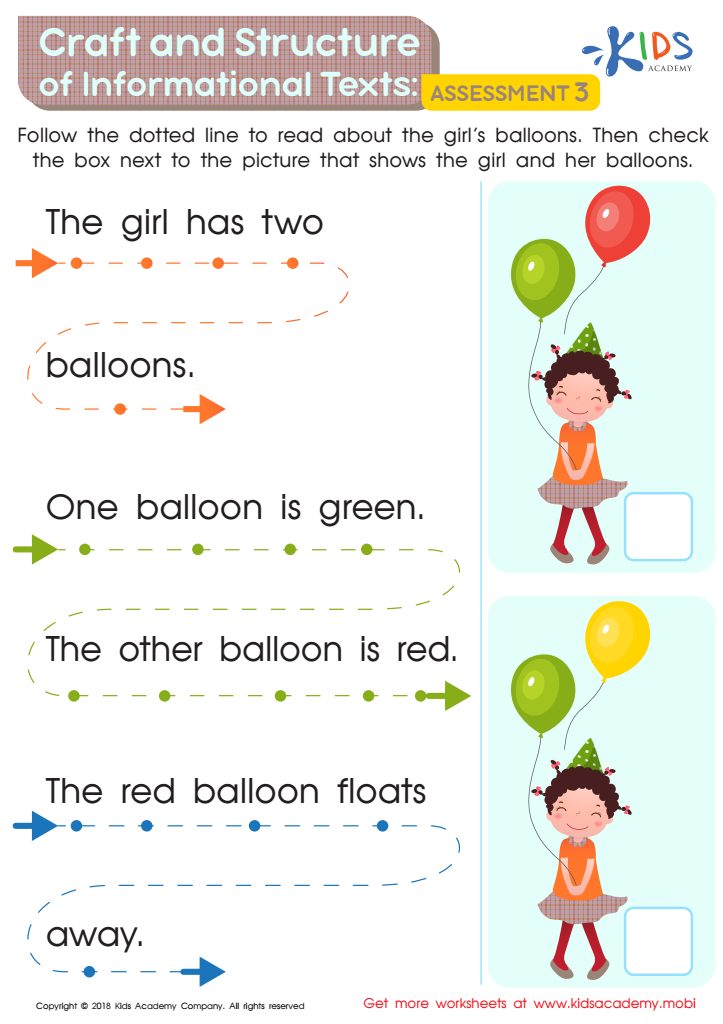
Craft and Structure of Informational Texts: Assessment 3 Worksheet

Craft and Structure of Informational Texts: Assessment 3 Worksheet

Test your beginning reader's understanding of left-to-right directionality and use of details from informational texts with this fun worksheet. Follow the traceable paths to find the right picture for each sentence. This will help your child gain confidence and be successful as a reader.
Craft and Structure of Informational Texts: Assessment 3 Worksheet
Worksheet
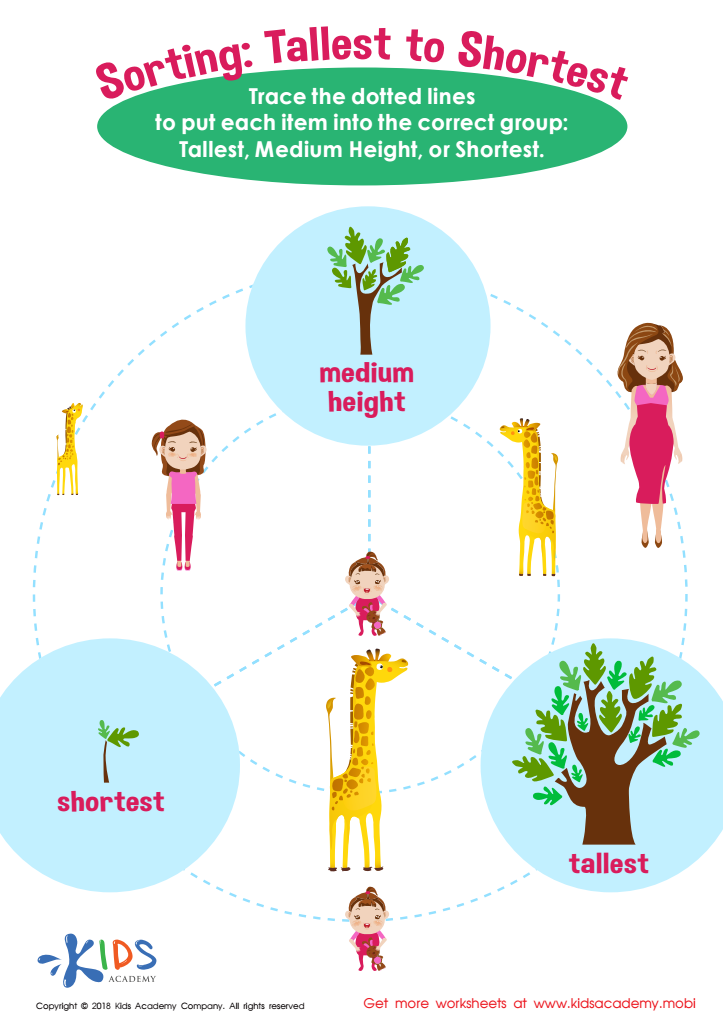
Sorting: Tallest to Shortest Worksheet

Sorting: Tallest to Shortest Worksheet

This worksheet is great for preschoolers to practice foundational measurement skills. Traceable lines help them sort pictures into Tallest, Shortest and Medium categories, giving them concrete examples to compare. Fine motor skills and understanding of relationships between sizes are also developed - perfect for preparing them for larger measurement concepts.
Sorting: Tallest to Shortest Worksheet
Worksheet
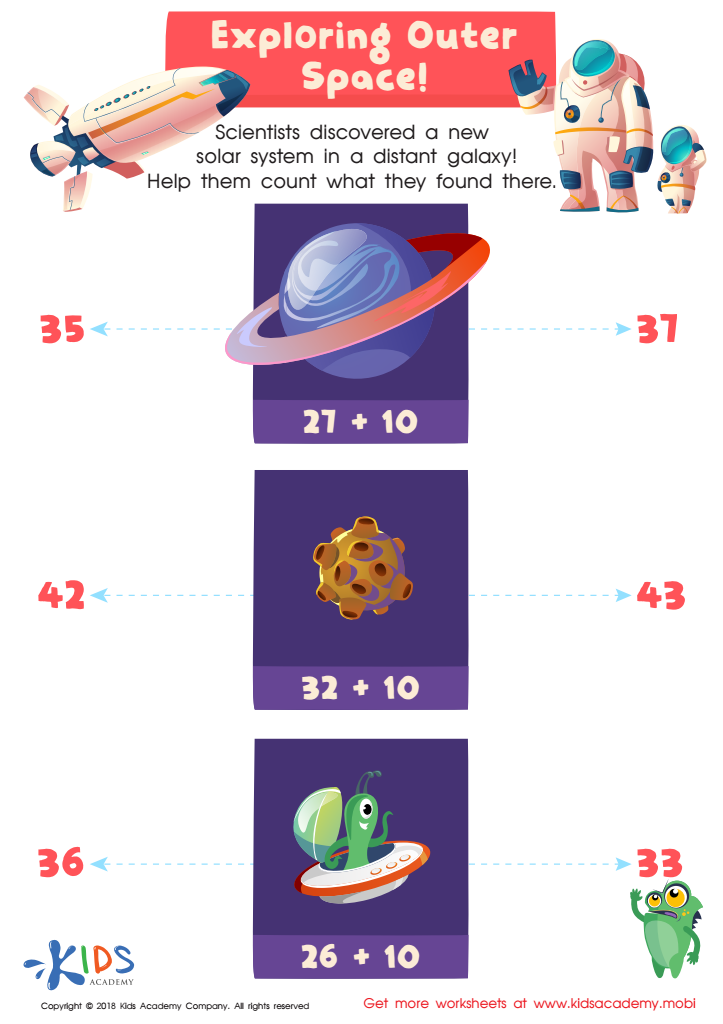
Exploring Outer Space Worksheet


Exploring Outer Space Worksheet

Outer space is an intriguing world. Physics behave differently than on Earth, and much remains to be uncovered. In this worksheet, scientists have located a new solar system in a distant galaxy. Explain to your kids what these two things are, then have them help count the findings. Solve the math problems, then link the lines to the right answer.
Exploring Outer Space Worksheet

Worksheet


... 46 47

Parents and teachers should care deeply about the normal development milestones for ages 3 to 6 because these formative years are critical in a child's cognitive, social, emotional, and physical growth. Understanding what is typical helps caregivers recognize healthy development and identify any potential delays or issues early on. During this period, children develop foundational skills such as language, motor abilities, and social interaction, which are crucial for later academic and personal success.

For instance, by age 3, children should be able to follow simple instructions, engage in imaginative play, and express themselves in short sentences. By age 6, they should have improved motor coordination, the ability to understand complex instructions, and stronger problem-solving skills. Being aware of these benchmarks ensures that parents and teachers can provide appropriate support and stimulation, whether that means offering diverse learning activities, emphasizing cooperative play, or addressing specific areas of concern through interventions.

Moreover, early identification of developmental delays or disorders, such as speech and language difficulties or social challenges, allows for timely intervention. Early support not only mitigates possible negative impacts on future learning but also boosts a child’s confidence and overall well-being. In short, knowledge of normal developmental milestones equips caregivers with the tools to foster a nurturing and responsive environment tailored to each child’s unique pathway.