Comparing sizes Normal Worksheets for Ages 3-6
3 filtered results
-
From - To
Discover a fun and interactive way for children aged 3-6 to learn about size comparisons with our "Comparing Sizes" worksheets. These expertly crafted resources foster essential early learning skills, encouraging young minds to observe, compare, and differentiate between various objects. Engaging designs and simple exercises make these worksheets ideal for preschoolers and kindergarteners, helping them understand concepts of big and small, tall and short, and more. Enhance your child's cognitive development while keeping learning enjoyable and stress-free. Start building foundational skills today with our easy-to-use and beautifully illustrated "Comparing Sizes" worksheets!
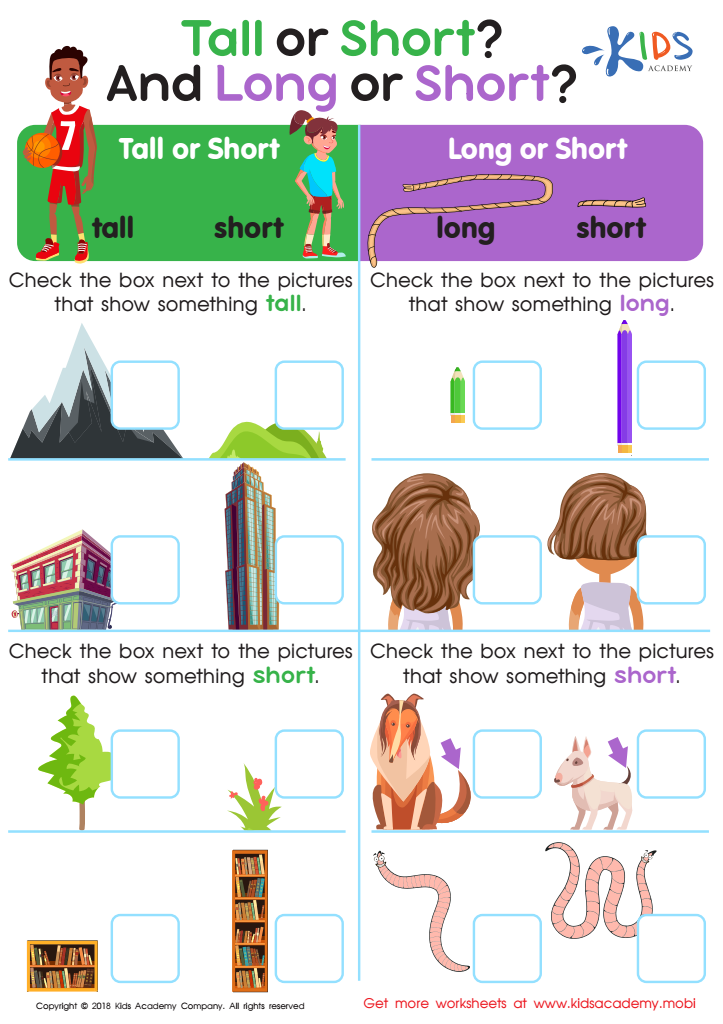
Tall or Short and Long or Short? Worksheet
 Assign to My Students
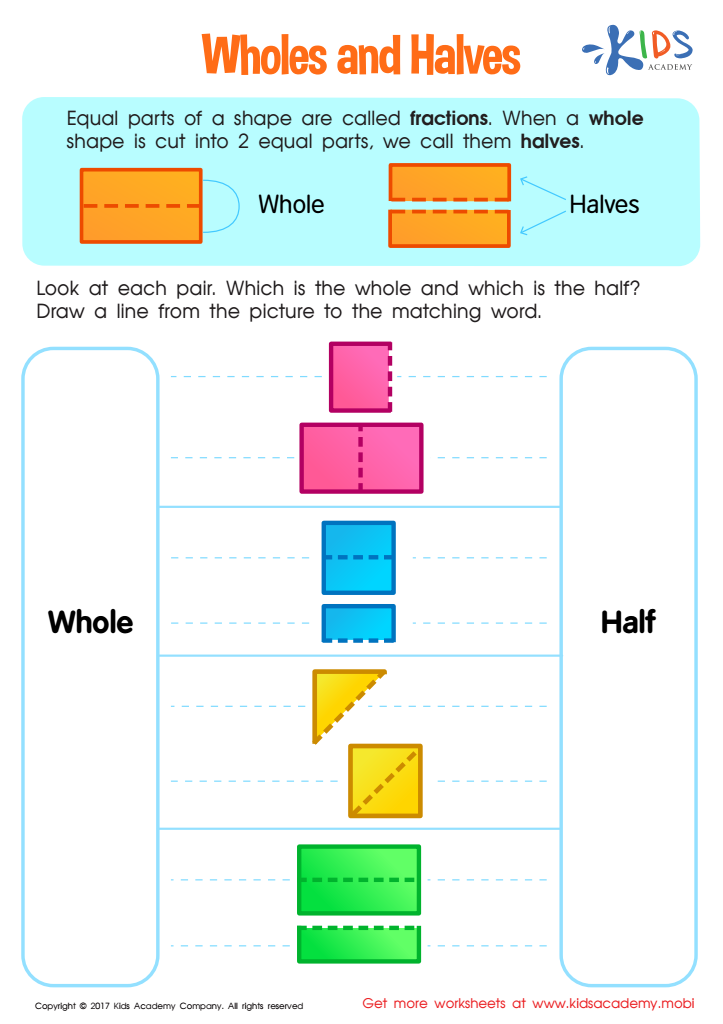
Wholes and Halves Worksheet
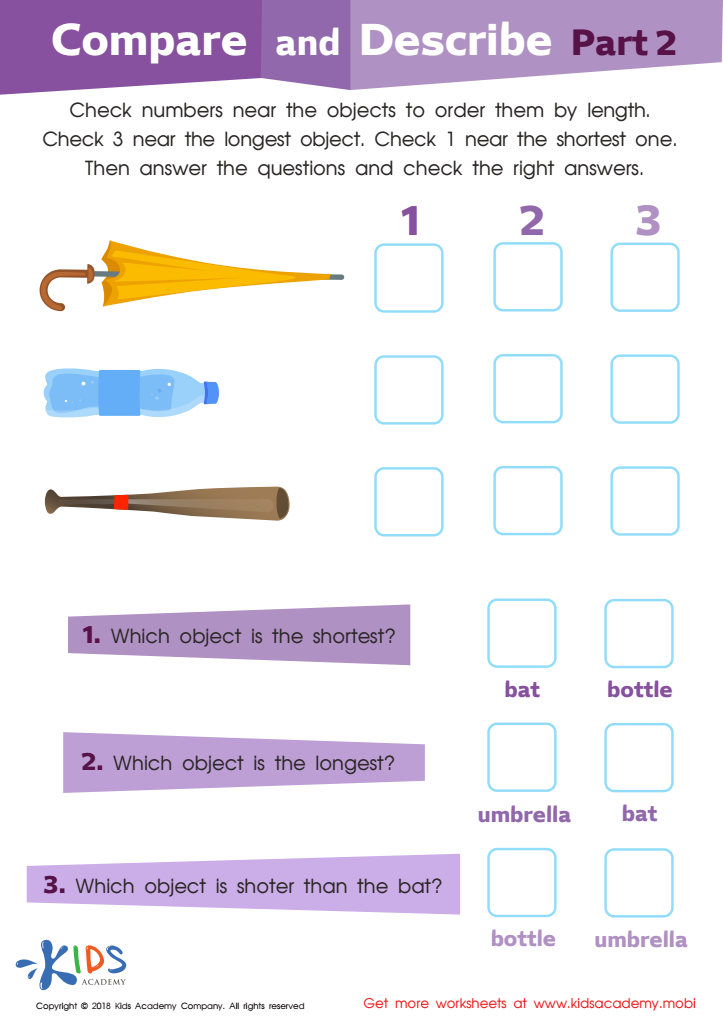
Compare and Describe: Part 2 Worksheet


.jpg)





Comparing sizes is a fundamental cognitive and mathematical concept crucial for the development of young children aged 3-6. This skill serves as a foundation for understanding measurement, geometry, and number sense, all integral parts of later academic achievement. When children compare sizes, they begin to use language accurately, describing objects as bigger, smaller, taller, or shorter, which enhances their vocabulary and communication skills.
Engaging in size comparison activities enhances critical thinking and problem-solving abilities, fostering a child's ability to classify, organize, and analyze their environment. For instance, determining the appropriate blocks to create a stable structure or selecting books that can fit on a given shelf promotes practical problem-solving actions that translate into real-world applications.
At this early age, children are naturally curious and eager to explore their surroundings. By comparing sizes, they meet intrinsic developmental milestones crucial for spatial awareness and motor skills. Teachers and parents who emphasize these concepts in playful, interactive settings, model positive attitudes toward learning and encourage children to be observers and inquisitive thinkers. This strong foundation in size comparison not only makes abstract mathematical concepts more concrete but also supports educational growth and self-confidence, setting children up for future academic triumphs.








