Understanding fractions Normal Worksheets for Ages 3-6
4 filtered results
-
From - To
Explore our engaging "Understanding Fractions Normal Worksheets" designed for children aged 3-6! These worksheets provide a fun and interactive way for young learners to grasp the concept of fractions. With colorful visuals and age-appropriate exercises, kids can easily identify and represent fractions through simple activities like coloring, matching, and counting. Each worksheet is thoughtfully crafted to foster critical thinking and enhance early math skills, making learning enjoyable and effective. Perfect for parents and educators alike, our resources aim to build a strong foundation in math concepts. Dive into the world of fractions and watch your little ones thrive!
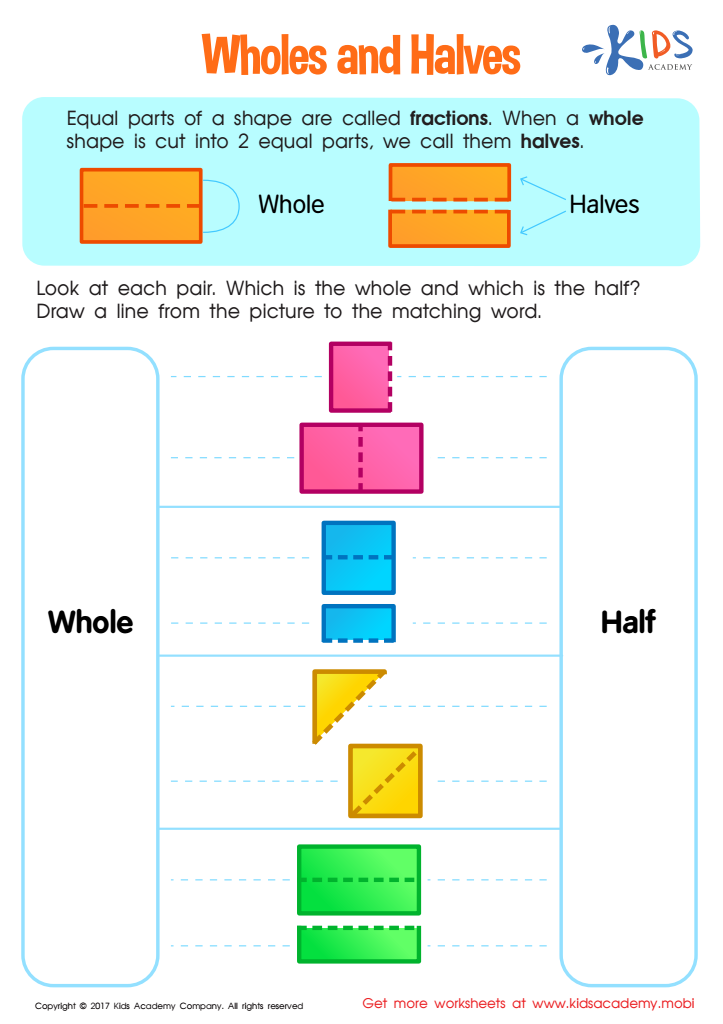
Wholes and Halves Worksheet
 Assign to My Students
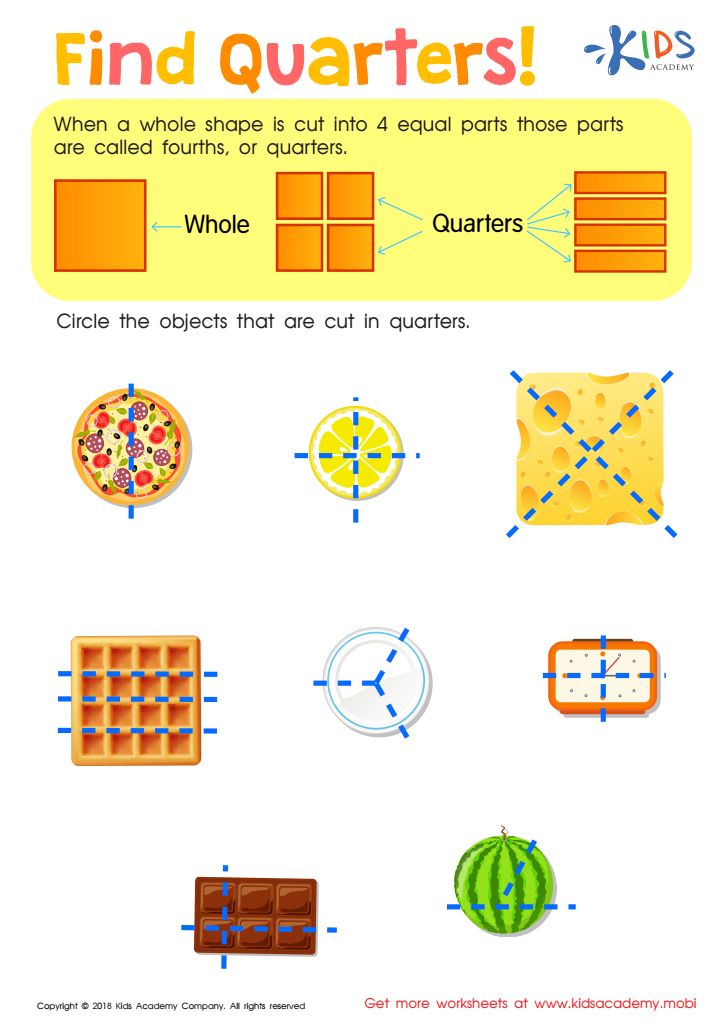
Find Quarters Worksheet
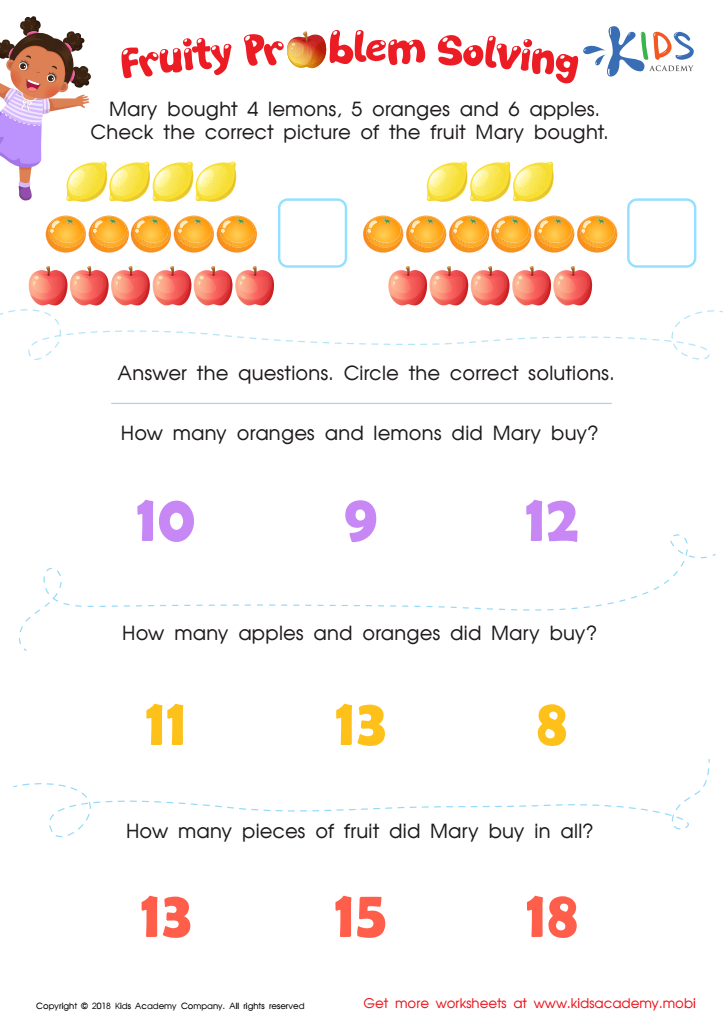
Fruity Problem Solving Worksheet
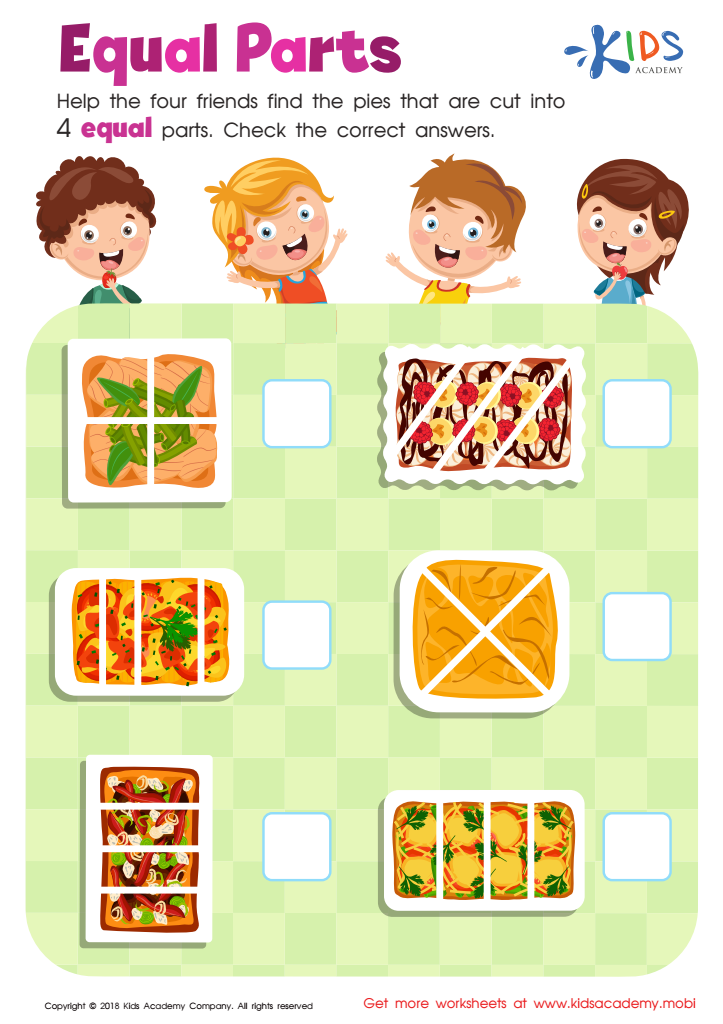
Equal Parts: Food Worksheet







Understanding fractions is vital for children aged 3-6 as it lays the foundation for essential mathematical skills. At this stage, children are naturally curious and eager to explore concepts through play and hands-on activities. Learning about fractions helps them understand parts of a whole, which is crucial not just in math, but also in real-life situations such as sharing food, dividing toys, or even in arts and crafts.
Early exposure to fractions fosters critical thinking skills and encourages problem-solving, as children learn to compare sizes, quantities, and shapes. For parents and teachers, incorporating fraction concepts into everyday activities can make learning engaging and enjoyable. Utilizing visual aids, such as cutting fruit or using pie charts, resonates with young learners and enhances conceptual understanding.
Moreover, mastery of fractions significantly contributes to their future academic success. Often, difficulties in later grades can be traced back to a weak foundation in understanding basic fractions. Therefore, by prioritizing early fraction education, adults can nurture confident and capable learners, ensuring that they develop a positive attitude toward math and cultivate essential skills they will use throughout their lives. Ultimately, supporting young children in understanding fractions is a key investment in their cognitive and academic development.








