
Hand-eye Coordination Normal Addition & Subtraction Worksheets for Ages 3-6
3 filtered results
Difficulty Level
Grade
Age
-
From - To
Subject
Activity
Standards
Boost your child's mathematical skills and hand-eye coordination with our "Hand-eye Coordination Normal Addition & Subtraction Worksheets for Ages 3-6." Designed with fun activities, these worksheets are perfect for young learners to practice basic addition and subtraction while enhancing their fine motor skills. Engaging and easy to follow, each sheet is crafted to transform learning into an enjoyable and interactive experience. Tailored specifically for ages 3-6, these worksheets support early math understanding and foster essential developmental abilities. Explore our collection to help your little ones build a strong foundation in math and coordination skills today!
Favorites
With answer key
Interactive
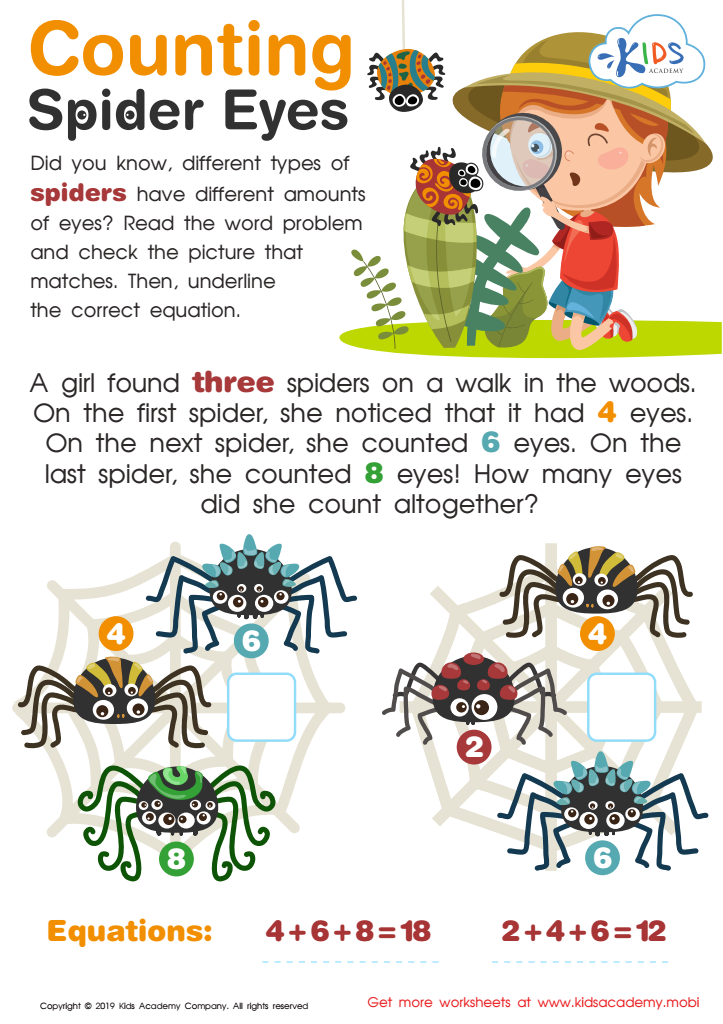
Counting Spider Eyes Worksheet
Did you know different spiders have different eye numbers? Kids will love learning this fact and solving the spider word problems on this free worksheet! Word problems promote a deeper understanding of the concept, plus they get to add up the spiders’ eyes while solving addition problems with more than one addend. Fun and math all in one!
 Assign to My Students
Counting Spider Eyes Worksheet
Worksheet
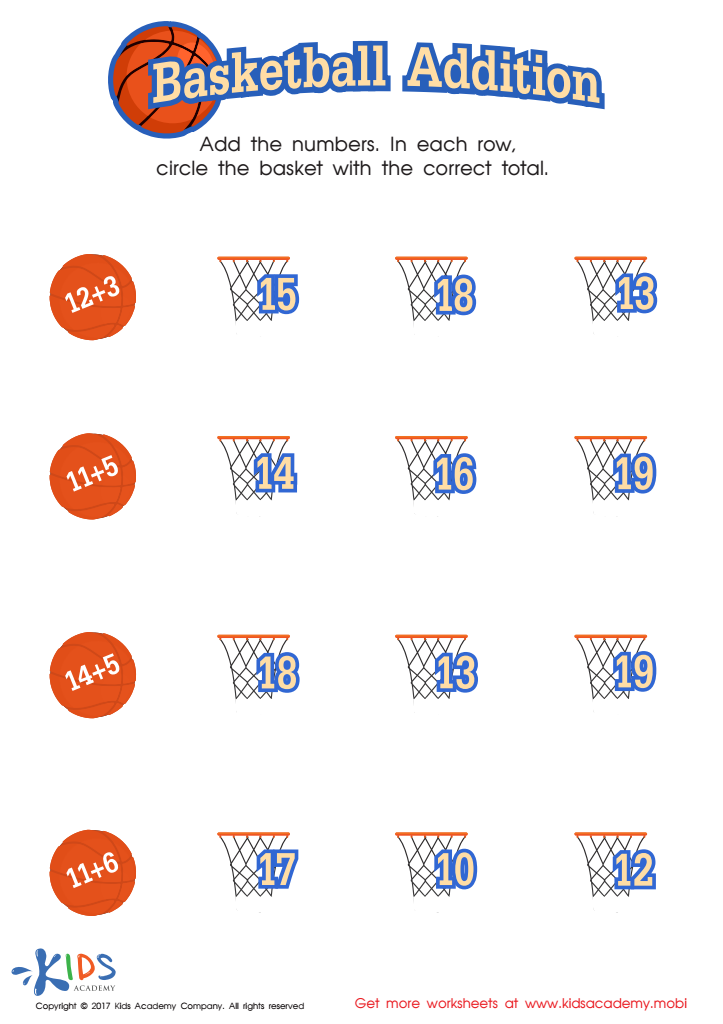
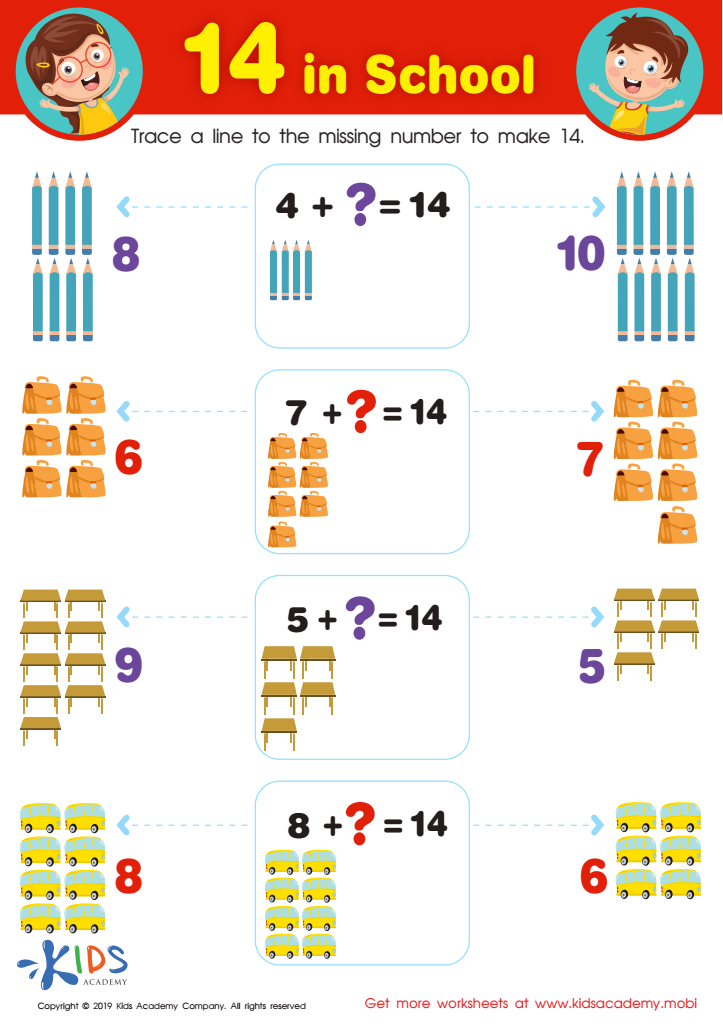
14 in School Worksheet
Remind your kids that adding different sets of numbers can give the same total (e.g. 2+3=5, 4+1=5). Ask them for more examples. Afterwards, work through the exercise. Help them count the objects and trace a line to the missing number that makes the total 14.
14 in School Worksheet
Worksheet
Join Kids Academy for Free
Who is primarily going to use this learning content?








Hand-eye coordination is a fundamental skill for children ages 3-6 as it enhances their overall development and learning capabilities. This coordination entails the harmonious interaction between visual input and hand movements, a crucial element for performing daily tasks and engaging in educational activities. When children work on normal addition and subtraction within this age range, they not only grasp foundational math skills but also fine-tune their hand-eye coordination.
Sandals with manipulatives like counting beads or fingers help cement the connection between seeing numbers and performing physical actions that reflect those numbers. This tactile experience reinforces numerical understanding and aids in cognitive development. Children are more likely to retain what they learn when they physically manipulate objects to solve problems, which simultaneously improves dexterity and muscle control in their hands.
Furthermore, strong hand-eye coordination can bolster a child's performance in various areas like writing, cutting with scissors, or engaging in sports and recreational activities. Activities like drawing numbers, connecting dots to reveal shapes, or playing interactive math-based games support both their academic progress and physical development.
Overall, focusing on hand-eye coordination along with basic arithmetic prepares children for future academic success and lays down a solid foundation for fine motor skill development, making it an essential aspect of early education.








